
When late summer yields to crisp autumn air, few woody sub-shrubs illuminate the landscape with the vibrant, electric sapphire intensity of Caryopteris, affectionately celebrated as Bluebeard or Blue Mist Shrub. Revered by gardeners and late-season pollinators alike, this aromatic perennial shrub produces frothy whorls of azure blossoms on slender silver-green stems. Yet, as hard frosts approach, enthusiastic gardeners frequently commit the single most devastating mistake in sub-shrub management: reaching for the pruning shears too early in the autumn. Navigating the dormant season successfully requires understanding how cold winds interact with hollow woody stems and mastering the counterintuitive art of delayed spring cutbacks.
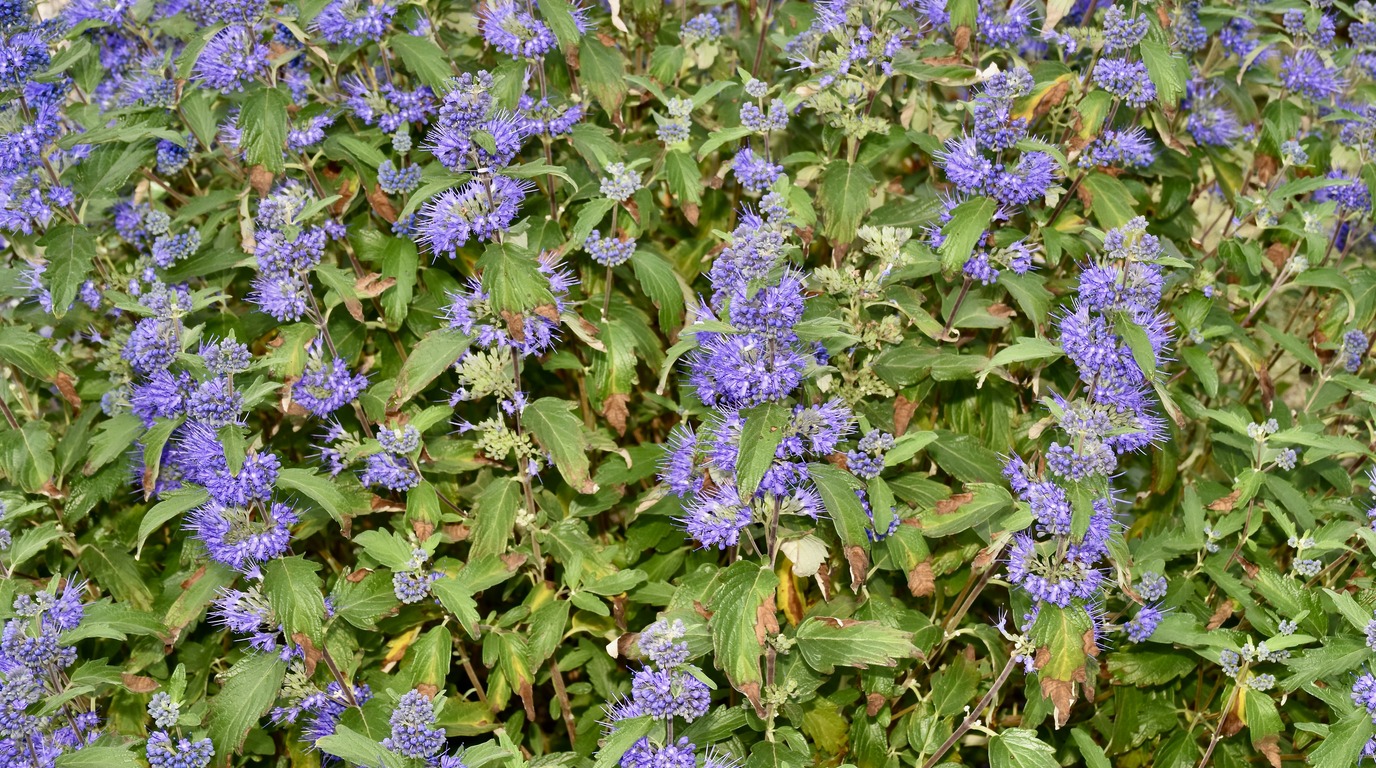
Classified botanically as a deciduous sub-shrub, Caryopteris × clandonensis occupies a unique horticultural niche between herbaceous perennial and true woody shrub. Rated primarily for USDA Hardiness Zones 5 through 9, its woody stems feature a soft, porous central pith. When cut back in autumn, moisture seeps directly into these exposed pithy conduits, where successive freeze-thaw cycles split stems and channel freezing rot directly down into the subterranean root crown. By preserving the complete framework of top growth throughout the winter, you trap insulating snowfall and establish an architectural wind barrier, ensuring the crown remains robust and fully primed to generate vigorous new flowering canes come spring.
Why You’ll Cherish Caryopteris in the Autumn & Winter Garden
- Vital Late-Season Pollinator Oasis: Flowering profusely from August through October, Bluebeard serves as a critical nectar reservoir for migrating monarch butterflies, native bumblebees, and honeybees preparing for winter.
- Uncompromising Deer & Rabbit Resistance: The foliage releases a sharp, pleasant eucalyptus-anise aroma when brushed, rendering it naturally immune to foraging pests among deer-resistant plants for rural gardens.
- Superb Drought & Heat Tolerance: Once established in well-draining garden soil, Caryopteris thrives with minimal supplemental hydration, asking only for ample sunlight and dry crown conditions in winter.
- Winter Seedhead Silhouette: Leaving the spent branches untrimmed introduces delicate tawny textures and architectural presence against barren winter snowdrifts.
Key Winterizing Supplies & Mulch Smart Swaps

- Pine Needles or Shredded Bark Mulch: Loose, breathable organic mulches provide superior thermal insulation over dense, wet grass clippings or heavy compost, which suffocate dormant crowns.
- Breathable Burlap & Hardwood Stakes: In wind-swept northern sites (USDA Zone 5), a 3-sided burlap windscreen deflects desiccating sub-zero blasts without trapping excessive solar heat.
- Coarse Horticultural Grit or Pea Gravel: Surrounding the root flare with sharp mineral grit accelerates moisture drainage, similar to principles used when learning how to winterize Sempervivum.
- Bypass Hand Pruners (Locked Away Until Spring): High-carbon steel pruners are vital for the dramatic early spring renewal cutback, but should remain strictly idle throughout late autumn.
Step-by-Step Winterizing Walkthrough for Bluebeard Shrubs
1. Strictly Cease All Autumn Pruning: Resist the urge to tidy up faded flower spikes or shape the bush in October or November. Every intact woody branch shields the crown from polar winds and traps natural insulating snow. Any pruning cut made in late autumn stimulates vulnerable sap flow and leaves hollow channels prone to frost-crack damage.
2. Deep Autumn Soak Before Soil Freezes: In mid-to-late autumn before the ground freezes solid, provide a slow, thorough soaking around the root zone. Woody root systems insulated in hydrated soil are dramatically more freeze-resistant than roots trapped in parched, dry earth.

3. Build a Protective Mounded Mulch Collar: After the first two hard killing frosts have completely sent the shrub into dormancy, mound 4 to 6 inches of loose pine straw, shredded oak leaves, or coarse bark directly around the crown base. This protective mound moderates soil temperature fluctuations and prevents catastrophic frost heaving.
4. Erect Windscreen for Zone 5 & 6 Microclimates: If your garden sits in an open, wind-swept northern exposure, drive three wooden stakes into the ground around the windward side of the shrub and staple breathable burlap across them. Never wrap burlap tightly around the shrub like a mummy; allow ambient air to circulate freely.
3 Horticulturist Secrets for Flawless Caryopteris Winter Survival
1. The Hollow Stem Capillary Trap: Cutting Caryopteris stems in fall leaves open vascular canals. Rain and melting sleet enter these cuts, pool inside the pith, and freeze. As ice expands, it shatters the vascular cambium down to root level. Treating Caryopteris with the same delayed cutback discipline used in our guides on winterizing Salvia and winterizing Agastache preserves vital crown vitality.
2. Snow Is a Natural Geothermal Insulator: Fluffy fallen snow caught among the branching twigs of an untrimmed Bluebeard shrub holds soil temperatures remarkably stable at 32°F (0°C), shielding the root system even during sub-zero polar vortex events.
3. Remove Winter Mulch Promptly in Early Spring: While mounded mulch saves the crown during January and February freezes, leaving it in place through damp March weather encourages fungal crown mold. Pull the mulch mound back 3 inches away from the stems as soon as the ground completely thaws.
What to Pair with Caryopteris in Autumn & Winter Borders

- Feather Reed Grass (Calamagrostis ‘Karl Foerster’): The upright golden plumes of ornamental grasses create a majestic contrasting backdrop to the cloud-like sapphire blossoms of Bluebeard.
- Black-Eyed Susans (Rudbeckia) & Goldenrod (Solidago): Warm golden and amber autumn tones provide a complementary color explosion alongside the rich blue whorls of Caryopteris.
- Dwarf Conifers & Structured Evergreens: Planting Bluebeard in front of dark green yews or dwarf blue spruces frames both its late-summer flowers and its sculptural winter silhouette.
Container Overwintering & The Essential Spring Cutback
- Overwintering Container-Grown Bluebeard: Because container roots experience temperatures up to 20°F colder than in-ground plantings, move potted Caryopteris into an unheated garage or shed once fully dormant. Water lightly once every 4 to 6 weeks to keep the root ball barely moist.
- The Hard Spring Pruning Technique: In early to mid-spring, watch the base of the shrub. As soon as you spot swollen green buds emerging near the root flare, cut all previous year’s stems hard back to 4 to 6 inches above ground level. Because Caryopteris blooms strictly on new wood grown that season, this hard pruning produces dense, floriferous branching.
- Fertilization Protocol: Never apply nitrogen-rich fertilizers in autumn. Wait until fresh spring growth reaches 6 inches tall before applying a balanced slow-release organic fertilizer.
Frequently Asked Questions
Should I cut back Caryopteris in the fall or in the spring?
Always wait until early spring to cut back Caryopteris. Autumn pruning exposes the hollow, pithy stems to freezing moisture, leading to severe crown rot and winter dieback. Leaving stems intact preserves crown health; cut the entire shrub back to 4 to 6 inches in spring once new green buds emerge.
How cold hardy is Caryopteris (Bluebeard)?
Most cultivars of Caryopteris × clandonensis (such as ‘Dark Knight’ and ‘Blue Mist’) are hardy in USDA Zones 5 through 9. In Zones 5 and 6, top branches naturally die back to the ground in severe winters, but the protected root crown readily sends up vigorous new shoots in spring.
Did winter kill my Caryopteris if it looks dead in early spring?
Almost certainly not. Caryopteris is notoriously slow to break winter dormancy, often showing zero sign of life until late April or early May when soil temperatures warm significantly. Be patient and wait for fresh green basal shoots to sprout before assuming winter injury.
Pin This Bluebeard Winterizing Guide for Later
Protect your sapphire autumn blooms! Save this pin to your Pinterest gardening board so you have these essential pruning timing rules and crown protection tips ready for fall!
