Few gardening annoyances are more frustrating than a sudden cloud of tiny black fungus gnats hovering around your prized indoor houseplants and seed starting trays. While adult gnats are primarily a cosmetic nuisance, their microscopic subterranean larvae actively chew through tender root hairs, spread lethal fungal root rots like Pythium, and stunt plant vitality. Fortunately, you don’t need harsh chemical pesticides to reclaim your indoor jungle; an organic 3-step soil drench protocol targets the entire gnat lifecycle to eliminate both flying adults and underground larvae permanently.
Fungus gnats (Bradysia species) thrive exclusively in warm, constantly damp organic matter, where a single female can lay over 200 eggs in the top 2 inches of moist potting soil. In just 4 days, those eggs hatch into voracious translucent larvae that feed on soil fungi and delicate feeder roots. To achieve permanent eradication, treatment must break the reproductive loop by simultaneously trapping flying adults, sterilizing active larvae with biological larvicides, and physically sealing the soil surface.
Why Chemical Bug Sprays Fail Against Fungus Gnats
- Subterranean Immunity: Aerosol insect sprays only target the 10% of the population flying in the air, leaving hundreds of unhatched eggs and feeding larvae completely untouched in the soil.
- Rapid Pest Resistance: Constant synthetic pyrethroid exposure leads to resistant strains while killing beneficial soil predatory mites.
- Root Phytotoxicity: Harsh chemical residues disrupt delicate root absorption zones and harm indoor air quality.
- The Organic Biological Advantage: Using targeted natural agents like Bacillus thuringiensis israelensis (BTI) kills larvae internally with zero toxicity to humans, pets, or plant tissue.
Essential Eradication Materials, Traps & Solutions

- 3% Household Hydrogen Peroxide (H2O2): The ultimate contact larvicide. Diluted with water, it oxidizes larvae on contact while breaking down into beneficial oxygen and pure water.
- BTI Granules (Mosquito Bits or Gnatrol): Contains natural bacterial crystal proteins that specifically dissolve the digestive tracts of fungus gnat and mosquito larvae without harming beneficial organisms.
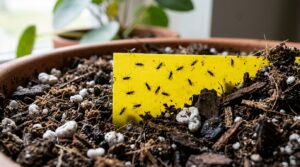
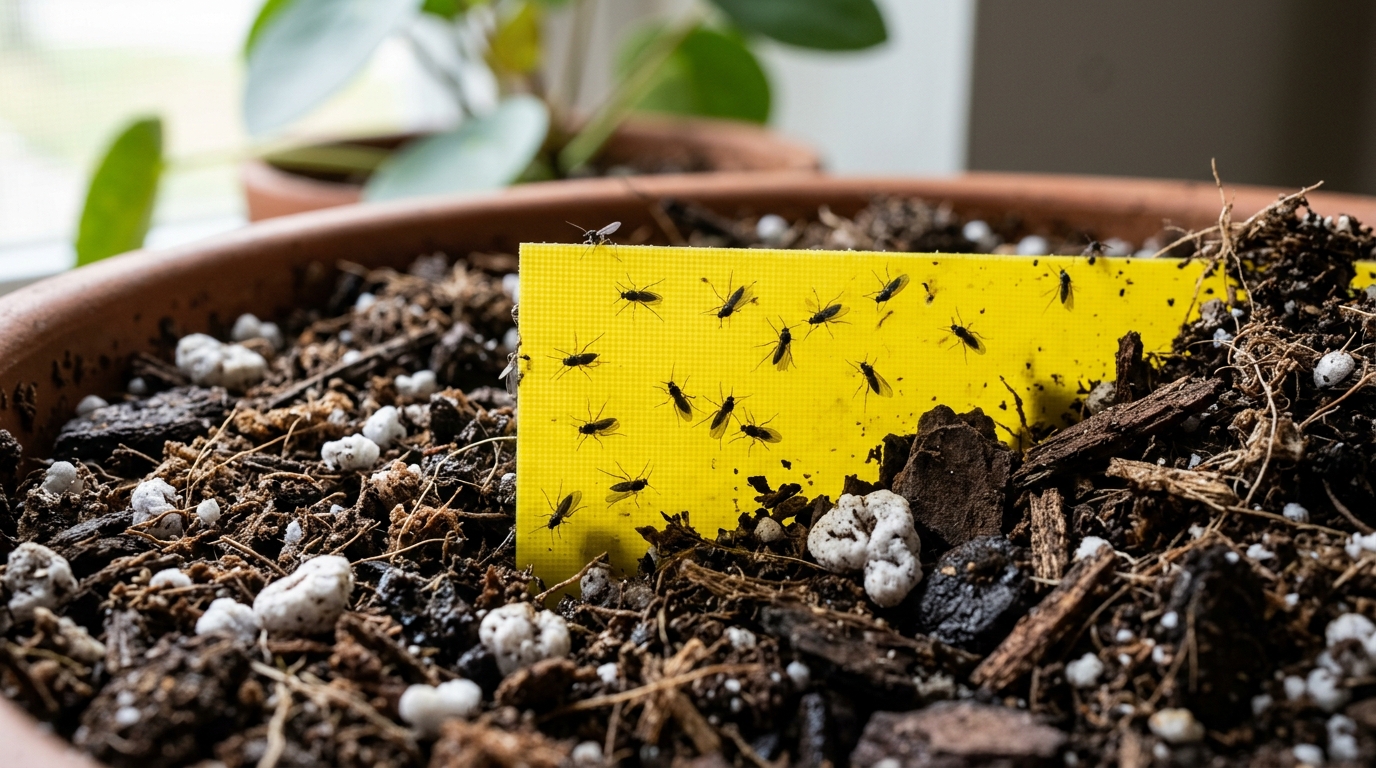
- Dual-Sided Yellow Sticky Traps: Fungus gnats are biologically attracted to bright yellow wavelengths; traps monitor population crashes and eliminate egg-laying adult females.
- Coarse Horticultural Sand or Diatomaceous Earth: A sharp 1/2-inch physical top-dressing barrier that shreds egg-laying adults and blocks newly hatched gnats from emerging.
Step-by-Step 3-Stage Elimination Protocol
1. Step 1: Deploy Soil-Level Yellow Traps: Insert yellow sticky traps directly into the potting soil horizontally. This captures active flying females before they can deposit fresh egg clutches.
2. Step 2: Allow the Top 2 Inches of Soil to Dry: Withhold watering for 5 to 7 days until the top 2 inches of potting mix are bone dry. Dry soil dehydrates sensitive gnat eggs naturally.

3. Step 3: Execute the Effervescent Peroxide Drench: Slowly pour the 1:4 hydrogen peroxide mix through the entire root ball. The gentle bubbling sound indicates oxygen release and immediate larval elimination.
4. Step 4: Follow Up with Biological BTI “Tea”: Seven days later, steep 2 tablespoons of Mosquito Bits in 1 gallon of warm water for 30 minutes. Water all plants thoroughly with this BTI tea to inoculate the soil with protective bacteria.
5. Step 5: Seal the Surface with a Sand Barrier: Spread a uniform 1/2-inch layer of clean horticultural sand over the soil surface, preventing remaining insects from accessing moist soil layers.
3 Master Gardener Secrets for Zero Reinfestation
1. Always Bottom-Water Sensitive Plants: Placing plant pots in a shallow tray of water for 20 minutes allows roots to soak up moisture from below while leaving the top 2 inches of soil perpetually dry and inhospitable to gnats.
2. Microwave or Solarize Bagged Potting Mix: Commercial bagged potting soil stored outdoors frequently contains dormant gnat eggs. Moisten new soil and microwave for 90 seconds (or solarize under clear plastic) before repotting.
3. Quarantine All New Nursery Additions: Isolate newly purchased houseplants for 14 days following our Indoor Plant Quarantine Protocol to catch hidden pests before they migrate across your collection.
Long-Term Preventative Soil Care

- Incorporate Chunky Aeration: Mix 30% perlite or pumice into dense potting soils to eliminate waterlogged anaerobic pockets, paired with proper drainage as outlined in our Monstera & Aroid Care Guides.
- Deploy Beneficial Nematodes (Steinernema feltiae): For large indoor collections or greenhouses, microscopic predatory nematodes provide automated biological defense by hunting down gnat larvae underground.
- Avoid Overwatering in Winter: As indoor plant growth slows in autumn, reduce watering frequency significantly, applying our Organic Houseplant Pest Defenses.
Frequently Asked Questions
Will hydrogen peroxide damage my plant’s roots?
No. At a 1:4 dilution (3% H2O2 mixed with water), it is completely safe for roots and breaks down rapidly into pure water and extra oxygen, aerating the root zone.
Can fungus gnats live without indoor plants?
No. Fungus gnat larvae require decaying organic matter and moisture. Eliminating standing water in plant saucers and letting topsoil dry breaks their reproductive cycle.
How long does it take to completely get rid of fungus gnats?
Because the complete lifecycle takes 3 to 4 weeks, maintaining sticky traps and applying two BTI waterings over 14 days achieves total eradication.
Love This Guide? Pin It!
Save this step-by-step fungus gnat eradication protocol to your Pinterest houseplant board so you have the natural cure ready whenever pests strike!

Pin This Gardening Guide for Later
Save this organic pest control masterclass to your Houseplant Care or Plant Health Hacks Pinterest board to keep your indoor garden pest-free all year long!