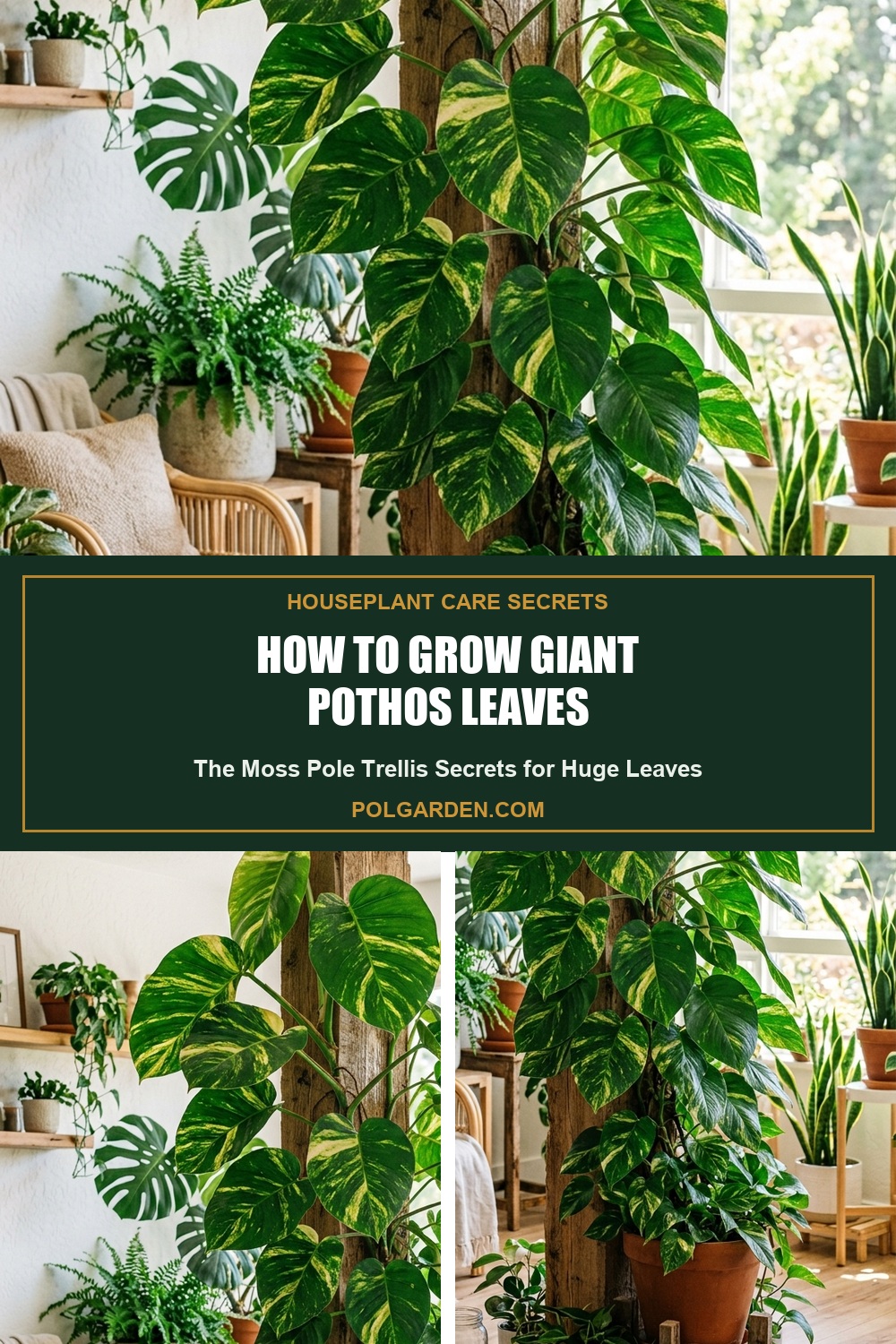
Almost every indoor gardener owns a Golden Pothos (Epipremnum aureum) gracefully trailing down a bookshelf with modest 3-inch leaves. But in tropical rainforests, this exact same plant transforms into a monstrous canopy climber with leaves exceeding 2 feet in width, complete with split fenestrations. Transforming your tabletop pothos into a giant Hawaiian-style statement piece requires understanding aerial root geotropism and vertical moss pole anchoring.
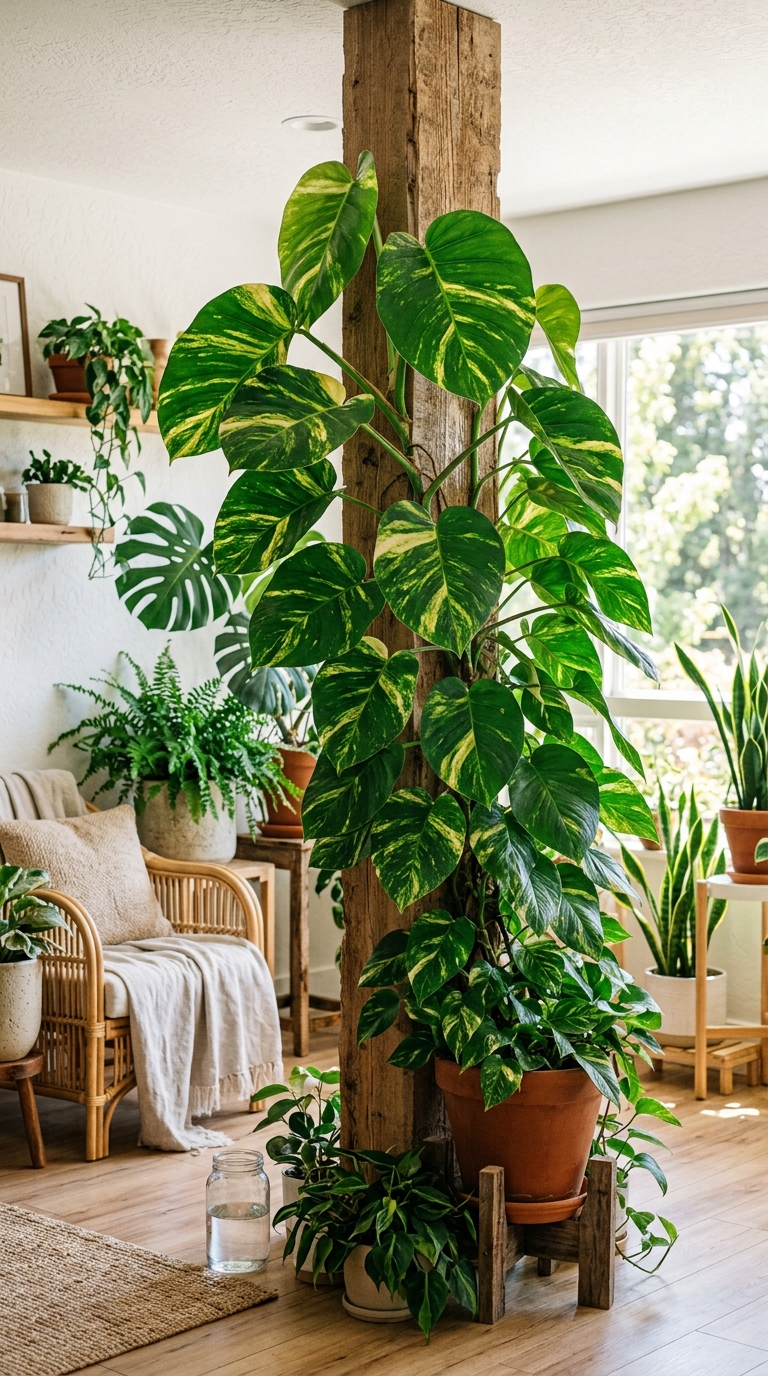
Pothos vines exhibit distinct juvenile and mature morphology. When trailing downward, hormonal auxin distribution keeps leaves small to conserve energy. When trained vertically on a moist fibrous substrate, climbing aerial roots anchor into the medium, triggering mature adult hormone synthesis that explodes leaf size and develops variegation.
- Difficulty: Beginner to Intermediate
- Leaf Size Potential: Up to 18–24 Inches
- Growth Medium: Chunky Aroid Mix (Bark, Perlite, Peat)
- Vertical Support: D-Mesh Sphagnum Moss Pole
- Optimal Lighting: Bright Indirect (800–1200 Foot-Candles)
Why You’ll Love This Method
- Jaw-Dropping Tropical Transformation: Turns a common $10 grocery store houseplant into a $200+ botanical centerpiece.
- Induces Giant Split Fenestrations: Mature climbing leaves develop stunning splits and perforations similar to Monstera deliciosa.
- Supercharged Growth Speed: Rooted moss pole climbers grow up to 3 times faster than trailing vines.
- Easy Propagation by Node: Massive mature nodes can be air-layered and chopped into instant giant specimen plants.
Essential Materials, Tools & Smart Swaps
- Plastic-Coated Wire Mesh (1/2-inch grid): Forms a rigid cylindrical D-shape support structure.
- Long-Fiber Chilean Sphagnum Moss: Retains moisture and provides the ideal anchoring medium for aerial root penetration.
- Chunky Aroid Potting Mix: Equal parts orchid bark, coarse perlite, chunky pumice, and coco coir.
- Velcro Plant Tape or Soft Garden Ties: Secures expanding vine stems gently against the moss pole without bruising tissue.
Step-by-Step Practical Walkthrough
1. Construct a Front-Facing D-Shape Moss Pole: Roll wire mesh into a cylinder packed firmly with damp sphagnum moss. Use plastic backing to retain internal humidity.
2. Anchor Pole into a Heavy Planter Base: Position the pole against the bottom of the pot before adding chunky aroid potting soil to ensure rock-solid stability.
3. Secure Vine Nodes Facing Inward: Press aerial root nodes firmly against the damp moss and secure with plant Velcro tape.
4. Keep the Sphagnum Moss Consistently Moist: Water the moss pole from the top down daily or use an inverted water bottle dripper so aerial roots never dry out.
5. Provide Intense Diffused Light: Position the setup 2 to 3 feet away from an unobstructed south or east-facing window with 800+ foot-candles of light.
3 Master Gardener Secrets for 100% Success
1. Aerial Roots Must Drink: If your moss pole dries out into crunchy straw, the vine treats it as a dead trellis and leaf size stalls. The aerial roots must absorb water and nutrients directly through the pole.
2. Add Diluted Fertilizer to the Moss Pole: Drizzle a quarter-strength 20-20-20 liquid fertilizer directly into the moss pole once a week to feed climbing root tips directly.
3. Extend the Pole Before the Vine Reaches the Top: When the climbing vine outgrows the pole, leaf size immediately regresses. Stack pole extensions proactively.
Top Aroids That Excel on Moss Poles
- Epipremnum pinnatum ‘Cebu Blue’: Develops silvery-blue mature fenestrated leaves when climbed vertically.
- Philodendron Brasil & Cordatum: Explodes in heart-leaf size with vibrant central variegation bands.
- Monstera adansonii (Swiss Cheese Vine): Develops giant perforated leaves with triple-tier windows on moist moss poles.
- Scindapsus pictus (Satin Pothos): Thickens into massive velvet-textured leaves with shimmering silver splashes.
Seasonal Timing, Storage & Maintenance
- Pole Extension Technique: Attach modular wire extensions using zip-ties without disturbing the rooted lower pole.
- Humidity Maintenance: Maintain room humidity above 55% to encourage rapid aerial root elongation.
- Leaf Cleaning: Wipe large leaves monthly with a damp microfiber cloth to remove dust and maximize light absorption.
Frequently Asked Questions
How long does it take for pothos leaves to get huge?
Under proper light and consistent moss pole moisture, noticeable leaf size increases occur within 3 to 4 new nodes (typically 2 to 3 months).
Can I get giant leaves on a wooden plank or coco coir pole?
Wood planks work in 80%+ greenhouse humidity, but dry indoor rooms require water-retaining sphagnum moss for roots to establish.
Why did the new top leaf come out smaller?
Smaller new leaves indicate either the moss pole dried out or the plant needs higher light levels.
Pin This Gardening Guide for Later
Save this giant pothos climbing guide to your Houseplant Goals or Aroid Care Pinterest board to grow massive tropical leaves at home!