Snake plants (Dracaena trifasciata, formerly Sansevieria) are revered as indestructible houseplants, but when it comes to leaf propagation, many plant parents encounter mushy stems and slimy bacterial decay. By utilizing the botanist-proven inverted V-cut method and enforcing an essential 48-hour callousing window, you can multiply a single mature leaf into dozens of vigorous, thriving baby pups with a 100% rooting success rate.
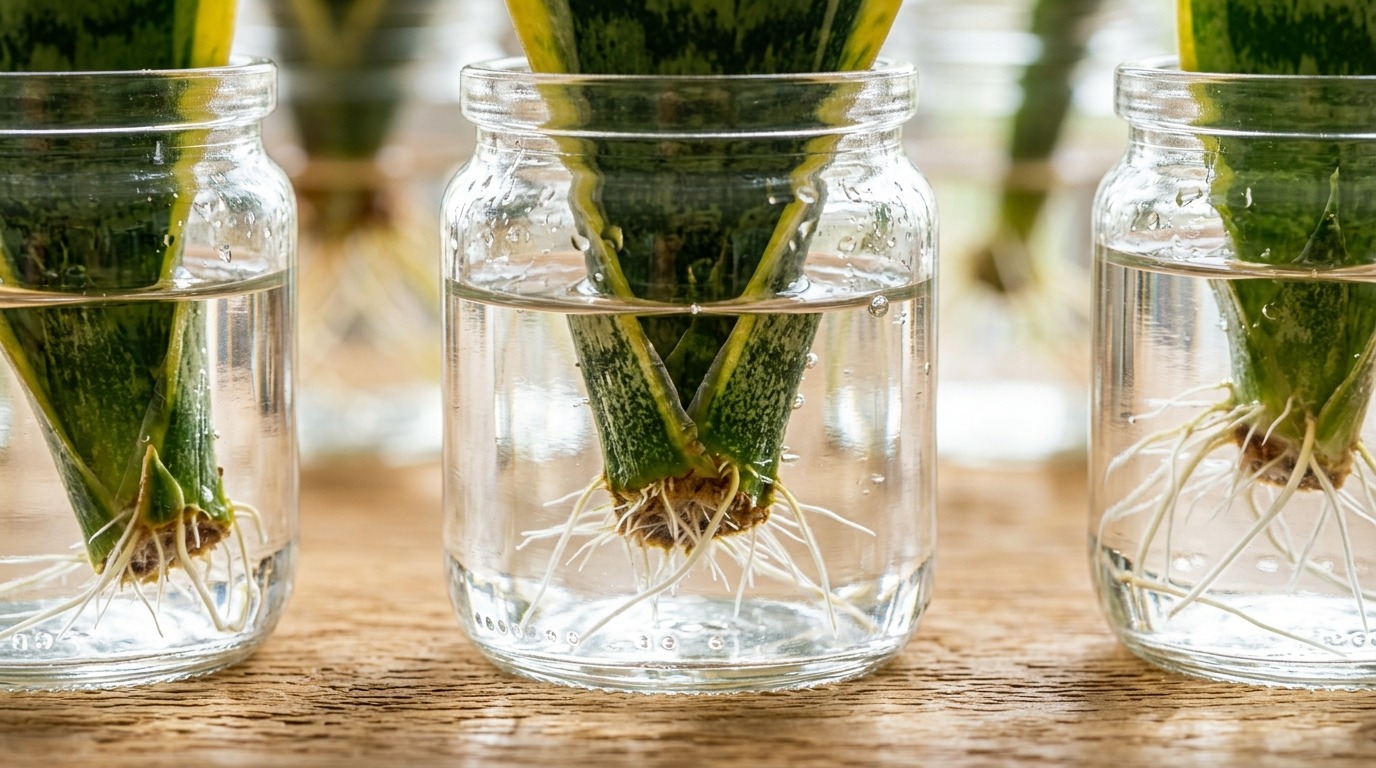
While standard horizontal cuts often flatten against the bottom of jars and suffocate emerging root primordia, the inverted chevron (V-cut) elevates the active vascular bundles above stagnation zones. This simple geometry increases surface area for root formation while ensuring continuous water circulation, preventing the anaerobic bacteria responsible for stem rot.
Why You’ll Love This Propagation Method
- Free Unlimited Houseplants: Transform a single pruning session into 5 to 10 new potted plants for your indoor jungle or gifts.
- Zero-Rot Guarantee: Inverted V-notching prevents flat contact with container bottoms, eliminating oxygen starvation.
- Visible Rooting Progress: Water propagation allows you to monitor root growth in real time before transitioning into soil.
- Pest-Free Multiplying: Clean indoor water propagation bypasses nursery soil pests like fungus gnats and root aphids completely.
Required Tools & Materials Checklist
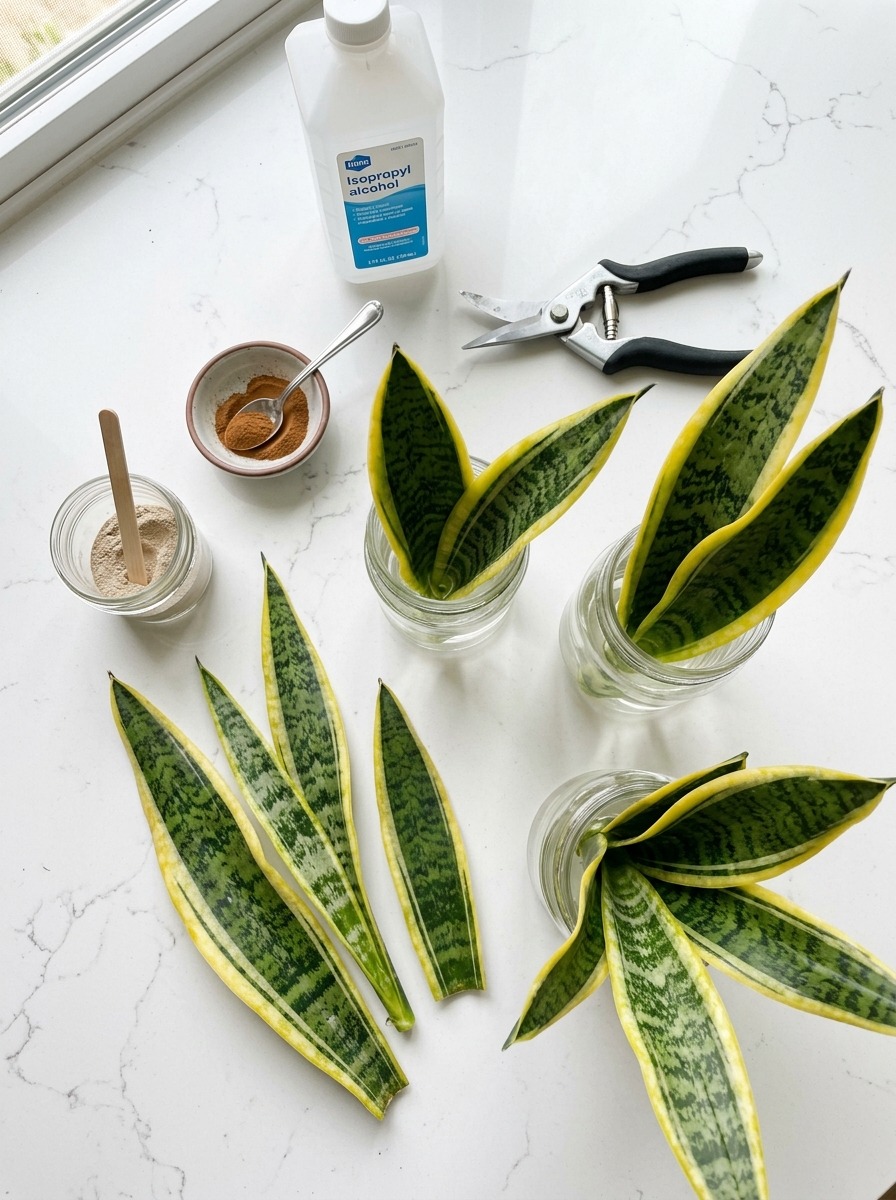
- Mother Plant Foliage: 1 or 2 firm, mature, undamaged snake plant leaves (at least 10–12 inches long).
- Sterilized Cutting Tool: Sharp bypass shears, razor blade, or utility knife sterilized with 70% isopropyl alcohol.
- Rooting Vessels: Clear glass jars or narrow propagation test tubes filled with filtered or dechlorinated tap water.
- Natural Fungicide: Organic ground cinnamon or powdered rooting hormone to dust freshly exposed cut edges.
- Potting Medium (Phase 2): A fast-draining succulent mix (50% potting soil, 30% perlite, 20% coarse pumice).
Step-by-Step Snake Plant Propagation Walkthrough
Step 1: Harvest Mature Healthy Leaves
Select thick, firm outer leaves from your mother plant. Use a sterile razor to make a clean slice right at the soil line, ensuring you do not damage surrounding rhizomes.
Step 2: Cut the Inverted V-Notch (Chevron Cut)
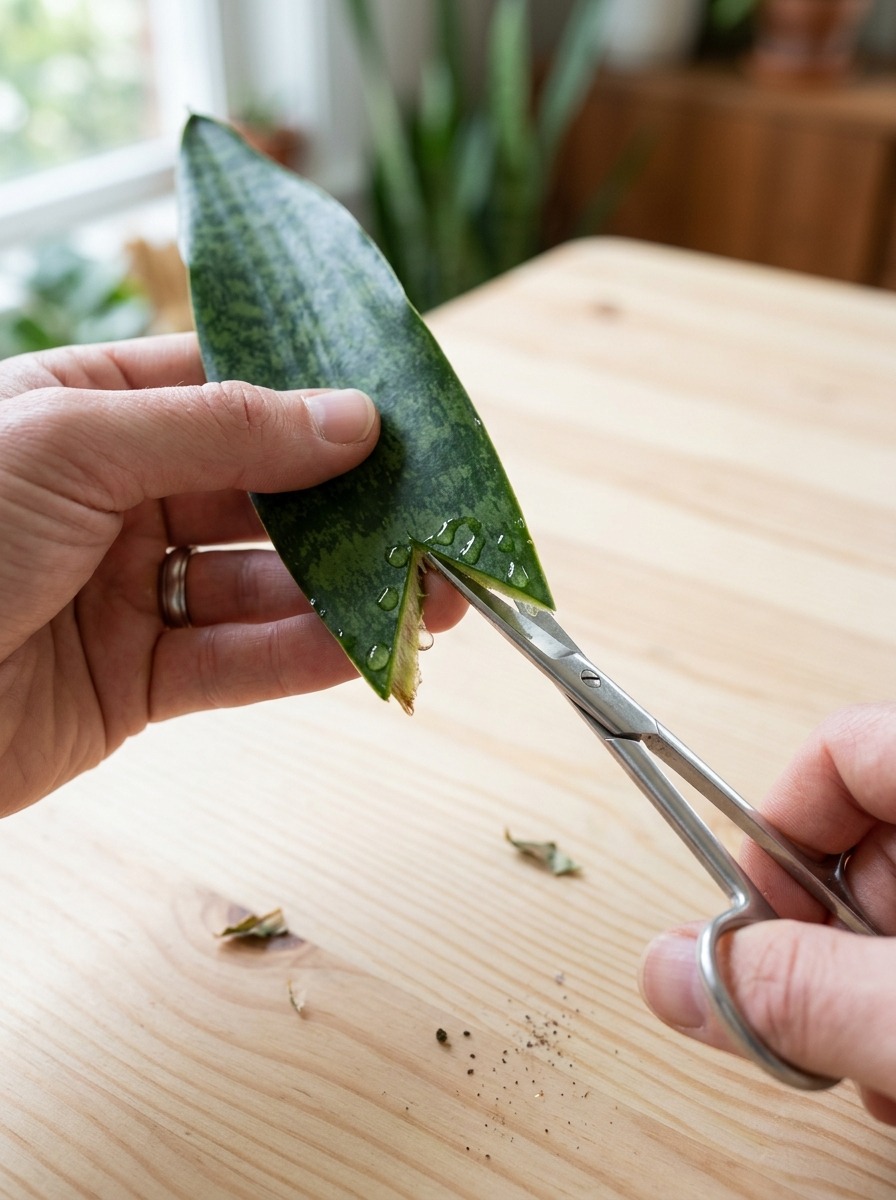
Divide long leaves into 4-to-6-inch segments. On the bottom edge of each piece (the end that grew closest to the soil), cut an inverted ‘V’ wedge approximately 3/4-inch deep. This creates two distinct contact points that prop the cutting off the container floor while doubling root surface area.
Step 3: The Crucial 48-Hour Callous Window
Never place fresh succulent cuttings immediately into water. Lay your cut segments flat on a clean paper towel in a dry, shaded room for 48 to 72 hours. The cut ends will form a tough, dry protective callous seal that acts as an impenetrable shield against fungal pathogens.
Step 4: Submerge in Shallow Filtered Water
Place calloused cuttings into your glass jars with only 1 to 1.5 inches of water covering the bottom tips. Position the jars in bright, indirect sunlight (avoid harsh direct rays that scorch foliage and promote algae). Refresh water every 7 to 10 days.
3 Botanist Secrets for Rapid Root Formation
1. Maintain Upright Polarity (Zero Inversion): Snake plant vascular tissue is strictly unidirectional. If you accidentally place a leaf segment upside down, it will never generate roots and will slowly wither. Always notch the true bottom end immediately upon slicing.
2. The Pothos Auxin Companion Hack: Drop a single golden pothos cutting into the same jar with your snake plant leaves. Pothos naturally exudes high concentrations of natural plant growth auxins into the water, accelerating snake plant root development by up to 40%.
3. Understanding Variegation Genetics (Chimeras): If you propagate variegated varieties like Sansevieria trifasciata ‘Laurentii’ via leaf cuttings, the resulting baby pups will revert to solid green. To preserve vibrant yellow margins, propagate via underground rhizome division rather than leaf cuts!
Potting Up: Transitioning Water Roots to Soil
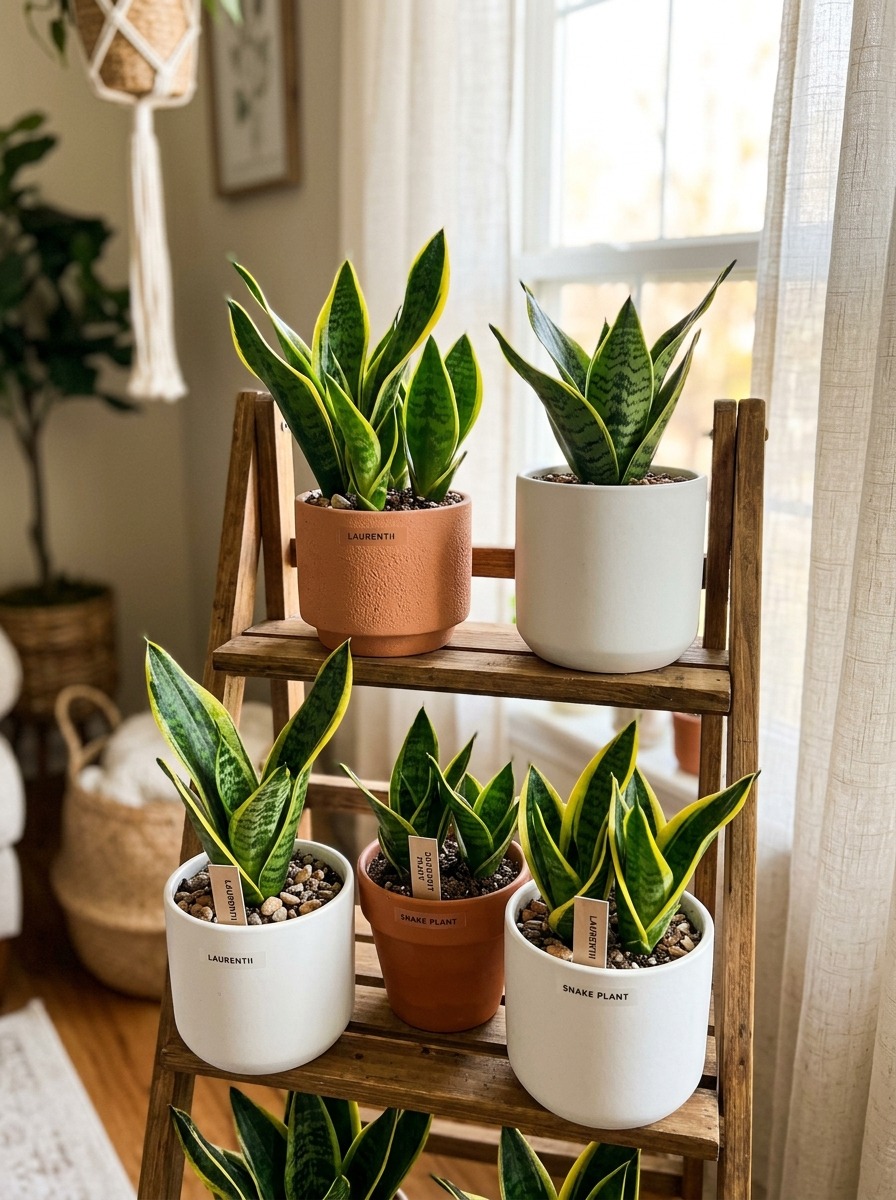
- When to Pot: Transfer cuttings to soil once white primary roots reach 2 to 3 inches in length and develop tiny secondary root hairs (usually 6 to 8 weeks).
- Pot Choice: Select a small 4-inch terracotta pot with an open drainage hole. Terracotta breathes and prevents moisture retention around succulent roots.
- First Watering: Water lightly immediately after potting, then withhold moisture for 10 to 14 days until new underground rhizomes anchor into the mix.
Seasonal Houseplant Care & Troubleshooting
- Winter Dormancy Transition: As daylight decreases in autumn, root formation slows. For broader indoor preparation tips, check our guide on how to transition houseplants indoors for fall.
- Yellowing or Squishy Leaf Base: Indicates cutting was not calloused long enough or water was too deep. Slice away soft tissue, dry for 3 days, and restart in shallow water.
- Slow Root Development: Place jars on a seedling heat mat set to 75°F (24°C) to simulate tropical soil temperatures and jumpstart root cells.
Frequently Asked Questions
How long does it take for a snake plant leaf to grow a pup?
Roots appear in 3 to 6 weeks, but miniature baby pups emerging from the leaf base typically take 2 to 4 months. Patience is key with succulent propagation!
Can I propagate snake plants directly in soil?
Yes! After callousing for 48 hours, dip the V-cut base in rooting powder and insert 1 inch deep into moist cactus soil. Keep in bright indirect light and mist lightly once weekly.
Why did my cutting turn mushy in water?
Mushiness is caused by bacterial soft rot (Erwinia), which happens when uncalloused raw wounds touch water, or when water isn’t refreshed regularly.
Pin This Snake Plant Guide to Your Houseplants Board
Love indoor plants? Save this step-by-step V-cut propagation guide to your Pinterest board so you have the foolproof rooting secret ready for your next pruning day!