
Few succulents look as mesmerizing as a flourishing String of Pearls (Senecio rowleyanus) cascading feet below a hanging ceramic pot. Yet, countless plant lovers watch their pearls turn into mushy brown sludge within weeks of bringing them home. Growing dense, plump, meter-long beaded vines requires mastering epidermal window light exposure and the soak-and-shrivel watering rhythm.
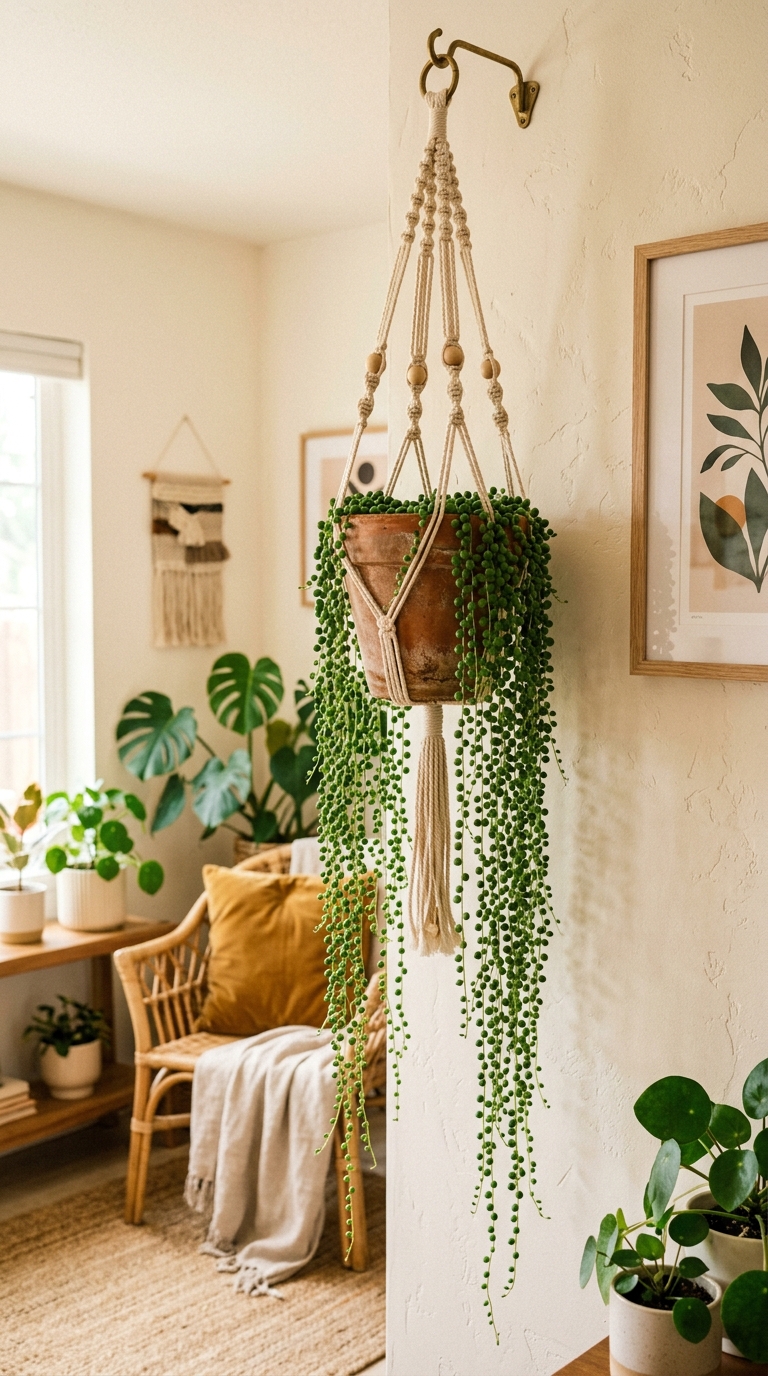
Each pea-shaped pearl is a modified spherical succulent leaf equipped with a narrow, translucent slit called an epidermal window. This window channels light deep into the leaf interior, allowing the plant to photosynthesize even in harsh arid native South African habitats while minimizing surface moisture loss.
- Difficulty: Intermediate
- Growth Rate: Fast (12–18 inches per year)
- Sunlight Needs: Bright Indirect + Top-Crown Sunlight
- Watering Rhythm: Soak & Dry (Every 14–21 Days)
- Soil Composition: 70% Inorganic Grit / 30% Succulent Soil
Why You’ll Love This Method
- Stunning Cascading Architecture: Creates a dramatic living curtain of spherical green beads up to 3 to 5 feet long.
- Clear Visual Thirst Signals: Pearls physically shrivel and close their epidermal slits when thirsty, eliminating watering guesswork.
- Rapid Spring Propagation: Stems root within 7 to 10 days when pinned to moist gritty substrate.
- Drought Resilient: Easily tolerates 3-week vacations without missing a beat.
Essential Materials, Tools & Smart Swaps
- Porous Terracotta Hanging Pot (with Drainage): Terracotta wicks excess root zone moisture and prevents anaerobic rot.
- Bonsai Grit, Pumice or Perlite (70%): Coarse mineral particles that guarantee instant water percolation.
- Organic Cactus Potting Soil (30%): Provides basic organic anchor without waterlogging delicate shallow root systems.
- Bobby Pins or Floral U-Pins: Used to secure trailing vines across topsoil to induce multi-point root nodes.
Step-by-Step Practical Walkthrough
1. Expose the Crown to Direct Top Light: Hang the pot where natural sunlight strikes the TOP of the soil, not just the cascading strings. Top light is essential to prevent crown balding.
2. Pot into Ultra-Fast Draining Substrate: Blend 70% pumice/perlite with 30% succulent mix. Never use standard potting soil.
3. Coil Bare Vines Across the Topsoil: Take trailing stems and coil them across bare soil surface; anchor with bobby pins at leaf nodes to create a thick, bushy crown.
4. Read the Epidermal Slit Before Watering: Water ONLY when the round pearls develop slight indentations and their translucent epidermal windows narrow.
5. Execute a Deep Bottom-Soaking: Submerge the pot base in 2 inches of water for 20 minutes until topsoil is barely damp, then drain completely.
3 Master Gardener Secrets for 100% Success
1. Crown Balding is Caused by Light Starvation: When String of Pearls dies from the top down, it is almost always due to hanging too high where the top of the pot receives zero direct light. Keep the rim level with the window frame.
2. Never Mist Pearls with Water: Misting traps water droplets between dense beads, triggering fungal bacterial rot. Always bottom-water or water the soil directly.
3. Fertilize with Low-Nitrogen Cactus Food: Feed once a month during spring and summer with a 1-2-2 diluted fertilizer to promote firm, spherical beads rather than elongated leggy growth.
Ideal Trailing Succulent Companions
- String of Hearts (Ceropegia woodii): Shares identical light and drought preferences with delicate pink-mottled heart foliage.
- String of Turtles (Peperomia prostrata): Adds intricate miniature shell patterns to multi-tiered hanging displays.
- Burro’s Tail (Sedum morganianum): Provides thick, silvery-blue braided texture alongside emerald pearl beads.
- String of Dolphins (Senecio peregrinus): Whimsical leaping-dolphin foliage that thrives in matching terracotta containers.
Seasonal Timing, Storage & Maintenance
- Winter Rest Period: Reduce watering to once every 3 to 4 weeks during winter dormancy; keep away from cold window drafts.
- Pruning Protocol: Trim leggy or bare vines with sterile shears in early spring; replant cuttings directly into the mother pot.
- Temperature Limits: Thrives between 65°F–80°F (18°C–27°C); protect from freezing temperatures below 50°F (10°C).
Frequently Asked Questions
Why are my pearls turning mushy and translucent?
Mushy translucent pearls indicate severe overwatering and root rot. Immediately unpot the plant, trim rotted black roots, and repot in dry gritty soil.
How do I make my String of Pearls fuller on top?
Pin long trailing vines in circular spirals across the soil using bobby pins. Each node will sprout new adventitious roots and vertical growth shoots.
Are String of Pearls toxic to cats and dogs?
Yes. Senecio species contain pyrrolizidine alkaloids that can cause mild drooling or digestive upset if ingested. Hang out of reach of pets.
Pin This Gardening Guide for Later
Save this String of Pearls care guide to your Houseplant Care or Succulent Propagation Pinterest board for lush cascading vines!