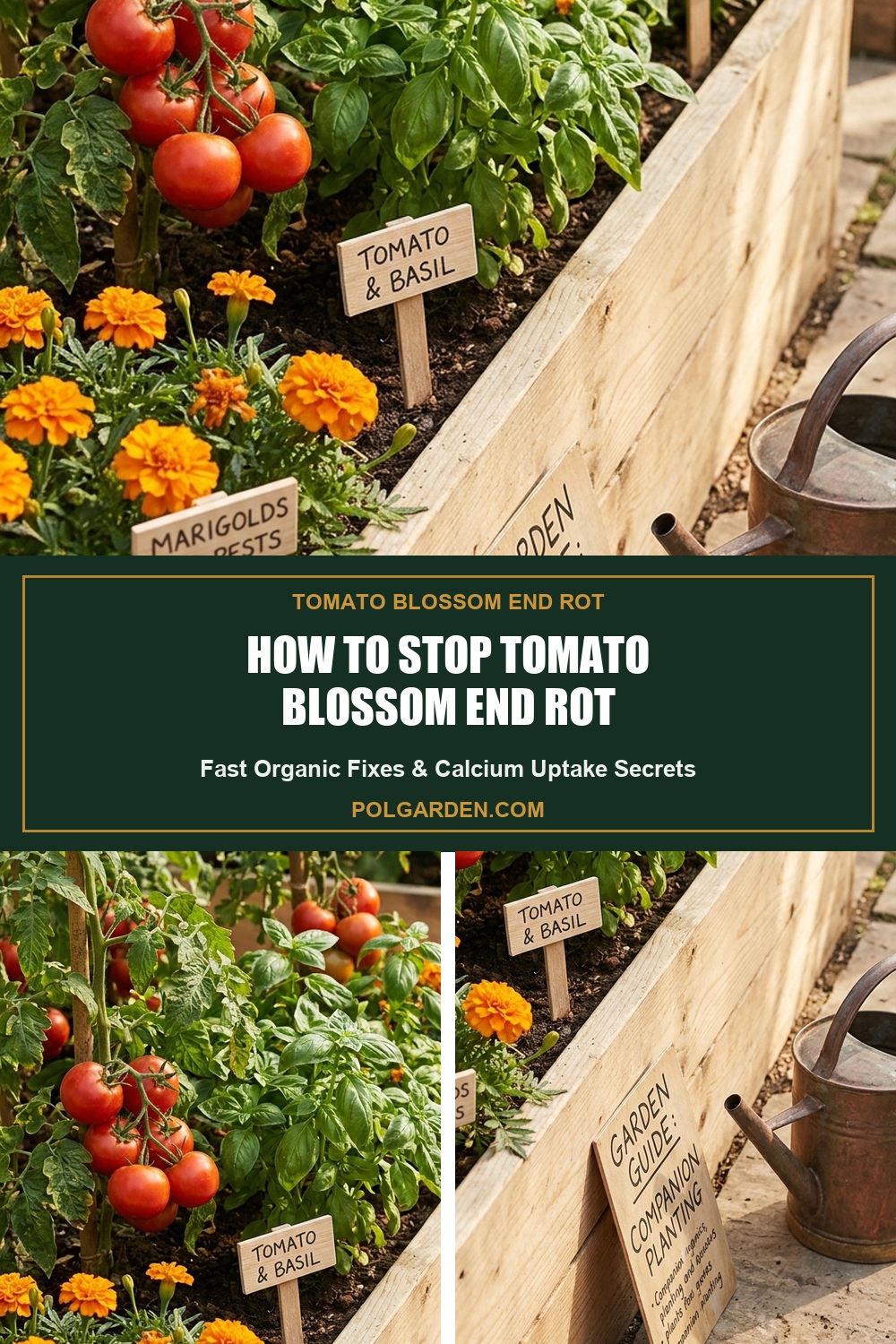

There is nothing more disappointing than waiting weeks for your tomatoes to ripen, only to discover a sunken, leathery black patch on the bottom of each fruit. This is Blossom End Rot (BER). While alarming, it is completely preventable once you understand what triggers it.
What Causes Blossom End Rot?
Blossom End Rot is a physiological disorder caused by a localized calcium deficiency in developing fruit tissue. However, in 90% of garden cases, the soil actually has plenty of calcium — the problem is that inconsistent watering prevents the plant from transporting calcium up into the fruit cells.
Key Facts About Blossom End Rot
- It is not a disease, virus, or fungus — it cannot spread from plant to plant.
- Affected fruits will not heal; pick them off immediately so the plant focuses energy on healthy new blooms.
- Consistent moisture is the true secret to preventing calcium lockout.
4 Steps to Stop Blossom End Rot Fast
1. Master Consistent Deep Watering
Tomatoes need deep, regular watering rather than frequent shallow sips. Aim for 1 to 2 inches of water per week. Keep soil evenly moist like a wrung-out sponge.
2. Apply a 3-Inch Organic Mulch Layer
Cover the root zone with clean straw, shredded leaves, or wood chips. Mulch prevents soil moisture from evaporating rapidly during hot afternoons, ensuring steady calcium absorption.
3. Check Soil pH (Aim for 6.2 to 6.8)
If soil is overly acidic (below 6.0), calcium becomes chemically bound and unavailable to plant roots. Add agricultural lime or crushed oyster shells to balance pH.
4. Avoid High-Nitrogen Chemical Fertilizers
Excessive synthetic nitrogen causes rapid leafy vegetative growth that hogs calcium away from developing tomato fruits. Use balanced organic fertilizers rich in potassium and bone meal.