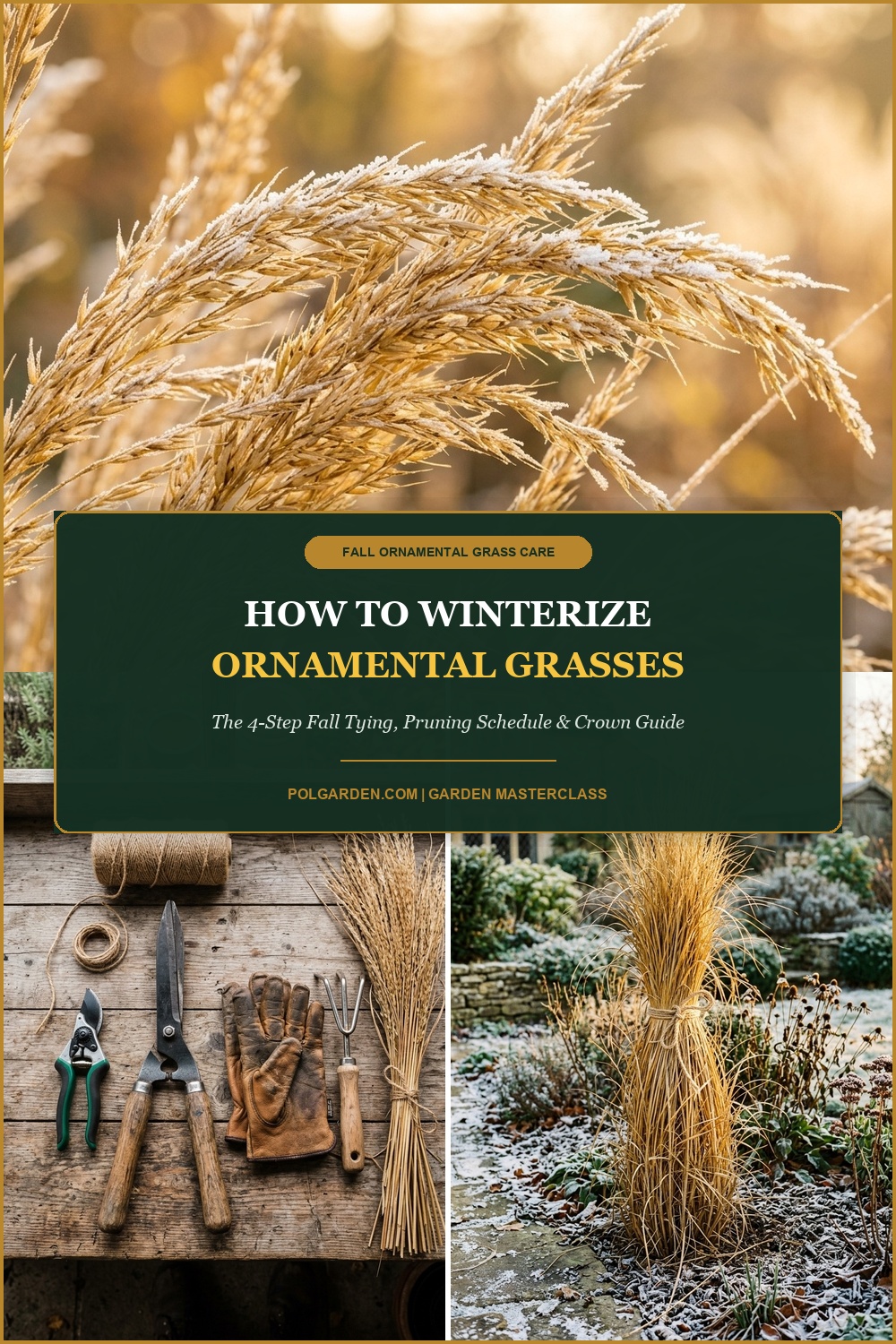
Ornamental grasses are the poetic soul of the late-autumn landscape, providing unmatched kinetic motion, rustling whispers in cold breezes, and luminescent golden plumes that catch the low autumn sun. From towering Maiden Grass (Miscanthus) and dramatic Feather Reed Grass (‘Karl Foerster’) to compact Fountain Grass (Pennisetum) and native Switchgrass (Panicum), these resilient perennials anchor the garden through dreary weather. Yet as the gardening season winds down, one of the most common—and biologically destructive—mistakes gardeners make is shearing ornamental grasses down to the soil in October, leaving vulnerable root crowns completely defenseless against freezing winter rain and ice.

The botanical reason why grasses should never be cut to the ground in fall lies in the internal anatomy of their hollow culms (stems). When you shear an ornamental grass clump in autumn, you convert hundreds of hollow stems into miniature open drinking straws that channel cold autumn rainwater, freezing sleet, and melting snow directly into the heart of the dormant crown. Water collects in the root plate, freezes solid during polar snaps, and creates an anaerobic, ice-locked environment that invites devastating fungal crown rot (Rhizoctonia and Fusarium). By leaving foliage intact or bundling it into protective upright sheaves, you create a natural thatched roof that sheds water away from the crown while preserving vital wildlife shelter.
Why You’ll Love This Fall Grass Strategy
- Total Crown Rot Prevention: Shields the plant’s delicate growing center from standing winter water, ice-plugging, and freezing rain.
- Stunning Winter Architectural Interest: Preserves dramatic golden silhouettes, feathered plumes, and textural movement against bleak snowy backdrops.
- Vital Winter Wildlife Sanctuary: Supplies critical high-energy seeds and insulated roosting shelter for American goldfinches, juncos, chickadees, and beneficial insects.
- Effortless Spring Clean-Up: Bundling canes in fall makes late-winter pruning ten times faster, allowing you to slice through the entire clump in one clean stroke.
Essential Fall Supplies & Tying Gear
Winterizing ornamental grasses requires heavy-duty personal protection against razor-sharp foliage edges and durable natural binding materials.

- Heavy-Duty Bypass Loppers or Hedge Shears: Long-handled shears with hardened steel blades make fast work of fibrous, silica-heavy grass culms without straining wrists.
- Thick Biodegradable Jute Twine or Burlap Strips: Natural fiber twine holds heavy clumps firmly against winter winds without cutting into brittle stems or creating plastic micro-waste.
- Heavy Leather Gauntlet Gloves: Essential protection; mature ornamental grasses (especially Miscanthus and pampas grass) have microscopic serrated silica teeth along their leaf margins that produce painful paper-cut-like lacerations.
- Bungee Cords (The Pro Tying Hack): Standard elastic bungee cords hold giant grass clumps together temporarily, freeing both hands to wrap and knot your permanent jute twine.
- Shredded Bark or Pine Needle Mulch: Light, well-draining organic mulch provides root insulation without trapping water directly against the central crown.
Step-by-Step Grass Winterizing Walkthrough
Follow these four chronological steps from late October through the first hard sustained freeze to winterize both warm-season and cool-season ornamental grasses.
Step 1: Understand Grass Physiology (Warm-Season vs. Cool-Season)
Before touching your grasses, determine whether you are growing warm-season or cool-season species:
- Warm-Season Grasses (Do NOT Cut Back in Fall): Includes Miscanthus (Maiden Grass), Panicum virgatum (Switchgrass), Pennisetum (Fountain Grass), Schizachyrium scoparium (Little Bluestem), and Sorghastrum nutans (Indiangrass). These grasses go fully dormant and turn golden-bronze after the first hard freeze. They hollow out as they dry, making autumn pruning fatal. Golden Rule: Tie in fall, cut back in late winter.
- Cool-Season Grasses (Minimal Autumn Care): Includes Calamagrostis x acutiflora (‘Karl Foerster’ Feather Reed Grass), Festuca glauca (Blue Fescue), and Helictotrichon sempervirens (Blue Oat Grass). These species remain active during cool autumn weather and stay semi-evergreen. Never shear blue fescue in fall; simply comb out dead blades with gloved fingers. ‘Karl Foerster’ has rigid, upright stems that can stand unbundled or be tied lightly.
Step 2: The “Sheaf & Tepee” Tying Protocol
Instead of cutting warm-season grasses down, bundle their dry foliage into an attractive upright “shock” or sheaf. Tying compresses the foliage into a conical thatch that sheds rain and snow outward, keeping the central crown bone dry.

Wearing protective leather gauntlets, wrap an elastic bungee cord around the middle of the clump to pull the sprawling blades inward. Next, take your natural jute twine and tie two to three secure bands around the clump: one band approximately 12 to 18 inches above the ground, a second band around the midpoint, and a third band near the top beneath the seedheads.
Tie the knots firmly using a double square knot. This neat columnar bundle prevents heavy, wet snowloads from splaying the clump open and stops winter gales from blowing loose, messy blades across your lawn and driveway.
Step 3: Perimeter Debris Clearing & Crown Sanitation
Dense grass clumps act like giant wind nets, catching fallen deciduous tree leaves, soggy mulch, and windblown litter at their base. Allowing a thick layer of wet, matted tree leaves to rest against the base of your grass sheaf creates an ideal environment for voles, mice, and crown rot fungi.
Use a narrow hand rake or gloved hands to pull away all decaying tree leaves, weeds, and fallen debris from the lower 6 inches around the base of the clump. Exposing the soil immediately adjacent to the crown encourages air circulation and discourages small rodents from nesting in the warm center of the clump and chewing on tender dormant roots.
Step 4: Root Insulation & Drainage Mulch Collar
While mature in-ground ornamental grasses are deeply cold-hardy, newly planted specimens (installed within the current growing season) have shallow root systems susceptible to frost heaving—the repeated freeze-thaw cycle that pushes root balls out of the ground.
Spread a 2- to 3-inch layer of coarse organic mulch (such as shredded pine bark, wood chips, or pine needles) in a 24-inch circle around the perimeter of the tied clump, extending over the root drip zone. Crucial rule: Keep the mulch 2 to 3 inches away from the actual base of the stems. Never pile mulch like a volcano against the grass culms. Mulching the root perimeter keeps soil temperatures stable while allowing the crown itself to breathe.
3 Master Horticulturist Secrets for Spectacular Grasses
Elevate your ornamental grass displays to commercial botanical garden standards with these proven cultivation insights:
1. The “Two-Step Pruning” Calendar (Never Rush Spring): The exact moment to prune your tied grass sheaves is in late winter (late February to mid-March), just as winter breaks but before new green shoots emerge. If you wait too long and new green blades grow 3 inches into the clump, you will inevitably shear off the tips of the new leaves, leaving jagged, brown-tipped foliage that disfigures the plant all summer.
2. The 5-Inch Cutting Height Rule: When performing your late-winter cutback, cut warm-season grasses back to approximately 4 to 6 inches (10–15 cm) above the ground. For giant grasses like Miscanthus, cutting at 6 inches preserves the root crown while leaving a tidy, clean platform. For smaller fescues and blue oat grasses, never cut to the ground—simply trim dead ends lightly with scissors.
3. The 4-Year “Doughnut Hole” Division Window: Over 4 to 6 years, the center of an ornamental grass crown naturally dies out as outer growth expands, leaving an unsightly empty doughnut hole. Early spring—just as growth begins—is the ideal window to renovate. Dig up the entire root clump using a sharp spade, cut out and discard the dead woody center, and divide the vigorous outer ring into fist-sized chunks with 3–5 eyes for replanting.
Companion Care & Perennial Cottage Border Pairings
Ornamental grasses reach their pinnacle of beauty when woven among late-season perennials and structured woody borders that share unified autumn maintenance schedules.

- Sedum & Grass Border Harmony: Upright stonecrops and feather reed grasses are the iconic pairing of modern naturalistic borders; synchronize your autumn routine with our masterclass on how to winterize sedum and protect succulent crowns.
- Cottage Trellis Background Accents: Tall grass plumes create a soft, moving backdrop behind climbing vines on garden trellises; coordinate your care with our field guide on how to prune and winterize clematis across Groups 1, 2 and 3.
- Perennial Cottage Border Anchors: Herbaceous peonies planted in front of tall maiden grasses offer lush contrast; protect them from winter spores using our protocol for cutting back peonies in fall to eliminate fungal blight.
- Mediterranean Sun-Lover Companions: Aromatic drought-tolerant companions like English lavender require similar dry winter soil conditions; review our protection tips on overwintering lavender and winter root protection.
Spring Awakening & The Clean-Cut Routine
When late winter arrives and the danger of severe polar freezes has passed, your tied sheaves make pruning remarkably effortless. Because the stems are already bound tightly together with twine, you don’t have to chase blowing blades across the garden.
Simply take your sharp hedge shears or a clean, serrated pruning saw and cut straight through the entire tied bundle 4 to 6 inches above the soil line in a single pass. The entire bundle lifts away cleanly as a solid sheaf, ready to be dropped into your wheelbarrow or compost bin. Rake away the loose stubble, and within two weeks, fresh emerald-green shoots will surge upward through the trimmed crown.
Frequently Asked Questions
What happens if I cut my ornamental grasses back in the fall?
Cutting warm-season grasses back in autumn opens their hollow stems directly to winter moisture. Water and melted snow enter the open culms, settle into the crown, and freeze solid during cold snaps. This frequently results in winter crown rot, killing the center of the plant or completely destroying the clump before spring.
How do I winterize tender grasses like Purple Fountain Grass (Pennisetum setaceum ‘Rubrum’)?
Purple fountain grass is a tropical perennial hardy only to USDA Zone 9. In Zones 8 and colder, it cannot survive outdoors. You can dig up the root ball before the first frost, pot it into a container with well-draining soil, cut the foliage back to 6 inches, and store it in an unheated, frost-free basement or garage, watering only once every 4 to 6 weeks. Alternatively, treat it as an annual and replace it in spring.
What is the easiest way to cut through thick, woody grass clumps?
For massive, mature clumps of Miscanthus or pampas grass, hand pruners can be exhausting. Professional horticulturists often use a clean, sharp gas or battery-powered hedge trimmer, or a traditional curved, serrated Japanese harvest knife (hori-hori / grass sickle). Always wear eye protection and heavy leather gauntlets.
Do ornamental grasses grown in containers survive winter outside?
Container-grown grasses are exposed to much colder root temperatures (typically 10°F to 20°F colder than in-ground roots). In Zones 6 and colder, wrap the container in bubble wrap and burlap, or move the potted grass into an unheated garage, shed, or sheltered corner against your home’s foundation to protect the root ball from freezing solid.
Pin This Ornamental Grass Winterizing Guide for Later
Love elegant, four-season garden borders? Save this pin to your Pinterest Gardening or Fall Care boards so you always have the tying techniques and spring pruning schedule ready every autumn!