Most home gardeners mistakenly treat pepper plants as tender annuals, letting frost claim their productive summer bushes every October. Botanically, all pepper varieties (Capsicum annuum, chinense, baccatum, and frutescens) are tropical perennials capable of thriving and producing for a decade or more. Turning your mature autumn garden peppers into compact, living bonsai masterpieces—known internationally as “Bonchi”—is the ultimate space-saving technique to protect your genetics, harvest fresh chilis all winter, and guarantee massive yields months ahead of seed-sown crops.
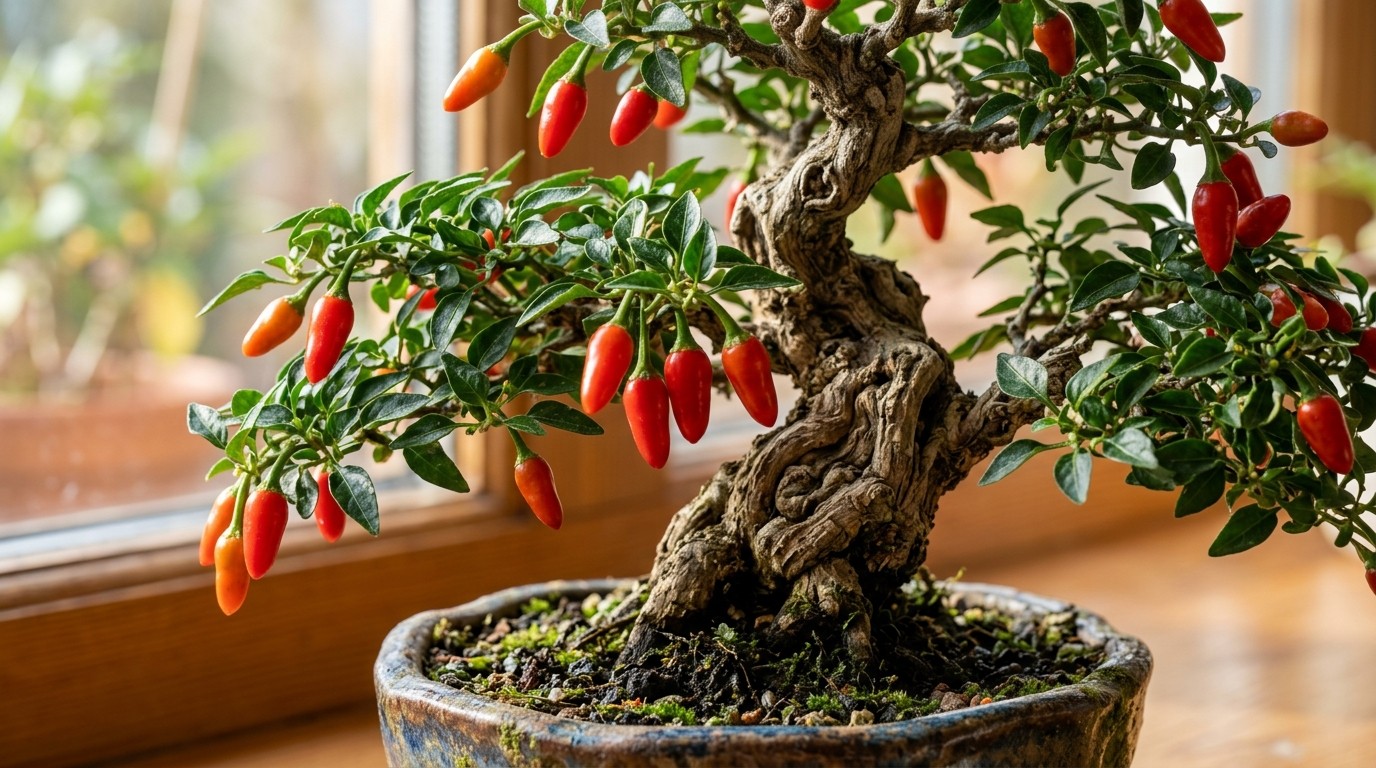
The term “Bonchi” merges traditional Japanese bonsai artistry with productive chili cultivation. Because garden-grown pepper plants develop thick, gnarled, lignified trunks over a single summer, they provide the exact aged aesthetic that standard bonsai trees take decades to achieve. By pruning back sprawling summer canopies and reducing root balls into shallow ceramic pots, you transform bulky garden vegetables into striking, low-maintenance ornamental houseplants.
Why You’ll Love Overwintering Peppers as Bonchi
- Exponential Spring Head-Start: Overwintered plants boast thick established root reserves, flowering 6 to 8 weeks earlier in spring than seed starts.
- Space-Saving Indoor Footprint: Shrink a massive 4-foot outdoor bush into a gorgeous 8-inch tabletop plant that fits comfortably on any sunny windowsill or bookshelf.
- Continuous Off-Season Harvests: Varieties like Thai Hot, Habanero, and Pequin continue setting fiery ornamental pods under basic indoor lighting.
- Preserve Rare Cultivars: Keep expensive or cross-pollinated heirloom pepper genetics alive year after year without risk of seasonal seed loss.
Key Tools & Bonchi Setup Essentials
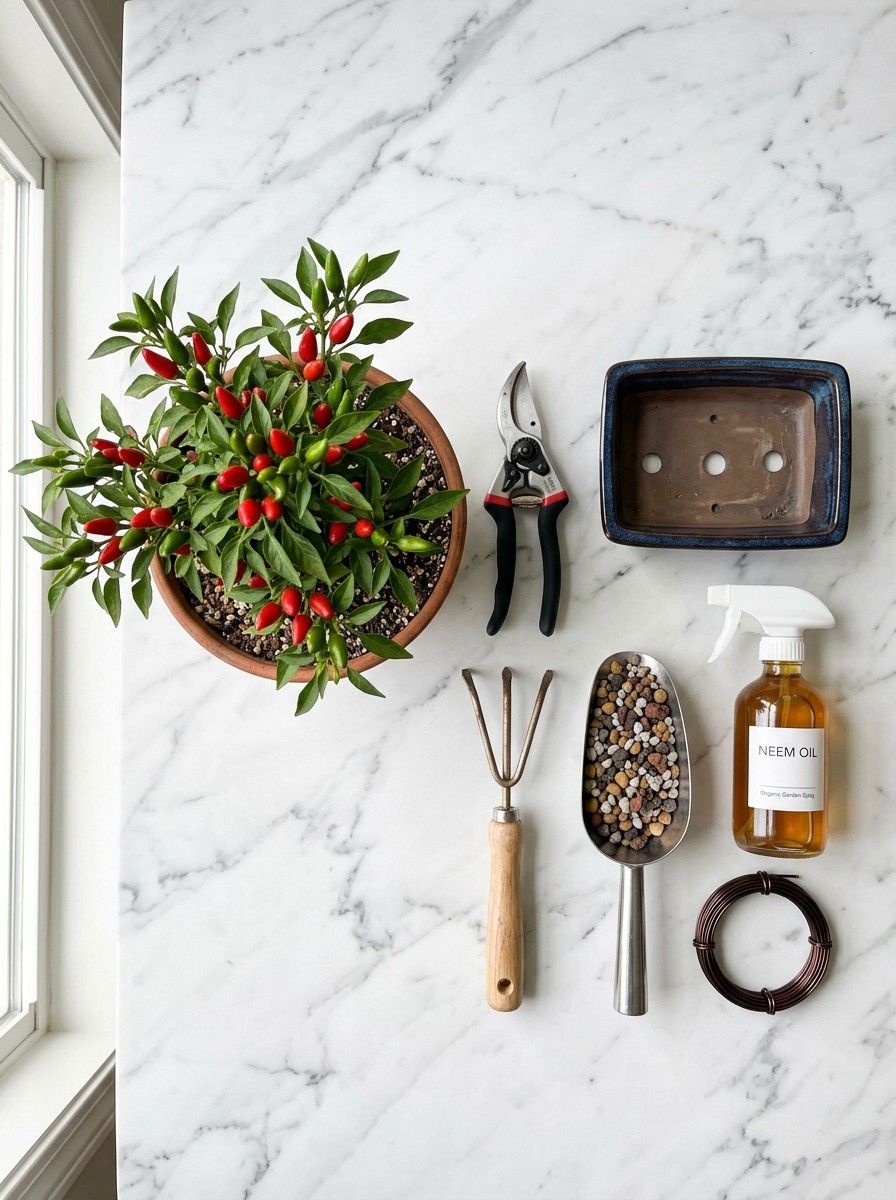
- Bypass Secateurs & Bonsai Scissors: Razor-sharp pruning blades ensure clean cuts through tough woody stems without splintering the vascular tissue.
- Root Rake or Root Hook: Essential for untangling compact field soil and gently combing out fragile root structures without snapping the main taproot.
- Well-Draining Substrate: A 50/50 blend of high-grade potting soil and inorganic aggregates (pumice, perlite, or fired akadama clay) prevents winter root rot.
- Shallow Ceramic Bonsai Pots: Choose pots with ample drainage holes to accommodate the reduced root disk and restrict excessive vegetative growth.
Step-by-Step Bonchi Pruning Walkthrough
1. Pre-Frost Timing & Fruit Clearing: Begin your conversion 2 to 3 weeks before the first expected autumn frost. Harvest all ripe and green peppers from the plant to relieve metabolic demand on the roots. Inspect the entire bush for aphids and spider mites, and apply a thorough organic neem oil spray 24 hours prior to bringing the plant indoors.
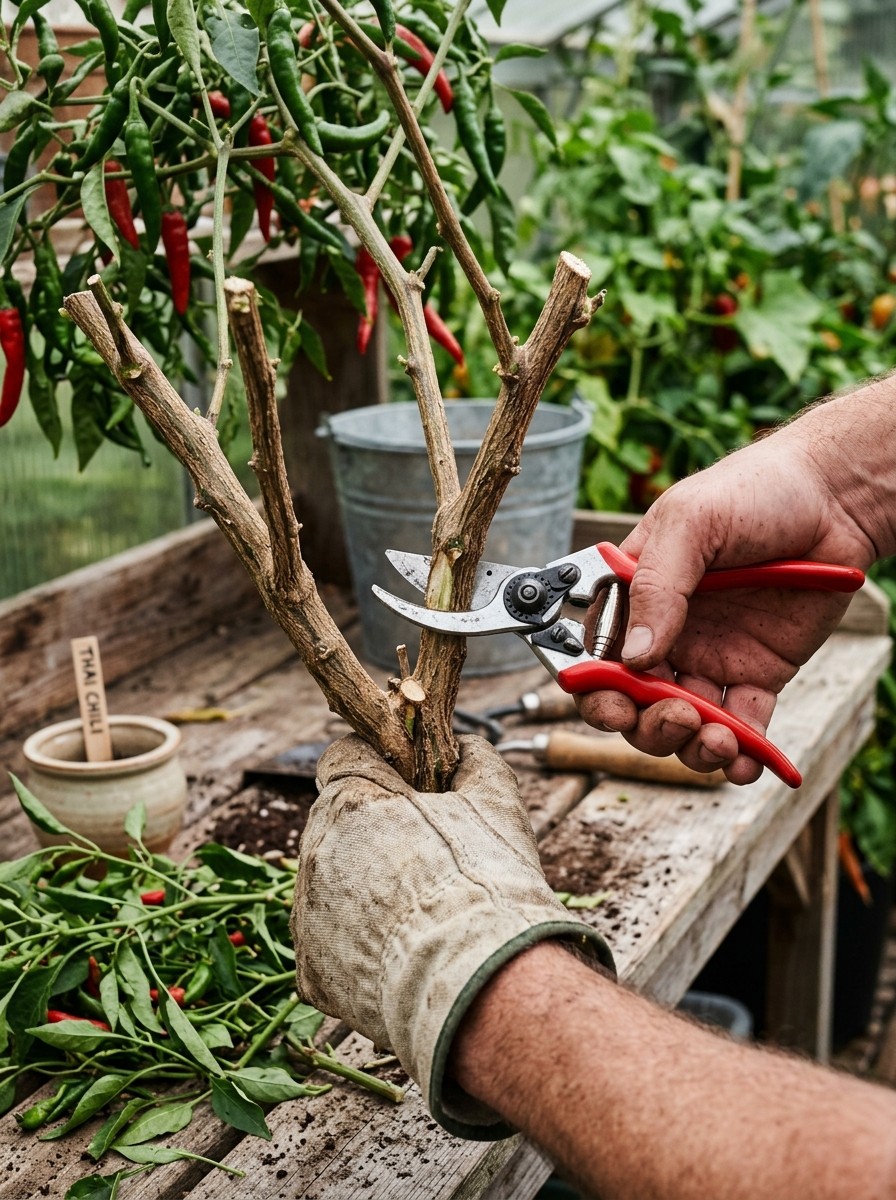
2. The Radical Canopy Hard-Prune: Do not be afraid of drastic cuts. Locate the thickest lower section of the main trunk and identify several outward-facing dormant nodes (small bumps along the bark). Using sanitized bypass pruners, cut the entire upper canopy away at a 45-degree angle, leaving a compact trunk roughly 4 to 8 inches tall with 2 to 3 primary branch stubs.
3. Excavation and Root Ball Reduction: Dig a wide trench around the root zone (or gently unpot container plants). Shake away coarse garden soil, then submerge the root mass in a bucket of water to wash away residual field dirt and lurking pests. Using sharp shears, prune the root system down by roughly two-thirds, trimming away thick downward taproots while preserving a fine network of fibrous feeder roots that fit your bonsai container.
4. Potting & Settling: Place mesh over the drainage holes of your bonsai container. Add a thin gravel base layer, position the sculpted pepper trunk, and work your well-draining soil mix firmly around the root network using a chopstick to eliminate air pockets. Water thoroughly until liquid flows freely from the base drainage ports.
3 Chef & Horticulturist Secrets for Indoor Success
1. Strictly Control Winter Watering: With 90% of its foliage removed, your bonchi uses a fraction of the water it consumed in July. Water strictly when the top inch of soil feels bone dry to the touch. Overwatering dormant roots in cool indoor air is the single most common cause of fatal fungal root rot.
2. Target 60°F–70°F (15°C–21°C) Room Temperatures: Keep your bonchi away from drafty exterior doors or direct heat vents. Mild room temperatures stimulate healthy node development without forcing leggy, pale vertical growth that weakens the plant’s structural silhouette.
3. Defoliate & Pinch Lateral Shoots: Within 14 to 21 days of pruning, dozens of tiny green leaves will burst from dormant trunk nodes. As new branches grow, pinch out the terminal leaf tips after every 2 to 3 leaf pairs. This continuous pinching restricts internode length, resulting in authentic miniature bonsai leaves that match the scale of the small tree.
Winter Lighting & Care Integrations
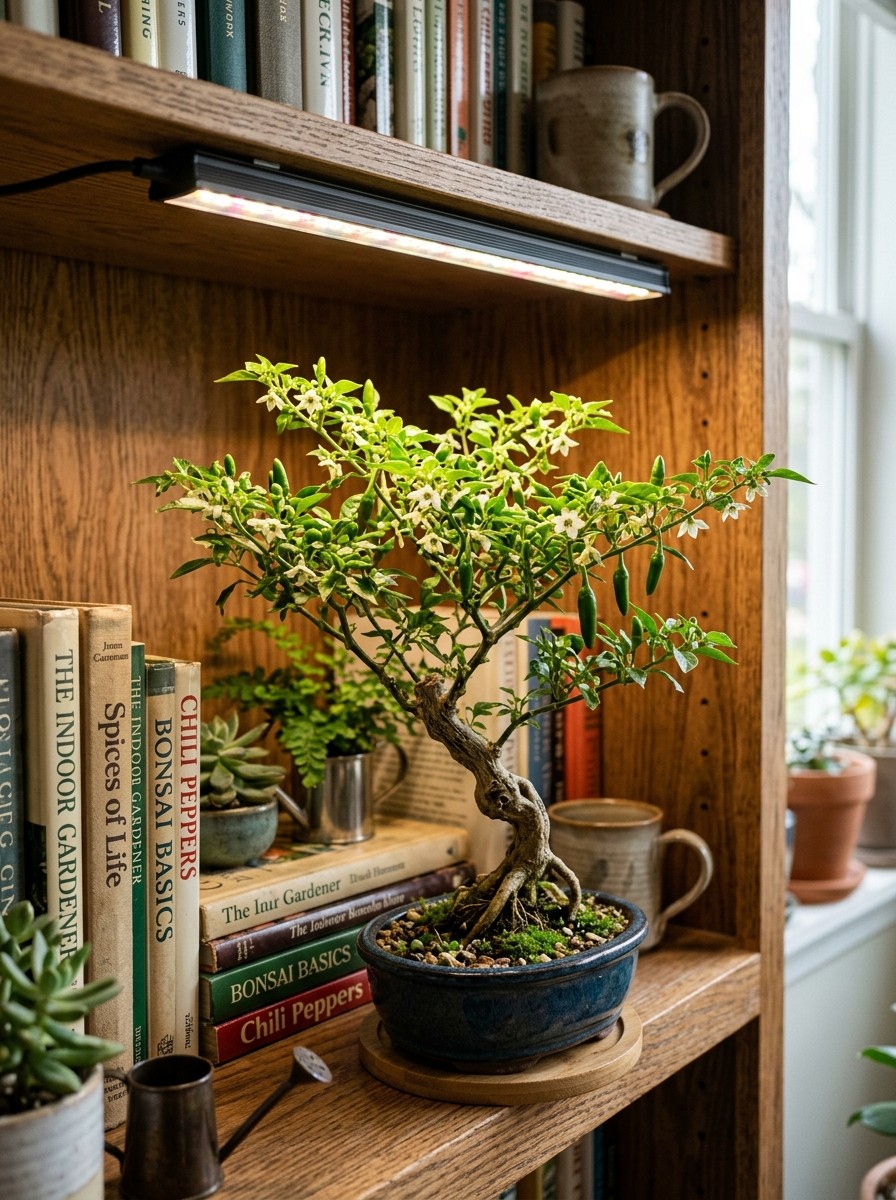
- Indoor Grow Station Setups: Enhance winter light levels by exploring our complete indoor garden ideas and light setups.
- Winter Garden Bed Protection: After excavating your outdoor pepper crops, safeguard empty beds with our autumn garden bed mulching protocol.
- Spring Propagation Synergy: In late February, take tender spring cuttings from your bonchi new shoots to clone new plants using our clean propagation cutting techniques.
Troubleshooting Bonchi Pests & Leaf Drop
- Sudden Leaf Drop: Normal shock response following radical root pruning. As long as the trunk bark remains green when scratched lightly with a fingernail, new growth will emerge within 2 weeks.
- Aphid Infestations on Tender New Shoots: Indoor winter heating creates ideal conditions for dormant aphid eggs to hatch. Wipe stems weekly with a soft cloth dipped in mild castile soap or diluted neem oil.
- Yellowing Lower Leaves: Indicates excessive moisture retention in the potting mix. Increase perlite content or reduce watering frequency immediately.
Frequently Asked Questions
Which pepper varieties make the best Bonchi bonsai trees?
Small-leaved, naturally compact varieties with diminutive fruits create the most proportional bonsai look. Exceptional choices include Thai Bird’s Eye, Tabasco, Pequin, Habanero, and ornamental chilis like Black Pearl or Numex Twilight. Large bell peppers can be overwintered as bonchi, though their oversized fruits look less proportionate on miniature trunks.
Can I replant my Bonchi back into the outdoor garden next spring?
Absolutely! Once nighttime temperatures stay reliably above 55°F (13°C) in late spring, you can either step up the plant into a large patio pot or transplant it directly into your outdoor garden soil. The massive established root ball will produce an explosive canopy that yields up to double the harvest of ordinary annual plants.
How many years can a single chili pepper plant survive as a Bonchi?
Under proper indoor winter care, chili pepper plants routinely live and produce for 5 to 10 years or more. Some documented ornamental and wild Capsicum bonchi specimens have thrived for over 15 years, developing thick hollowed trunks resembling ancient miniature oak trees.
Pin This Gardening Blueprint for Later
Love this bonchi guide? Save this pin to your Fall Gardening and Indoor Plant boards on Pinterest so you have these pruning and overwintering steps ready before the cold weather sets in!