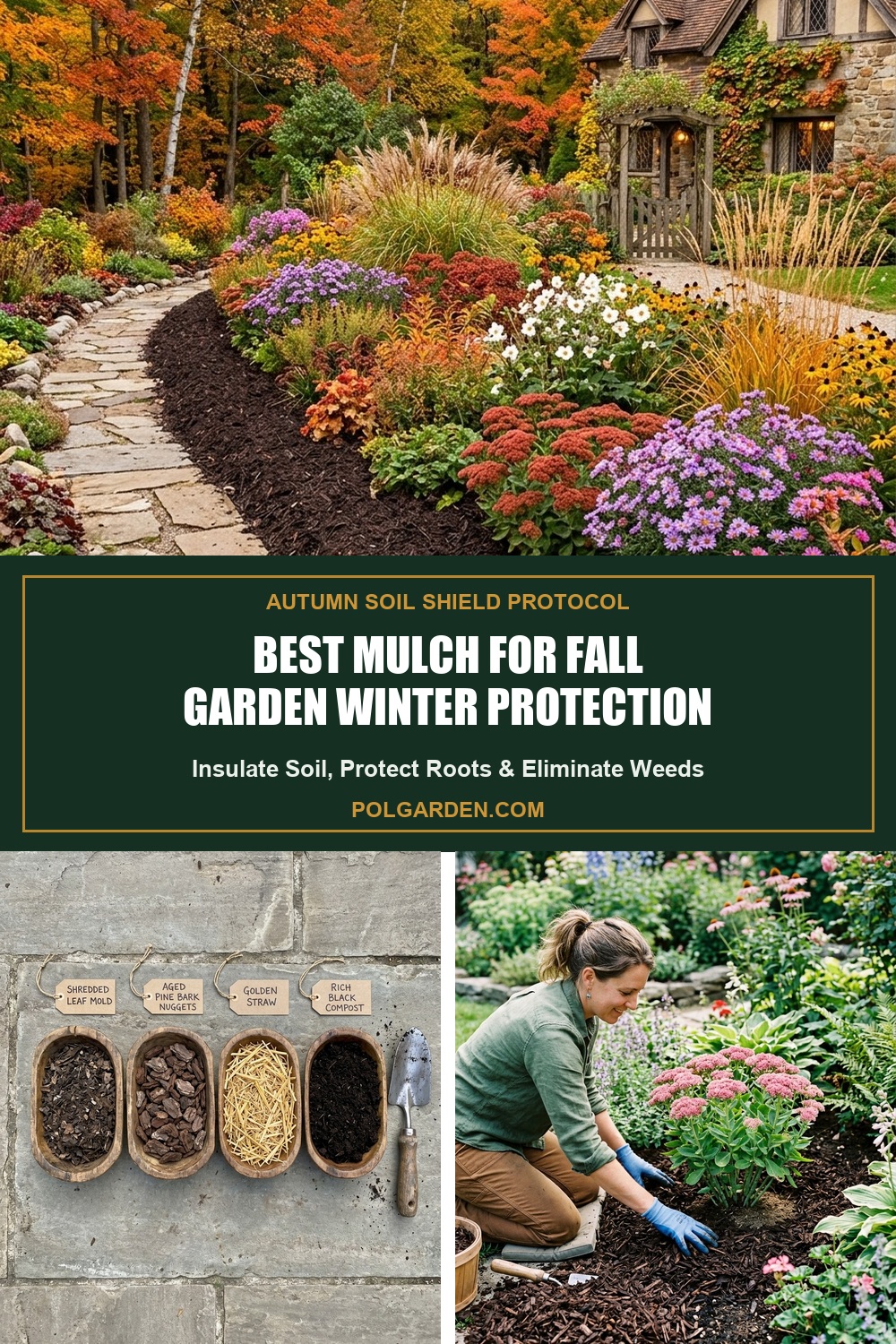
As autumn temperatures plunge toward freezing, your garden soil faces severe biological stress from repeated freeze-thaw cycles that heave delicate root systems out of the earth. Applying the right organic mulch in late autumn acts as a thermal blanket, insulating soil microbes, retaining vital autumn moisture, and preventing erosion until spring emergence.

Unlike spring mulching—which aims to suppress emerging weeds and cool rapidly warming soil—autumn mulching serves a fundamentally different purpose: thermal buffering. By blanketing dormant perennials, newly planted fall-planted spring bulbs, and vegetable beds after the first killing frost, you lock in steady subterranean conditions that prevent shallow root snapping.
Why Autumn Mulching Is Essential for Cold Climate Survival
- Eliminates Frost Heaving: Rapid freeze-thaw swings expand and contract clay soils, tearing fine feeder roots and lifting plant crowns above the soil line.
- Feeds Soil Microbiome All Winter: Organic materials slowly decompose beneath snow cover, converting into bioavailable humus by early spring.
- Locks in Autumn Soil Moisture: Cold winter winds desiccate dormant root systems faster than summer heat; mulch creates an impenetrable moisture seal.
- Suppresses Early Spring Weeds: Deters cool-season weed seeds (like winter cress and chickweed) from germinating during late-winter thaws.
Top 4 Organic Mulch Types for Autumn (Ranked by Thermal Performance)

- 1. Shredded Leaf Mold (The Gold Standard): Using crushed autumn leaves or homemade DIY leaf mold provides free, nutrient-dense insulation that earthworms eagerly pull into the soil profile.
- 2. Aged Shredded Pine Bark: Medium-textured bark knits together tightly to resist wind displacement while offering superior fungal resistance for perennial borders.
- 3. Clean Seedless Straw: The undisputed champion for vegetable beds and fall garlic crops, creating trapped air pockets that deliver maximum R-value thermal protection.
- 4. Fully Cured Organic Compost: Excellent top-dressing layer that jumpstarts spring earthworm activity while insulating raised beds and cold frame soil.
Step-by-Step Autumn Mulching Walkthrough
Step 1: Wait for the Ground to Cool (Timing Is Critical)
Never mulch too early in warm September! Applying thick mulch before soil cools traps residual summer heat, tricking perennials into pushing late tender shoots that will freeze. Wait until after your region’s first hard frost (night temperatures consistently below 32°F / 0°C) when plants have fully entered winter dormancy.
Step 2: Deeply Water Beds Before Freezing
Moist soil holds significantly more thermal mass than dry, powdery soil. Give borders and perennial beds one final deep watering 24 to 48 hours before applying your winter mulch blanket.
Step 3: Spread to the 3-Inch Sweet Spot
Distribute mulch evenly across garden beds at a depth of exactly 2.5 to 3 inches. Avoid thin 1-inch dusting (which blows away) and suffocating 6-inch piles that restrict spring soil gas exchange.
Step 4: Practice the ‘Donut’ Rule (Zero Mulch Volcanoes)
Never pile mulch directly against woody trunks or perennial crown centers. Leave a 2- to 3-inch bare margin around all stems—forming a flat donut shape—to prevent rodent nesting and crown fungal rot.
3 Landscaper Secrets for Flawless Winter Protection
1. The Evergreen Bough Anchor Trick: In windy northern climates, shredded leaves and straw can blow away before snow cover sets in. Lay discarded pine or spruce evergreen branches across the mulch layer to lock it securely in place all winter.
2. Shred Whole Leaves First: Never apply whole, intact maple or oak leaves directly over perennials. Whole wet leaves mat together like heavy papier-mâché, blocking oxygen and suffocating dormant crowns. Always run whole leaves through a mower or shredder first.
3. Spring Pull-Back Timing: In early spring as snow melts, gently rake winter mulch 3 inches away from emerging crowns to let the sun warm the topsoil and trigger vigorous green growth.
Garden Beds That Require Autumn Mulch Priority
- First-Year Perennial Borders: Young perennials planted during late summer have shallow root balls and need mulch to prevent frost dislocation. Combine with our perennial border design guide.
- Strawberry & Berry Patches: A 4-inch layer of clean straw protects shallow strawberry crowns from freezing air without crushing dormant buds.
- Winter Garlic & Shallot Beds: Essential insulation that allows fall garlic to establish robust root networks before soil freezes solid.
Frequently Asked Questions
Can I use fresh wood chips as autumn mulch?
Yes, as surface mulch, fresh wood chips are perfectly safe for winter protection and will not deplete nitrogen from the soil below unless actively tilled into the root zone.
Does winter mulch attract mice and voles?
Volcano mulching piled directly against trunks attracts nesting rodents. Maintaining the 3-inch open “donut” collar around stems and applying mulch only after the ground freezes eliminates rodent nesting appeal.
Should I remove autumn mulch in the spring?
Do not remove it completely—simply pull it back 2 to 3 inches from emerging green shoots. The decomposed layer underneath will nourish your soil all summer.
Authoritative Horticultural References & Soil Science
- University of Minnesota Extension: Protecting Trees, Shrubs, and Perennials from Winter Damage with Organic Mulches.
- Cornell University Cooperative Extension: Winter Mulching Practices and Soil Temperature Dynamics in Northern Climates.
- Penn State Extension: The Science of Mulch: Types, Depths, and Organic Soil Benefits.
Pin This Autumn Mulch Guide for Your Winter Garden
Protect your soil and perennials before the first deep freeze! Save this step-by-step autumn mulching guide to your Pinterest Gardening Board for quick winterizing reference.