
When central heating kicks on in late autumn, indoor humidity levels plummet from a lush 60% down to desert-dry 20%, triggering immediate distress in tropical foliage. For the magnificent Fiddle Leaf Fig (Ficus lyrata), this seasonal atmospheric shift manifests almost overnight as crispy, curling brown margins, dull leaf surfaces, and alarming premature lower leaf drop. Learning to distinguish dry-air browning from fatal fungal root rot—and applying targeted humidity stabilization—is the key to keeping your fiddle leaf fig vibrant, glossy, and pristine all winter long.
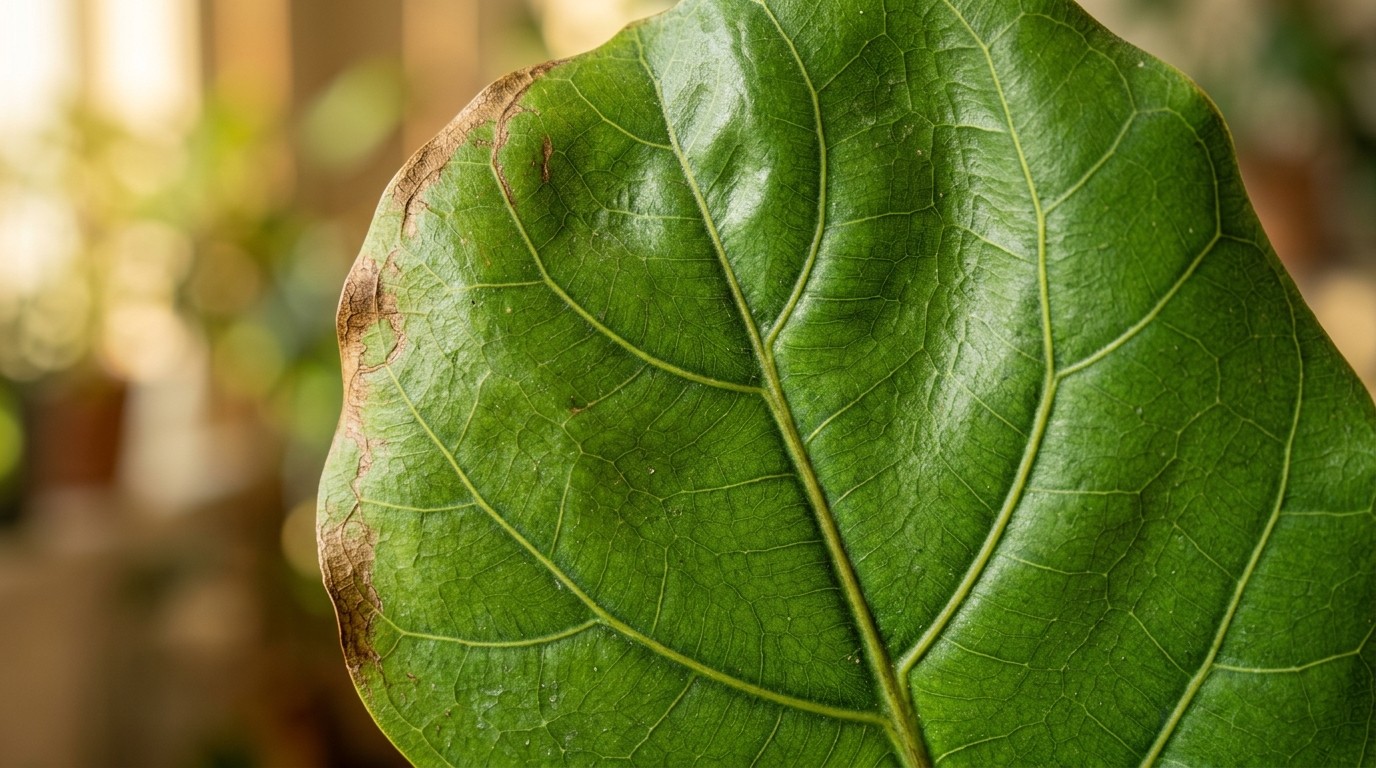
Because Fiddle Leaf Figs originate in the humid lowland rainforests of Western Africa, their broad, violin-shaped leaves lose moisture rapidly through transpiration. When indoor heating robs the surrounding air of ambient vapor, the plant cannot draw water from the soil fast enough to hydrate its massive outer leaf perimeters. By implementing proactive winter environmental adjustments, you can completely arrest dry-air damage without shocking the root system.
Why You’ll Love This Winter Care Protocol
- Instant Visual Diagnosis: Quickly determine whether brown spots stem from low humidity, underwatering, fungal infection, or overwatering.
- Aesthetic Leaf Reshaping: Master clean surgical pruning techniques to trim unsightly brown edges without compromising overall leaf geometry.
- Optimized Micro-Climate Control: Learn how to maintain ideal 45%–60% indoor humidity levels using targeted ultrasonic humidifiers and plant clustering.
- Pest & Shock Prevention: Protect weakened winter foliage from opportunist indoor pests like spider mites that thrive in dry, heated environments.
Diagnostic Tools & Plant Care Equipment
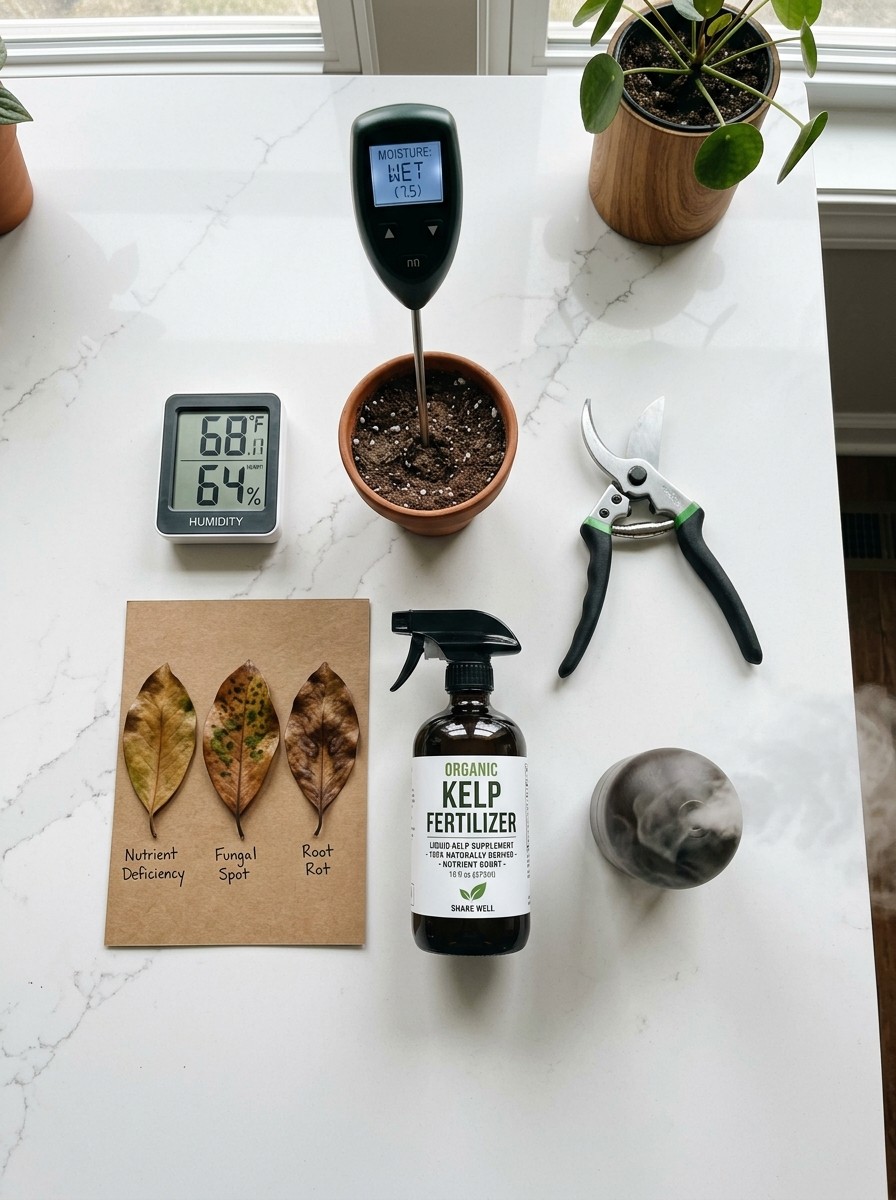
- Digital Hygrometer & Thermometer: Provides real-time relative humidity readings directly at canopy level to ensure levels stay above the 45% threshold.
- Long-Stem Soil Moisture Probe: Verifies deep root-zone hydration before watering, preventing the double tragedy of underwatering dry air foliage.
- Precision Micro-Tip Trimming Shears: Sanitized stainless steel shears allow delicate edging cuts along leaf margins without tearing fibrous green tissue.
- Ultrasonic Cool-Mist Humidifier: Delivers an ultra-fine ambient vapor plume that elevates localized moisture without soaking soil or leaving wet residue on furniture.
Step-by-Step Winter Recovery Walkthrough
1. Diagnostic Confirmation: Inspect the location and texture of the brown areas. Dry-air browning produces light brown, tan, papery, and brittle edges that crumble when touched, primarily along outer leaf contours and tips. In contrast, fungal root rot creates dark brown-to-black, soft, mushy patches originating near the center vein or base of the leaf accompanied by yellow halos.
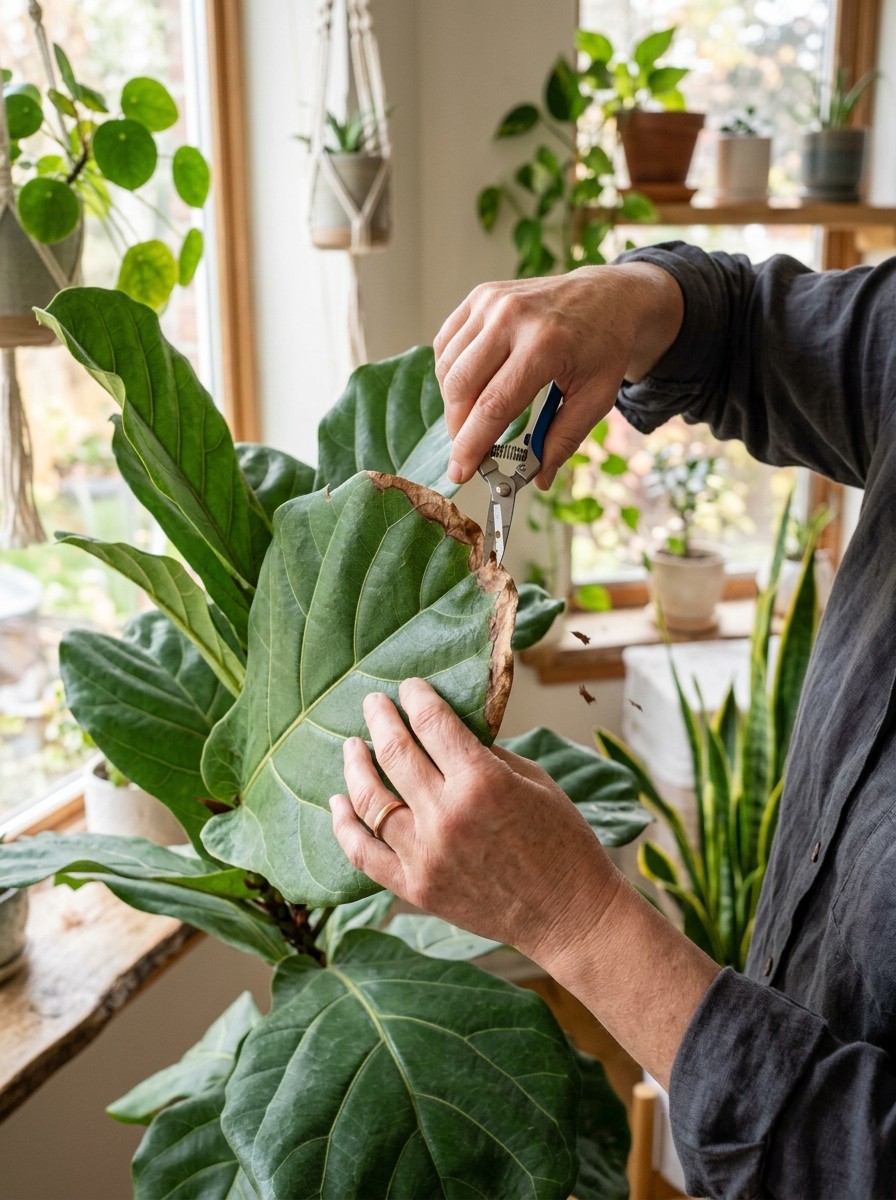
2. Aesthetic Leaf Trimming: While dead brown leaf tissue cannot turn green again, you do not need to remove the entire leaf. Take sterilized micro-tip shears and carefully trim away the brown crispy zones. Leave an ultra-thin sliver (roughly 1 millimeter) of dead brown tissue intact—cutting directly into live green tissue opens a fresh wound that will desiccate and turn brown again.
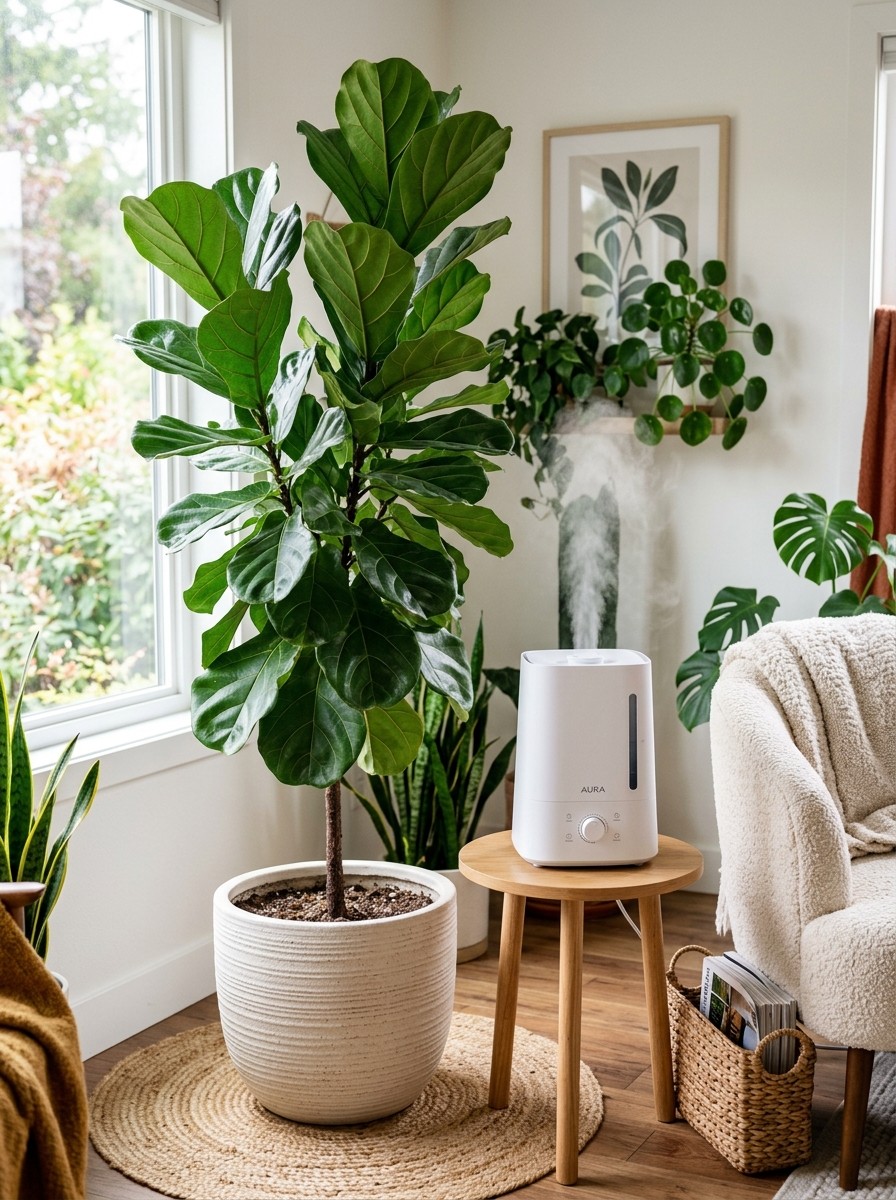
3. Humidity Stabilization Setup: Position an ultrasonic cool-mist humidifier 3 to 4 feet away from the tree, aiming the vapor plume toward the mid-canopy. Set the humidifier to maintain 50% to 60% ambient relative humidity. Alternatively, group your Ficus lyrata with other broadleaf tropicals like Monstera and Calatheas to create a mutually beneficial, self-humidifying micro-climate.
4. Relocation Away from Heat Vents: Never position your Fiddle Leaf Fig directly in the blast path of forced-air heating registers, baseboard radiators, or cold drafty entryway doors. Move the plant into a bright, stable spot receiving 6 to 8 hours of filtered, bright indirect sunlight, maintaining steady room temperatures between 65°F and 75°F (18°C–24°C).
3 Expert Secrets to Prevent Winter Leaf Loss
1. Stop Daily Misting with Spray Bottles: Spraying leaves with a hand mister raises localized humidity for only 5 to 10 minutes before evaporating completely. Furthermore, standing water droplets trapped in leaf crevices under low winter indoor light encourage opportunistic bacterial leaf spot infections. Rely on continuous mechanical humidifiers instead.
2. Monthly Leaf Dusting & Foliar Sponge Baths: Dust settles rapidly on wide indoor leaves during heating season, blocking up to 40% of available winter sunlight and clogging stomata. Once every 3 to 4 weeks, gently wipe down both sides of every leaf with a soft microfiber cloth dampened with lukewarm filtered water and a drop of organic castile soap.
3. Adopt the “Soak & Dry” Winter Watering Rhythm: Lower winter light slows down transpiration and root uptake. Always wait until the top 2 to 3 inches of soil feel completely dry before giving the pot a thorough, slow drenching until water runs out the drainage holes. Empty the drip saucer after 15 minutes so the pot never sits in stagnant water.
Companion Winter Houseplant Guides
- Overwatering Recovery: If your brown spots appear dark, soft, and watery, review our emergency overwatered plant CPR recovery guide immediately.
- Seasonal Plant Relocation: Protect all container tropicals before frost with our fall indoor plant transition protocol.
- Low-Light Tolerant Companions: Pair your fig with durable varieties featured in our guide to best low-light houseplants for dim spaces.
Troubleshooting Common Winter Leaf Symptoms
- Tiny Red/Brown Specks on New Leaves (Edema): Caused by inconsistent moisture uptake when cell walls burst under sudden water pressure. Maintain consistent, scheduled watering.
- Fine Webbing on Leaf Undersides (Spider Mites): Dry winter air encourages spider mites. Rinse foliage under a lukewarm shower and treat weekly with organic insecticidal soap.
- Sudden Dropping of Completely Green Leaves: Indicates environmental shock from sudden cold drafts or drastic relocation. Keep the tree in a stable, draft-free micro-environment.
Frequently Asked Questions
Should I fertilize my Fiddle Leaf Fig during the winter months?
No. Fiddle Leaf Figs enter semi-dormancy in late autumn and winter due to shorter daylight hours. Adding chemical or organic fertilizers while the plant is not actively pushing new growth leads to salt accumulation in the soil, which burns delicate root tips and worsens leaf browning. Resume light feeding in March.
Will a pebble tray with water provide enough humidity for a large Fiddle Leaf Fig?
Pebble trays work well for small 4-inch to 6-inch tabletop plants, but they do not produce enough ambient moisture to influence the micro-climate of a 4-foot to 6-foot Fiddle Leaf Fig tree. For mature trees, a dedicated cool-mist ultrasonic humidifier is necessary to maintain adequate humidity levels.
Can brown spots on Fiddle Leaf Fig leaves turn green again?
Once leaf tissue dies and turns brown and crispy, the cellular structure is permanently lost and cannot regenerate green chlorophyll. However, by correcting humidity and watering, all newly emerging spring leaves will grow completely healthy, deep green, and spot-free.
Pin This Houseplant Care Guide for Later
Love these houseplant rescue tips? Save this pin to your Indoor Gardening and Houseplant Care board on Pinterest so you have these humidity and trimming steps ready whenever winter air strikes!