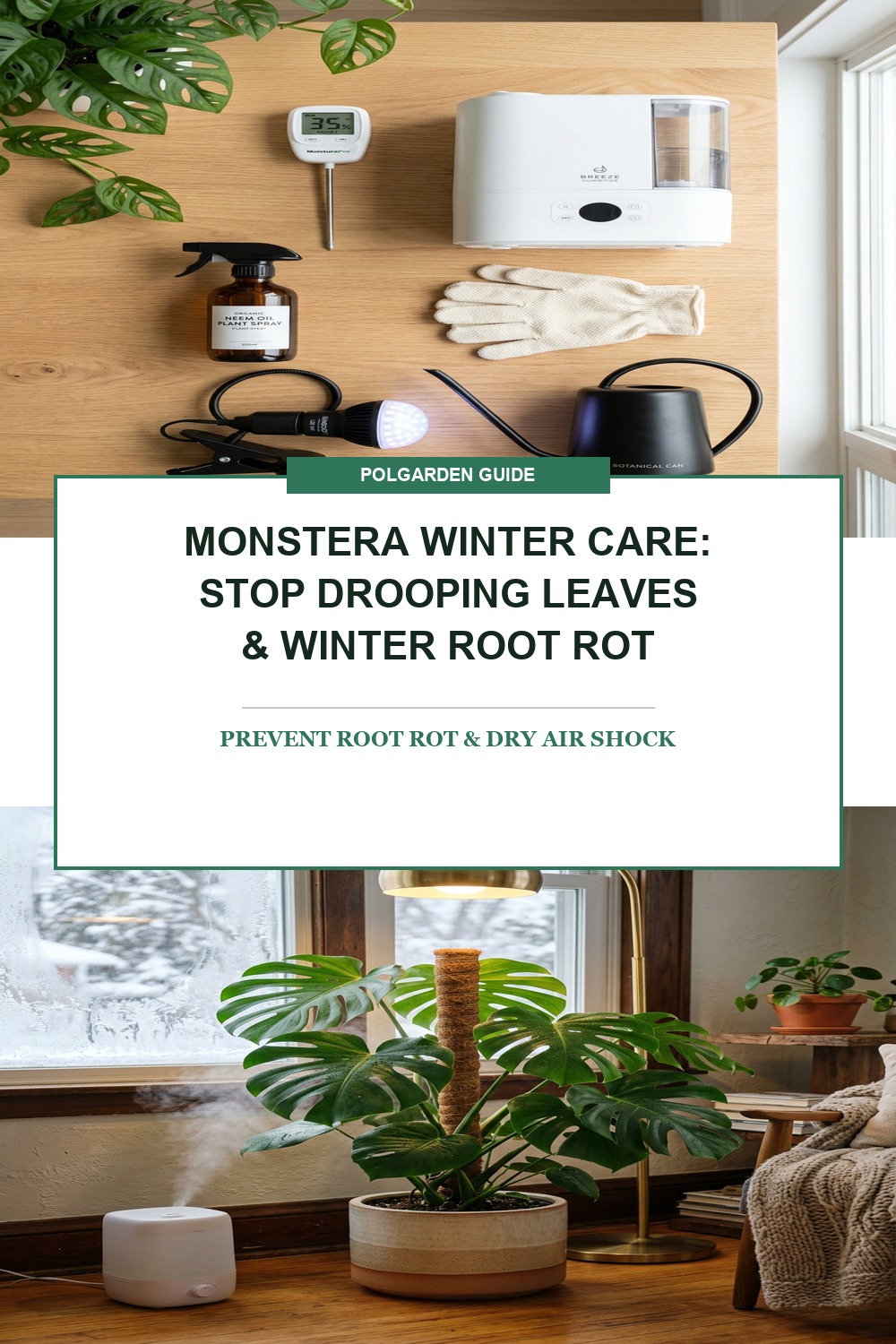
When autumn days shorten and indoor central heating turns household air as dry as the Sahara, the majestic Swiss Cheese plant (Monstera deliciosa) undergoes acute seasonal distress. Suddenly, proud upright petioles begin drooping, vibrant emerald leaves turn dull and limp, crispy brown halos encircle leaf margins, and yellowing lower foliage signals the onset of winter root rot. In the low light of winter, continuing a summer care routine is the fastest way to suffocate your plant’s roots. By executing this comprehensive 4-step Monstera winter care protocol, you will calibrate watering to match dormant metabolic rates, elevate ambient humidity without inviting fungal leaf spot, and keep your prized tropical centerpiece thriving until spring.
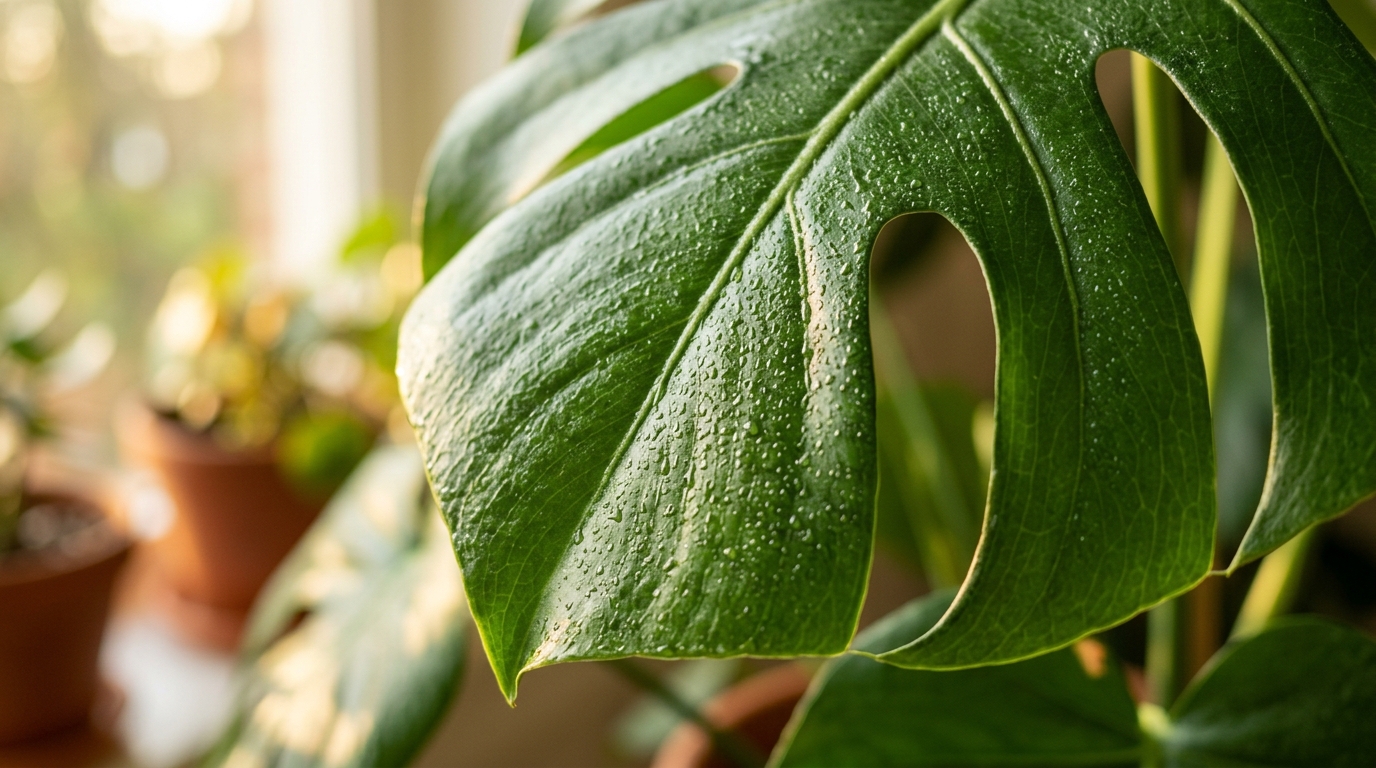
In their native Central American rainforests, Monsteras experience steady tropical warmth, abundant humidity, and bright, dappled canopy light year-round. Inside North American and European homes during winter, however, two catastrophic environmental shifts occur simultaneously: natural daylight hours plummet by more than 40%, and indoor heating reduces relative humidity from a balmy 60% down to a desiccating 20%. Because the plant cannot photosynthesize at summer speeds, its root system absorbs water at a fraction of the normal rate. When well-meaning owners continue weekly watering, waterlogged soil creates an anaerobic cesspool where opportunistic Pythium fungi thrive, rotting the root system from the tips inward.
- Difficulty: Beginner to Intermediate
- Target Winter Temperature: 65°F to 78°F (18°C to 26°C); never below 55°F (13°C)
- Ideal Winter Humidity: 50% to 65% relative humidity (achieved with cool-mist ultrasonic humidifiers)
- Watering Frequency: Reduced by 50% to 70% (wait until the top 2 to 3 inches of chunky potting mix are bone dry)
- Fertilizer Rule: Complete suspension from late October until the first new unfurling leaf in mid-March
Why Monstera Winter Care Requires an Immediate Strategy Shift
Understanding the internal biological rhythm of tropical aroids prevents the most common winter indoor plant disasters:
- Combating the Semi-Dormancy Slowdown: While Monsteras do not enter a complete deciduous dormancy, reduced sun angles trigger a vegetative resting phase. Cell division slows, transpiration drops, and the plant conserves carbohydrate reserves.
- Preventing Winter Root Hypoxia: Cool, damp soil holds less dissolved oxygen than warm soil. Overwatering in winter drowns root hairs, causing leaves to turn pale yellow with dark, mushy brown blotches.
- Stopping Radiator Desiccation: Proximity to forced-air heating vents or baseboard heaters saps moisture from broad leaf surfaces faster than roots can replenish it, causing brittle, curled leaf tips and spider mite infestations.
- Dust Accumulation & Light Starvation: Closed winter windows and indoor heating circulate fine household dust that settles on wide Monstera leaves, blocking up to 35% of already scarce winter sunlight.
Essential Monstera Winter Survival Equipment
Equip your indoor plant toolkit with these vital monitoring and care instruments:

- Soil Moisture Probe: Takes the guesswork out of watering by accurately gauging moisture depth down at root level rather than just the surface.
- Ultrasonic Cool-Mist Humidifier: Delivers clean, microscopic water vapor to sustain a healthy 55%+ microclimate without wetting the leaves directly.
- Full-Spectrum LED Grow Bulb: Supplies crucial photosynthetic wavelengths (400–700 nm) to supplement short winter days and prevent leggy, stretched petioles.
- Microfiber Dusting Mitts: Soft cloths safely remove airborne dust and static grease from delicate leaf cuticles without abrasive scratching.
- Organic Cold-Pressed Neem Oil: Prevents dry-air winter pest flare-ups, specifically insidious spider mites and thrips that thrive in heated apartments.
The 4-Step Monstera Winter Care Walkthrough
Execute this systematic 4-step walkthrough throughout the late autumn and winter seasons:
Step 1: The “Soak and Dry” Winter Watering Protocol
Throw away rigid calendar schedules. In winter, an 8-inch pot that needed water every 6 days in July may now only require watering every 14 to 21 days. Always probe the soil 2 to 3 inches deep with your finger or moisture meter. If it feels cool and damp, delay watering by another 3 to 5 days. When you do water, do so thoroughly with lukewarm room-temperature water until it drains freely from the bottom holes. Discard any runoff in the saucer immediately—never let a Monstera sit in standing drainage water!
Step 2: Relocate Closer to Light or Add Supplemental LEDs
In summer, placing a Monstera directly in a south-facing window can scorch its foliage. In winter, however, sunlight is significantly weaker and the sun travels at a much lower arc across the sky. Move your plant directly into your brightest eastern or southern window. If your home lacks bright natural light, position a full-spectrum 36W LED grow light 18 to 24 inches above the canopy on a timer set for 10 to 12 hours daily to prevent petiole stretching and leaf loss.

Step 3: Elevate Ambient Humidity Without Foliar Misting
Spritzing a Monstera with a handheld spray bottle does virtually nothing to raise humidity—the droplets evaporate within 10 minutes and leave mineral deposits that invite bacterial leaf spots. Instead, place an ultrasonic humidifier 3 to 5 feet away from the foliage, keeping relative humidity consistently between 50% and 60%. Alternatively, group tropical houseplants together on wide pebble trays filled with water to create a shared, humid botanical microclimate.
Step 4: Monthly Leaf Polishing & Winter Pest Scouting
Wipe down all leaves once a month with a soft cloth dampened with distilled water and a few drops of organic neem oil. Cleaning clears photosynthetic pores (stomata) while the neem creates an inhospitable barrier against spider mites, which exploit dry indoor winter heating to reproduce exponentially. Inspect the undersides of leaves and petiole junctures closely for tiny webs or silvery stippling.
3 Master Aroid Secrets for Winter Thriving
Implement these professional horticultural techniques to maintain vibrant deep green foliage all winter long:
1. Never Use Cold Tap Water: Cold winter tap water (often 45°F / 7°C from municipal pipes) shocks tropical root membranes, triggering sudden root dieback and yellowing leaves. Always allow tap water to sit at room temperature for 12 hours before watering.
2. Beware of Hidden Radiator Drafts: Even if a room feels warm, cold drafts leaking through window seals or warm blasts from heating vents cause localized temperature swings that trigger leaf drooping. Keep Monsteras at least 4 feet away from all vents, radiators, and exterior doorways.
3. Cease All Fertilizer Until Mid-March: Adding nitrogen fertilizers during the low-light winter period forces the plant to absorb mineral salts it cannot metabolize. These unused salts accumulate in the soil, scorching root tips and producing crispy brown leaf edges.
The Thriving Winter Indoor Sanctuary
Behold how proper lighting, calibrated moisture, and ambient humidity transform a Monstera into a radiant, sculptural living sculpture throughout snowy winters:

Spring Reawakening & Repotting Protocol
As daylight hours expand in mid-to-late March, transition your Monstera back into vigorous growth mode:
- First Spring Feeding: When you notice the first tightly rolled leaf spike emerging from a petiole sheath, resume feeding with a balanced liquid houseplant fertilizer diluted to half-strength.
- Flush Accumulated Salts: Take the plant to the shower or sink and run warm water through the potting mix for 2 minutes to flush out any winter fertilizer salt crusts.
- Evaluate for Spring Repotting: If thick aerial roots are circling the drainage holes or soil dries out in less than 4 days, repot into a container 2 inches wider using an airy, chunky aroid mix (orchid bark, perlite, pumice, and coco coir).
- Extend Moss Poles: Secure newly emerging climbing stems to your moss or coco coir pole with soft velcro plant ties to train vertical, space-saving growth.
Frequently Asked Questions
Why are the lower leaves on my Monstera turning yellow in winter?
Yellow lower leaves accompanied by damp soil are the classic symptom of overwatering and early-stage root rot. Immediately stop watering, allow the soil to dry out thoroughly, and inspect root tips. If the soil smells sour or roots appear black and mushy, trim away rotting roots and repot in fresh, well-draining aroid soil.
Can I propagate Monstera cuttings in winter?
While you can root stem cuttings in water during winter, root development will take twice as long due to low temperatures and weak light. For best results, use a seedling heat mat set to 75°F (24°C) and place the propagation vessel directly under a supplemental LED grow light.
Why are new winter leaves coming out without holes (fenestrations)?
Fenestrations are an evolutionary adaptation requiring high-intensity light. When light levels drop in winter, the plant conserves photosynthetic energy by producing smaller, solid juvenile leaves. Adding an LED grow light will quickly restore large, perforated foliage.
Related Autumn & Winter Plant Care Masterclasses
Deepen your botanical expertise with our comprehensive seasonal plant protection and care guides:
- Calathea Winter Care: How to Stop Curling Leaves, Brown Edges & Dry Air Shock
- Houseplants Fall Quarantine: The 5-Step Pest-Free Indoor Transition Protocol
- How to Overwinter Geraniums: Dormant Bare-Root & Potted Cellar Methods
- How to Winterize Fig Trees: The 4-Step Cane Bundling & Burlap Shield Blueprint
- How to Winterize Roses: The 4-Step Mounding, Pruning & Burlap Shield Masterclass
Pin This Monstera Winter Care Guide for Later
Keep your Swiss Cheese plant radiant and lush all winter long! Pin this comprehensive care blueprint to your Houseplant or Plant Care Pinterest board so you have these tips whenever you need them!