
Blackberries (Rubus fruticosus) are among the most rewarding and intensely productive perennial fruit crops in the home orchard, yielding gallons of plump, antioxidant-rich berries year after year. Yet their relentless vigor is a double-edged sword: beneath their rampant growth lies a strict biennial reproductive cycle that requires decisive autumn intervention. Left unpruned through winter, blackberry patches rapidly devolve into an impenetrable, diseased thicket of dead canes that harbor destructive fungal spores, attract borers, and rob next season’s crop of sunlight and airflow. Pruning out spent canes and securing your trellis before ground freeze ensures a bumper harvest of sweet, heavy berries next summer.
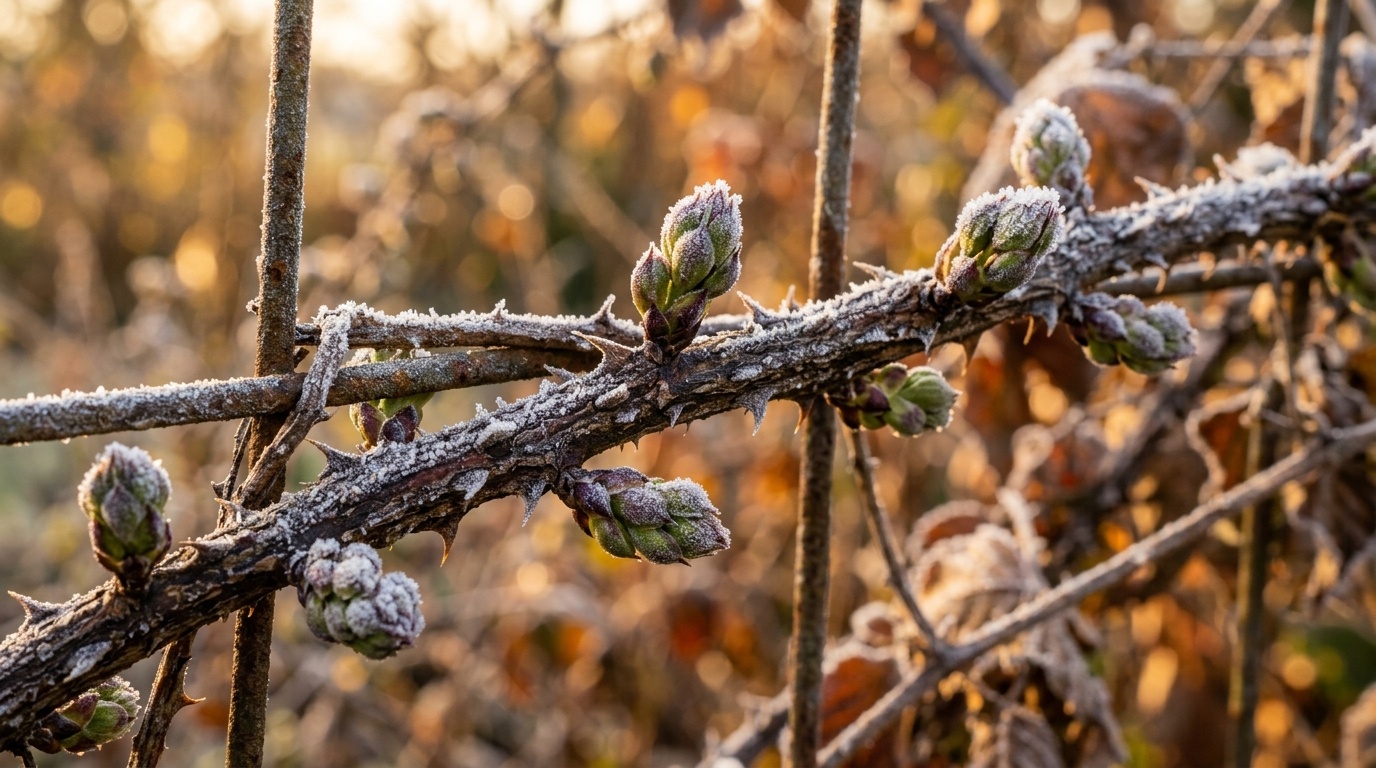
To master autumn blackberry care, every gardener must grasp the fundamental botany of cane renewal. While blackberry root crowns are long-lived perennials that endure for decades, individual canes are strictly biennial—living for just two distinct seasons. First-year canes, known as primocanes, emerge vigorously from the crown in spring with lush green stems, producing vegetative leaves and forming latent floral buds. In their second year, these stems become floricanes, bursting into bloom, ripening heavy fruit, and then senescing. Once a cane has borne fruit, its biological purpose is fulfilled; it naturally dies and will never produce fruit again. Removing these dead floricanes in autumn is the single most critical task in fruit gardening.
Why You’ll Love This Fall Blackberry Protocol
- Doubled Summer Yields: Eliminates light-blocking deadwood and channels the plant’s entire metabolic energy into healthy, productive fruiting wood.
- Total Fungal & Borer Eradication: Removing spent floricanes halts the life cycle of cane blight (Leptosphaeria coniothyrium), anthracnose (Elsinoë veneta), and the red-necked cane borer.
- Painless Harvesting Next Summer: Untangles the patch into neat, accessible fruiting walls that allow easy picking without torn skin or clothes.
- Severe Freeze Protection: Shields tender primocanes and root crowns from winter wind desiccation and severe frost-heave damage across cold USDA Zones 4 through 7.
Essential Fall Pruning Supplies & Cane Safety
Working in a thorny blackberry patch requires robust personal protection and clean, heavy-duty cutting tools to make surgical cuts through dense woody canes.

- Heavy-Duty Bypass Loppers: Choose long-handled bypass loppers with hardened carbon steel blades; loppers provide the leverage needed to cut through 1-inch thick woody canes flush at the soil line without leaving jagged stubs.
- Thorn-Proof Leather Gauntlets: Long goatskin or cowhide gloves with elbow-length gauntlet cuffs protect your wrists and forearms from wicked hooked thorns when reaching deep into the thicket.
- Tool Sanitizing Spray (70% Isopropyl Alcohol): Spraying cutting blades between bushes stops the cross-contamination of systemic bacterial and fungal pathogens.
- Soft Jute Garden Twine or Heavy Plant Ties: Biodegradable jute or stretchy rubber ties secure dormant canes firmly against trellis wires without cutting into the tender bark during winter gales.
- Aged Organic Compost & Clean Seedless Straw: Provides essential cold-season root insulation and supplies slow-release potassium and phosphorus as soil thaws in early spring.
Step-by-Step Blackberry Winterizing Walkthrough
Follow these four chronological steps in mid-to-late autumn, after the final berries have been harvested and leaves begin yellowing following early light frosts.
Step 1: Decode Your Canes (Floricane vs. Primocane Identification)
Before cutting anything, take a step back and examine the canes at the base of the bush. Distinguishing spent floricanes from next year’s primocanes is straightforward once you know what to look for:
- Spent Floricanes (Cut These Out): The wood is dull gray, dark brown, or brittle, often with peeling papery bark. They carry the dried, withered remnants of old fruit clusters and dead flower stems. These canes are biologically dead or senescing rapidly.
- Vigorous Primocanes (Save & Protect These): The canes are supple, vibrant green, reddish-green, or bright purple-bronze. The bark is smooth and healthy, and the stems are loaded with plump, live dormant leaf and blossom buds. These canes are your entire fruit crop for next summer.
Step 2: Flush Ground Cutback & Cane Selection
Armed with your long-handled loppers, reach deep into the base of the plant to remove every spent floricane.

Position your lopper blades as close to the soil crown as possible, cutting the dead floricane completely flush with the ground. Crucial rule: Never leave 3- to 6-inch “peg” stubs! Dead stubs act as open pathways for rainwater collection and provide entry points for cane blight fungi (Leptosphaeria) to penetrate directly into the healthy perennial crown.
Next, thin the remaining new primocanes. Inspect the bush and select the 4 to 6 thickest, healthiest primocanes per plant. Cut out any spindly, diseased, or damaged green canes smaller than pencil diameter. If your canes have long lateral side branches, trim these secondary branches back to 18 to 24 inches (45–60 cm) using sharp hand shears. Tipping laterals forces the plant to channel energy into plump berry buds rather than out-of-control vine length.
Step 3: Trellis Re-tying & Winter Wire Training
How you secure your canes for winter depends on the growth habit of your blackberry cultivar and your local climate zone:
- Erect & Semi-Erect Varieties (‘Chester’, ‘Triple Crown’, ‘Navaho’, ‘Apache’): These vigorous canes are self-supporting or trained to a two-wire trellis. Spread the 4 to 6 retained primocanes out in a balanced fan pattern across your trellis wires (typically at 3 feet and 5 feet off the ground). Tie each cane securely with soft jute twine using a figure-eight knot. The figure-eight tie cushions the cane from rubbing abrasively against metal wire during high winter winds.
- Trailing Varieties (‘Marionberry’, ‘Boysenberry’, ‘Black Diamond’): Trailing canes are exceptionally long, flexible, and more sensitive to extreme sub-zero cold. In mild regions (USDA Zones 7–9), weave them along trellis wires. In cold regions (Zones 4–6), gently unhook the canes from the trellis, lay them flat along the ground inside the row, and pin them down with landscape staples. This ground-pinning strategy allows snow cover to insulate the canes against sub-zero polar vortex events.
Step 4: Crown Insulation & Compost Mulch Collar
Once all pruned debris has been raked clean and removed from the patch, prepare the perennial root system for deep winter dormancy.
Spread a 3- to 4-inch layer of rich, well-aged compost or composted manure across the berry row in a 24-inch wide band centered over the root zone. Compost feeds beneficial soil mycorrhizae and earthworms through the winter. Follow this with a loose 4- to 6-inch layer of clean, seedless wheat straw or shredded leaves directly over the plant crowns. This thermal blanket buffers shallow feeder roots against extreme freeze-thaw cycles that can heave root crowns out of the ground.
3 Commercial Grower Secrets for Monster Blackberry Crops
Adopt these proven commercial berry management techniques to optimize production in your backyard fruit orchard:
1. The “Summer Pinch, Fall Trim” Multiplication Law: Commercial berry growers don’t wait for autumn to manage cane height. When primocanes reach 36 to 48 inches in midsummer, pinch off the top 2 inches of the growing tip. This halts vertical climbing and forces the cane to explode with 4 to 8 lateral side branches. In autumn, trimming these side branches back to 18 inches creates a dense, compact fruiting ladder capable of producing double the fruit weight of an unpinched cane.
2. Complete Patch Sanitation (Zero Leftover Debris): Fungal anthracnose and spur blight overwinter almost exclusively on fallen leaves and dead cane remnants on the ground. Never mulch over old blackberry clippings, and never compost spent floricanes in your backyard compost pile unless it maintains temperatures over 140°F (60°C). Bag and dispose of all cuttings in municipal green waste or burn them.
3. Late Autumn Dormant Copper/Lime Sulfur Wash: Right after fall pruning and defoliation, spray your remaining green canes and surrounding soil with a broad-spectrum organic copper fungicide or lime-sulfur dormant spray. Applying this wash on a clear, frost-free autumn day creates a protective barrier that sterilizes microscopic spore bodies, guaranteeing disease-free spring shoot emergence.
Companion Care & Winter Berry Patch Pairings
Blackberries flourish when incorporated into a dedicated perennial fruit border alongside other cool-climate berry and edible perennial plantings.

- Strawberry Bed Insulation: Perennial berry patches naturally complement each other; coordinate your seasonal work with our field guide on winterizing strawberry plants and protecting crowns with clean mulch.
- Perennial Vegetable Bed Management: Adjoining perennial crops like rhubarb share identical heavy compost feeding requirements; explore our step-by-step masterclass on how to winterize rhubarb crowns and fall mulch.
- Asparagus Patch Synchronization: Perennial asparagus ferns also require complete fall sanitation to stop rust fungi; review our protocol for winterizing asparagus beds and cutting back fall ferns.
- Orchard Fruit Tree Protection: Ensure your entire fruit garden survives winter intact by applying our orchard guide on winterizing fruit trees against frost cracks and winter desiccation.
Spring Awakening & Trellis Re-Elevation
As winter weather breaks and soil temperatures rise above 45°F (7°C) in late February or March, begin waking up your berry patch. If you pinned trailing canes to the ground for winter, carefully lift the supple canes before bud break begins, untangle them, and wrap them back onto your trellis wires, securing them with fresh twine.
Gently rake back the heaviest straw mulch away from the center of the root crown, allowing warm spring sunlight to reach the soil. Apply a balanced organic fruit fertilizer (such as an all-purpose 10-10-10 or berry-tone formula) along the drip line to fuel explosive leaf development and robust blossom cluster formation.
Frequently Asked Questions
What happens if I don’t prune my blackberries in fall?
If you skip fall pruning, dead floricanes will remain tangled among living canes. They will cast heavy shade, stifle air circulation, and become a breeding ground for cane blight and fungal diseases. Over two to three seasons, an unpruned patch becomes completely choked with deadwood, and overall berry yield will plummet by 50% to 70%.
Should I prune primocane-fruiting (everbearing) blackberries differently?
Yes. Primocane-fruiting cultivars (like ‘Prime-Ark’ series) produce fruit on the tips of first-year canes in late autumn. For maximum simplicity, you can cut the entire plant down flush with the ground in late winter, which produces a single massive late-summer/fall harvest every year. If you prefer two smaller harvests (a spring floricane crop and fall primocane crop), only prune out the spent fruited tips in autumn.
How far back should I cut the green primocanes in fall?
Do not cut healthy primocanes to the ground! You want to preserve the main vertical cane (typically 4 to 6 feet long) because it will bear next summer’s entire fruit harvest. You should only trim the lateral side branches back to 18 to 24 inches and snip off any weak, diseased, or broken cane tips.
Can I prune blackberries during winter instead of autumn?
Yes, in mild USDA Zones 7 through 9, pruning can take place any time between late autumn and late winter while plants are fully dormant. However, in cold northern climates (Zones 4 to 6), autumn pruning is strongly recommended so spent canes can be cleared out and tender fruiting canes can be safely tied down or protected before heavy snow and deep freezes arrive.
Pin This Blackberry Pruning & Winterizing Guide for Later
Love growing homegrown berry harvests? Save this pin to your Pinterest Berry Patch or Fruit Gardening board so you always have the floricane cutback and trellising rules ready every fall!