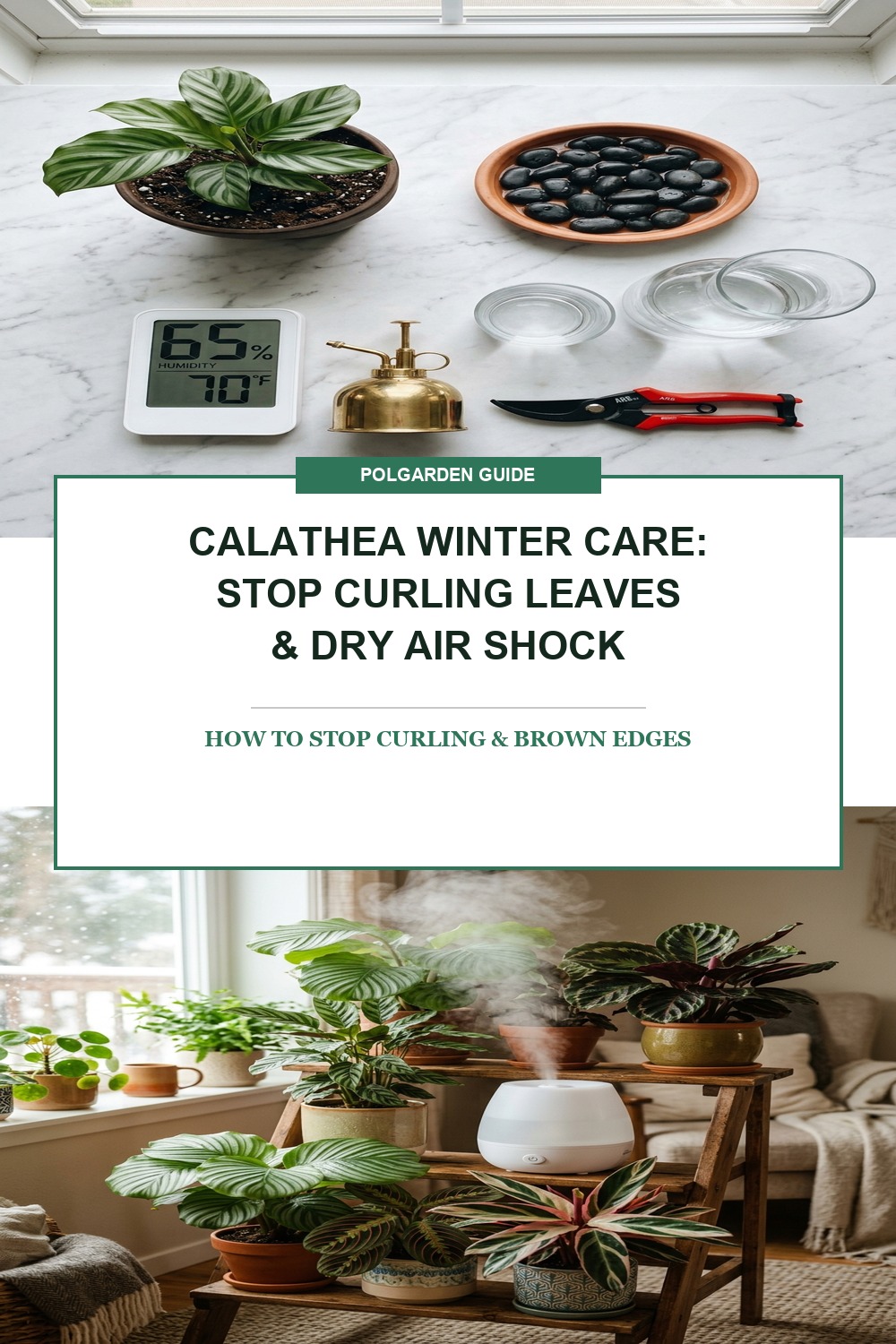
When autumn transitions into winter and household central heating furnaces kick on, indoor humidity plummets from a lush 60% down to a desert-dry 15% to 20% within days. For tropical prayer plants belonging to the Marantaceae family—including Calathea, Goeppertia, Maranta, and Ctenanthe—this invisible atmospheric shift triggers an immediate emergency defense response: delicate pinstriped leaves curl inward like tight cigars, pristine leaf margins turn crisp and brown, and graceful foliage droops in physiological shock. Because these equatorial understory beauties do not enter true dormant rest during cold months, surviving winter indoors requires proactive moisture management rather than passive neglect.
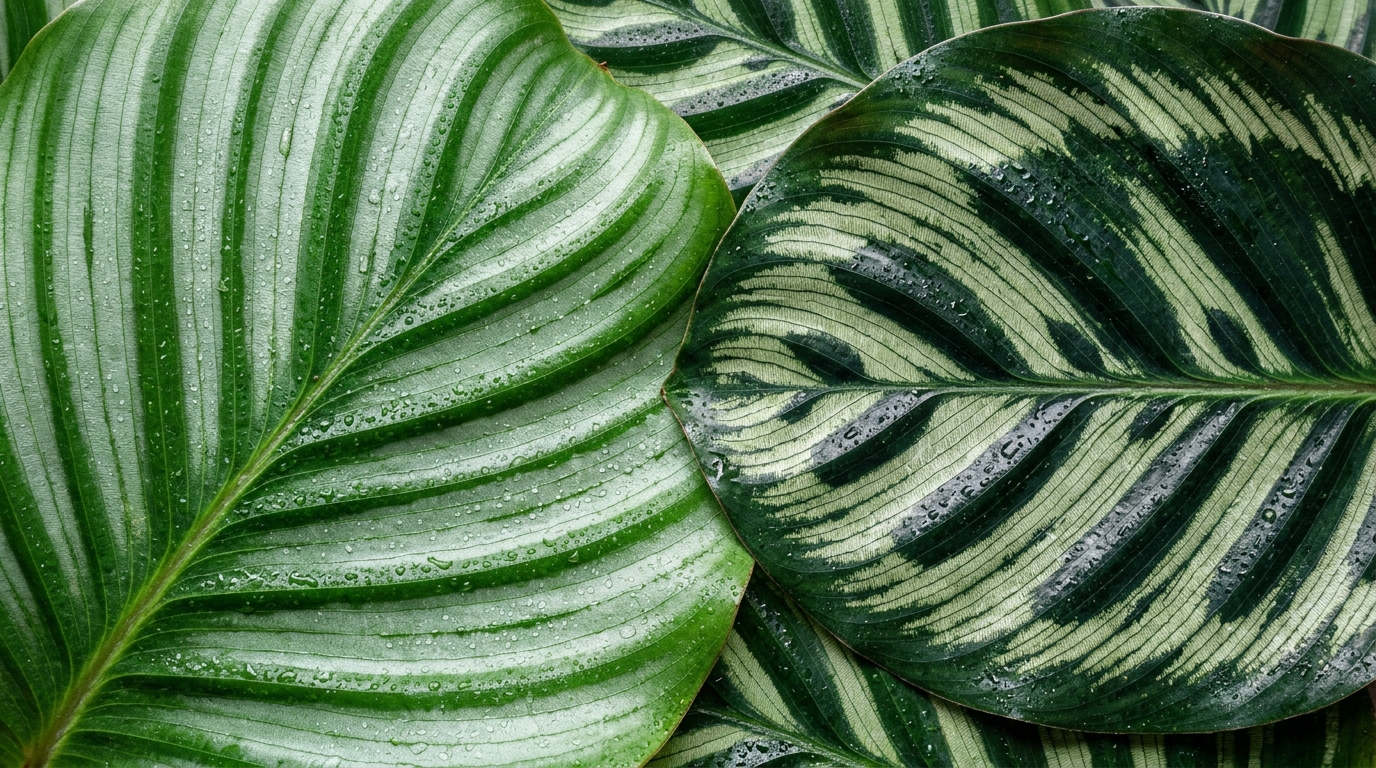
Unlike resilient snake plants or ZZ plants that thrive on winter abandonment, Calatheas possess extremely thin, papery foliage with high transpiration rates. In tropical Brazilian rainforest canopies, they absorb moisture continuously through stomata bathed in 70% ambient vapor. Indoors during December and January, dry radiator convective currents accelerate leaf water evaporation faster than shallow fibrous roots can draw chilled moisture from potting mix. To rescue curling leaves and stop necrotic brown edges in their tracks, you must harmonize three non-negotiable winter pillars: local ambient humidity, mineral-free hydration, and thermal draft protection.
Why You’ll Love Mastering Calathea Winter Care
- Instant Curl Reversal: Understanding the precise trigger behind leaf curling allows you to unfurl tight, stressed foliage within 24 to 48 hours of correcting your humidity deficit.
- Zero Crispy Brown Halos: Eliminating hard tap water minerals and furnace draft exposure preserves spotless, showroom-worthy leaf perimeters all season long.
- Pest Prevention Fortress: High ambient winter humidity physically deters two-spotted spider mites (Tetranychus urticae), which proliferate aggressively in bone-dry winter rooms.
- Effortless Spring Rebound: Guarding active crowns against root rot and dry shock ensures vigorous, multi-stem growth explosions as soon as natural day length expands in March.
Essential Supplies & Humidity Toolkit
Relying on hand misting alone is the number one mistake indoor gardeners make in winter. Water droplets from spray bottles evaporate within five minutes without raising baseline relative humidity, while standing surface water on cold leaves invites bacterial spot. Assemble this proven winter stabilization kit instead:

- Digital Thermo-Hygrometer: An indispensable tool. Keep one directly beside your Calathea grouping to monitor real-time relative humidity (aiming strictly for 55% to 65%) and ambient temperature.
- Wide Pebble Humidity Tray: A shallow ceramic or terracotta tray filled with 1 to 2 inches of rinsed gravel or river stones. When filled with water just below the stone peaks, continuous natural evaporation blankets the plant in a localized microclimate.
- Distilled, Reverse Osmosis, or Rainwater: Calatheas are notorious mineral hyper-accumulators. Fluoride, chlorine, chloramines, and dissolved sodium salts found in municipal tap water cannot be processed by the leaves and are deposited at leaf edges, creating permanent crispy brown rims.
- Cool-Mist Ultrasonic Humidifier: The ultimate winter lifesaver. Running a cool-mist humidifier on low near your plant collection raises ambient room humidity effortlessly without elevating temperatures.
- Sterilized Precision Shears: For neatly trimming dead margins. Always sterilize blades following proven sanitization techniques to avoid introducing pathogens into vascular leaf tissue.
Step-by-Step Winterization & Rehabilitation Walkthrough
1. Relocate Away from Thermal Stress Zones: First, inspect your plant’s physical location. Heating vents, floor registers, radiators, and fireplaces blast dry air that cooks leaf cells. Simultaneously, uninsulated single-pane window glass creates freezing micro-drafts below 55°F (13°C). Position your Calathea 4 to 6 feet back from drafty windows and at least 8 feet away from any active heat source in bright, indirect filtered sunlight.
2. Construct an Evaporative Pebble Bed: Fill your wide saucer with polished river stones. Pour distilled or rain water until the liquid level sits roughly a quarter-inch below the top of the stones. Set your Calathea nursery pot or decorative container directly on top of the stones.

3. Adjust Watering Cadence (The Top 2-Inch Rule): Shorter winter daylight slows photosynthetic activity. While Calatheas never want bone-dry soil, overwatering in cold winter soil leads directly to anaerobic root rot. Probe your index finger 1.5 to 2 inches into the soil. Water only when the top layer feels barely dry to the touch, and always use room-temperature water (68°F to 72°F / 20°C to 22°C) to prevent thermal root shock.
4. Groom Damaged Foliage with Surgical Precision: Brown, crispy leaf edges will not turn green again. To restore aesthetic beauty without stressing the plant, take sterilized shears and trim away the dead tissue following the natural curve of the leaf blade. Leave a tiny sliver (1 millimeter) of brown margin intact rather than cutting into live green leaf tissue, which triggers further browning.
3 Master Secrets for Flawless Calathea Winter Foliage
1. Cluster Plants to Form Canopy Microclimates: In nature, tropical plants never live in isolation. Group your Calatheas closely together alongside ferns, pothos, and philodendrons. Through collective transpiration, a cluster of 5 to 7 houseplants creates a mutual humidity bubble that elevates local moisture by 15% to 20% compared to the rest of your home, mirroring effective indoor microclimate enclosures.
2. Halt All Fertilizer Until Spring Equinox: Because low winter light levels stall vigorous vegetative growth, houseplants cannot metabolize fertilizer salts during December and January. Feeding during winter causes excess fertilizer salts to accumulate around the root ball, causing chemical root burn that manifests as sudden leaf margin necrosis. Stop feeding entirely from October through late February.
3. Regular Dusting & Spider Mite Inspection: Winter furnace air circulates household dust that clogs delicate foliar stomata and inhibits weak winter light absorption. Once every two weeks, wipe both the tops and reddish-purple undersides of leaves with a soft microfiber cloth dampened with lukewarm distilled water. Inspect the stem joints for microscopic webbing, the hallmark of indoor spider mites.
Winter Lighting Strategies & Cold Draft Protection
Winter sun angles sit much lower in the sky, significantly reducing photosynthetic photon flux indoors. While direct summer sunlight will scorch delicate Calathea leaves, gentle winter morning sunlight from an east- or north-facing window is exceptionally beneficial.

- Supplementing with Gentle LED Grow Lights: If your winter living spaces lack natural light, suspend a full-spectrum LED grow light 18 to 24 inches above your plant cluster on a 10-hour timer. This maintains energetic vitality without generating scorching heat.
- Nighttime Thermal Drop Limits: Calatheas prefer stable temperatures between 65°F and 75°F (18°C to 24°C). Ensure nighttime room temperatures never dip below 60°F (15°C). If your windowsill gets icy after dark, pull plants 2 feet back into the room each evening.
- Integrated Indoor Resilience: Pair your indoor winter care protocols with our comprehensive seasonal guides on winter plant cold protection strategies to safeguard your entire botanical collection through the coldest months.
Troubleshooting Common Calathea Winter Distress Signals
- Leaves Curling Inward Lengthwise: Acute dehydration or humidity shock below 40%. Check soil immediately; if dry, bottom-water with lukewarm distilled water. If soil is already damp, move the plant directly into the plume of your humidifier.
- Crispy Brown Edges with Yellow Halos: Chemical toxicity from fluoride or chlorine in tap water, or accumulated fertilizer salts. Flush the root ball thoroughly with 1 gallon of pure distilled water to leach trapped salts.
- Yellowing Lower Leaves & Mushy Stems: Overwatering and root suffocation caused by cold, saturated potting mix. Allow soil to dry out significantly, ensure excess drainage water never pools in decorative outer pots, and increase ambient air circulation.
- Pale, Washed-Out Foliage: Too much direct sunlight. Shift plant into filtered shade or hang a sheer white curtain across the window.
Frequently Asked Questions
Can I use boiled tap water for my Calathea in winter?
No. Boiling tap water evaporates pure steam and actually concentrates dissolved minerals like calcium, lime, and sodium salts, making water chemistry worse for your plant. While boiling removes volatile chlorine gas, it does not remove chloramines or fluoride. Stick strictly to distilled water, reverse osmosis filtered water, or melted clean snow.
Why are my Calathea leaves standing upright at night and spreading during the day?
This is completely normal! Calatheas and prayer plants possess a specialized swelling at the base of the petiole called a pulvinus, which alters cell turgor pressure to move leaves vertically at night (prayer position) and horizontally during the day to optimize light capture. If this movement ceases, it is an early warning sign of environmental stress or low humidity.
Should I repot my rootbound Calathea during winter?
Avoid repotting in winter unless your plant is actively rotting and requires emergency surgical root rescue. Repotting during cold months damages dormant feeder roots that cannot heal quickly, leading to transplant shock. Wait until active spring growth surges in April or May before upsizing containers.
Pin This Calathea Winter Care Guide for Later
Struggling with crispy brown leaf edges or tightly curled prayer plant foliage? Save this complete indoor humidity, distilled water, and winter microclimate guide to your Houseplant Care, Indoor Jungle, or Plant Propagation boards on Pinterest so you have it ready whenever cold winter weather strikes!