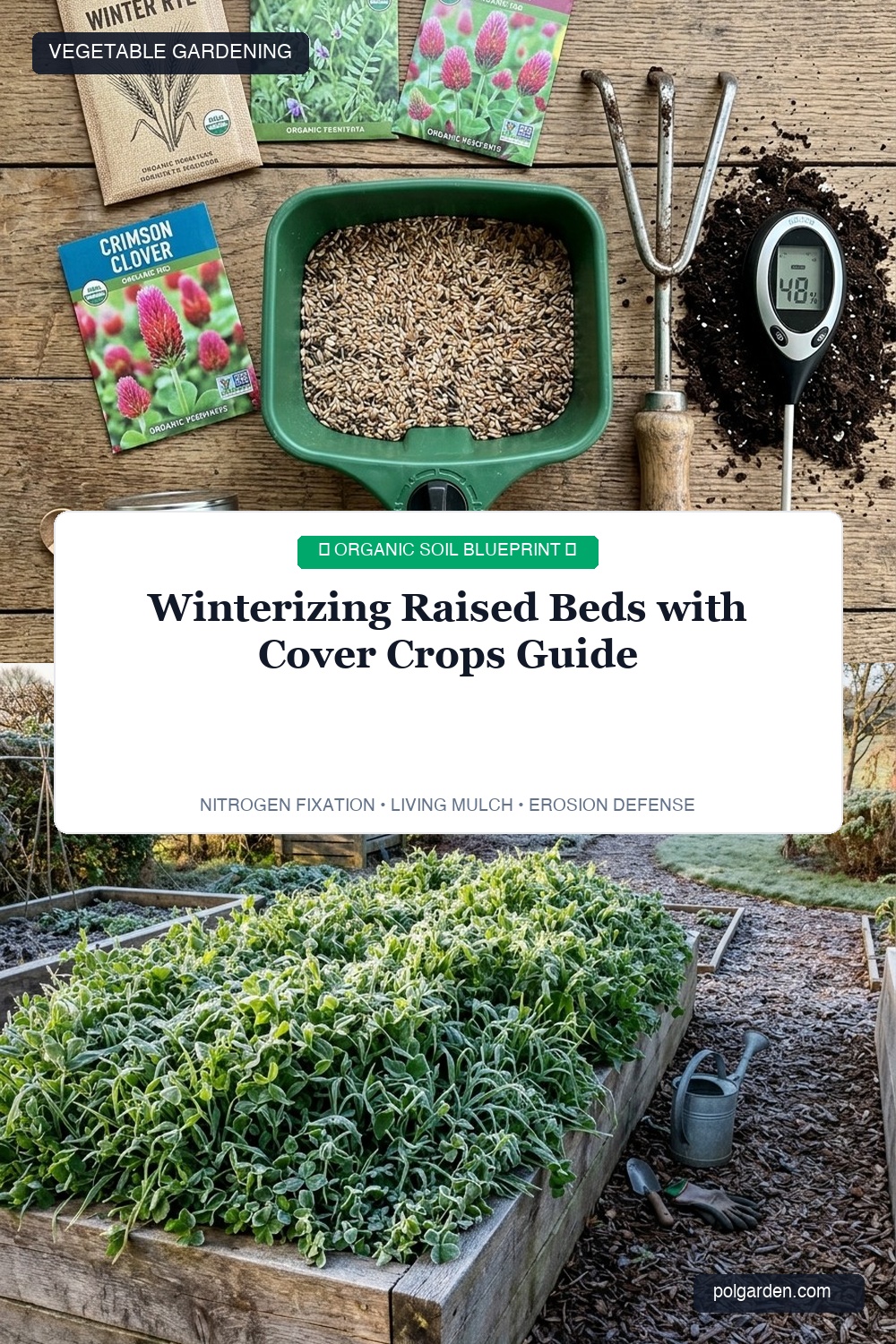
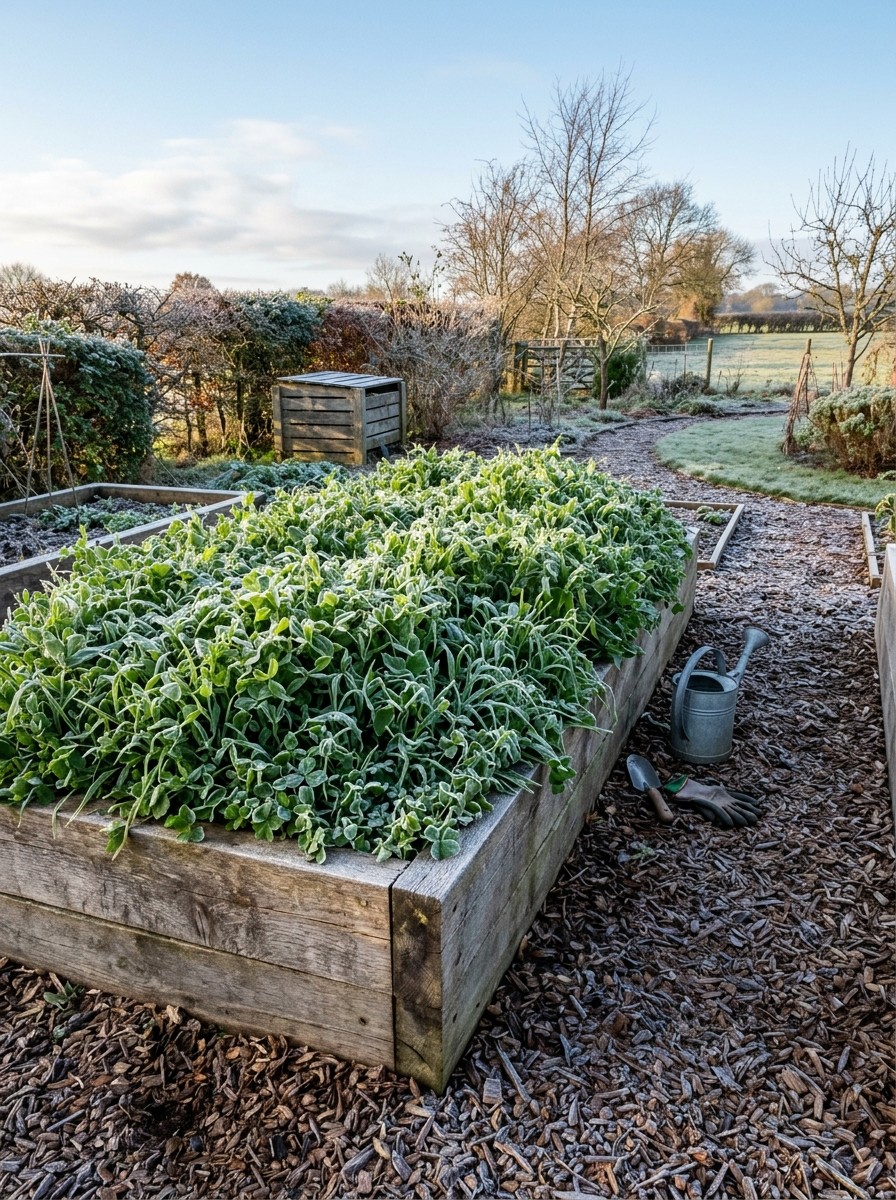
Leaving raised garden bed soil bare and exposed over winter is the single fastest way to deplete soil fertility, destroy beneficial mycorrhizal fungi, and invite aggressive spring weeds. Heavy winter rains, snowmelt, and harsh freezing winds leach vital nitrogen and compact loose organic loam into dense, lifeless slabs. Sowing cold-hardy winter cover crops—often called “green manure”—creates a living vegetative blanket that fixes atmospheric nitrogen, unlocks deep minerals, and transforms ordinary garden beds into supercharged organic soil ready for explosive spring vegetable harvests.
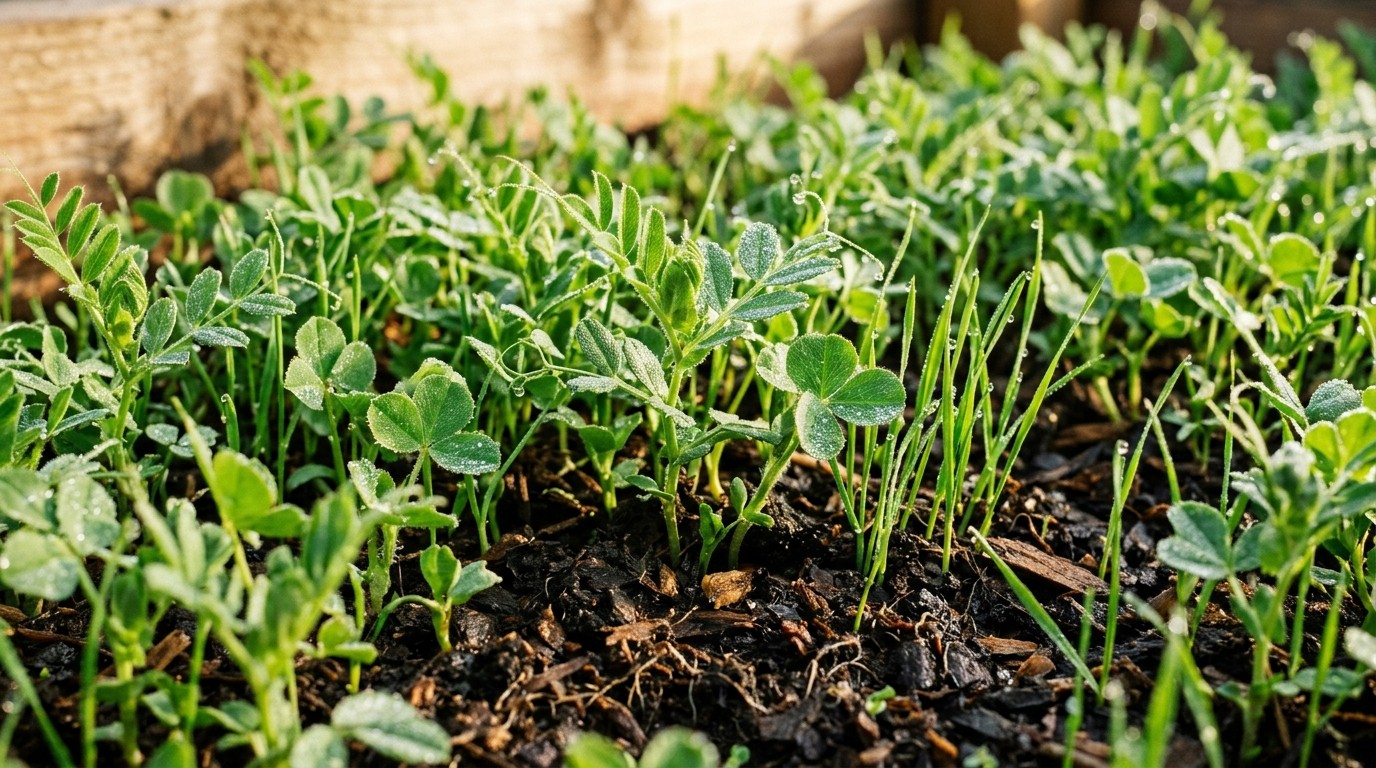
Unlike in-ground field crops, raised garden beds dry out and experience deeper frost penetration along their exposed wooden or metal sidewalls. Cover cropping acts as biological insulation, moderating root-zone soil temperatures and feeding billions of underground microbes that would otherwise starve during winter dormancy. By selecting the right combination of winter-kill annuals or cold-hardy overwintering legumes, you can customize your soil renovation with zero tilling or synthetic fertilizers.
Why You’ll Love Winter Cover Crops in Raised Beds
- Free Biological Nitrogen Fixation: Legume cover crops like Crimson Clover and Hairy Vetch pull nitrogen from the atmosphere, depositing up to 100+ lbs of organic nitrogen per acre directly into root nodules.
- Complete Soil Erosion & Compaction Defense: Fibrous grain roots lock lightweight raised bed compost in place, preventing winter wind erosion and rain compaction.
- Natural Weed Suppression: Dense green foliage forms a thick canopy that blocks light from reaching dormant weed seeds, eliminating hours of spring weeding.
- Deep Nutrient Scavenging: Deep-rooting species like Daikon Radish mine subsoil calcium, phosphorus, and potassium, bringing minerals up to surface root zones where future vegetables can reach them.
Key Cover Crop Varieties & Sowing Tools
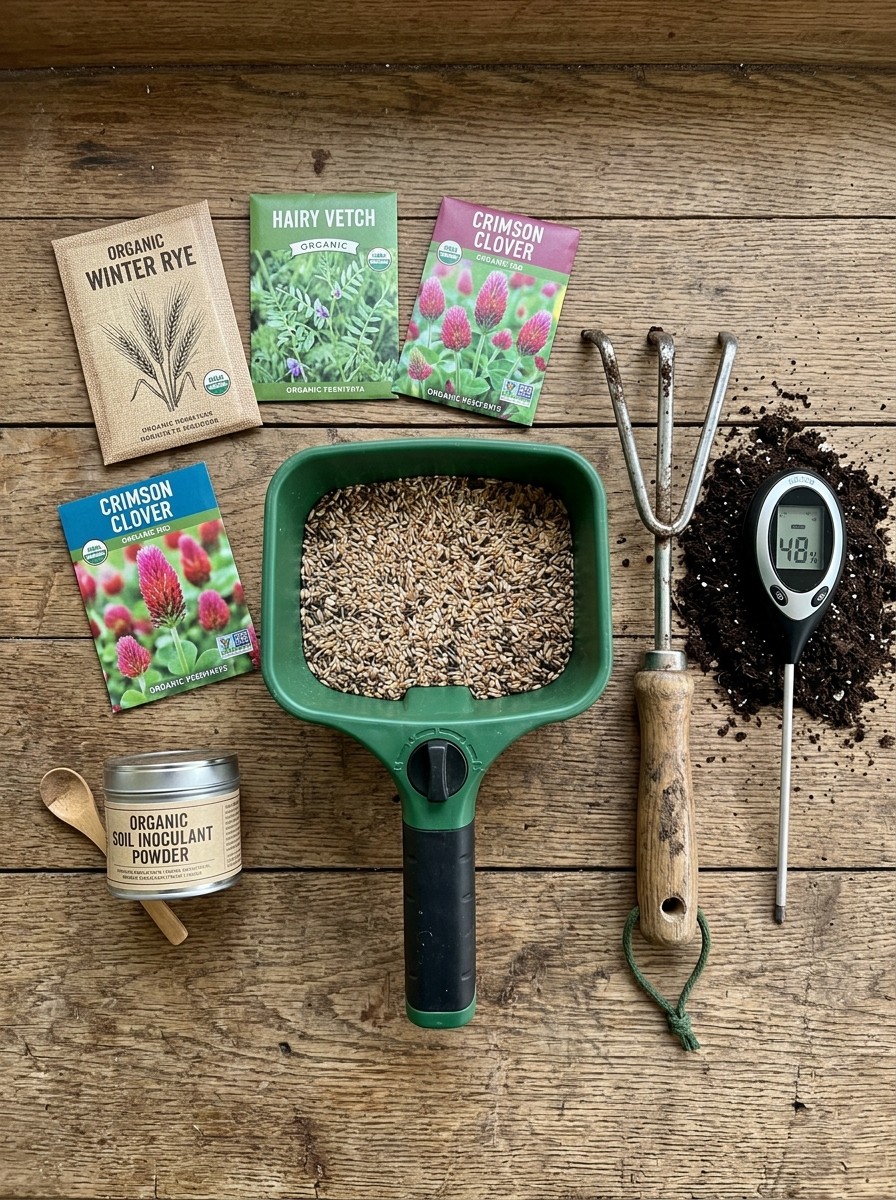
- Crimson Clover (Trifolium incarnatum): Rapidly establishing winter annual legume that fixes abundant nitrogen and produces pollinator-attracting spring blooms.
- Hairy Vetch (Vicia villosa): Extremely cold-hardy overwintering legume capable of surviving sub-zero winter temperatures while producing massive organic biomass.
- Winter Rye / Cereal Rye (Secale cereale): Fast-growing winter grain with extensive fibrous roots that scavenge excess summer nutrients and suppress soil-borne pathogens.
- Rhizobium Legume Inoculant: Essential organic beneficial bacterial powder mixed with seeds before planting to guarantee high-efficiency root nodule nitrogen fixation.
Step-by-Step Planting & Termination Walkthrough
1. Timing and Bed Clearing: Plant your winter cover crops 4 to 6 weeks before your first expected autumn frost. Clear out finished summer tomato, pepper, and squash vines. Rake the raised bed soil surface smooth and remove large debris, leaving the underlying soil ecosystem undisturbed.
2. Inoculating and Broadcasting Seeds: Moisten your legume seeds lightly with non-chlorinated water and roll them in Rhizobium inoculant powder until evenly coated. Broadcast the seed blend generously across the raised bed at a rate of roughly 1 to 2 tablespoons per 10 square feet. Use a handheld broadcast spreader or hand-scatter for dense, uniform coverage.
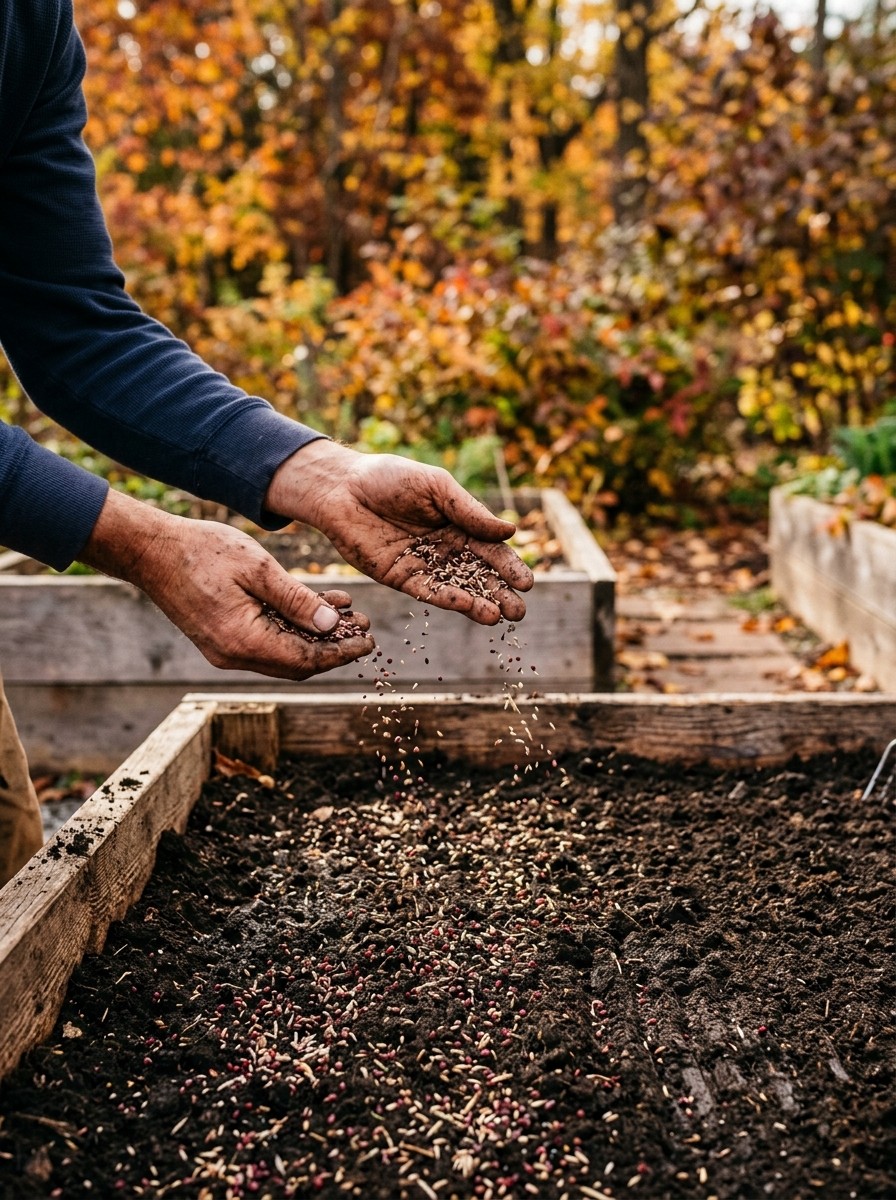
3. Raking In & Moisture Establishment: Lightly drag a hand cultivator or leaf rake across the bed to cover seeds with 1/4 to 1/2 inch of soil. Gently tamp the surface down with the back of your hand or rake to guarantee firm seed-to-soil contact. Water thoroughly with a gentle mist spray, keeping the top layer moist until green sprouts emerge in 4 to 7 days.
4. Spring “Chop & Drop” Termination: In early spring—roughly 3 to 4 weeks before planting warm-season crops (or when legumes begin 50% flowering)—cut cover crop stems at the soil line using hedge shears or a string trimmer. Leave the cut green biomass on the bed surface as nutrient-dense organic mulch, or top with 2 inches of compost. The severed roots underground will naturally decompose, releasing nitrogen and creating aerated root channels for your spring vegetables.
3 Master Secrets for Raised Bed Cover Cropping
1. Blend Grains and Legumes for Complete Soil Balance: Never sow a single species alone. Combining a nitrogen-fixing legume (like Crimson Clover or Field Peas) with a carbon-rich biomass grain (like Winter Rye or Oats) provides balanced nutrition: the grain prevents nitrogen leaching while the legume adds new organic nitrogen.
2. Leverage “Winter-Kill” Species for Zero-Effort Spring Beds: If you want hassle-free spring planting without trimming live winter crops, sow tender cover crops like Daikon Radishes and Forage Oats. They grow vigorously in autumn, and naturally freeze and die when temperatures drop below 20°F (-6°C), leaving a clean, weed-free, bio-drilled seedbed ready for early spring sowing.
3. Terminate Before Seed Set: Always cut or crimp overwintering cover crops when they reach the flowering stage. Allowing cover crops to mature and produce viable seeds turns beneficial green manure into persistent garden weeds that compete with your spring crops.
Companion Autumn Soil Upgrades
- Fall Garden Bed Mulching: Protect walking pathways and perennial beds alongside your cover crops using our fall garden bed mulch and insulation guide.
- Winter Garlic Planting: Allocate dedicated bed space for winter-sown alliums following our fall garlic planting protocol.
- Organic Leaf Mold Soil Booster: Enrich spring planting beds by making nutrient-rich compost with our DIY organic leaf mold guide.
Troubleshooting Cover Crop Growing Issues
- Sparse or Patchy Germination: Caused by dry surface soil during the first week. Maintain daily light watering until root systems anchor.
- Bird Foraging on Seeds: Hungry migrating birds love winter grain seeds. Lay a lightweight floating row cover over the bed for 7 days until seeds sprout.
- Overgrown Spring Biomass: Heavy spring growth can be difficult to manage. Mow or weed-whack foliage down in stages and cover with a dark silage tarp for 2 weeks to accelerate breakdown.
Frequently Asked Questions
Can I plant cover crops in small containers and fabric grow bags?
Yes! Cold-hardy cover crops like Crimson Clover, Buckwheat (for quick fall biomass), and hairy vetch perform excellently in 5-to-15 gallon fabric grow bags and patio containers, preventing container soil compaction and preserving biological health over winter.
Do I need to till cover crops into the soil in spring?
No. In no-till organic gardening, tilling is discouraged because it disrupts beneficial fungal networks and brings buried weed seeds to the surface. Simply chop the crop at the base and let roots decay naturally underground while using the top foliage as surface mulch.
What is the best cover crop blend for heavy clay raised bed soil?
A 3-way mix of Daikon Radish (for deep root compaction fracturing), Winter Cereal Rye (for fibrous root aggregation), and Crimson Clover (for nitrogen fixation) is the premier blend for breaking up dense clay and infusing organic carbon.
Pin This Soil Building Blueprint for Later
Love these organic soil secrets? Save this pin to your Raised Bed Gardening and Fall Garden Prep boards on Pinterest so you have these cover crop sowing and termination steps ready before frost arrives!