
As winter frosts descend and sub-freezing winds sweep through autumn gardens, the Mediterranean evergreen woody shrub (Salvia rosmarinus) faces its most perilous seasonal hurdle. While rosemary thrives under intense summer heat, rocky drought, and baking sun, cold temperatures combined with damp, heavy soil quickly trigger root rot, black foliage dieback, and sudden winter mortality. By executing this comprehensive 4-step rosemary overwintering protocol, you can insulate vulnerable root balls, regulate cold-weather soil moisture, and guide both potted patio containers and in-ground bushes safely through freezing temperatures until warm spring growth resumes.
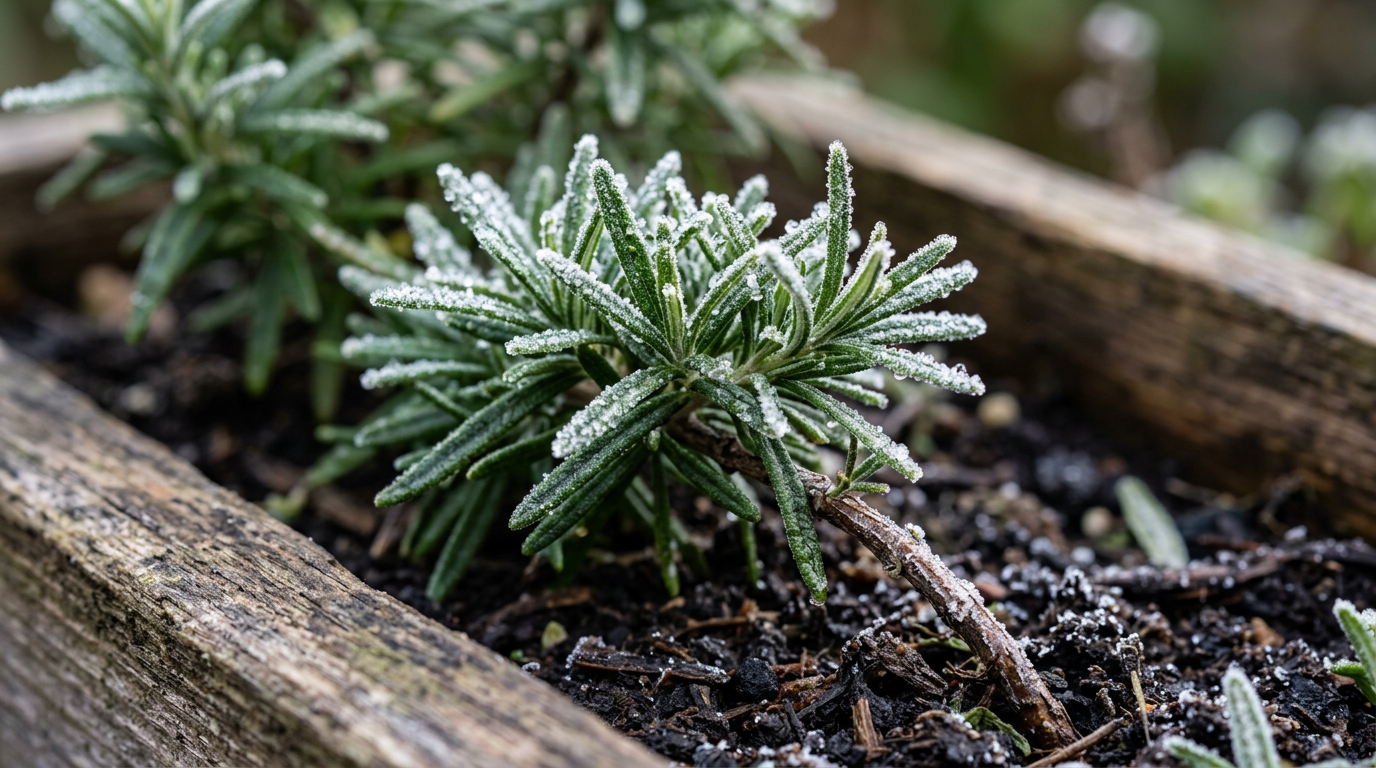
Native to the sun-baked, calcified cliffs of the Mediterranean basin, rosemary can comfortably endure light frosts down to 20°F (-6°C) for cold-hardy cultivars like Arp, Alcalde Cold Hardy, or Madeline Hill. However, standard tender culinary varieties like Tuscan Blue or Prostratus suffer cellular frost crack once temperatures dip below 25°F (-4°C). Understanding the critical balance between winter dormancy, root breathability, and ambient air circulation is the secret to keeping your rosemary plants vibrant year after year.
Why You’ll Love This Overwintering Method
- 100% Organic Root Insulation: Protects vulnerable root structures without toxic chemicals or artificial heat mats.
- Eliminates Winter Root Rot: Calibrates drainage and watering so plants never sit in cold, stagnant winter slush.
- Versatile for Pots & In-Ground Beds: Clear step-by-step paths whether you garden on a cold urban balcony or spacious landscape beds.
- Preserves Essential Oil Potency: Keeps aromatic terpenes concentrated within healthy needles for continuous culinary harvesting.
Essential Supplies & Insulation Materials

- Breathable Natural Burlap & Frost Cloth: Natural woven burlap wraps insulate root balls while letting excess humidity evaporate freely, preventing mold.
- Coarse Horticultural Perlite & Pea Gravel: Rosemary roots suffocate in soggy winter potting soil; amending pots with 30% perlite guarantees sharp drainage.
- Organic Pine Needle or Bark Mulch: A 3-inch layer of pine needles or aged Organic Leaf Mold Compost insulates the soil surface against severe ground freezes.
- Clean Bypass Pruning Shears: To trim dead, spindly, or diseased woody stems before winterizing begins.
- Jute Twine & Pot Elevators: Elevating containers off freezing concrete patio stone prevents drainage hole ice dams.
Step-by-Step Walkthrough: The 4-Step Winter Shield
1. Autumn Sanitary Pruning & Pest Inspection: About 3 to 4 weeks before your region’s first anticipated hard freeze, inspect your rosemary bush thoroughly. Snip away dead, weak, or crisscrossing branches to improve interior airflow. Check branch joints for late-season pests like spider mites; if detected, wash foliage down with organic cold-pressed oil following our Spider Mite Organic Eradication Guide before bringing any plants indoors.
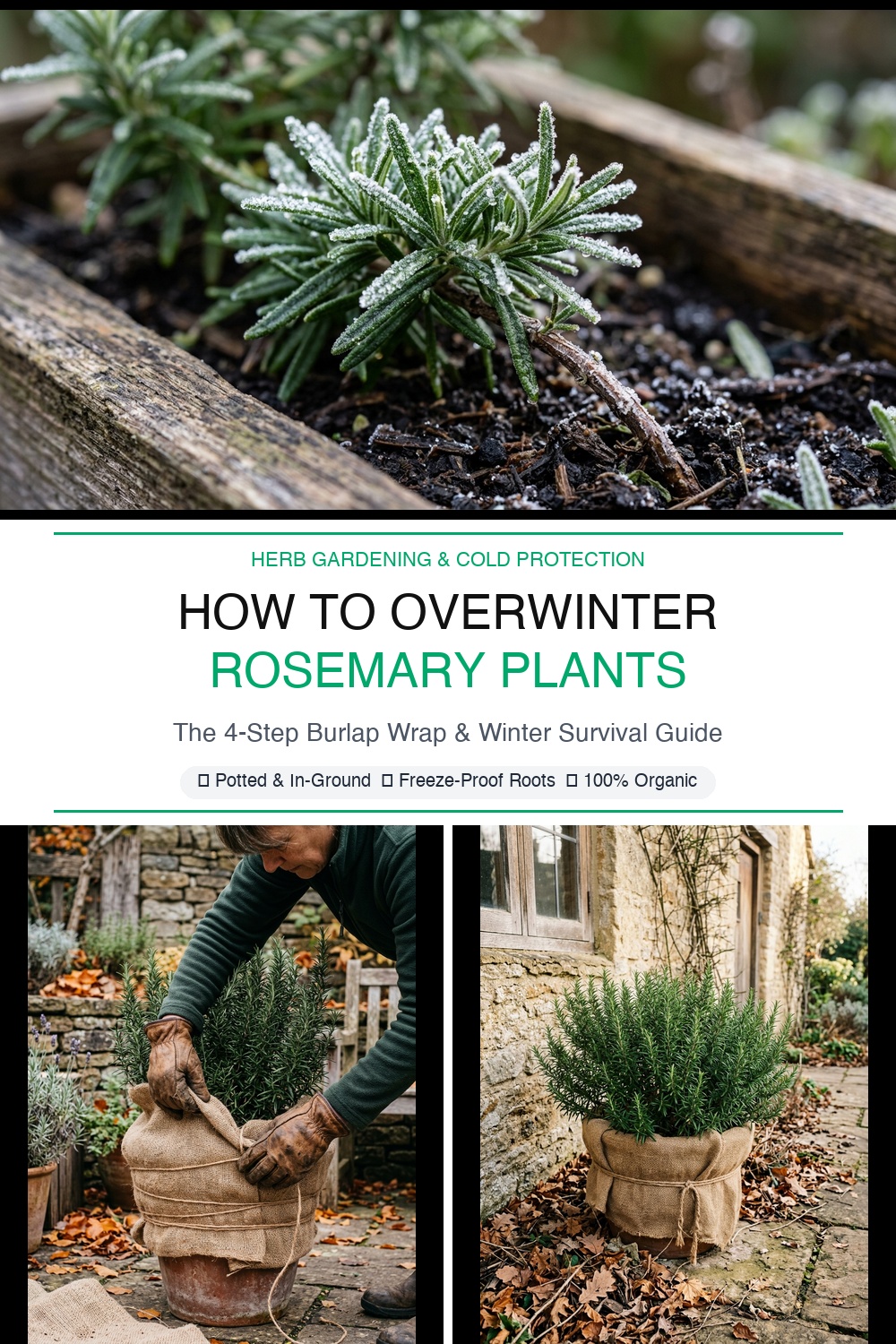
2. Pot Insulation & Root Shielding: Because container soil freezes from all sides, root temperatures in uninsulated pots plummet 15°F colder than in-ground soil. Wrap 3 to 4 layers of thick natural burlap around the exterior of the container, securing it snugly with natural jute twine. Ensure the burlap covers from the pot’s top rim down to the base to buffer delicate root tips against thermal shock.

3. Microclimate Relocation & Windbreaks: Position insulated potted rosemary against a sheltered south-facing or west-facing masonry wall. Brick, concrete, and stone absorb solar radiation during daylight hours and slowly radiate latent thermal warmth throughout freezing nights. If overwintering in-ground shrubs, erect a windbreak burlap cage similar to our Fig Tree Burlap Winter Shield to prevent desiccation from sub-zero winter gusts.
4. Root Collar Mulching & Drainage Elevation: Spread a 3-inch blanket of pine straw, dry autumn leaves, or wood chips over the potting soil surface, keeping mulch 1 inch away from the central woody crown to prevent stem rot. Place terracotta feet or wooden risers beneath the pot base to ensure meltwater flows freely away without freezing the bottom drainage hole shut.
3 Pro Secrets for Winter Rosemary Survival
1. The “Dry Roots” Principle: Cold wet soil kills rosemary 10 times faster than cold air alone. Allow the top 2 to 3 inches of soil to completely dry out before offering modest sips of water. During December and January, plants enter semi-dormancy and consume less than 20% of their summer moisture intake.
2. Never Fertilize in Late Autumn or Winter: Applying high-nitrogen fertilizers stimulates tender, succulent green shoot tips that will instantly blacken and freeze under the first hard frost. Cease all fertilization by early September and resume only when spring growth begins in late March.
3. Maximize Winter Light When Transitioning Indoors: If your region drops below 10°F (-12°C) and you must bring rosemary indoors, place it in your sunniest south-facing windowsill. Indoor spaces are notoriously dim in winter; if ambient light drops, supplement with full-spectrum LEDs or explore naturally shade-tolerant species from our guide to the best houseplants for dark rooms.
Common Overwintering Mistakes to Avoid

- Using Non-Breathable Plastic Wraps: Never wrap rosemary foliage or pots in airtight black plastic or bubble wrap. Plastic traps condensation, fostering powdery mildew, botrytis blight, and rapid crown suffocation.
- Placing Potted Rosemary Directly on Frozen Concrete: Cold concrete acts as a giant heat sink that saps warmth directly from potting soil. Always elevate containers on wooden cedar blocks or rubber pot feet.
- Overwatering Indoors: Indoor heating combined with low light makes wet soil a death trap. Keep a digital soil probe handy and water only when the pot feels noticeably lightweight.
Winter Watering & Temperature Care Cadence
Maintain this simple schedule during the dormant winter months (November through February):
| Growing Method | Watering Frequency | Critical Minimum Temp | Light Requirement |
|---|---|---|---|
| Outdoor Potted (Insulated) | Every 3 to 4 weeks (Frost-free days only) | 20°F (-6°C) | Full sun / South-facing wall |
| Indoor Overwintered | Every 2 to 3 weeks (Dry top 3 inches) | 50°F to 65°F (10°C to 18°C) | 6+ hrs south window or grow light |
| In-Ground Mulched Bed | Natural rainfall only (Zero supplemental) | 15°F (-9°C) for hardy varieties | Open winter sun & windbreak |
Save This Rosemary Overwintering Guide on Pinterest
Frequently Asked Questions
Can rosemary survive winter outdoors?
Yes, rosemary can survive outdoors if you grow cold-hardy cultivars like Arp down to USDA Zone 6 (around 0°F / -18°C) when planted in well-drained, gravelly soil with thick mulch. Tender cultivars in containers must be insulated with burlap or moved to an unheated garage, shed, or sunny indoor windowsill once temperatures drop below 25°F (-4°C).
Why do rosemary leaves turn brown and brittle in winter?
Brittle brown needles are typically caused by either winter drought (frozen roots unable to absorb moisture during dry, sunny winter days) or indoor dry air shock combined with overwatering. Ensure outdoor potted plants are watered slightly before hard freezes, and keep indoor plants away from direct heating drafts.
Should I prune rosemary before winter?
Only conduct light sanitary pruning to remove damaged, dead, or crossing branches in early autumn. Never hard-prune rosemary woody branches late in the season, as pruning stimulates tender new shoots that cannot survive freezing temperatures and leaves open wounds susceptible to fungal infection.
Pin This Cold-Weather Guide for Later
Planning to freeze-proof your herb garden this season? Pin this guide to your Gardening, Herb Care, or Fall Preparation boards so you have this essential survival walkthrough ready whenever sub-freezing temperatures arrive!