
As late autumn sweeps across the garden border and frost transforms summer blooms into dried silhouettes, butterfly bush (Buddleja davidii) stands at the center of one of gardening’s most widely misunderstood seasonal rituals. Every November, countless well-meaning gardeners make the fatal mistake of pruning their butterfly bushes down to tidy six-inch stubs. While cutting back perennials in fall works wonders for hostas and black-eyed susans, doing so to a butterfly bush invites catastrophic winter dieback: hollow, woody stems act as direct straws funneling icy water straight into the heart of the root crown, causing deadly fungal rot during deep freezes. Mastering how to winterize your butterfly bush in autumn requires understanding the shrub’s unique anatomical biology, practicing strategic restraint, and applying an insulating blanket of organic mulch to ensure vibrant, fragrant panicles and clouds of visiting pollinators next summer.
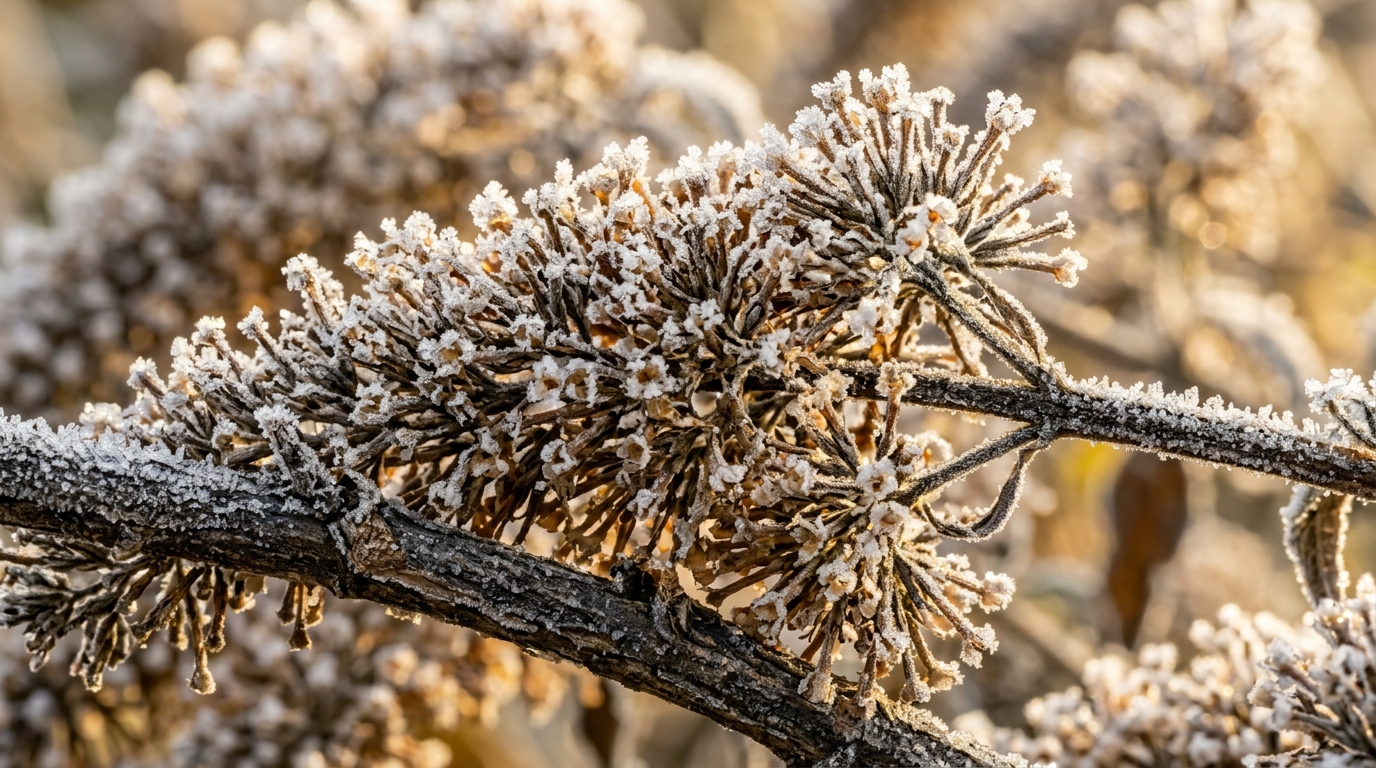
Native to rocky, dry hillside regions across central China, butterfly bushes possess remarkable drought tolerance and vigorous summer growth rates. However, their woody stems feature a soft, sponge-like internal pith that shrinks during freezing weather, creating open, hollow conduits. In USDA hardiness zones 5 through 9, winter conditions alternate unpredictably between heavy freezing downpours, sleet, and sub-zero temperatures. If canes are cut flush to the ground before winter arrives, trapped water repeatedly expands as ice inside these pith channels, splitting the woody base and exposing the delicate crown tissue to bacterial cankers and crown rot. Preserving the majority of the top branch framework buffers the crown against wind currents and insulates the lower buds until true spring arrives.
Why Winterizing Butterfly Bush Matters: The 4 Critical Risks
- Eliminates Hollow Stem Crown Rot: Cutting canes down to the base in fall opens porous hollow channels that funnel winter rain directly into the root crown, causing waterlogging and lethal crown rot.
- Prevents Wind-Rock Root Loosening: Vigorous 8-foot shrubs catch fierce winter winds like sails, rocking the root ball back and forth and snapping fragile feeder roots in waterlogged winter soil.
- Insulates the Dormant Root Flare Against Frost Heaving: Rapid freeze-thaw cycles heave unprotected shallow roots out of the soil, exposing root nodules to dry, desiccating winter winds.
- Preserves Natural Wildlife Shelter: Leaving dried flower cones and dense branching provides vital winter roosting cover for overwintering beneficial insects, solitary bees, and small foraging birds.
Essential Winterizing Supplies & Smart Swaps

- Heavy-Duty Bypass Loppers: Sharp anvil or bypass loppers capable of cleanly trimming thick, 1-inch woody canes without crushing or splintering the stem bark.
- Sharp Bypass Hand Pruners: For deadheading dried seedheads and removing weak, crossing branches at the center of the canopy.
- Shredded Bark or Pine Needle Mulch: 6 inches of coarse, well-aerated mulch to insulate the crown (smart swap: clean straw or dry shredded hardwood leaves).
- Well-Rotted Organic Compost: 1 to 2 inches top-dressed around the drip line to feed soil mycorrhizae through winter without triggering late tender growth.
- Heavy Jute Twine: Used to bundle remaining tall stems loosely in high-wind regions to prevent branch breakage under heavy wet snow loads.
- Evergreen Boughs (Zone 5 Protection): Recycled fir or pine branches placed over the mounded base to trap snow insulation and prevent wind-driven desiccation.
Step-by-Step 4-Step Walkthrough to Winterize Butterfly Bush
Step 1: Apply the “Rule of One-Third” (Resist the Hard Fall Cutback). The single most critical rule of butterfly bush autumn care is: never prune back to the ground in fall. Instead, use bypass loppers to trim tall canes back by just one-third to one-half of their height. This targeted reduction prevents “wind-rock”—the violent swaying of tall stems during gale-force autumn storms that leverages the root ball and snaps delicate anchoring roots below ground. Trim above an outward-facing bud node, angling the cut slightly so autumn moisture runs off the surface rather than pooling on the cut end.
Step 2: Deadhead Spent Seedheads and Sanitize Surrounding Soil. Snip off all remaining dried, brown cone-shaped flower panicles. Removing these seedheads serves two crucial purposes: it halts aggressive volunteer self-seeding (many Buddleja cultivars produce thousands of wind-blown seeds that can become invasive in native woodlands), and it prevents heavy snow from accumulating on bushy flower heads and snapping primary branches. Next, rake away fallen diseased foliage around the base to prevent fungal spores from overwintering near the crown.

Step 3: Mound a 6-Inch Insulating Collar of Coarse Organic Mulch. After the first light frost has halted active sap flow, spread a 1- to 2-inch layer of rich compost around the root zone, keeping it 3 inches away from direct contact with woody stems. Next, mound a generous 4- to 6-inch cone of coarse shredded bark, pine needles, or clean seedless straw over the root flare and base of the canes. This organic mound acts as a thermal blanket: it keeps root temperatures stable, shields dormant basal buds from sudden Arctic temperature plunges, and prevents repeated soil heaving during erratic mid-winter thaws.
Step 4: Shield Cold-Zone Plants & Winterize Potted Specimens. In USDA Zone 5 and colder microclimates, winter freezes regularly plunge below -10°F (-23°C), which will kill butterfly bush top-growth completely down to ground level. Lay fragrant evergreen boughs (recycled from holiday wreaths or pruning) across the mulch mound to hold it securely against whipping winter winds. For butterfly bushes grown in patio pots and containers, elevate the containers off cold concrete onto pot feet, wrap the exterior planter walls in bubble wrap or insulated burlap, and cluster pots against a sheltered south-facing brick wall out of direct freezing winds.
3 Master Secrets for Vigorous Spring Regrowth & Heavy Blooms
1. Stop All Nitrogen Fertilizer by Mid-August. Applying high-nitrogen fertilizers or rich liquid feeds in late summer or early fall forces the shrub to produce succulent, fleshy green stems that have zero winter hardiness. These soft shoots freeze into mush at 28°F (-2°C), providing an entry portal for fungal pathogens. Stick strictly to slow-release bone meal or potassium in late autumn to fortify root cell walls.
2. The Deep Pre-Freeze Hydration Soak. One of the leading causes of winter dieback in woody shrubs is not cold temperatures, but winter desiccation. Dry, freezing winds evaporate moisture from stems while frozen soil prevents roots from drinking. Give your butterfly bush a thorough, deep soaking 24 to 48 hours before your region’s first predicted hard ground freeze (below 25°F / -4°C). Fully hydrated root cells withstand cellular freezing far better than dry, thirsty roots.
3. Wait for the “Green Eye” Signal in Spring Before Pruning Hard. In spring, butterfly bushes are notorious late risers. Gardeners frequently assume their bush is dead in March and make hasty pruning errors. Wait until mid-to-late spring (April or May depending on your zone) when warm sunshine causes vibrant green leaf buds—known as “green eyes”—to swell near the ground. Once these basal shoots emerge, cut all dead upper wood back cleanly to 12 inches above the soil line.
In-Ground vs. Container Overwintering Strategy

Because container potting soil lacks the massive subterranean insulation of in-ground soil, winterizing techniques differ significantly based on planting location:
- In-Ground Plantings (USDA Zones 5–9): Deep root systems benefit from ambient earth heat. Simply reduce stems by one-third, deadhead brown panicles, and apply 6 inches of shredded bark over the root zone. In Zones 5 and 6, top canes may die back to the mulch line, but the insulated crown will push vigorous 6-foot shoots rapidly in May.
- Potted / Patio Specimens (USDA Zones 7–9): Container roots experience ambient freezing air from all sides, effectively making them two zones colder (a pot in Zone 7 experiences Zone 5 soil temperatures). Move containers to an unheated garage, shed, or sheltered patio nook once the plant enters dormancy, watering sparingly once a month just to keep root balls from turning bone-dry.
Spring Wake-Up: When and How to Make the Rejuvenation Hard Cutback
When daffodils fade and soil temperatures climb above 50°F (10°C) in spring, your butterfly bush is ready for its true rejuvenation cut. Carefully rake back the mounded mulch collar from the crown to let warming spring sunshine reach the soil. Inspect the woody base for new green shoots pushing from the root flare. Using sharp bypass loppers, cut all old, weathered canes back to 10 to 12 inches above ground level, making clean 45-degree cuts just 1/4 inch above strong, healthy outward-facing green buds. Because butterfly bushes bloom exclusively on “new wood” produced during the current growing season, this dramatic spring pruning stimulates explosive new basal branching and produces the largest, most prolific flower spikes imaginable.
Frequently Asked Questions
What happens if I already cut my butterfly bush down to the ground in fall?
If you already trimmed your shrub to ground level before reading this guide, do not panic! Immediately cover the exposed stubs with a generous 6- to 8-inch mound of dry, coarse mulch, such as shredded bark, dry leaves, or pine straw, and top with an overturned nursery pot or bucket weighted with a brick. This prevents rainwater and ice from penetrating the hollow pith until spring.
Does butterfly bush die completely to the ground in winter?
In colder regions (USDA Zones 5 and 6), all top wood typically dies back during harsh sub-zero temperatures, meaning the shrub behaves like a herbaceous perennial, regrowing entirely from dormant root crowns in spring. In warmer regions (Zones 8 and 9), stems often remain alive and evergreen or semi-dormant throughout mild winters.
Should I wrap butterfly bush in burlap for winter?
Burlap wrapping is generally unnecessary for healthy in-ground butterfly bushes in Zones 6 through 9. However, in windy Zone 5 gardens, placing a three-stake burlap windbreak on the windward side helps protect the crown from desiccating northern winds without trapping moisture against the stems.
Explore Related Seasonal Gardening Guides
- How to Winterize Black-Eyed Susans (Rudbeckia): Seedhead Retention & Crown Care
- How to Winterize Hydrangeas: Old vs. New Wood Pruning & Bud Protection Guide
- How to Winterize Roses: Mounding, Graft Union & Winter Cane Protection Guide
- How to Winterize Potted Plants Outdoors: Root Insulation & Grouping Guide
Pin This Gardening Guide for Later
Love this guide? Save this pin to your Pinterest gardening board so you have these fall pruning tips and shrub protection steps ready whenever you need them!