
With their cheerful golden-orange ray petals, bold chocolate-brown central cones, and steadfast drought tolerance, Black-Eyed Susans (Rudbeckia fulgida and Rudbeckia hirta) stand among the most resilient and beloved herbaceous perennials in the temperate garden landscape. From mid-summer through crisp autumn mornings, these native North American prairie powerhouses illuminate cottage borders, pollinator meadows, and foundation beds with ceaseless golden brilliance. Yet as November arrives and killing hard frosts reduce their vibrant floral displays to blackened petals and stiffened brown stems, gardeners inevitably face a universal autumn dilemma: should you cut Black-Eyed Susans down to the ground in fall, or leave them standing all winter? While modern tidy-gardening instincts urge an immediate ground-level haircut, stripping your garden of standing Rudbeckia stems removes a vital ecological lifeline for winter foraging songbirds and deprives subterranean root crowns of their natural snow-trapping insulation. Conversely, leaving diseased, fungus-ridden foliage standing over winter can invite devastating fungal blight next spring. By learning how to winterize Black-Eyed Susans through our balanced 4-step protocol—selective sanitary thinning, pre-freeze crown hydration, breathable root zone mulching, and late-winter cutback timing—you will nourish native wildlife, protect root crowns from lethal freeze-thaw cycles, and ensure an explosive golden resurgence next season.
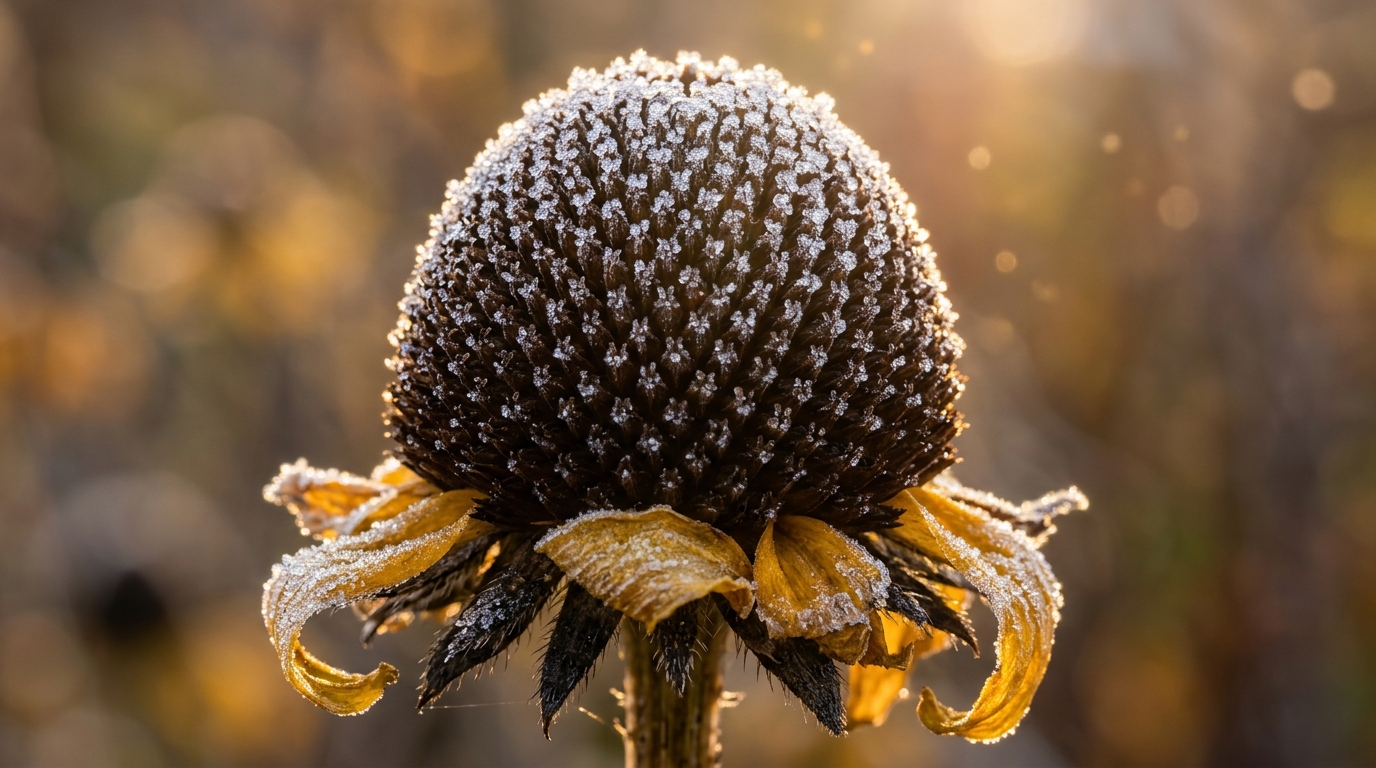
To successfully winterize Black-Eyed Susans, gardeners must recognize the critical ecological and physiological differences between perennial varieties (like Rudbeckia fulgida ‘Goldsturm’) and biennial or short-lived varieties (such as Rudbeckia hirta). True perennial Black-Eyed Susans survive freezing winters by developing a dense subterranean crown of resting vegetative buds situated just below the soil line. Much like the winter care principles applied when winterizing purple coneflowers or protecting perennial herb crowns, the stiff, upright flower stalks act as natural stakes that catch falling autumn leaves and drifting snow, forming a natural insulating blanket over the vulnerable crown. Furthermore, their oil-rich seeds provide high-calorie sustenance for goldfinches, chickadees, and nuthatches during mid-winter food scarcity. The only valid reason for aggressive autumn cutbacks is the presence of Septoria leaf spot or powdery mildew; otherwise, selective sanitary cleanup followed by a light mulch collar delivers the ultimate winter protection.
Why Selective Winterizing Protects Wildlife & Prevents Crown Rot
- Critical High-Calorie Winter Forage for Songbirds: The dense central cones of Rudbeckia are packed with nutrient-dense seeds. Leaving healthy stalks standing provides American Goldfinches, juncos, and towhees with essential food from December through February.
- Thermal Ground Snow-Trapping: Upright standing stems act as snow fences, capturing windblown snow directly above the root zone. Snow acts as an outstanding natural thermal insulator, keeping crown temperatures stable near 32°F (0°C) even during sub-zero polar vortexes.
- Prevention of Destructive Frost Heaving: Oscillating freeze-thaw cycles in bare soil expand and contract the ground, pushing shallow perennial root crowns out of the earth and exposing delicate root hairs to sub-zero freeze-drying.
- Eradication of Overwintering Fungal Spores: Black-Eyed Susans are notorious hosts for Septoria leaf spot. Selectively removing spotted basal foliage in autumn prevents fungal spores from overwintering in the soil and reinfecting spring seedlings.
Essential Supplies & Smart Perennial Winterizing Toolkit

- Sharp Bypass Pruning Shears: Provides clean, surgical cuts without tearing or crushing fibrous perennial stems, ensuring rapid callusing.
- 70% Isopropyl Alcohol or Disinfectant Wipes: Used to sterilize pruner blades between plants to prevent the accidental transfer of fungal blight.
- Shredded Leaf Mulch or Clean Pine Straw: The ideal natural mulch for herbaceous perennials. As highlighted in our guide to choosing the best garden mulches, airy organic mulches insulate soil without matting or suffocating crowns.
- Weatherproof Plant Markers: Essential for marking the perimeter of Rudbeckia clumps, preventing accidental shoveling or disturbance during early spring garden cleanup.
- Garden Rake & Yard Waste Bags: For gathering and safely bagging diseased foliage for municipal green disposal rather than backyard composting.
Step-by-Step Black-Eyed Susan Winterizing Walkthrough
Step 1: Sanitary Foliage Inspection (Keep the Cones, Cut the Spots)
Carefully inspect the basal foliage and lower stems of your Rudbeckia patch in late autumn. If the lower leaves display circular dark brown or black lesions with gray centers, your plants are infected with Septoria leaf spot. Using sterilized bypass pruners, selectively snip off these diseased basal leaves and rake away fallen debris beneath the plant, discarding them in household garbage. However, leave the healthy, upright central stems and dark seedhead cones standing tall for wildlife!

Step 2: Deep Pre-Winter Crown Soaking
Before the ground freezes solid in mid- to late November, provide your perennial flower beds with a deep, thorough watering. Moisten the soil profile down to a depth of 6 to 8 inches. Hydrated roots and crown tissues resist cellular desiccation during dry, windy winter cold snaps exponentially better than parched roots.
Step 3: Apply a 2- to 3-Inch Breathable Mulch Donut
Spread a 2- to 3-inch layer of clean shredded leaves, pine needles, or composted wood chips around the root perimeter of the clump, extending 6 to 8 inches outward. Crucially, practice the “mulch donut” method: leave a 1-inch bare gap immediately around the central base of the stems. Never pile heavy, wet mulch directly over the crown like a volcano, which traps winter moisture and breeds lethal fungal crown rot.
Step 4: Label and Protect Clumps from Winter Foot Traffic
Because perennial flower beds disappear under heavy winter snowbanks, drive a sturdy wooden plant marker or small bamboo stake at the corner of each Rudbeckia clump. This prevents accidental trampling during snow removal and marks the exact location for spring division.
3 Master Secrets for Thriving Rudbeckia Perennials
1. Never Compost Foliage Showing Septoria Leaf Spot: Backyard compost piles rarely generate internal heat high enough (140°F to 160°F) to destroy microscopic Septoria rudbeckiae fungal spores. Tossing diseased autumn leaves into your compost bin will contaminate next spring’s compost topdressing. Always bag and discard diseased perennial foliage off-site.
2. Allow Natural Self-Seeding for Free Future Plants: If you grow biennial or short-lived varieties like Rudbeckia hirta (‘Indian Summer’ or ‘Cherry Brandy’), leaving seedheads standing is essential for garden continuity. Winter winds and feeding birds will scatter ripe seeds onto the surrounding soil, where cold stratification naturally triggers high-percentage germination next spring.
3. Cease All Autumn Fertilizing: Never apply nitrogen-heavy plant food to Black-Eyed Susans after August. Late feeding stimulates tender vegetative crown growth that cannot harden off before freezing weather arrives. Let the root system transition naturally into seasonal dormancy.
Rudbeckia Fulgida vs. Rudbeckia Hirta: Cold Hardiness Comparison

- Rudbeckia Fulgida (True Perennial – e.g., ‘Goldsturm’): Extremely cold-hardy down to USDA Zone 3 (-40°F / -40°C). Forms dense, expanding rhizomatous colonies that return reliably for a decade or more. Exceptionally resilient to sub-zero temperatures with basic root mulching.
- Rudbeckia Hirta (Biennial / Short-Lived Perennial – e.g., ‘Gloriosa Daisy’): Hardy to USDA Zones 4-9, but individual plants frequently die after heavy flowering. Winterizing relies on seedhead retention so self-sown seeds germinate in spring.
- Rudbeckia Laciniata (Cutleaf Coneflower): Giant 6- to 9-foot native variety ideal for back-of-border pollinator gardens. Sturdy stalks resist heavy wet snow loads, making them top-tier wildlife winter towers.
- Potted / Container Black-Eyed Susans: Because container soil freezes solid without ground buffering, outdoor pots must be insulated. Review our comprehensive tutorial on winterizing potted plants outdoors for root-wrapping and grouping guidelines.
Spring Cutback & Clump Division Protocol
- Timing the Spring Cutback: Wait until late winter or early spring (typically late March to mid-April) when temperatures begin warming and new green basal rosettes emerge at the soil line. Using bypass pruners, shear the old standing stalks down to 2 inches above the crown.
- Dividing Overcrowded Clumps: Every 3 to 4 years, mature Rudbeckia clumps develop dead, woody centers. In early spring when new shoots are 2 to 3 inches tall, lift the entire clump with a spade, slice into 3 or 4 healthy divisions with roots attached, and replant into fresh organic compost.
- Mulch Raking: Gently pull back winter mulch layers from emerging green shoots to allow sunlight to warm the crown and stimulate vigorous early spring growth.
- Explore Companion Perennial Guides: Pair your spring garden planning with our specialized guides on caring for hostas and overwintering coneflowers.
Frequently Asked Questions
Should I cut back Black-Eyed Susans in the fall or spring?
For healthy plants, leaving them standing through winter and cutting them back in early spring is overwhelmingly recommended. Standing stems feed goldfinches, insulate root crowns with trapped snow, and provide architectural interest in winter. The only exception is if your foliage was severely infected with fungal leaf spot, in which case diseased leaves should be cut in fall.
Will Black-Eyed Susans survive freezing winter weather in pots?
Yes, but only if the container is adequately insulated. A perennial in an uninsulated outdoor pot effectively loses two hardiness zones. In USDA zones 6 and colder, wrap containers in bubble wrap and burlap or cluster them against a sheltered foundation wall to keep root balls from freezing solid.
Do deer eat Black-Eyed Susans during the winter?
No! Black-Eyed Susans feature coarse, hairy stems and bristly foliage that deer and rabbits generally find unpalatable. Their winter seedheads are virtually deer-proof, making them one of the safest native perennials for wildlife-adjacent gardens.
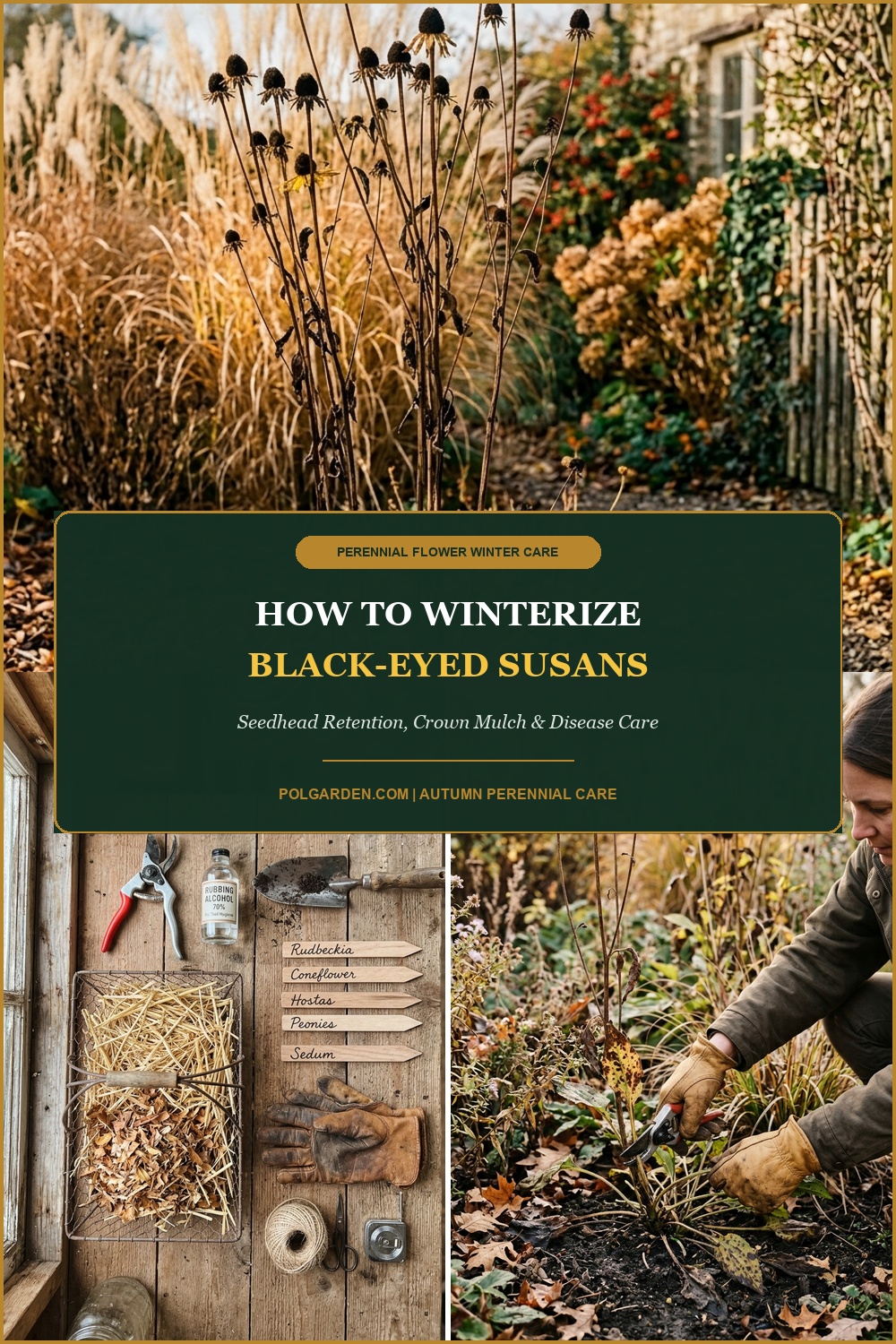
Pin This Black-Eyed Susan Winterizing Guide for Later
Love this guide? Save this pin to your Pinterest gardening board so you have the seedhead retention steps, crown mulching tips, and spring pruning schedule ready before the first hard winter freeze!