
When late autumn chill frosts the kitchen garden and the scent of crushed aromatic oils fills the brisk morning air, your perennial herb patch reaches a delicate seasonal crossroad. Unlike tender annual herbs like basil or cilantro that inevitably succumb to the first light frost, hardy perennial culinary staples—including garden thyme (Thymus vulgaris), culinary sage (Salvia officinalis), Greek oregano (Origanum vulgare), and garden mint (Mentha)—are inherently built to survive sub-freezing temperatures down to USDA Zone 5 and beyond. Yet every year, countless backyard gardeners walk out into their spring garden only to discover rotten, blackened woody stubs instead of thriving aromatic mounds. The lethal winter killer of perennial Mediterranean herbs is almost never ambient freezing temperatures; it is soggy, waterlogged soil, suffocating leaf mats, and severe freeze-thaw cycles that shear shallow feeder roots. By executing a targeted late-autumn winterizing regimen centered around crown drainage, strategic pruning restraints, and breathable evergreen pine bough sheltering, you ensure your culinary herbs emerge vigorous, healthy, and exceptionally fragrant come spring.
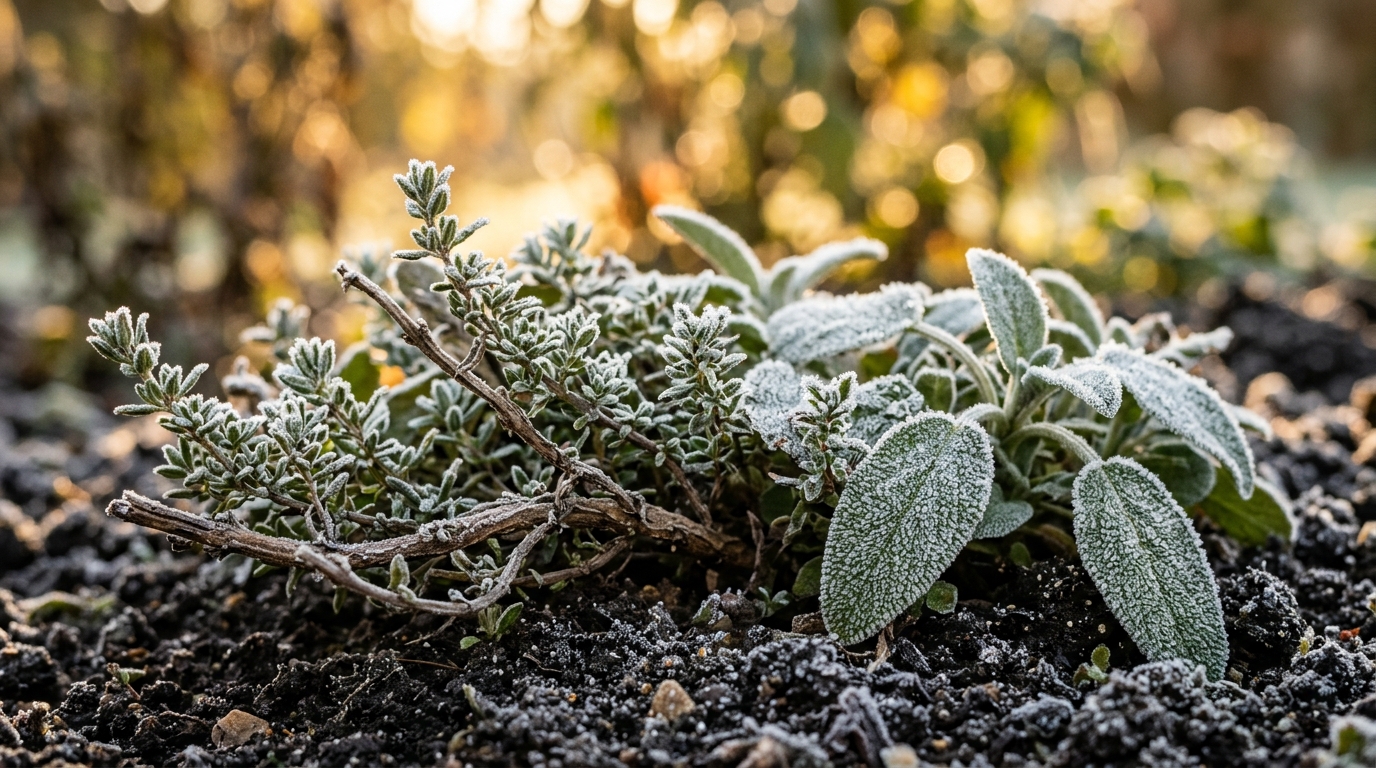
To successfully winterize culinary herbs, gardeners must distinguish between two completely distinct botanical groups: woody semi-evergreen sub-shrubs and herbaceous dieback perennials. Mediterranean natives like thyme, sage, and oregano develop woody lower stems that retain tough, leathery foliage throughout early winter; if you prune these woody stems severely in late autumn, you remove protective carbohydrate stores and stimulate tender cambial wounds that invite fatal crown rot. Conversely, vigorous herbaceous spreaders like mint, chives, and lemon balm naturally die back flat to the soil line after hard frosts, requiring a sanitary cutback to eliminate overwintering mildew spores and rust mycelium. Understanding these divergent winter habits—similar to the distinction between floricanes and primocanes when pruning autumn raspberries or caring for strawberry crowns—is your key to flawless perennial survival.
Why Winterizing Perennial Herbs Protects Essential Flavor & Root Health
- Elimination of Winter Crown Rot (The #1 Herb Killer): Mediterranean herbs evolved on arid, rocky limestone hillsides. During cold, wet northern winters, heavy clay soils stay saturated for months, suffocating oxygen and rotting woody crowns. Establishing mineral drainage buffers saves plants from fatal root asphyxiation.
- Prevention of Frost Heaving in Shallow Root Systems: Thyme and oregano form dense, mat-forming root networks within the top 3 inches of soil. Oscillating freeze-thaw cycles lift the earth upward, snapping delicate root filaments and leaving root balls exposed to desiccating arctic winds.
- Desiccating Winter Windburn Protection: Bitter, sub-zero winter winds evaporate essential moisture from semi-evergreen sage and thyme foliage while the root system sits locked in frozen ground, causing terminal twigs to turn brittle and die back.
- Sanitation & Fungal Rust Suppression in Mint Beds: Mint rust (Puccinia menthae) and powdery mildew overwinter on old autumn stems. Cutting mint flush to the ground in late autumn strips away infectious fungal inoculum before spring rains arrive.
Essential Supplies & Smart Material Choices

- Evergreen Pine or Fir Boughs: The absolute gold standard for winterizing Mediterranean herbs. Light evergreen boughs trap insulating snow without matting down, shade foliage from scorching winter sun, and allow 100% free air movement around woody crowns.
- Horticultural Pea Gravel or Coarse Grit: A 1 to 2-inch collar of gravel placed directly against the crown base sheds water instantly away from root collars, absorbs daytime solar warmth, and prevents soil splashing.
- Sanitized Precision Bypass Pruners: Required for snipping mint down to the ground and cleaning dead twigs on thyme and sage without tearing fibrous bark.
- Clean Pine Straw or Oat Straw: Loose, airy mulch ideal for winterizing vigorous dieback herbs like mint and chives. Avoid dense, heavy hay loaded with weed seeds.
- Heavy Burlap & Bubble Wrap (For Potted Herbs): Essential thermal jackets for container herb planters that freeze rapidly from all sides on cold patios.
Step-by-Step Perennial Herb Winterizing Walkthrough
Step 1: The Golden Pruning Rule (Woody vs. Herbaceous Herbs)
Resist the urge to scalp your entire herb bed in autumn! For woody herbs like Thyme, Sage, and Oregano, do NOT cut back into hard old wood in late autumn. Only snip off spent flower spikes and dead, blackened outer twigs, leaving the main woody foliage canopy intact to protect crown buds. Save your primary structural renewal pruning until spring when new green shoots emerge.
For herbaceous herbs like Mint and Lemon Balm, do the exact opposite: after the first hard killing frost turns foliage black, use bypass pruners to shear stems cleanly 1 inch above the soil line, depositing all spent debris directly into the trash to eliminate fungal rust.

Step 2: Install Crown Drainage Collars with Pea Gravel
Clear away all fallen autumn tree leaves that have settled around the base of your sage, thyme, and oregano plants. Spread a 1 to 2-inch layer of clean pea gravel, crushed granite, or coarse horticultural grit directly around the crown base. This mineral barrier ensures the crown never sits in stagnant, freezing winter mud during freeze-thaw cycles.
Step 3: Deep Pre-Freeze Hydration
Approximately two weeks before the ground freezes solid, give your entire perennial herb garden a thorough, deep watering. Semi-evergreen herbs continue to transpire moisture late into the fall season; going into winter with dehydrated roots dramatically increases susceptibility to winter burn and cane death.
Step 4: Sheltering with Evergreen Boughs & Light Mulch
After the ground has experienced three consecutive hard overnight frosts and frozen into a solid crust, lay cut evergreen boughs (from discarded pine branches or holiday tree trimmings) loosely over your thyme, sage, and oregano mounds. For cut-back mint beds, apply a loose 3-inch layer of straw or shredded pine needles directly over the row.
3 Expert Secrets for Maximum Herb Cold Hardiness
1. Never Use Whole Fallen Maple or Oak Leaves as Herb Mulch: Whole broadleaf tree leaves form an impenetrable, soggy, wet mat over low-growing thyme and oregano. This dense leaf seal traps condensation, suffocates oxygen exchange, and rots herb crowns into brown mush within four weeks. Always stick to breathable evergreen boughs or airy pine straw.
2. Cut Off Nitrogen Feeding by Late Summer: Never apply nitrogen-rich fertilizers to perennial herbs after late July. Late-season feeding forces soft, succulent green shoots that lack the time to produce lignified cellular bark before freezing weather hits, resulting in extensive frost kill that threatens the entire root crown.
3. Elevate Herb Drainage in Raised Beds or Spirals: If your garden soil contains heavy, slow-draining clay, grow your perennial Mediterranean herbs in elevated stone herb spirals, rock gardens, or raised wooden beds amended with 30% coarse sand and pumice. Excellent drainage improves winter hardiness by two full USDA hardiness zones.
Overwintering Perennial Herbs in Containers & Patio Pots

- The Container Freeze Hazard: While in-ground thyme and sage survive -20°F (-29°C), roots confined in plastic or ceramic pots suffer root death when soil drops below 20°F (-7°C). Potted herbs left unprotected on elevated outdoor decks rarely survive winter.
- The Trenching Pots In-Ground Trick: Dig a shallow trench in an empty vegetable bed, sink potted herbs up to their rims in the earth, and mulch with 3 inches of straw. The surrounding soil provides geothermal warmth that buffers roots against fatal freezes.
- The Unheated Garage Overwintering Method: Move potted sage, thyme, oregano, and mint indoors into an unheated garage, shed, or cold cellar after plants experience two light frosts. Keep the space cool (30°F to 40°F / -1°C to 4°C). Check soil monthly, applying just 1/2 cup of water so roots never dry out completely.
Spring Uncovering & Culinary Renewal Protocol
- Timing Bough Removal: In early spring when snow melts and temperatures consistently hover above freezing, gently remove the evergreen boughs on an overcast day to avoid sun shock.
- Spring Renewal Pruning: Wait until you observe tiny green leaf buds bursting along the woody stems of sage, thyme, and oregano (typically April). Prune back winter-damaged tips by 1/3, cutting just above an active pair of green outward-facing buds to spur dense, bushy new growth.
- Spring Organic Compost Feed: Top-dress around the base of your herbs with 1 inch of finished compost or worm castings, pairing with our companion guides on winterizing coneflowers and choosing garden mulches.
Frequently Asked Questions
Can I harvest thyme and sage during winter?
Yes, in mild winter zones (Zones 7 and warmer), you can harvest a few sprigs of sage and thyme throughout winter. However, only snip small outer sprigs and avoid taking more than 10% of the plant’s total foliage, as the plant cannot regenerate leaf tissue while dormant.
Why did my rosemary die while my thyme and oregano survived winter?
While thyme and oregano are cold-hardy down to USDA Zone 5 (-20°F / -29°C), standard culinary rosemary (Salvia rosmarinus) is only hardy to Zone 8 (10°F to 15°F / -12°C). Unless you grow cold-hardy cultivars like ‘Arp’ or ‘Madeline Hill’ in sheltered microclimates, rosemary must be overwintered indoors in northern climates.
Does potted mint need protection in winter?
Yes, although mint is an aggressive, virtually indestructible weed in the ground, potted mint roots freeze quickly when container soil dips below 15°F (-9°C). Group pots together against an exterior house wall and insulate the perimeter with burlap or straw.
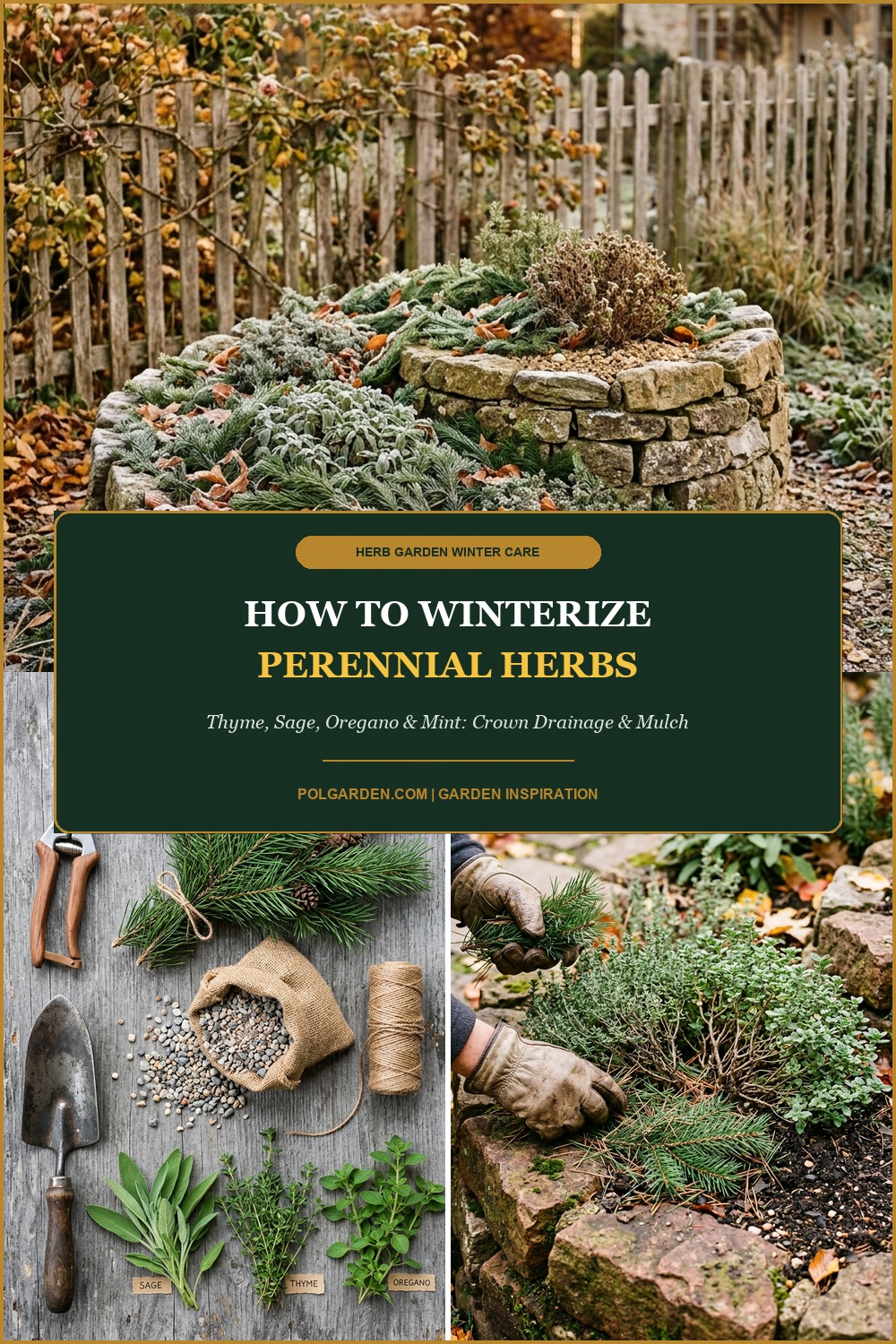
Pin This Perennial Herb Winterizing Guide for Later
Love this guide? Save this pin to your Pinterest gardening board so you have the thyme, sage, oregano, and mint winterizing steps, crown drainage tips, and spring pruning rules ready whenever frosty weather arrives!