
Throughout North American neighborhoods, arborvitae hedges (Thuja occidentalis)—especially popular cultivars like ‘Emerald Green’ (Smaragd) and ‘Green Giant’—form the beloved green backbone of residential landscapes, providing impenetrable year-round privacy, wind buffering, and lush verdant structure. Yet when winter unleashes its full fury with heavy wet snowfalls, freezing ice storms, and sub-zero arctic gales, these majestic columnar conifers face catastrophic structural threats. Countless homeowners awaken after winter’s first heavy blizzard to find their neat upright hedges disastrously splayed open like broken umbrellas, with multi-stem central leaders bowed to the frozen ground, split down the crotch, or permanently bent. Combined with desiccating winter windburn that scorches green scale-like foliage into unsightly rusty-brown patches, unshielded arborvitae can suffer irreversible disfigurement in a single stormy weekend. By implementing a proactive 4-step late-autumn winterizing regimen centered around spiral twine tying, strategic anti-desiccant protection, and freestanding burlap windbreak screens, you ensure your evergreen privacy hedge emerges pristine, erect, and radiantly healthy come spring.
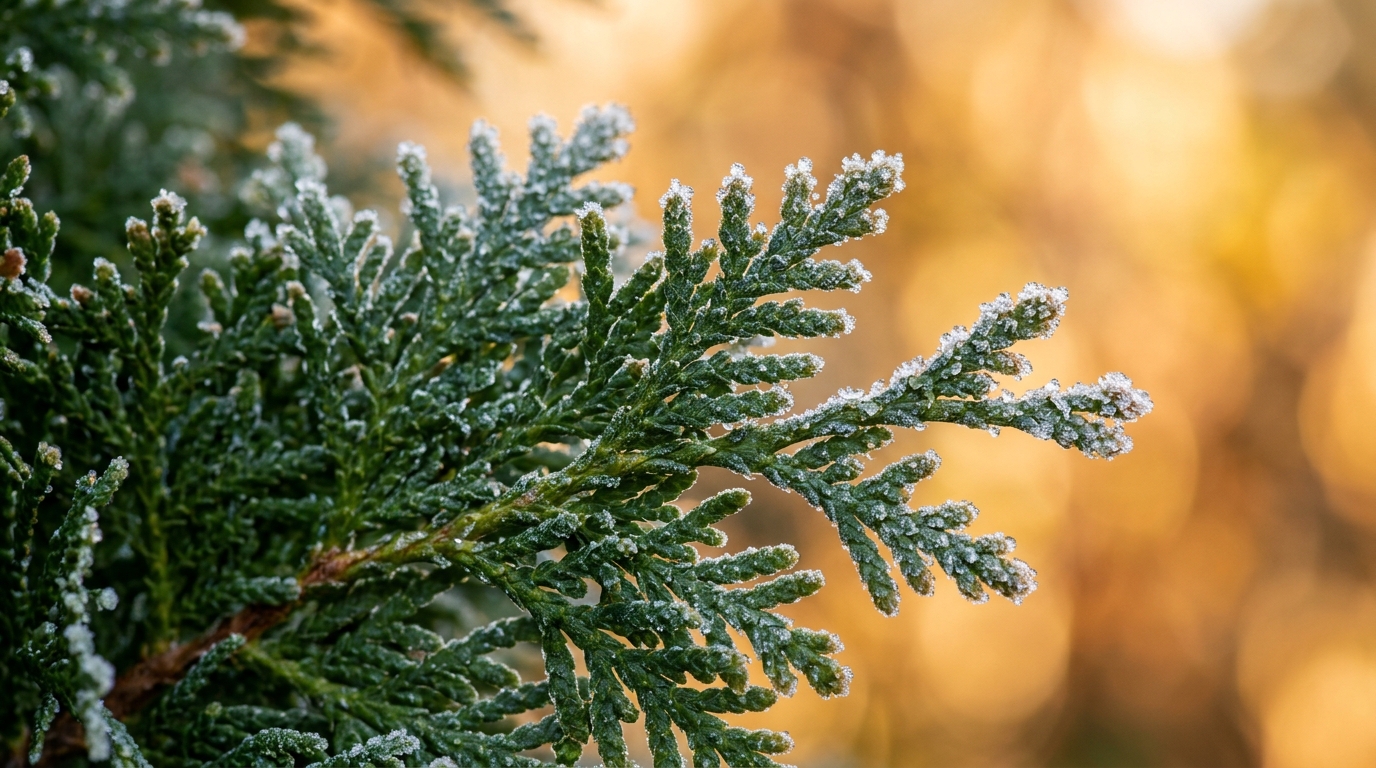
To effectively protect arborvitae against winter trauma, gardeners must recognize the anatomical vulnerability inherent to their columnar growth habit. Unlike single-trunked native pine or spruce trees whose flexible boughs naturally shed snow downward, popular arborvitae varieties (particularly ‘Emerald Green’) naturally produce multiple co-dominant vertical leaders. These dense, upright stems create numerous narrow V-shaped crotches that trap heavy wet snow. As snow and ice accumulate inside the canopy, the immense outward leverage pulls stems apart, often tearing heartwood down to the root collar. Furthermore, because arborvitae retain active green foliage all winter, bitter winds continuously draw moisture from scale needles. When the surrounding root zone is locked in solid frozen ice, roots cannot replace transpired water, resulting in winter desiccation browning. Similar to the targeted microclimate care required when winterizing boxwood shrubs or staking young Japanese maples, proactive physical support is the true key to evergreen survival.
Why Winterizing Arborvitae Protects Hedge Architecture & Foliage Health
- Elimination of Snow Splay & Leader Splitting: Heavy wet snow wedges between upright stems, bending leaders outward under tremendous mechanical stress. Once stems bend beyond their elastic limit or freeze into bent positions, trees remain disfigured for years or split fatally.
- Prevention of Desiccating Winter Windburn (Browning): High-velocity arctic winds and bright winter sunlight wick moisture out of scale-like needles faster than frozen root balls can absorb ground moisture, leaving foliage scorched and crispy brown.
- Barrier Against Road Salt Spray: Arborvitae planted along street fronts and driveways suffer severe chemical burn from highway de-icers kicked up by passing snowplows and traffic.
- Thermal Ground Insulation for Fibrous Feeder Roots: A proper organic mulch ring prevents severe soil temperature fluctuations and keeps shallow feeder roots hydrated longer into early winter.
Essential Supplies & Smart Material Choices

- Heavy-Duty Natural Jute Twine or Arbor Tie Webbing: The essential material for spiral-binding multi-stem leaders. Soft natural jute or 3/4-inch woven webbing will never cut into delicate green cambium bark under wind tension, unlike wire or nylon mono-filament.
- Heavy Natural Coarse-Weave Burlap: Used to construct rigid windbreak shields on the windward side of exposed hedge rows. Allows 30% air permeation to prevent fungal stagnant heat pockets.
- Pointed 2×2-Inch Wooden Garden Stakes: Driven firmly into the earth around hedge lines to anchor burlap windbreaks without touching the foliage.
- Horticultural Anti-Desiccant Spray (e.g., Wilt-Pruf): An organic pine resin emulsion that coats needle scales in a microscopic protective film, cutting winter transpiration by up to 50%.
- Aged Shredded Hardwood or Pine Bark Mulch: Regulates soil moisture and insulates shallow roots against frost heaving.
Step-by-Step Arborvitae Winterizing Walkthrough
Step 1: Deep Late-Autumn Hydration & Interior Needle Cleaning
Before the first sustained hard ground freeze (typically late October through mid-November), give your entire arborvitae hedge line a slow, deep root soaking. Apply 10 to 15 gallons of water per tree around the drip line. Hydrated cellular needles resist sub-zero freeze-drying far better than water-stressed foliage.
Next, reach your gloved hands inside the canopy to gently shake out accumulated brown shed needles from the interior crotches. Removing this damp dead debris eliminates overwintering pest harbors and fungal needle blight spores.

Step 2: Spiral-Tie Multi-Stem Leaders
Tie one end of heavy natural jute twine firmly to the base of the main trunk. Begin wrapping the twine upward in a spiral barber-pole pattern around the tree, maintaining a 45-degree angle. As you spiral upward, gently pull the outer upright stems inward toward the central axis, snugging them together without crushing foliage. When you reach the top tip, tie the twine off securely. This creates a unified columnar pillar that snow simply slides off instead of wedging between separate leaders.
Step 3: Apply an Anti-Desiccant Protective Spray
Choose a clear, dry autumn morning with temperatures between 45°F and 55°F (7°C to 13°C), ensuring temperatures will remain above freezing for at least 4 to 6 hours after application. Spray all outer foliage thoroughly with an anti-desiccant until the needle scales glisten. This organic coating locks in natural sap moisture throughout the harshest winter weeks.
Step 4: Construct a Staked Burlap Wind & Salt Screen
For arborvitae hedges facing open northern/western winter winds or adjacent to salted roadways, drive 2×2 wooden stakes into the ground 12 to 18 inches away from the foliage. Staple heavy natural burlap to the stakes to create a solid 3-sided windscreen. Crucially, leave the top open to allow sunlight and snow accumulation on the root zone, and avoid wrapping burlap tight against the needles like a cocoon.
3 Arborist Secrets for Flawless Arborvitae Winter Care
1. Never Use Monofilament Fishing Line or Thin Metal Wire: Thin, sharp materials like wire, twine, or zip ties cut straight through soft arborvitae bark under the vibration of 40 mph winter winds. This girdles active vascular cambium, causing branches above the tie to die back permanently. Always choose wide, soft natural jute twine or broad webbing straps.
2. Execute the “Upward Broom Bounce” for Snow Removal: When heavy, wet snow blankets your arborvitae after a blizzard, resist the natural urge to beat downward with a broom or shovel. Striking downward snaps cold-brittle stems instantly. Instead, place a soft-bristled broom underneath branches and gently bounce upward. Snow falls away effortlessly without stressing branch joints.
3. Cease Nitrogen Fertilization After Mid-Summer: Never feed arborvitae with high-nitrogen fertilizers after late July. Late-season feeding stimulates succulent, tender green tip growth that cannot harden off before freezing temperatures arrive, ensuring black frost-burned tips by December.
Rescuing Splayed or Bent Branches After Winter Storms

- Do Not Panic If Branches Splay: If a sudden ice storm bends leaders horizontal before you had a chance to tie them, do not forcefully yank them upright while frozen, or you will snap the brittle wood. Wait for temperatures to climb slightly above freezing.
- The Two-Person Reset Technique: Have one person gently gather the bowed branches back into their natural vertical upright alignment while a second person wraps wide arbor tie webbing or soft jute twine around the leaders, securing them firmly to the central stem.
- Allow Spring Turgor to Reset Wood Memory: Keep the support ties in place throughout the following spring. As active sap flows resume in May, the tree’s vascular pressure and new cambial growth rings will “freeze” the branches back into their upright upright posture permanently.
Spring Uncovering & Growth Awakening Protocol
- Timing Burlap & Twine Removal: Dismantle burlap screens in early spring once extreme sub-zero winds subside (typically late March). Cut and remove spiral jute twine before vigorous new spring growth begins in April so stems have room to expand.
- Assessing Winter Bronzing vs. True Dieback: Many arborvitae cultivars naturally take on a dull bronze-green tint in winter as a natural protective response to cold temperatures. Do not prune these branches! They will green up vigorously within 14 days of warm spring sunshine. Only prune branches that are brittle, completely brown, and snap like dry matchsticks.
- Spring Compost Top-Dressing: Replenish the root zone with 1 inch of finished organic compost, referencing our companion guides on winterizing coneflowers and choosing garden mulches.
Frequently Asked Questions
Do ‘Green Giant’ arborvitae require winter tying like ‘Emerald Green’?
‘Green Giant’ naturally develops a stronger, single dominant central trunk than ‘Emerald Green’, making mature specimens far less prone to snow splay. However, young ‘Green Giant’ trees under 3 years old still benefit immensely from windbreak screens and mulch collars in cold, windy zones.
Can I use plastic shrink wrap or tarps to wrap arborvitae?
Never! Solid plastic and non-breathable tarps trap moisture, overheat during sunny winter afternoons, and create a stagnant microclimate that rots foliage with fungal blight. Always use breathable natural burlap or open mesh arbor netting.
How can I protect arborvitae from deer browsing in winter?
In winter when food is scarce, deer frequently devour the lower 4 to 5 feet of arborvitae foliage. Staked burlap windbreaks serve double-duty as physical deer barriers. Alternatively, encircle trees with 6-foot galvanized wire fencing anchored to T-posts.
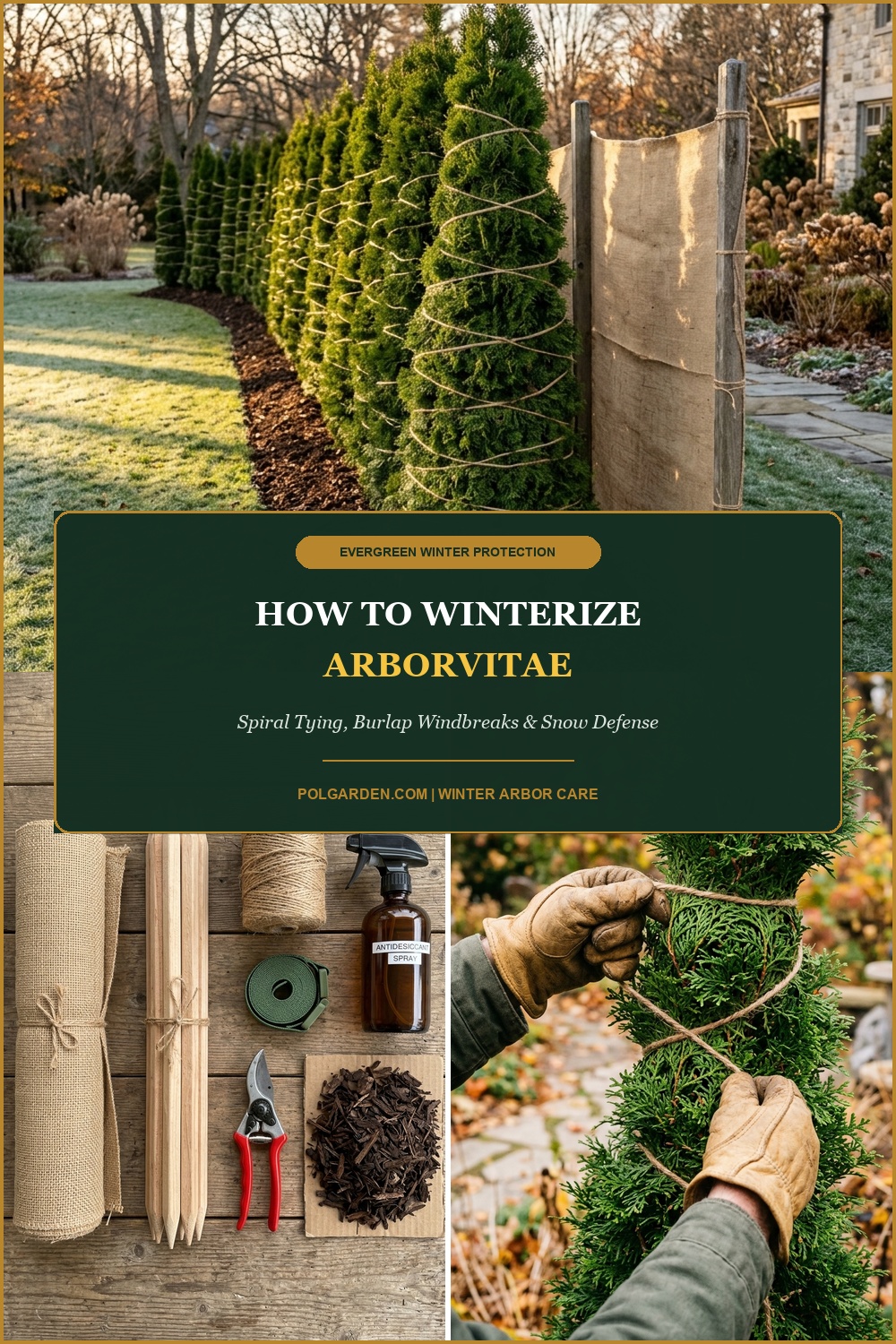
Pin This Arborvitae Winterizing Guide for Later
Love this guide? Save this pin to your Pinterest gardening board so you have the spiral twine tying steps, burlap windscreen setup, and snow rescue tips ready before winter blizzards arrive!