
Few ornamental specimens grace a landscape with the sculptural elegance and luminous autumn drama of a Japanese maple (Acer palmatum). Yet beneath that delicate architectural silhouette lies one of the most winter-vulnerable root systems and cambial structures in the temperate garden. While mature, acclimatized Japanese maples can withstand USDA Hardiness Zone 5 winter chills once completely dormant, young trees under five years old, container-grown specimens, and finely dissected laceleaf cultivars (Acer palmatum var. dissectum) frequently suffer catastrophic winter damage. The primary winter adversaries of Japanese maples are rarely ambient freezing temperatures alone; rather, they are southwest sunscald bark cracking, desiccating arctic windburn, and shallow root freeze caused by lack of insulating ground cover. By implementing a proactive 4-step late-autumn winterizing regimen centered around trunk wrapping, freestanding burlap windbreaks, and proper doughnut mulching, you insulate vulnerable tissue and ensure your prized tree bursts into vibrant spring foliage undamaged.
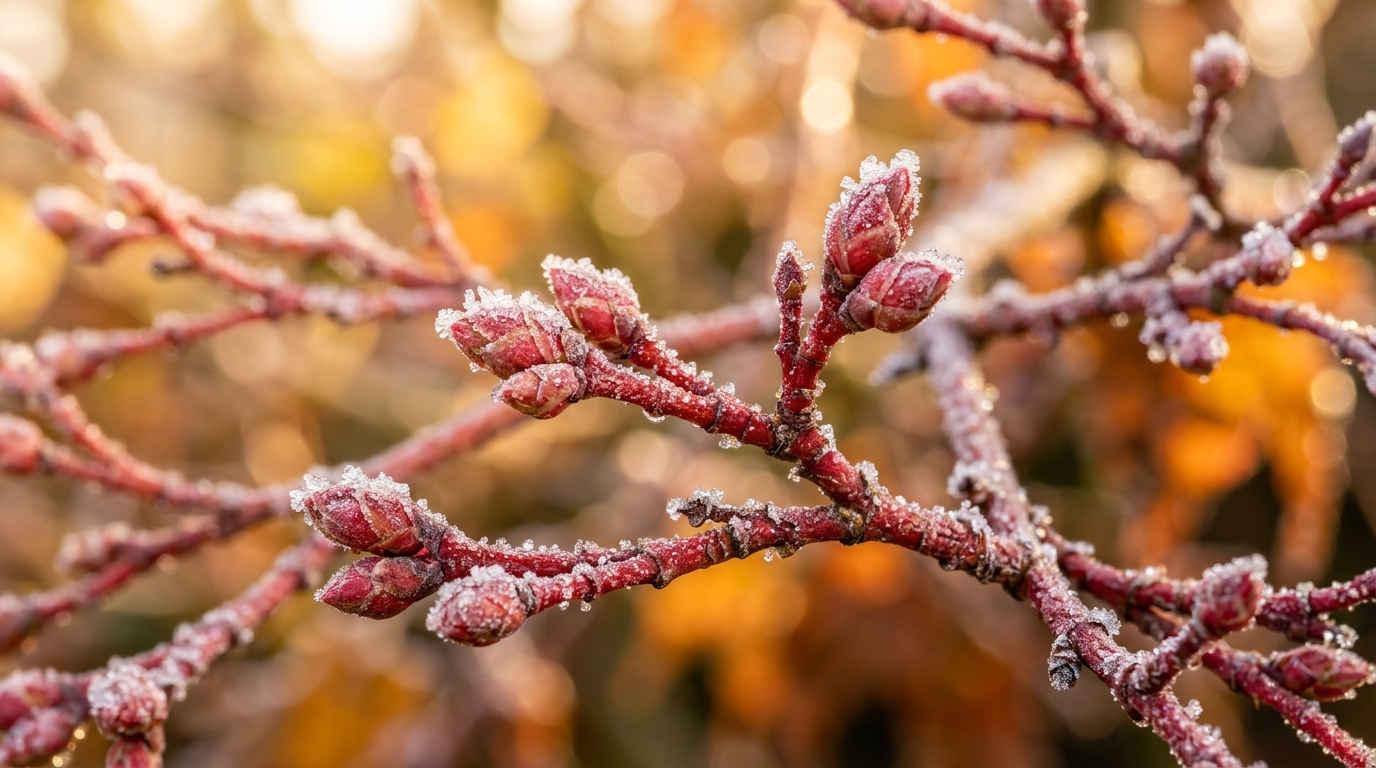
Understanding the unique botanical architecture of Acer palmatum is essential before reaching for winterizing materials. Unlike rugged native oaks or maples that possess thick, heavily furrowed corky bark, Japanese maples retain comparatively thin, smooth, and moisture-sensitive bark throughout their lives. When bright, low-angle winter afternoon sun beats against the south or southwest side of an exposed trunk, it warms the dormant cambium tissue above freezing, activating localized cellular respiration. As twilight falls and temperatures plunge suddenly back below zero, this thawed moisture flash-freezes inside tender vascular channels, causing deep vertical frost cracks that invite fatal cankers and wood-boring pests. Similar to the delicate cold-frame protocols required when winterizing boxwood shrubs or shielding perennial herb crowns, targeted microclimate shielding preserves woody integrity without suffocating the plant.
Why Winterizing Japanese Maples Protects Bark Integrity & Root Longevity
- Prevention of Southwest Injury & Frost Cracking: The catastrophic vertical splitting of trunk bark occurs when winter afternoon sun prematurely activates cambial sap cells that rupture as night temperatures crash. Protective white wraps reflect radiant heat and stabilize trunk surface temperatures.
- Deflection of Desiccating Arctic Windburn: Sub-zero winter gale winds evaporate vital moisture from dormant buds and twig tips faster than frozen roots can draw water from the soil, causing terminal dieback on weeping laceleaf branches.
- Thermal Insulation for Shallow Feeder Roots: Over 80% of a Japanese maple’s fibrous feeder roots concentrate within the upper 4 to 8 inches of topsoil. Rapid freeze-thaw cycles without mulch cause root-heaving and severe cellular necrosis.
- Structural Protection Against Heavy Wet Snow Loading: The weeping, horizontal branch framework of dwarf dissectum varieties acts as a snow-shelf. Proper staking or overhead lattice shielding prevents branch breakage under heavy wet precipitation.
Essential Supplies & Smart Material Choices

- Natural Burlap Fabric (Coarse Open Weave): The gold standard for winter shielding. Burlap baffles howling wind velocities by 70% while remaining completely breathable, preventing humid heat build-up on sunny winter days.
- Pointed 1×2-Inch Wooden Garden Stakes: Used to construct a rigid freestanding windscreen around the tree perimeter. Staking ensures the fabric never rests directly on delicate branches.
- Breathable White Polypropylene Trunk Wrap or Expandable Tree Guards: Lightweight, light-reflecting wraps that shield the lower 2 to 3 feet of trunk from direct thermal swings and hungry winter rodents.
- Shredded Aged Hardwood or Pine Bark Mulch: Retains soil warmth, mitigates moisture evaporation, and prevents frost-heaving without compacting into an impermeable barrier.
- Heavy-Duty Staple Gun & Natural Jute Twine: Fastens burlap firmly to wooden posts to resist 50 mph winter gusts without tearing.
Step-by-Step Japanese Maple Winterizing Walkthrough
Step 1: Deep Pre-Winter Hydration & Sanitation
Before the topsoil freezes into a solid crust (typically late autumn after all leaves have dropped), provide your Japanese maple with a slow, deep root soaking. Apply 5 to 10 gallons of water around the drip line. Hydrated cellular tissue resists frost desiccation exponentially better than drought-stressed wood.
Gently rake away and compost all fallen autumn maple leaves beneath the canopy to eliminate overwintering fungal spores, such as Verticillium or anthracnose.

Step 2: Apply the “Doughnut” Mulch Ring
Spread a 3 to 4-inch layer of shredded hardwood mulch or pine bark across the entire root zone, extending outward to the tree’s drip line. Crucially, pull the mulch 3 to 4 inches away from the trunk collar, creating a clear “doughnut hole”. Piling mulch directly against tree bark (volcano mulching) traps suffocating moisture against the collar, encouraging bark decay, fungal rot, and rodent nesting.
Step 3: Wrap the Lower Trunk Against Sunscald
Starting at the soil line, wrap breathable white tree wrap or clip an expandable spiral tree guard around the trunk, working upward to the lowest structural scaffold branch. Overlap each tier by 1/3 and secure with natural jute twine or exterior tape. The reflective white surface repels low winter sun rays, keeping cambium dormant and preventing fatal frost cracks.
Step 4: Erect a Freestanding Staked Burlap Windbreak
For young maples (under 5 years) or specimens in wind-swept northern/western exposures, hammer three sturdy wooden stakes into the ground around the tree perimeter, roughly 12 to 18 inches outside the branch tips. Stretch heavy natural burlap tightly across the windward sides (facing prevailing winter winds) and secure with heavy staples. Leave the top open to the sky so natural light, rain, and snow can enter freely.
3 Arborist Secrets for Maximum Cold Hardiness
1. Never “Mummy-Wrap” Japanese Maples in Direct Fabric: The single most common amateur mistake is wrapping burlap or tarps directly around the branches like an Egyptian mummy. Direct contact causes wet fabric to freeze onto fragile twigs, tearing delicate dormant buds when winds shift and snapping branches under heavy snow weight. Always maintain a rigid air gap by mounting burlap to exterior stakes.
2. Cease All Fertilizing and Pruning by Late July: Late-season pruning wounds fail to compartmentalize before dormancy, while nitrogen feeds stimulate succulent green shoots that cannot harden off before sub-freezing temperatures strike. Save structural shaping pruning until mid-spring after the tree has fully leafed out.
3. Use the Upward Broom Sweep for Heavy Snow: Never beat downward on snow-covered Japanese maple branches with a shovel or heavy broom. To clear heavy wet snow accumulation, place a soft-bristled broom underneath branches and gently bounce upward. This avoids snapping brittle cold-hardened wood.
Overwintering Japanese Maples in Patio Containers & Pots

- The Container Cold Hardiness Drop: Potted roots lack the geothermal buffering of the earth. In containers, root death occurs when soil drops below 20°F (-7°C)—making potted maples roughly two USDA zones more tender than in-ground trees.
- Trenching Pots In-Ground (The Best Outdoor Solution): Dig a temporary trench in an empty vegetable bed or garden border, bury the potted container up to its rim in the soil, and cover with 3 inches of straw mulch.
- The Unheated Garage or Shed Retreat: Once your container maple drops all its leaves and enters full dormancy after a few light frosts, transition it into an unheated garage, garden shed, or sheltered breezeway. Maintain temperatures between 32°F and 42°F (0°C to 5°C). Check soil monthly, providing just enough water to keep the root ball slightly damp.
- Deck Pot Insulation: If containers must remain outdoors on a patio, group pots against an eastern or northern house wall, wrap the pot exterior with multiple layers of bubble wrap and burlap, and elevate on wooden pot feet to prevent direct conductive heat loss to frozen paving stones.
Spring Uncovering & Growth Awakening Protocol
- Timing Screen Dismantling: Remove burlap windbreak screens in early spring once extreme sub-zero arctic blasts have passed, but before buds swell into active growth (typically late March). Dismantle the screen on an overcast day to acclimatize the tree to direct sunlight.
- Removing Trunk Wraps Promptly: Unwrap white trunk protection as soon as daily high temperatures climb above 50°F (10°C). Leaving wraps on during warm spring weather traps moisture, providing an ideal breeding ground for trunk borers and fungal pathogens.
- Spring Health Feeding: Top-dress the root zone with 1 inch of finished organic compost and a light dressing of balanced slow-release organic fertilizer. Complement your garden preparation with our companion guides on winterizing coneflowers and choosing garden mulches.
Frequently Asked Questions
Do mature Japanese maples require burlap protection every winter?
No. Once Japanese maples are well-established (in the ground for 4 to 5 years) and reach mature size, their thicker bark and deep, sprawling root systems easily handle standard winter conditions in Zones 6 through 8 without burlap screens. Windbreaks are primarily vital for trees under 5 years old, newly planted specimens, or exposed hilltop sites.
What should I do if my Japanese maple’s trunk splits in winter?
If you discover a vertical frost crack on the trunk, do NOT paint or coat the wound with commercial tree tar or wound sealer! These sealers trap fungal moisture inside and inhibit natural healing. Simply keep the area clean and allow the tree to form natural healing callus tissue (woundwood) along the seam in spring.
Can I prune broken or dead branches during winter?
You may cleanly prune off broken, diseased, or dead branches in mid-to-late winter while the tree is dormant. However, avoid heavy aesthetic or structural shaping cuts in late autumn or early spring, as Japanese maples bleed copious sap when cuts are made just before bud break.
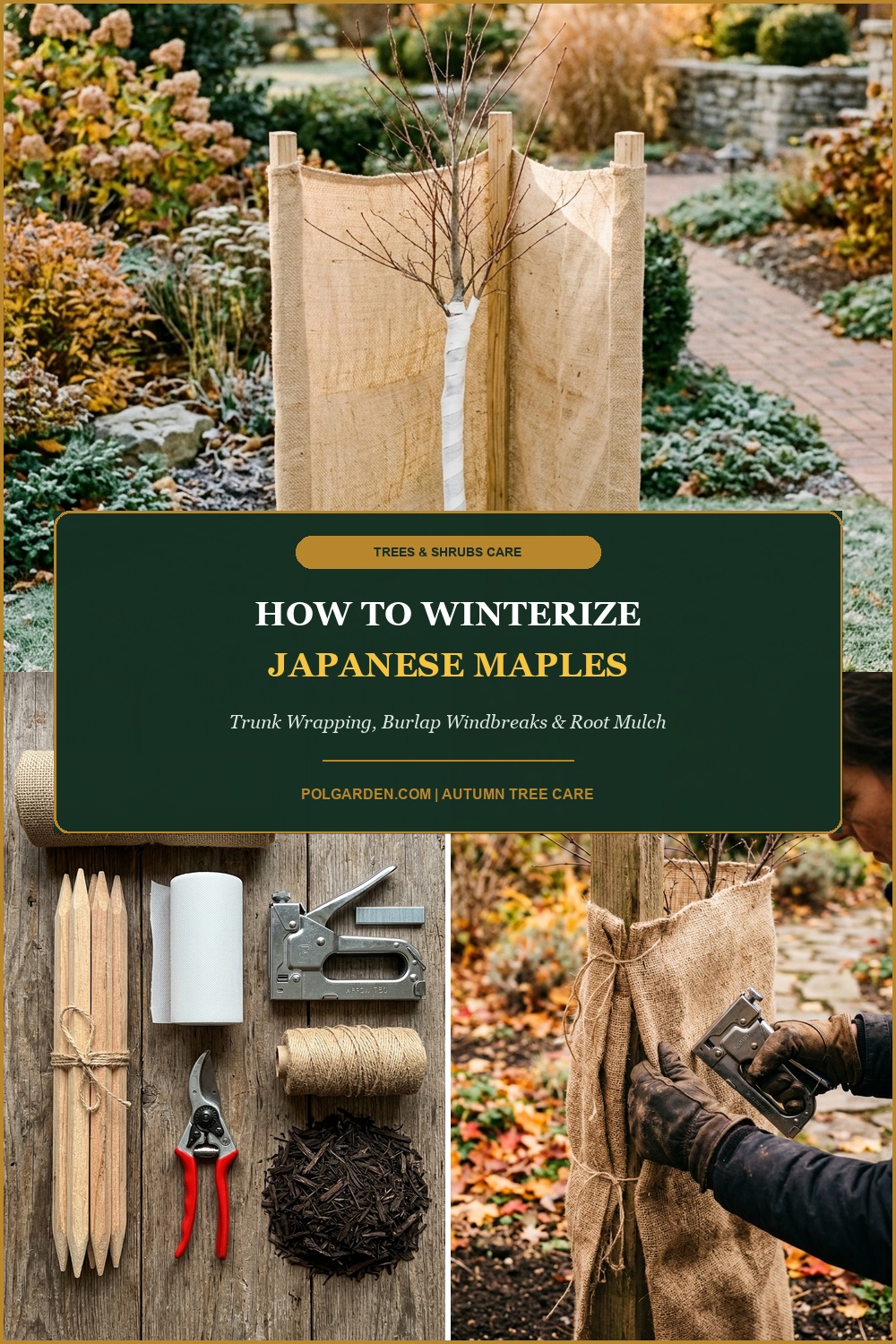
Pin This Japanese Maple Winterizing Guide for Later
Love this guide? Save this pin to your Pinterest gardening board so you have the trunk wrapping methods, burlap windscreen construction steps, and potted container overwintering rules ready before winter weather arrives!