
As autumn winds strip the vineyard canopy down to bare, twisting woody cordons, home grape growers face the most intimidating yet rewarding horticultural chore on the calendar: dormant grapevine pruning and winterization. A healthy mature grapevine (Vitis vinifera, Vitis labrusca, or cold-hardy French-American hybrids) produces an astronomical amount of rampant vegetative growth each summer, frequently throwing out twenty to thirty feet of tangled, sprawling canes. If left unpruned heading into winter, this chaotic mass of old wood invites fungal dieback, acts as a sail catching arctic gale winds that damage trellises, and dilutes the vine’s vital carbohydrate reserves. By executing a targeted late-autumn through late-winter pruning protocol that removes eighty to ninety percent of last season’s wood—paired with strategic graft union mounding and cane trenching in cold climates—you channel explosive spring vigor into plump, sweet grape clusters while safeguarding the vine from deadly polar freezes.
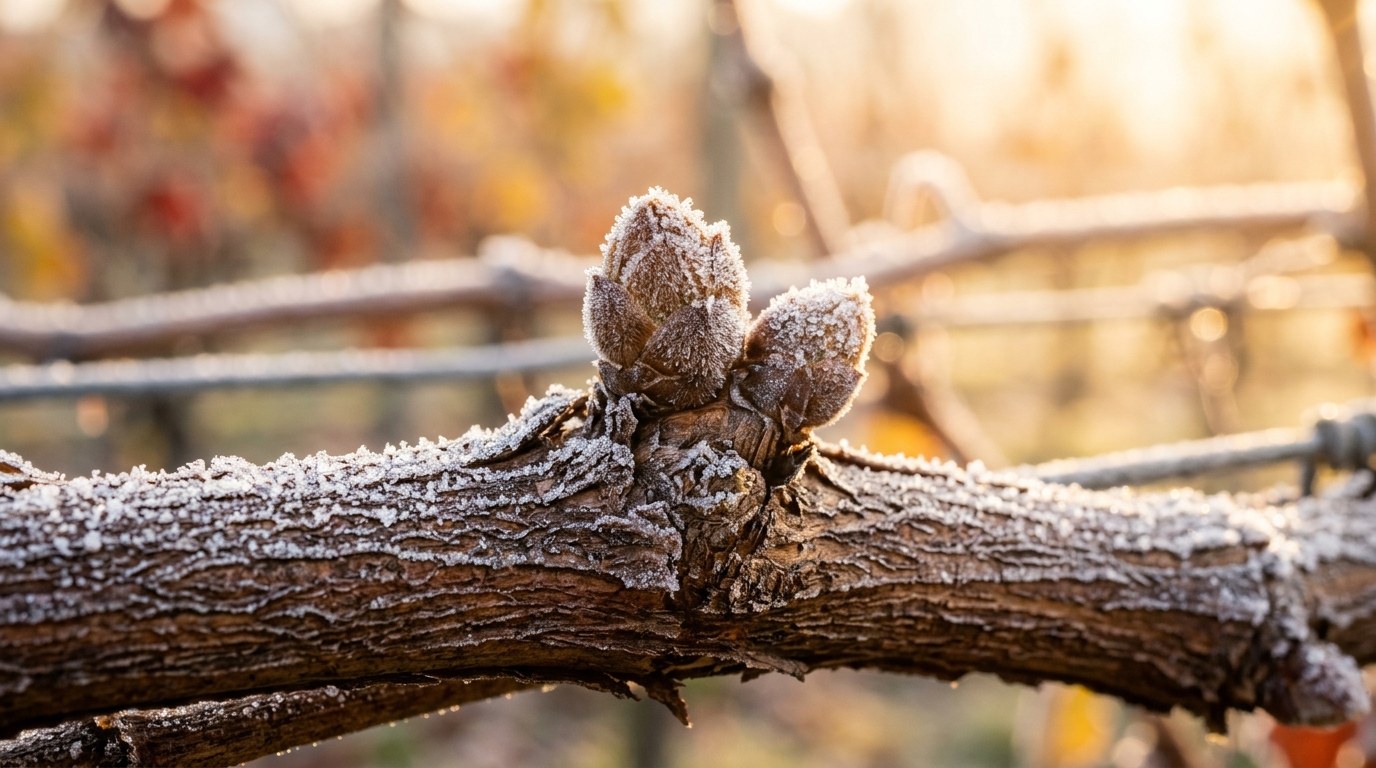
Understanding grapevine fruiting physiology is the essential foundation of every clean cut. Grapevines bear fruit solely on shoots growing from one-year-old dormant canes (wood that grew green during the immediate past summer and has turned reddish-brown or cinnamon-colored). Older, dark gray, shaggy bark trunks and cordons produce zero fruit; they serve strictly as structural pipelines conveying water and sugars. If you leave too much one-year-old wood, the vine overcrops, producing tiny, sour, mildew-prone fruit; if you prune off all the one-year-old wood, you harvest nothing at all. Much like the careful cane selection required when pruning blackberries and maintaining seasonal raspberries, your objective is to pinpoint pencil-thick canes with tight internodes and prune back the rest.
Why Grapevine Autumn Pruning & Winterizing Is Essential
- Elimination of Overwintering Fungal Inoculum: Mummified black rot berries (Guignardia bidwellii), dead arm (Phomopsis viticola), and powdery mildew spores cling to old canes and dried clusters. Stripping away spent wood in late autumn sanitizes the vineyard perimeter.
- Graft Union Protection Against Sub-Zero Kills: Most European vinifera grapes are grafted onto phylloxera-resistant North American rootstocks. If sub-zero temperatures kill the vine down to the snowline, an un-mounded vine will regenerate solely from the inferior wild rootstock, losing the cultivated fruiting variety forever.
- Trellis Structural Relief from Winter Ice & Wind: Heavy ice storms adhere to dense, tangled summer canes, creating thousands of pounds of downward mechanical torque that snaps wires and topples end posts. Clean pruning reduces wind resistance and ice accumulation by over 80%.
- Balanced Crop Load & Sugar Accumulation: Regulating the number of retained buds (typically 30 to 40 buds per mature vine) balances vegetative vigor with fruit production, ensuring radiant spring sunlight penetrates deep into the canopy for maximum berry brix (sweetness).
Essential Supplies & Smart Material Choices

- Sanitized Bypass Pruning Shears: Sharp bypass blades make crisp, clean cuts without crushing the delicate vascular cambium. Dip blades in 70% rubbing alcohol between vines to prevent spreading crown gall (Agrobacterium vitis).
- Heavy-Duty Bypass Loppers: Required for severing thick, two-to-three-year-old old arms and dead renewal trunks up to 1.5 inches in diameter without straining your wrists.
- Stretchable Vinyl Tie Tape (Branch Ties): Flexible green vinyl ribbon secures retained canes to trellis wires without girdling expanding stems as spring cambial growth explodes.
- Organic Finished Compost or Shredded Bark: A rich 8 to 10-inch insulating cone mounded over the graft union shields tender scion tissues from winter root freezes.
- Wire Trellis Turnbuckles & Gripples: Vital vineyard hardware for tightening sagging high-tensile trellis wires loosened by heavy summer fruit loads before winter winds whip the arbor.
Step-by-Step Grapevine Pruning & Winterizing Walkthrough
Step 1: Choose Your System: Cane Pruning vs. Spur Pruning
Before making your initial cut, identify your vineyard training system. Spur Pruning (Cordon System) is ideal for vigorous table and French-American hybrid grapes: the vine maintains permanent horizontal arms (cordons) along the wire, and you prune last season’s canes back to short 2-to-3-bud spurs spaced every 6 inches. Cane Pruning (Guyot System) is superior for European vinifera varieties that have low fruitfulness at basal buds: you cut away the entire old cordon and tie two new 10-to-12-bud canes flat to the wire, along with two 2-bud renewal spurs near the trunk.

Step 2: Selecting Ideal Fruiting Canes & The 90% Cutback
Remove 80% to 90% of all vegetative wood. When selecting the one-year-old wood to retain, look for canes that are pencil-thick (1/4 to 3/8 inch in diameter), round rather than flattened, with smooth cinnamon-brown bark and close internode spacing. Reject giant “bull canes” thicker than your thumb—these are excessively vegetative, hollow, brittle, and produce poor flower clusters. Cut back retained spurs cleanly 1/2 inch above the final bud at a 45-degree slant pointing away from the bud to shed winter rainwater.
Step 3: Mounding Soil Over the Graft Union (Hilling Up)
In late autumn after the vine drops all leaves and experiences several light frosts, shovel an 8 to 12-inch (20 to 30 cm) cone of loose garden loam or finished compost over the base of the trunk, ensuring the graft union is completely buried. This critical thermal barrier protects dormant buds above the graft union even if ambient winter air temperatures drop below -15°F (-26°C). In spring once freezing dangers pass, gently rake this soil away.
Step 4: Securing Canes & Deep Pre-Freeze Watering
Tie retained canes or spurs to the trellis wire using flexible vinyl tape, leaving slight slack for winter contraction. Never leave loose, unattached canes dangling in the wind. Conclude your autumn preparation with a deep soaking (10 to 15 gallons per mature vine) to ensure the deep taproot enters winter fully hydrated.
3 Expert Secrets for Vineyard Cold Hardiness
1. The “Pruning Delay” Strategy in Cold Climates: In USDA Zones 4 through 6 where polar vortex deep-freezes are common, delay your final pruning cuts until late winter or early spring (February or March). Leaving excess canes on the trellis throughout early winter provides “insurance buds.” If a severe January freeze kills 30% of the buds, you have plenty of backup canes to choose from during your late-winter final cut.
2. Sanitize and Dispose of Pruned Canes: Never leave pruned grapevine brush lying under the arbor or in walking aisles. Always gather, shred, or burn pruned canes, as dead grape wood is the primary winter reservoir for black rot mummies and powdery mildew spores, similar to the sanitation protocols recommended for winterizing strawberry patches.
3. Never Prune When Wood Is Frozen Solid: Avoid pruning on bitter sub-zero days when wood temperatures drop below 20°F (-7°C). Frozen grapevine wood is glassy, brittle, and prone to splintering longitudinal cracks when squeezed by pruners, creating deep ragged wounds that cannot seal properly in spring.
Severe Winter Protection: The Trenching & Burial Method (Zone 4 & 5)

- The Minnesota Trenching Technique: In regions where winter temperatures plummet below -20°F (-29°C), plant grapevines at an oblique 45-degree angle rather than vertically. In late autumn, untie the long flexible canes from the trellis, gently bend the entire framework down into a shallow 6-inch trench dug along the row, pin with metal staples, and bury beneath 6 inches of soil and straw mulch.
- Overwintering Container Grapevines: Grapes grown in large oak barrels or terracotta planters must not remain elevated outdoors in freezing climates. Move potted vines into an unheated garage or root cellar kept between 28°F and 38°F (-2°C to 3°C), watering sparingly once every six weeks to keep root soil from drying to dust.
- Spring Vine Uncovering & Bleeding: In spring when soil begins to warm, pull soil away from the graft union. If cuts “bleed” clear sap upon spring trimming, do not panic—this natural osmotic phenomenon demonstrates powerful root pressure pushing nutrients up from the thawed root system.
Spring Trellis Awakening & Organic Nutrition
- Spring Trellis Tensioning: Inspect horizontal trellis wires in early spring. Retighten loose wire strands and replace broken posts before green canopy mass quadruples in May.
- Balanced Spring Top-Dressing: Grapevines thrive in lean to moderately fertile soils. Spread 1 inch of well-aged compost around the drip line in early spring, avoiding high-nitrogen fertilizers that spur excessive shading foliage rather than fruit.
- Bud Break Frost Protection: Keep rolls of medium-weight frost cloth near the vineyard. If an unseasonal late spring frost threatens after tender 2-inch green shoots emerge, quickly drape the cloth over the wires overnight.
Frequently Asked Questions
When is the absolute best time to prune grapevines?
Late winter (late January through March) while the vines are completely dormant but just before bud swell is the ideal window. Pruning in late winter minimizes winter kill risk and allows you to clearly assess cold damage before selecting fruiting wood.
Why do grapevines “bleed” sap after spring pruning, and will it hurt the vine?
When temperatures rise in late winter, active roots pump pressurized water and minerals upward. If you make late pruning cuts, clear watery sap flows profusely from the wound. This is completely harmless and does not weaken or injure the grapevine.
What happens if I don’t prune my grapevines every year?
Unpruned grapevines quickly turn into dense, shaded, tangled thickets of weak, spindly wood. Fruiting shifts higher into the tree canopy out of reach, yields decline dramatically, berries remain tiny and sour, and fungal diseases like black rot and powdery mildew run rampant.
Pin This Grapevine Pruning & Winterizing Guide for Later
Love this guide? Save this pin to your Pinterest gardening board so you have the step-by-step cane vs. spur pruning, graft union mounding, and trellis tying instructions ready whenever dormant season pruning arrives!