
As autumn foliage flares into fiery crimson and temperatures tumble toward freezing, your blueberry bushes (Vaccinium corymbosum) enter a vital state of physiological rest known as winter dormancy. While mature highbush blueberry canes are remarkably cold-hardy—frequently enduring ambient temperatures between -20°F and -30°F (-29°C to -34°C)—their shallow, hairless root system sits dangerously exposed in the upper few inches of topsoil. Without an intentional autumn care strategy that pairs deep pre-freeze hydration with coarse acidic mulching, sub-zero cold winds can dehydrate developing fruit buds and violent freeze-thaw cycles can heave feeder roots right out of the frozen earth, gutting next summer’s sweet berry harvest.
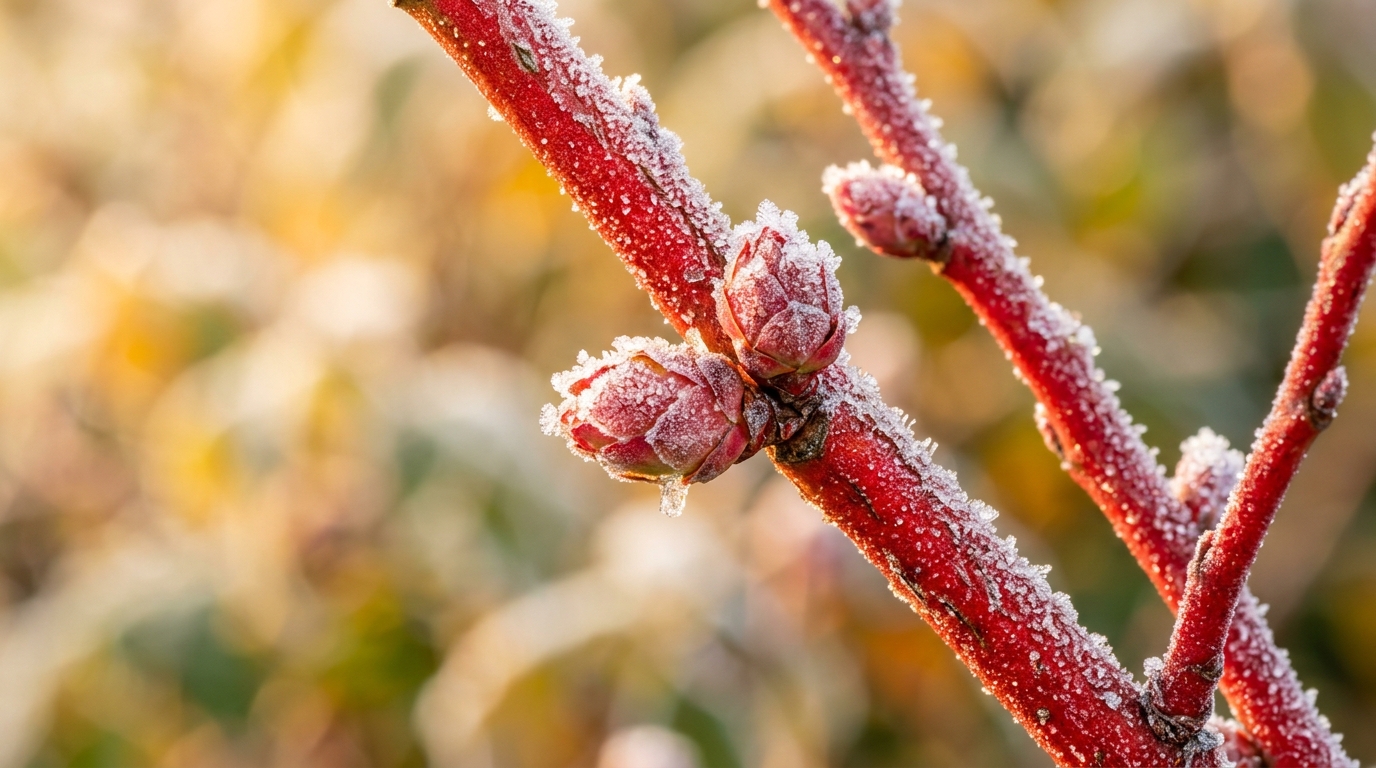
To successfully winterize blueberries, home gardeners must recognize how fundamentally different their botanical biology is compared to other fruit-bearing shrubs like blackberries or strawberries. Blueberry plants lack traditional root hairs; instead, they absorb water and micronutrients entirely through ultrafine, fibrous root filaments that depend on symbiotic mycorrhizal fungi thriving exclusively in acidic soil (pH 4.5 to 5.2). Furthermore, next year’s crop does not develop on new spring wood—plump, fat flower buds formed during late summer along the tips of this season’s reddish growth. Safeguarding these exposed terminal buds from winter dessication and rodent predation is your ultimate objective.
Why Winterizing Blueberry Bushes Protects Future Crop Yields
- Preservation of Developing Blossom Buds: Flower buds at the shoot tips are substantially more vulnerable to cold desiccation than woody stems. Sub-zero winds can freeze and desiccate these tender buds, causing them to turn black and abort before spring bloom.
- Acidic Root Zone Thermal Insulation: Because blueberry roots are fine and shallow, sudden freeze-thaw oscillations heave soil upward, severing delicate root systems. A thick blanket of coarse acidic mulch acts as a shock absorber that maintains a steady, frozen root environment.
- Winter Burn & Twig Dieback Prevention: Bitter winter sunshine paired with sub-freezing winds stimulates moisture loss from bare canes when roots in frozen ground cannot take up water. Deep pre-freeze watering prevents fatal cane shrinkage.
- Wildlife Exclusion (Rabbits & Voles): When heavy snow blankets groundcover in midwinter, food-deprived cottontail rabbits and rodents turn directly to succulent, sweet blueberry canes, frequently girdling mature bushes down to the snowline.
Essential Supplies & Smart Material Choices

- Aged Pine Bark Nuggets & Acidic Pine Straw: The gold-standard organic winter mulch for ericaceous plants. They maintain essential acidity (pH 4.5–5.2), decompose slowly, resist compaction under heavy snow, and allow excellent airflow around the crown base.
- Sanitized Bypass Pruning Shears: Quality sharp bypass pruners are vital for removing dead, diseased, or crossing canes in late autumn or late winter without crushing delicate vascular tissues.
- Galvanized Hardware Cloth (1/4-inch Wire Mesh): Heavy-duty cylindrical metal mesh placed around the crown base provides a permanent physical barrier against hungry winter rabbits, voles, and mice.
- Heavyweight Breathable Burlap & Wooden Stakes: Used to construct temporary windbreak screens for windward beds and wrap fragile container-grown blueberries.
- Digital Soil pH Meter: Essential for checking the root zone in autumn; if soil pH has drifted above 5.5, apply agricultural elemental sulfur before applying winter mulch.
Step-by-Step Blueberry Winterizing Walkthrough
Step 1: Sanitation, Soil pH Check & Minimal Pruning
Begin your autumn regimen after all leaves have dropped. Clear away fallen blueberry foliage beneath the bushes, as old leaves frequently harbor spores of mummy berry (Monilinia vaccinii-corymbosi) and anthracnose. Check your soil pH with a meter; if it tests above 5.2, sprinkle 1/4 cup of elemental sulfur around the drip line. Limit autumn pruning to snipping off broken, dead, or diseased wood. Save your primary structural renewal pruning until late winter (February to March) when severe freezes have passed and winter-damaged tips can be accurately identified.

Step 2: Deep Autumn Hydration Before Soil Freezes
Blueberry canes remain metabolically active even when dormant. In the two to three weeks leading up to the first hard ground freeze, water bushes deeply with 2 to 3 gallons of water per plant per week. Saturated root zones hold significantly more warmth than dry, desiccated soil, buffering the root ball against sudden deep-freeze snaps.
Step 3: Laying the 4-Inch Acidic Mulch Blanket
Spread a generous 3 to 4-inch (8 to 10 cm) layer of aged pine bark nuggets or clean pine needles across the entire root zone, extending outward to the bush’s drip line. Crucially, keep the mulch 2 inches away from directly touching the central base stems; piling mulch against woody trunks invites fungal crown rot and creates a dark tunnel for bark-chewing mice.
Step 4: Installing Hardware Cloth & Burlap Windbreaks
To prevent catastrophic rabbit chewing, encircle the base of each bush with a 24-inch tall cylinder of 1/4-inch galvanized hardware cloth, sinking the bottom 2 inches into the soil. For gardens exposed to relentless northwest winter gales, erect two or three wooden stakes on the windward side and staple a sheet of breathable burlap to form an insulating windbreak screen that diverts drying gales without trapping moisture.
3 Expert Secrets for Maximum Blueberry Winter Protection
1. Never Use Hardwood Bark or Mushroom Compost: Typical municipal wood chips, shredded hardwood bark, and mushroom compost contain high levels of calcium carbonate and decompose to an alkaline or neutral pH (6.5–7.5). Applying these common mulches will induce iron chlorosis (yellowing leaves) and stunt your blueberries. Stick rigidly to acidic pine needles or pine bark.
2. Withhold Late-Summer Nitrogen Fertilizers: Never apply nitrogen fertilizer to blueberries after late July. Late-season feeding stimulates succulent, tender green shoots that cannot harden off before autumn frosts arrive, resulting in blackened, frost-killed tips that invite fungal cane canker.
3. Heavy Snow Is Free Insulation: Do not shake or knock fluffy snow off dormant blueberry branches unless heavy wet ice threatens to snap major structural canes. Light snow is an exceptional natural insulator that locks the lower canes and crowns at a safe 32°F (0°C) regardless of how low sub-zero air temperatures plunge.
Overwintering Blueberries in Containers & Patio Planters

- The Pot Freeze Vulnerability: While above-ground blueberry canes tolerate -20°F (-29°C), roots confined in plastic or ceramic pots suffer root death when soil drops below 15°F (-9°C). Potted shrubs cannot be left uninsulated on elevated decks.
- The Unheated Garage Overwintering Method: Move potted blueberries into an unheated garage, garden shed, or cold cellar after the plants experience two to three hard frosts and drop all leaves. Keep the space cool (30°F to 40°F / -1°C to 4°C) and check soil moisture monthly, applying just enough water to keep roots slightly damp.
- Trenching Pots In-Ground: In zones 5 to 7, dig a trench in your vegetable garden, sink potted containers into the earth up to the rim, backfill around the exterior walls, and cover the root ball with 4 inches of pine needles.
Spring Wake-Up & Early Season Bloom Care
- Late Winter Corrective Pruning: In late February or early March before buds swell, prune out all weak, twiggy growth under 6 inches long, remove any dead gray wood, and cut down 1 to 2 oldest canes (over 6 years old) to the ground to spur vigorous new basal shoots.
- Frost Cloth on Early Blooms: Early-blooming varieties such as Northern Highbush can flower in late spring during unseasonal warm spells. If freezing temperatures are forecasted while delicate bell-shaped blossoms are open, drape floating row cover over the bushes overnight.
- Spring Acidifying Feed: As buds burst in early spring, top-dress the root zone with an organic fertilizer formulated specifically for acid-loving berries, such as ammonium sulfate or cottonseed meal.
Frequently Asked Questions
Do blueberry bushes need chill hours during winter?
Yes, all blueberry varieties require a specific number of winter “chill hours” between 32°F and 45°F (0°C to 7°C) to break flower bud dormancy properly. Northern highbush types require 800 to 1,000 chill hours, while southern highbush varieties need only 150 to 400 hours.
Should I wrap my blueberry bushes in plastic for winter?
Never wrap blueberry bushes in plastic sheeting. Clear or dark plastic creates a greenhouse effect on sunny winter days, prematurely warming the canes and causing them to break dormancy early, followed by fatal freezing when night falls. Plastic also traps condensation, inviting mold and rot. Always use breathable burlap or frost cloth.
Can I use oak leaves as winter mulch for blueberries?
Yes, shredded oak leaves are moderately acidic and can be mixed with pine needles. However, do not use whole, unshredded oak leaves, as they form an impenetrable, soggy mat that impedes water infiltration and suffocates soil aeration.
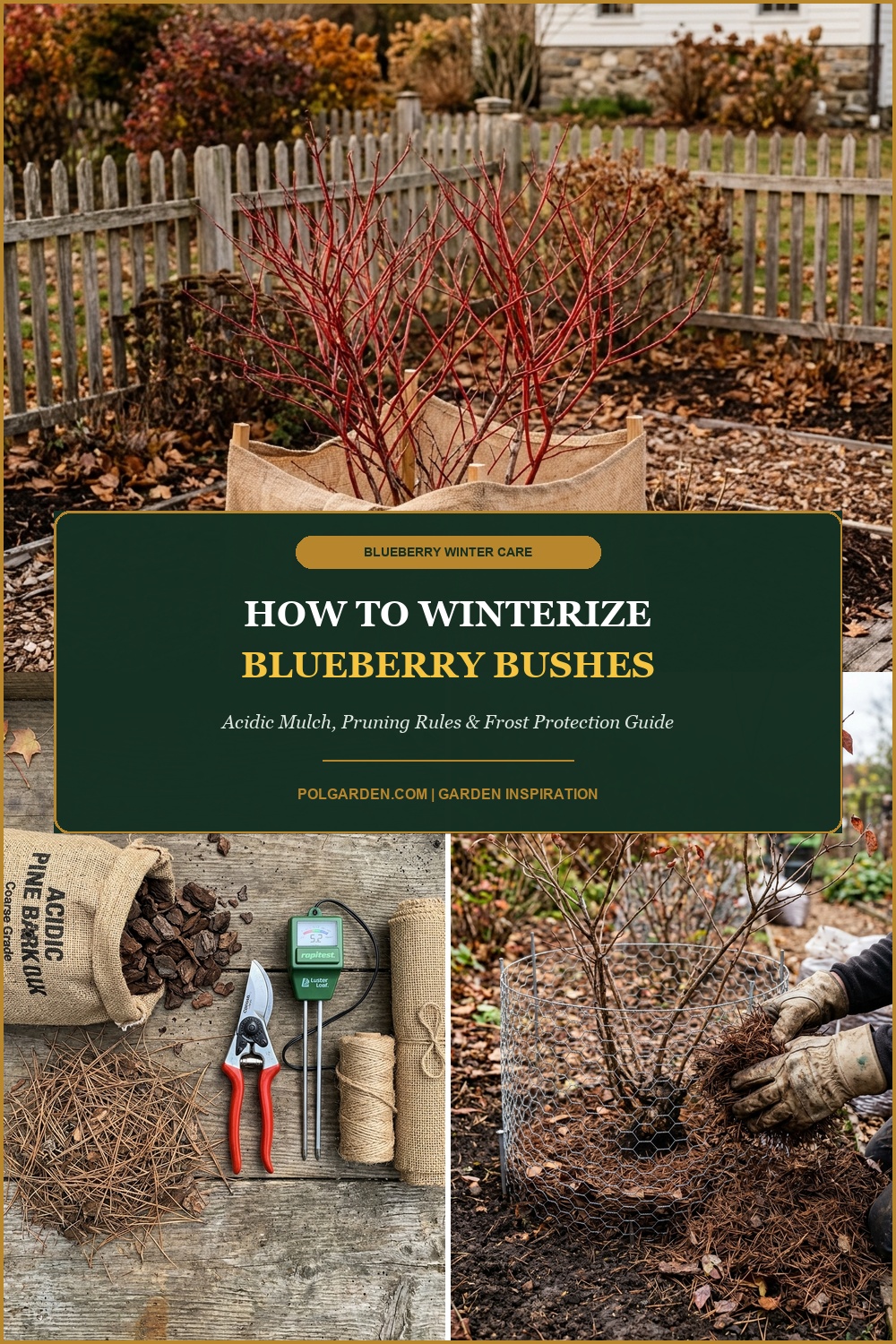
Pin This Blueberry Winterizing Guide for Later
Love this guide? Save this pin to your Pinterest gardening board so you have the acidic mulching, rabbit caging, and container overwintering instructions ready whenever frosty weather arrives!