
When late autumn temperatures plummet and morning frost glazes the garden, your strawberry patch faces its most precarious seasonal transition. Contrary to widespread gardening myth, strawberry plants (Fragaria × ananassa) do not perish from cold weather alone—their perennial crowns easily endure mild freezes, yet an uninsulated winter bed leaves delicate blossom buds exposed to fatal sub-zero dessication and violent soil freeze-thaw cycles. By executing a targeted autumn winterizing protocol that pairs strategic crown renovation with a fluffy four-inch blanket of clean oat straw, you insulate the shallow root system, prevent deadly frost heaving, and set the stage for an explosive, disease-free berry harvest come June.
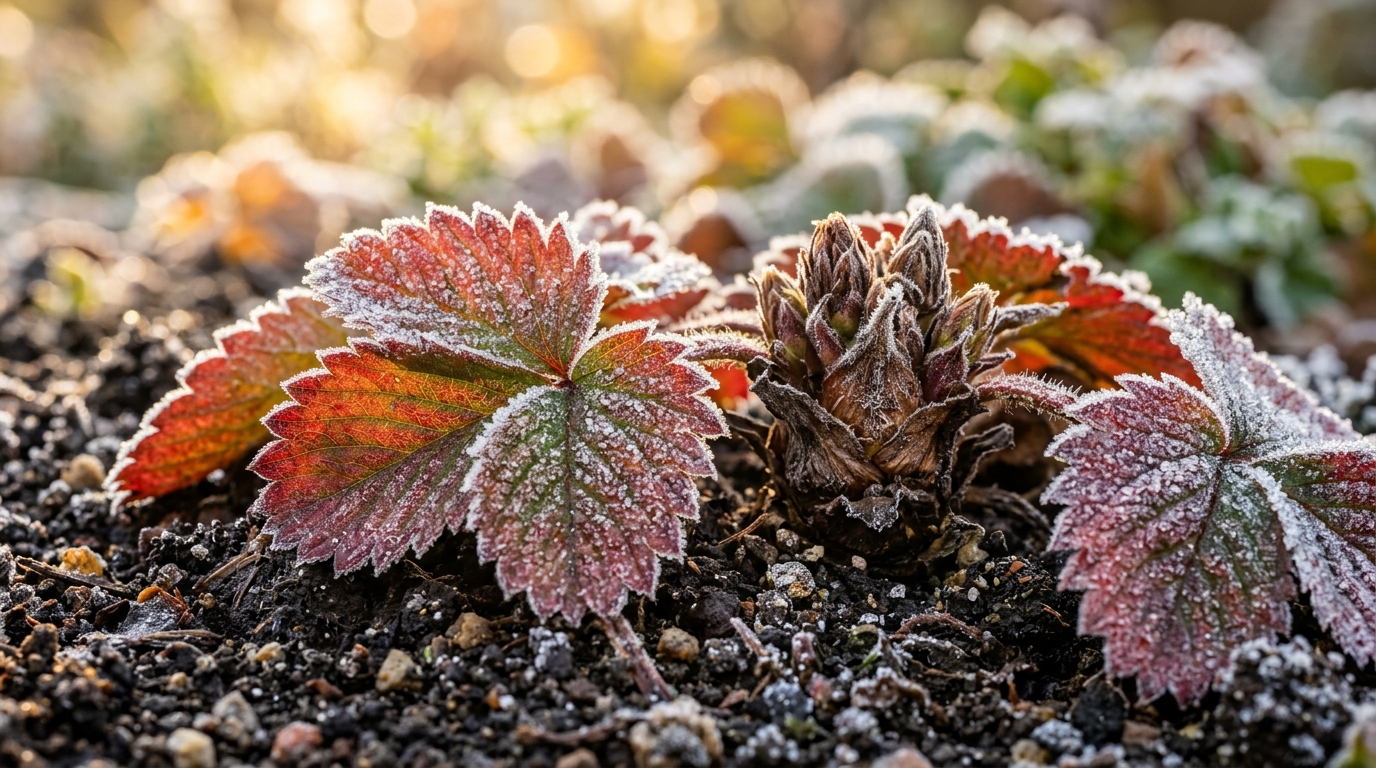
Understanding strawberry winter physiology is the key to preventing catastrophic crown rot and cold damage. Unlike deep-rooted berry shrubs such as blackberries or herbaceous perennials like rhubarb, strawberry plants concentrate over seventy percent of their active feeder roots within the top three inches of soil. Inside the central crown—that compressed, woody stem resting just at ground level—the plant has already formed microscopic embryonic flower clusters that will become next spring’s succulent berries. If winter soil temperatures drop below 15°F (-9°C) without protective cover, or if repeated freezing and thawing heaves the crowns out of the ground, those fragile fruit buds turn brown, spongy, and sterile.
Why Winterizing Strawberry Beds Is Essential for Spring Bumper Crops
- Elimination of Frost Heaving: In clay or loam beds subjected to oscillating freeze-thaw cycles, expanding ice crystals literally push shallow-rooted strawberry crowns out of the soil. Winter mulch acts as a thermal buffer, keeping the soil steadily frozen and preventing root rupture.
- Embryonic Flower Bud Preservation: Developing flower buds nestled inside the crown cannot survive ambient temperatures below 10°F (-12°C). A loose, lofty straw canopy stabilizes crown microclimates well above critical lethal thresholds.
- Desiccating Winter Wind Shield: Bitter, dry arctic winds evaporate essential moisture from dormant evergreen leaves when frozen root systems cannot replenish water, leading to winter burn and cane death.
- Suppression of Crown Rot & Fungal Blight: Proper autumn cleanup strips away dead foliage harboring Botrytis cinerea (gray mold) and anthracnose spores, ensuring sterile conditions before spring rains arrive.
Essential Supplies & Smart Material Choices

- Clean Weed-Free Oat or Wheat Straw: The undisputed gold standard for winterizing strawberries. Hollow stems trap millions of tiny insulating air pockets without matting or suffocating crowns. Never use regular hay, which is loaded with thousands of invasive weed seeds that will choke your patch come spring.
- Acidic Pine Needles (Pine Straw): An outstanding alternative, especially in humid regions. Pine needles do not compact when wet, resist fungal decay, and provide excellent drainage while naturally discouraging slugs.
- Sanitized Bypass Hand Pruners: Required for snipping dead outer foliage, late unproductive runners, and diseased leaves without tearing sensitive crown bark.
- Finished Compost or Bone Meal: A light autumn top-dressing provides phosphorus and slow-release potassium to fortify cellular cell walls against freezing shock without forcing tender nitrogen-fueled flush.
- Burlap & Heavy-Duty Row Cover (Optional for Containers): Essential insulation jackets for raised bed perimeters and potted strawberry planters that freeze from all sides.
Step-by-Step Strawberry Winterizing Walkthrough
Step 1: Late-Season Renovation & Canopy Triage
Begin preparation in mid-to-late autumn while the plants are winding down active growth. Carefully inspect each plant and use sanitized bypass pruners to snip away brown, spotted, or mildewed leaves, depositing them directly into the trash rather than your compost pile. Prune away late, weak runner stolons that haven’t rooted deeply—these sap precious carbohydrate reserves from mother plants. Keep the central crown and healthy green foliage completely intact; never mow or scalp strawberry beds in late autumn.

Step 2: Deep Hydration Before Ground Freeze
Evergreen strawberry leaves continue to transpire moisture late into the fall season. In the final weeks before the soil freezes solid, deliver a thorough, deep watering (approximately one to two inches of water per square foot). Moist soil retains significantly more latent heat than dry, porous earth and acts as a thermal buffer, insulating roots far more effectively against sudden temperature plunges.
Step 3: Timing the Straw Mulch Blanket
Do not apply your winter mulch too early in the fall. Wait until the strawberry plants have experienced three to four consecutive overnight hard frosts (temperatures consistently dropping into the mid-20s°F / -4°C) and foliage turns dull olive or purplish-green. Once the ground has crusted with a hard top layer of frost, gently shake out clean oat or wheat straw over the entire bed to a loose depth of 4 to 6 inches (10 to 15 cm), ensuring crowns are fully concealed yet breathable.
Step 4: Insulating Raised Beds, Pots & Towers
Strawberries grown in elevated cedar raised beds, fabric containers, or vertical planting towers lack the earth-sheltered thermal mass of in-ground beds. Soil inside containers drops to ambient freezing air temperatures rapidly. Group small containers together against a south-facing exterior wall, wrap the outer containers in double layers of burlap or bubble wrap, and top-dress with straw. In zones 5 and colder, bury plastic pots up to their rims in an empty vegetable bed or move dormant containers into an unheated garage or garden shed.
3 Expert Secrets for Perfect Strawberry Overwintering
1. Respect the Freezing Trigger Before Mulching: Applying thick straw mulch too early while warm autumn sun still shines prevents strawberry crowns from undergoing proper physiological cold-hardening. Premature mulching traps humidity, rots crowns, and creates an irresistible winter breeding shelter for field mice and voles.
2. Never Use Whole Fallen Tree Leaves: While fallen maple and oak leaves make excellent compost for fall garlic beds or asparagus trenches, broad tree leaves form an impenetrable, soggy, wet mat over strawberry crowns that suffocates oxygen exchange and breeds fungal crown rot. Stick strictly to loose hollow-stem straw or airy pine needles.
3. The Spring Uncovering Protocol: In early spring when soil temperatures reach 40°F (4°C) and crowns exhibit pale yellow-green new leaf growth under the mulch, rake the straw off the tops of the plants and tuck it directly between the planting rows. This recycled straw becomes a clean walking mulch that suppresses early weeds and prevents mud from splashing soil-borne spores onto developing fruit.
Post-Winterizing Care & Spring Wake-Up Strategy

- Rodent & Vole Deterrents: Loose straw provides attractive shelter for burrowing voles who chew through succulent strawberry crowns. Place organic peppermint-infused repellent granules or mouse traps around the perimeter of the bed before laying down straw.
- Late Spring Frost Insurance: Keep extra straw or floating row covers stored near your patch. If a freak late-spring frost threatens blooming strawberry blossoms after you have uncovered them, quickly pull the row cover back over the bed overnight.
- Spring Organic Feeding: Once crowns awaken in spring and actively push vibrant green foliage, side-dress each plant with a balanced organic 5-5-5 berry fertilizer or worm castings to fuel prolific flower clusters.
Winterizing Strawberries in Containers, Pots & Hanging Baskets
- Unheated Garage or Shed Storage: Move potted strawberries indoors after they experience several light frosts. Store them in a dark, unheated garage (kept between 25°F and 35°F / -4°C to 2°C). Check soil once every four weeks and apply a cup of water so roots never completely desiccate.
- Trenching Pots In-Ground: Dig a shallow trench in an empty vegetable garden bed, nestle potted strawberry planters down to their rims in the soil, backfill around the pots, and cover the entire group with 4 inches of straw mulch.
- Burlap & Wire Cage Insulation: For immovable outdoor barrels or towers, construct a chicken wire cylinder around the perimeter and pack the void with dry leaves or straw to create a 6-inch thermal buffer.
Frequently Asked Questions
Can I use wood chips or sawdust to winterize strawberries?
Avoid wood chips and sawdust around strawberry crowns. Dense wood particles trap excessive moisture, promote fungal pathogens, and temporarily lock up soil nitrogen as they decompose, starving your berries in early spring.
Should I cut back June-bearing and everbearing strawberries before winter?
No, never scalp or mow strawberry crowns in late autumn. The existing green leaves protect the inner crown tissue and store vital starches. Only remove dead, diseased, or pest-damaged outer leaves during your late-autumn renovation.
How do I know when it is time to uncover strawberry plants in spring?
Begin checking beneath the straw mulch in late winter or early spring as snow melts. When you observe pale, yellowish-green new shoots pushing upward from the crown center, rake the straw off the plants into the walking aisles between rows.
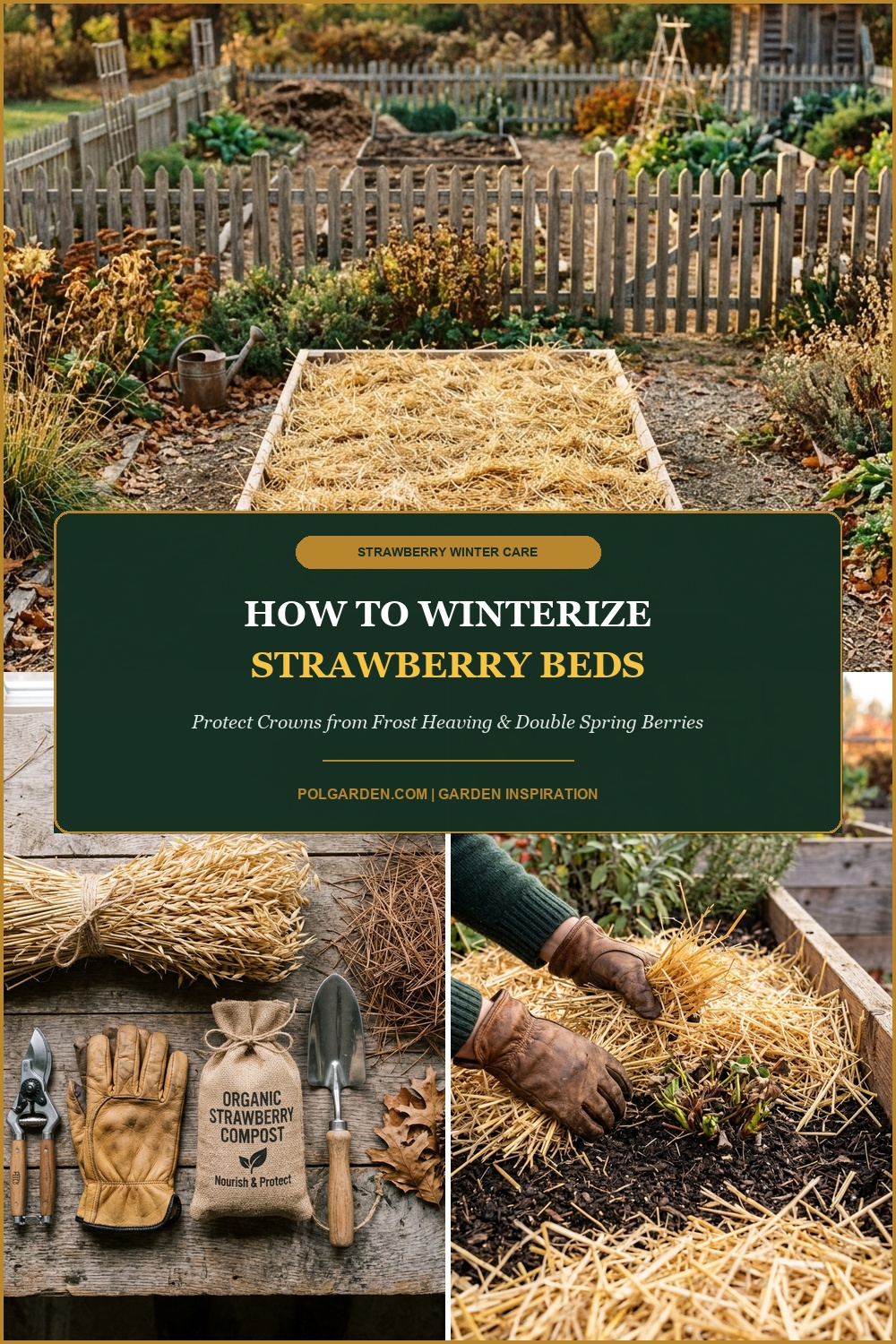
Pin This Strawberry Winterizing Guide for Later
Love this guide? Save this pin to your Pinterest gardening board so you have the step-by-step mulch timing, crown insulation, and spring uncovering instructions right at your fingertips!