
When late autumn chill descends upon the fruit patch and raspberry foliage fades into golden dormancy, home gardeners stand before one of the most widely misunderstood seasonal pruning chores in the temperate orchard. Unlike simple cane berries, raspberries (Rubus idaeus) follow a distinct biennial cane lifecycle where one catastrophic cut can entirely eliminate next summer’s entire fruit harvest. By mastering the fundamental distinction between spent second-year floricanes and vigorous first-year primocanes—and tailoring your cutback strategy precisely to whether you grow summer-bearing or everbearing varieties—you eliminate fungal disease vectors, stabilize canes against winter wind whip, and guarantee an abundant, heavy harvest of sweet berries next year.
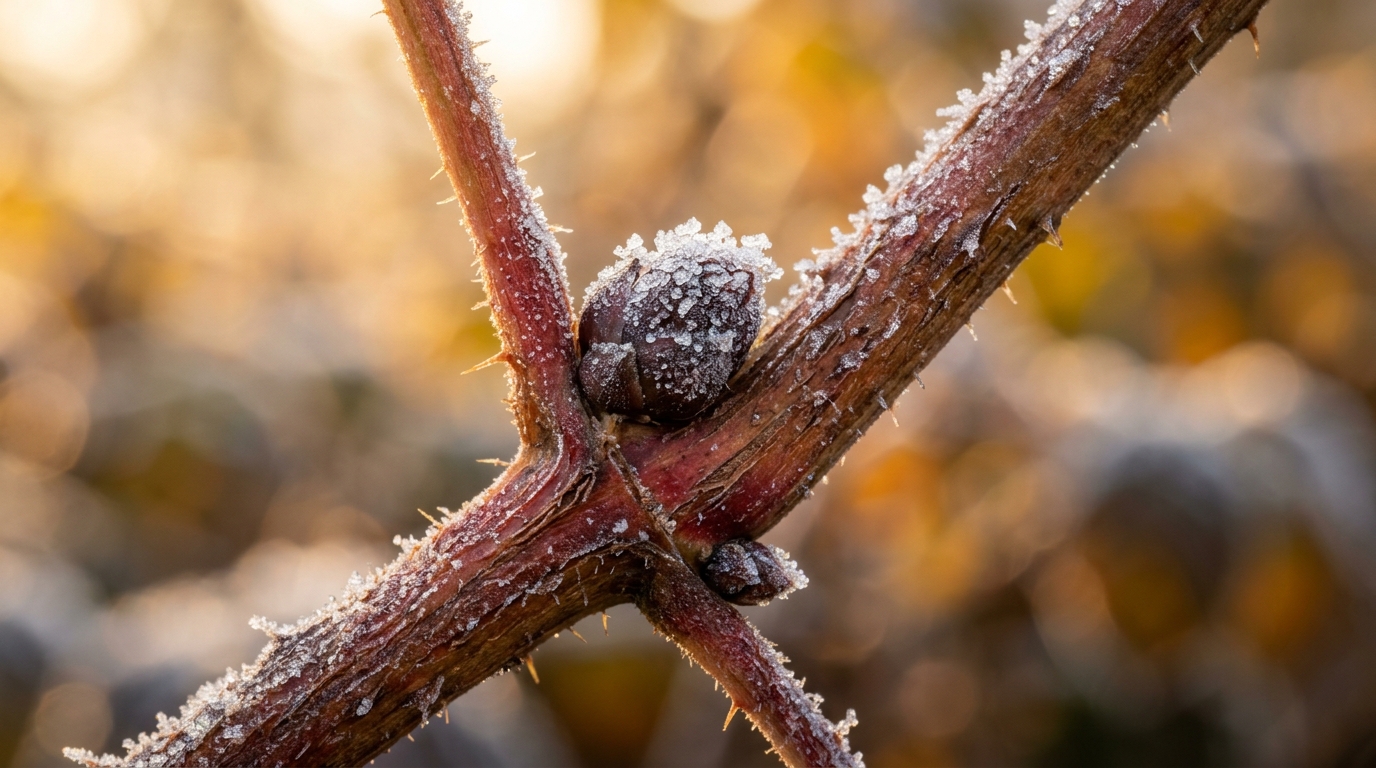
To prune raspberries with confidence, you must first understand their biennial growth habit. While raspberry root crowns are fully perennial, persisting in the earth for decades, each individual above-ground cane lives for exactly two seasons. In year one, succulent green canes known as primocanes emerge from the root crown, growing vigorously and forming carbohydrate stores. In year two, these same stems become woody, brown floricanes, producing lateral fruiting trusses. Once a floricane produces its crop, its biological lifecycle is complete—it naturally senesces, dies, and becomes a brittle vector for fungal cane blight, spur blight, and insect pests. Removing these dead spent canes in late autumn while protecting the vibrant primocanes is the secret to an effortless perennial berry patch, similar to the seasonal maintenance required for blackberries and blueberry bushes.
Why Autumn Pruning & Winterizing Matters for Berry Health
- Eradication of Overwintering Fungal Pathogens: Spent floricanes harbor dormant spores of anthracnose, spur blight (Didymella applanata), and cane blight. Removing and destroying these dead stalks in late autumn sanitizes the patch before wet spring conditions trigger spore dispersal.
- Elimination of Winter Wind Whip & Cane Snapping: Unpruned, dense berry thickets act as sails against bitter gale-force winter winds. Tying selected canes securely to horizontal support wires prevents violent whipping that cracks crowns at the soil surface.
- Root Crown Thermal Insulation: Raspberry roots are remarkably fibrous and shallow. Oscillating freeze-thaw cycles heave unprotected crowns upward. A loose, 4-inch organic mulch blanket maintains steady soil temperatures and prevents root dehydration.
- Maximized Sunlight Penetration & Airflow: Thinning canes to four to five sturdy stems per linear foot in autumn ensures maximum spring air circulation, drastically reducing humidity and gray mold (Botrytis) during bloom.
Essential Supplies & Smart Material Choices

- Sanitized Bypass Pruning Shears: Avoid anvil pruners, which crush living cane vascular cambium. Use sharp bypass blades sanitized with 70% isopropyl alcohol between rows to avoid transferring systemic viruses.
- Long-Handled Bypass Loppers: Invaluable for reaching deep into dense, thorny thickets to make clean, flush cuts at soil level without scratching your hands.
- Thornproof Leather Gauntlet Gloves: Heavy-duty goat or cowhide gloves protect forearms from aggressive thorny canes while gathering and bundling pruned brush.
- Soft Natural Jute Twine: Flexible, biodegradable twine secures canes firmly to trellis wires without cutting into expanding bark as winter winds blow.
- Coarse Wood Chip or Clean Straw Mulch: A breathable 3 to 4-inch layer buffers roots from frost without compacting into an anaerobic mat. Never use fine sawdust, which binds nitrogen and suffocates roots.
Step-by-Step Raspberry Pruning & Winterizing Walkthrough
Step 1: Identify Your Variety (Summer-Bearing vs. Everbearing)
Before making a single cut, determine which type of raspberry you grow. Summer-bearing (floricane-fruiting) varieties (like Latham, Boyne, or Cascade Delight) produce one massive crop in June or July solely on canes that grew the previous season. Everbearing/fall-bearing (primocane-fruiting) varieties (like Heritage, Autumn Bliss, or Caroline) produce berries at the tips of first-year green canes in late summer and autumn, and can fruit again lower down on those same canes the following summer.

Step 2: The Precise Autumn Cutback Protocol
For Summer-Bearing varieties, cut down every cane that bore fruit this past summer right at the soil surface. These spent canes are easily spotted by their grayish-brown, peeling bark and old berry trusses. Leave all healthy green primocanes intact. Thin the remaining green canes to leave 4 to 5 of the thickest, healthiest stems per linear foot, pruning out spindly, pencil-thin suckers.
For Everbearing varieties, you have two choices: for a massive single autumn harvest next year (easiest method), simply mow or cut all canes down to the ground in late autumn. For a two-crop system (summer + fall), only cut off the top 1/3 of the canes that actually bore autumn fruit, leaving the lower green stems to fruit next June.
Step 3: Trellis Securing & Wind Whip Prevention
Once pruning is complete, bundle 3 to 4 surviving primocanes together loosely and tie them to your horizontal trellis wire using soft jute twine. Do not tie too tightly; allow enough slack for natural thermal expansion. Securing canes prevents heavy winter snow loads and freezing winds from breaking canes at the root crown.
Step 4: Deep Pre-Freeze Hydration & Root Mulching
Give the berry patch a thorough, deep watering before the ground freezes solid in late autumn. Saturated soil holds heat and shields root crowns from extreme sub-zero temperatures. Finish by spreading a 3 to 4-inch (8 to 10 cm) blanket of coarse wood chips, shredded leaves, or clean straw across the planting bed, ensuring mulch is kept slightly back from directly choking cane bases.
3 Expert Secrets for Peak Raspberry Health
1. Never Compost Pruned Raspberry Canes: Always burn, bag, or dispose of pruned raspberry brush in municipal yard waste. Raspberry canes frequently harbor microscopic fungal spores and cane borer larvae that easily survive inside backyard compost heaps, re-infecting your berry patch next spring.
2. Prune Flush with the Soil Line: Never leave 3 to 4-inch woody stubs when cutting down spent floricanes. These exposed stubs slowly die back, collect moisture, and act as entry portals for fungal cane canker and crown borers. Make your cut cleanly at or just beneath the soil level.
3. Keep Rows Narrow (18 Inches Maximum): Raspberry roots spread aggressively via underground rhizomes. During your autumn cleanup, use a sharp spade to sever and dig up any suckers creeping into walking paths, maintaining your bed at a tidy 18-inch width. Narrow rows ensure radiant sunlight reaches the base of every cane.
Winter Protection in Severe Cold Climates (Zone 4 & Colder)

- The Cane Bending & Mulch Burial Method: In regions where winter temperatures plummet below -25°F (-32°C), unhook flexible primocanes from the trellis in late autumn, gently bend them flat along the soil line in the direction of the row, pin them with landscape staples, and cover them with 6 inches of straw or evergreen boughs. In early spring, uncover and re-tie them upright.
- Burlap Windbreak Screens: If your berry patch sits exposed on an open prairie or hillside facing brutal northwesterly winter winds, install a temporary burlap screen along the windward side of the trellis to prevent cane desiccation.
- Wildlife Protection: In areas with heavy snowpack, hungry cottontail rabbits will strip tender green primocane bark down to the cambium. Install a 3-foot perimeter fence of chicken wire around your berry rows before the first major snow falls.
Spring Wake-Up & Early Season Trellis Care
- Spring Tip Trimming: In late winter or early spring as snow melts, inspect surviving canes. Trim off the very tips that suffered winter dieback (usually the top 4 to 6 inches) by cutting 1/4 inch above the first strong, green outward-facing bud.
- Spring Organic Fertilization: Once new shoots begin emerging from the crown in spring, top-dress the row with a 1-inch layer of well-aged compost and an organic balanced 5-5-5 berry fertilizer, as detailed in our guide on winterizing strawberry beds and caring for perennial rhubarb.
- Trellis Wire Maintenance: Re-tighten wire turnbuckles loosened by winter ice storms to ensure heavy fruiting laterals remain elevated above splashing mud.
Frequently Asked Questions
How do I tell the difference between primocanes and floricanes in autumn?
Primocanes are vibrant, supple, and green or light reddish-bronze with intact leaves and smooth bark. Floricanes are dark brown or gray, stiff and woody, often with peeling bark and dried, woody berry hulls where fruit hung during summer.
Can I prune all my raspberries down to the ground every autumn?
Only if they are everbearing (fall-bearing) varieties! If you mow down summer-bearing varieties in autumn, you will destroy all the fruiting canes and get zero berries the following summer.
Should I fertilize raspberries in late autumn?
No, never apply nitrogen-rich fertilizers to raspberries in autumn. Late-season feeding forces tender new growth that cannot harden before freezing temperatures arrive, leading to severe frost dieback. Wait until early spring when crowns break dormancy.
Pin This Raspberry Pruning & Winterizing Guide for Later
Love this guide? Save this pin to your Pinterest gardening board so you have the floricane vs. primocane cutback steps, trellis tying tips, and winter mulch instructions ready whenever autumn cleanup begins!