
As autumn frosts strip the vibrant magenta and orange petals from your perennial border, a common gardening dilemma arises: should you shear your purple coneflowers (Echinacea purpurea) flat to the ground or leave them standing through the cold months ahead? While neat-freak autumn cleanup habits tempt many gardeners into scalping every perennial in October, cutting coneflowers back before winter strips your garden of its most valuable cold-season ecological resource. The rigid, spiky central cones that gave Echinacea its Greek name (echinos, meaning hedgehog) are densely packed with nutrient-dense, high-fat seeds that sustain American goldfinches, black-capped chickadees, and dark-eyed juncos through bitter blizzards. By adopting a modern ecological winterizing protocol that pairs strategic basal foliage cleanup with seedhead retention and breathable crown mulching, you prevent deadly winter crown rot, sustain backyard songbirds, and preserve stunning sculptural winter architecture until spring arrives.
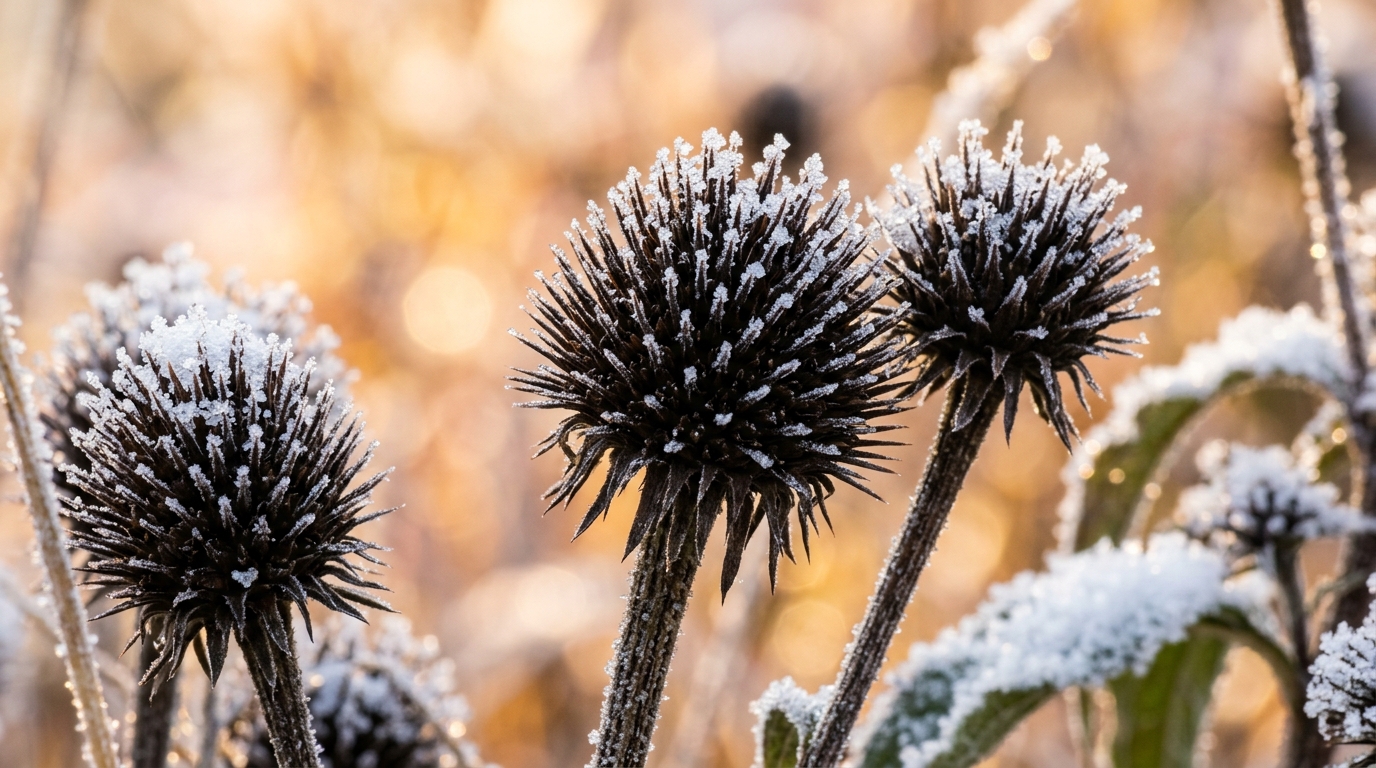
To successfully overwinter coneflowers, gardeners must balance wildlife benefits with plant health. Native to North American prairies and open savannas from USDA Zones 3 through 9, mature coneflowers possess deep, tenacious taproots and fibrous root crowns that easily withstand sub-zero ambient temperatures (-30°F / -34°C). However, the Achilles’ heel of any coneflower clump is winter moisture. In wet, heavy clay soils or under dense, soggy mats of fallen tree leaves, stagnant winter water collects around the central growth point, leading to fungal crown rot (Phytophthora and Rhizoctonia). Much like the specific winterizing strategies required for protecting stonecrop sedum crowns and cleaning hosta beds, the goal is not to keep the plant warm, but to keep the crown well-drained, disease-free, and structurally stable.
Why Winterizing Coneflowers Matters for Wildlife & Perennial Health
- Critical Winter Seed Supply for Songbirds: American goldfinches rely on standing coneflower cones as natural winter bird feeders. Each cone holds dozens of oil-rich seeds that provide essential calories during freezing periods when ground insects are unavailable.
- Crown Rot & Fungal Decay Prevention: Coneflower crowns decompose rapidly if covered by suffocating, wet leaves. Selective clearing of low basal foliage allows cold air to circulate freely, discouraging fungal mycelium.
- Frost Heaving Defense for Young Clumps: First-year plants with developing root systems can be pushed upward out of the soil by repeated freeze-thaw cycles. A breathable collar of pea gravel or airy leaf mold anchors crowns in place.
- Stunning Winter Visual Interest: In a stark, snow-covered landscape, the dark, spiky silhouettes of dried coneflower stalks and frosted seed globes add dramatic vertical height and visual interest to dormant borders.
Essential Supplies & Smart Material Choices

- Sanitized Bypass Pruning Shears: Sharp bypass shears allow you to selectively snip away diseased, mildewed basal leaves at ground level without accidentally severing the sturdy seed-bearing flower stalks.
- Horticultural Pea Gravel or Coarse Grit: The ideal crown mulch for coneflowers in clay soil. Pea gravel sheds water immediately away from the root crown, absorbs solar heat during winter thaws, and discourages rot-causing dampness.
- Organic Leaf Mold or Well-Aged Compost: Applied as a light 1 to 2-inch top-dressing around (not over) the drip line to nourish soil biology and feed beneficial mycorrhizal fungi without smothering crowns.
- Heavy Leather Gardening Gloves: Coneflower seedheads feature stiff, sharp bracts that can prick bare skin when handling stalks or collecting seed.
- Paper Seed Envelopes: Perfect for gathering a portion of heirloom open-pollinated seeds in late autumn for spring propagation or sharing with neighbors.
Step-by-Step Coneflower Winterizing Walkthrough
Step 1: Basal Foliage Triage & Disease Cleanup
In mid-to-late autumn after several light frosts have blackened the outer foliage, examine the base of each coneflower clump. Use sanitized pruners to snip off blackened, mushy, or powdery-mildew-spotted leaves lying flat on the soil. Discard this diseased foliage in the trash rather than your compost pile. Leave the sturdy, upright central flower stalks with their spiky brown seed cones completely standing.

Step 2: Crown Drainage Collar & Gravel Mulching
Coneflowers abhor sitting in pooling winter slush. Spread a 1-inch collar of clean horticultural pea gravel, crushed granite, or coarse horticultural grit directly around the crown base. This mineral barrier ensures crown tissue remains dry during freeze-thaw cycles and deters fungal pathogens from attacking the plant’s dormant central eyes.
Step 3: Perimeter Compost Top-Dressing
Around the outer perimeter of the gravel collar—extending across the root zone to the plant’s drip line—top-dress the soil with 1 to 2 inches of aged leaf mold or compost. This delivers slow-release phosphorus and potassium to strengthen cell walls without stimulating tender, cold-sensitive nitrogen flush.
Step 4: Seed Harvesting for Spring Propagation (Optional)
If you grow heirloom open-pollinated varieties (such as standard purple E. purpurea or pale purple E. pallida), snip off a few mature seed cones on a dry sunny afternoon. Rub the cones between gloved hands over a tray to dislodge seeds, place them in paper envelopes, and store in a cool dry pantry. Leave at least 70% of the cones on the plant for wild birds.
3 Expert Secrets for Pristine Coneflower Beds
1. Never Pile Heavy Wood Chips Over the Crown: Piling 4 inches of dense wood bark or whole tree leaves directly on top of coneflower crowns creates a moist, anaerobic sponge that rots the crown center over winter. Always keep organic mulch pulled back 2 inches from the central crown, using pea gravel for direct contact.
2. The Late-Winter Cutback Trigger: Wait until late winter or early spring (late February to mid-March) to cut down the remaining dead seed stalks. Look for tiny, fuzzy green basal rosettes emerging from the soil. Once new growth appears, cut the old brown stalks cleanly 1 inch above the ground with bypass pruners.
3. Divide Clumps in Spring, Not Late Autumn: While daylilies and hostas tolerate late-autumn division, coneflowers possess deep woody taproots that require substantial warm-soil root regeneration before freezing weather sets in. Dividing coneflowers too late in autumn frequently results in 50% winter mortality. Always schedule crown division for early spring just as new green shoots emerge.
Winterizing Potted Coneflowers on Patios & Balconies

- The Pot Freeze Danger: In container planters, soil freezes solid from all sides. In USDA Zone 6 and colder, potted coneflower roots will freeze and rot if left uninsulated on elevated decks.
- Trenching Pots In-Ground: Dig a hole in an empty vegetable bed or annual flower patch, bury the potted coneflower container up to its rim in the earth, and surround with 2 inches of mulch. The earth provides natural geothermal warmth that keeps roots alive.
- The Unheated Garage Strategy: In severe winter zones, move dormant potted coneflowers into an unheated garage, shed, or cold basement. Water once every four to six weeks with just enough moisture to prevent soil from becoming dust-dry.
Spring Wake-Up & Pollinator Border Restoration
- Spring Stem Cutback: When soil temperatures reach 45°F (7°C) in early spring, use sharp pruners to shear off all remaining winter stalks flush with the new green basal foliage.
- Chop-and-Drop Mulching: Chop the nutrient-depleted woody stems into 2-inch segments and scatter them around the base of nearby berry bushes or shrub borders as organic mulch.
- Pairing with Spring Companions: Pair your awakened coneflowers with other resilient perennials, as detailed in our comprehensive guide on winterizing ornamental grasses and choosing the best autumn mulch.
Frequently Asked Questions
Will leaving seedheads cause coneflowers to take over my garden?
Coneflowers do self-seed, but they are not aggressively invasive. Seedlings are easily recognized in spring by their fuzzy, spear-shaped leaves and can be easily hoed out or gently transplanted to other garden beds.
What should I do if my coneflowers had powdery mildew or aster yellows in summer?
If your coneflowers suffered from fungal powdery mildew, cut down the affected stems in late autumn and trash them to reduce overwintering spores. If plants exhibited distorted greenish flower heads caused by the phytoplasma disease “aster yellows,” the entire plant must be dug up and destroyed, as it cannot be cured.
Do hybrid coneflowers (like Sombrero or Artisan series) overwinter as well as native purple coneflowers?
Modern fancy hybrid coneflowers (bright yellows, oranges, and doubles) are somewhat less cold-hardy than native wild Echinacea purpurea. In zones 4 and 5, hybrid cultivars benefit from a slightly thicker collar of pea gravel and a light sheltering cover of evergreen pine boughs.
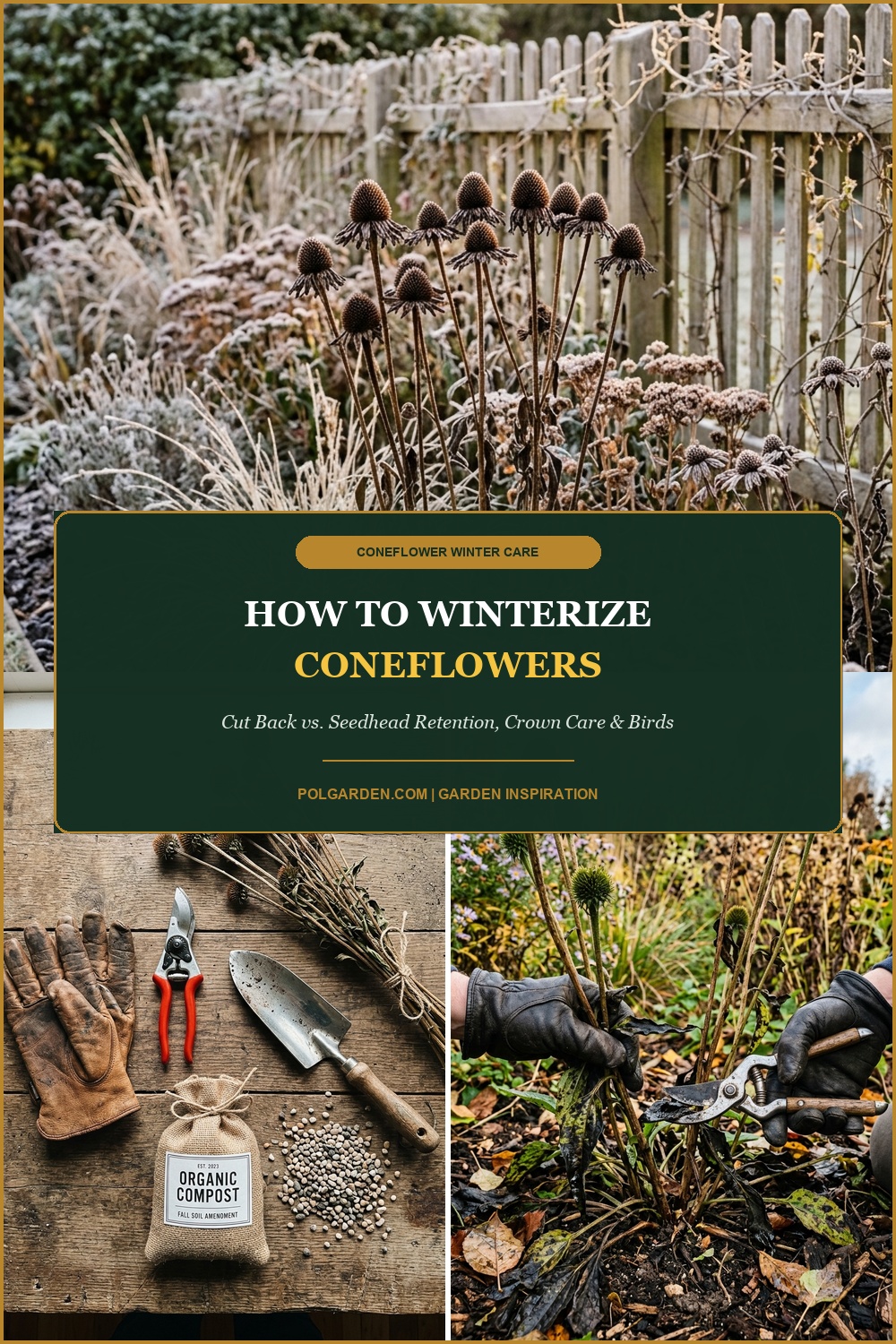
Pin This Coneflower Winterizing Guide for Later
Love this guide? Save this pin to your Pinterest gardening board so you have the seedhead retention tips, crown rot prevention steps, and spring cutback rules ready whenever autumn garden cleanup begins!