
Few architectural landscape plants match the year-round elegance of formal boxwood hedges (Buxus sempervirens and Buxus microphylla), yet few evergreens suffer more catastrophic winter damage when bitter arctic weather strikes. Come February and March, countless homeowners emerge from winter only to find their once-pristine emerald globes transformed into unsightly masses of bleached straw, rusty orange bronzing, and splayed, broken branches split open by heavy snow. Unlike deciduous shrubs that drop their foliage and sleep soundly beneath snowdrifts, broadleaf evergreen boxwoods retain their leaves all winter long—continuing to lose vital moisture even while their shallow roots sit locked in frozen solid soil. Executing an intentional late-autumn winterizing regimen that combines deep root hydration, breathable burlap windbreaks, and protective twine spiraling is the definitive defense that keeps your boxwoods vibrant, healthy, and emerald green through the coldest months.
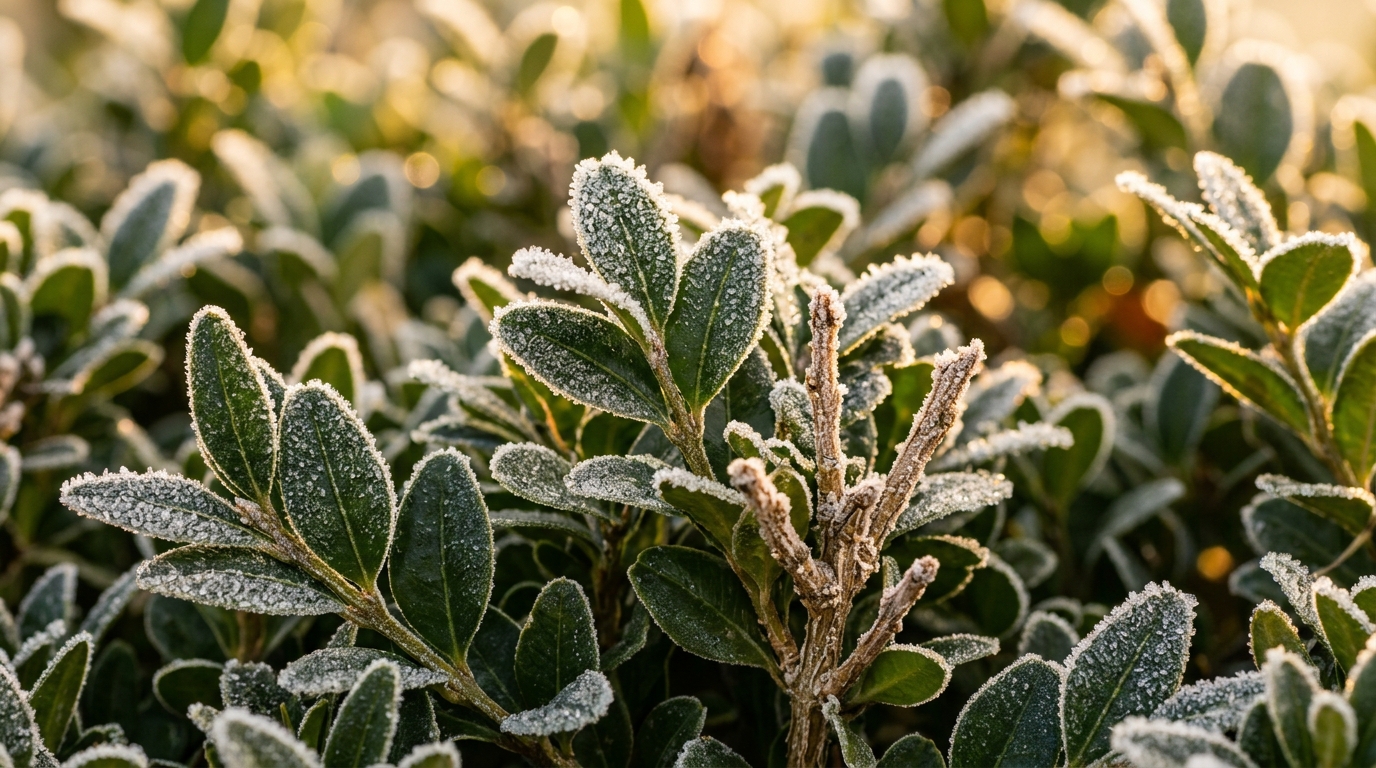
To successfully protect boxwoods, gardeners must understand the dual botanical hazards of winter desiccation (windburn) and photodamage. On bright, sunny winter days when soil moisture is frozen solid, solar radiation warms boxwood leaves, triggering cellular photosynthesis and opening microscopic leaf stomata. Water rapidly transpires into the dry, sub-zero air. Because the root system cannot draw moisture upward from frozen earth, leaf cells literally dehydrate and perish, producing the dreaded brown or rusty-orange scorched appearance known as winter burn. Furthermore, boxwoods possess brittle, multi-stemmed interior branch architectures that lack the flexible suppleness of conifers, making unbundled shrubs exceptionally vulnerable to crushing snow loads, similar to the vulnerabilities seen when winterizing landscape roses or protecting delicate hydrangea buds.
Why Winterizing Boxwood Shrubs Is Essential for Landscape Health
- Elimination of Winter Bronzing & Scorch: Harsh winter sunshine reflecting off white snow creates an intense ultraviolet glare that degrades chlorophyll in dehydrated leaves. Providing shade screens stops winter burn before it starts.
- Prevention of Structural Snow & Ice Splits: Heavy, wet snowfall accumulates inside the flat, dense top crowns of trimmed boxwood hedges, acting as a wedge that snaps major interior branches at the ground. Spiraling with twine holds the crown compact.
- Root Zone Freeze-Thaw Buffering: Boxwood roots are notoriously fibrous and sit primarily in the top 6 to 10 inches of soil. Deep organic mulching keeps the soil frozen at a steady temperature, preventing frost heaving that shears root filaments.
- Mitigation of Boxwood Blight (Calonectria pseudonaviculata): Clearing away infected autumn leaf litter and avoiding wet, suffocating plastic covers reduces humidity levels that allow fungal blight pathogens to overwinter.
Essential Supplies & Smart Material Choices

- Heavyweight Breathable Burlap (7 to 10 oz): Never use synthetic plastic sheeting or tarps, which trap heat on sunny days and bake foliage. Natural burlap creates a shaded, wind-deflecting microclimate while maintaining 100% air breathability.
- Sturdy 2×2 Wooden Garden Stakes: Driven firmly into the soil 6 inches away from the shrub perimeter, wooden stakes support burlap screens so fabric never directly contacts or rubs against delicate boxwood leaves.
- Natural Jute or Sisal Twine: Strong, flexible natural fiber twine secures burlap to stakes and spirals around multi-stemmed crowns to prevent splaying under heavy snowpack.
- Natural Pinene Anti-Desiccant Spray (Wilt-Pruf): An organic wax emulsion derived from pine resin that forms a transparent protective membrane over evergreen leaves, reducing winter moisture loss by up to 80%.
- Aged Shredded Hardwood or Bark Mulch: A breathable 2 to 3-inch layer insulates shallow root balls and conserves soil moisture without compacting into an airtight layer.
Step-by-Step Boxwood Winterizing Walkthrough
Step 1: Autumn Deep-Root Hydration & Sanitation
Long before the ground freezes solid in November or December, deliver a deep soaking to your boxwoods. Using a soaker hose or drip system, supply 2 to 3 inches of water across the entire drip zone once a week for three consecutive weeks. Moist soil holds thermal heat substantially better than dry earth and ensures leaf cells are fully saturated. Rake out all fallen debris and accumulated dead leaves from the interior crotches of the shrub to eliminate overwintering fungal spores.

Step 2: Internal Twine Spiraling for Snow Load Defense
For upright varieties (such as Green Mountain or Dee Runk) and dense rounded globes (Green Velvet, Winter Gem), tie a spool of natural jute twine to a main trunk near the base. Gently wrap the twine spiraling upward around the entire shrub, pulling interior branches together loosely into a compact cone. Fasten securely at the top. This simple 2-minute step prevents heavy wet snow from settling into the interior crotches and snapping outer branches outward.
Step 3: Applying Anti-Desiccant Spray at the Correct Threshold
Apply a foliar anti-desiccant spray (such as pine-oil based Wilt-Pruf) on a clear, calm autumn day when temperatures hover around 40°F to 50°F (4°C to 10°C) and no rain or freezing temperatures are forecasted for 24 hours. Coat both the upper and lower surfaces of the leaves thoroughly until dripping. The spray dries into a waxy, flexible microfilm that seals leaf pores against desiccating winter winds.
Step 4: Erecting Staked Burlap Windbreak Screens
Drive four 2×2 wooden stakes into the soil 6 to 8 inches outside the drip line of individual shrubs, or along the windward side of long hedges. Wrap heavyweight burlap around the stakes and staple securely, leaving the top open for natural rain and sunlight penetration. In zones 4 and 5 where snow accumulation is extreme, construct a wooden A-frame tent over the shrubs to deflect avalanches sliding off rooflines.
3 Expert Rules for Perfect Boxwood Winterizing
1. Never Wrap Burlap Directly Against Foliage: Tight “mummy wrapping” where burlap directly touches boxwood leaves is one of the most common beginner mistakes. In wet winter conditions, burlap absorbs moisture and freezes directly onto outer leaves. When winter winds whip the fabric, it abrades the frozen leaf cuticle, causing severe fungal infection and rot. Always use stakes to maintain a 4-to-6-inch air gap.
2. Keep Mulch 3 Inches Away from the Trunk Base: While a 2 to 3-inch blanket of shredded bark over the root zone is mandatory, piling mulch directly against the central trunk (mulch volcanos) traps continuous dampness against soft bark, encouraging Phytophthora root rot and inviting bark-chewing mice to nest.
3. Never Prune Boxwoods in Late Summer or Autumn: Pruning boxwoods after mid-August stimulates a flush of tender young green growth that lacks sufficient time to undergo physiological cold-hardening before freezing weather hits. These soft shoots turn black and die at the first light frost. Restrict all shearing and trimming to late spring.
Winterizing Boxwoods in Pots, Planters & Topiary Urns

- The Pot Freezing Dilemma: While boxwood leaves survive -15°F (-26°C) outdoors, roots enclosed in thin ceramic, terracotta, or plastic planters suffer fatal freeze damage when container soil dips below 15°F (-9°C). Potted boxwoods left exposed on open patios frequently die from root freeze by midwinter.
- The Bubble Wrap & Burlap Insulation Jacket: For heavy planters that cannot be moved, wrap the entire exterior of the pot in 3 layers of bubble wrap, followed by a decorative outer layer of burlap tied with jute rope. Top-dress the container soil with 3 inches of pine bark mulch.
- The Unheated Garage Overwintering Strategy: In zones 5 and colder, move potted boxwood topiaries into an unheated garage or garden shed. Even in darkness, dormant boxwoods thrive between 30°F and 40°F (-1°C to 4°C). Check soil monthly and apply 1 cup of water so root balls never dry out completely.
Spring Uncovering & Recovery Protocol
- Timing Burlap Removal: In early spring when soil completely thaws and consistent temperatures stay above freezing (typically late March or early April), remove burlap screens on an overcast day. Removing shade screens on an intensely bright sunny day can shock tender foliage.
- Treating Minor Winter Bronzing: If minor orange bronzing occurs on exposed tips, resist the urge to immediately cut it off. As spring root activity resumes and ambient temperatures rise, boxwood foliage naturally produces fresh chlorophyll and reverses mild winter bronzing within 4 to 6 weeks.
- Spring Feeding & Renewal: Once new bright green growth emerges in May, apply a slow-release organic balanced fertilizer formulated for evergreen shrubs, pairing with deep watering as outlined in our guide on choosing the best mulch for garden soil.
Frequently Asked Questions
Can I use plastic sheeting to cover boxwoods in winter?
Never use clear or black plastic sheeting. Plastic traps heat on sunny days, turning your shrub into an oven and breaking dormancy, followed by instant freeze shock when the sun sets. Plastic also condenses moisture on foliage, accelerating fungal blight and needle drop.
How often should I apply anti-desiccant spray during winter?
Most anti-desiccants naturally degrade after 6 to 8 weeks. Apply your primary coat in late autumn (November) when temperatures are in the 40s°F. In regions with long, harsh winters, apply a second coat during a midwinter thaw in January or February when temperatures rise above 40°F.
What is the best boxwood variety for cold northern climates?
Korean boxwood (Buxus microphylla var. koreana) and hybrid crosses like ‘Green Mountain’, ‘Green Velvet’, and ‘Winter Gem’ exhibit superior cold hardiness down to USDA Zone 4 (-30°F / -34°C) and resist winter bronzing far better than traditional English boxwood (Buxus sempervirens ‘Suffruticosa’).
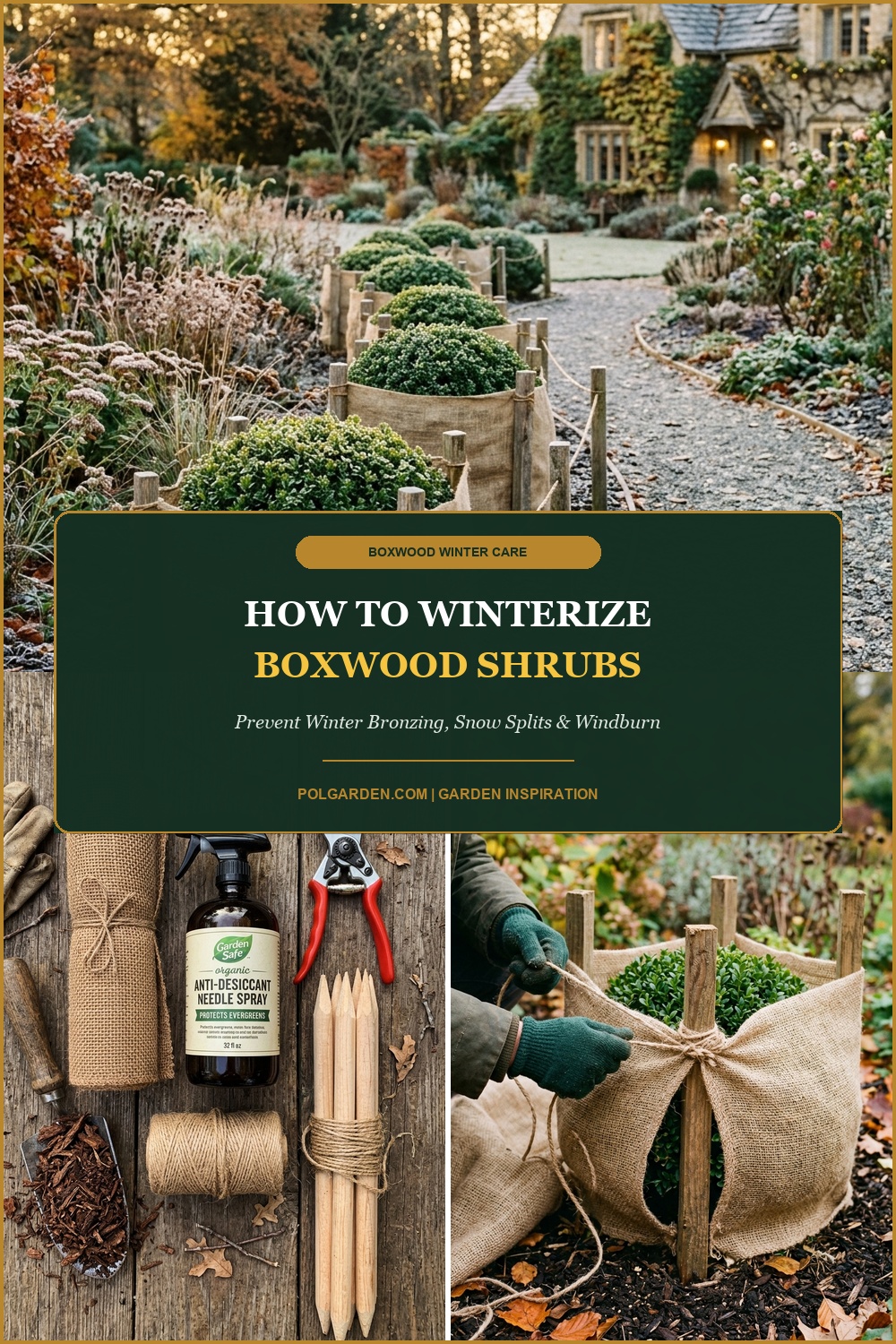
Pin This Boxwood Winterizing Guide for Later
Love this guide? Save this pin to your Pinterest gardening board so you have the burlap staking rules, anti-desiccant spray tips, and snow protection steps ready before winter storms strike!