
Few garden spectacles rival the opulent springtime majesty of blooming rhododendrons and evergreen azaleas (Rhododendron spp.), whose flamboyant clusters of bell-shaped blossoms illuminate woodland borders and foundation plantings with breathtaking radiance. Yet beneath that leathery evergreen foliage lies one of the most winter-sensitive broadleaf architectures in the temperate garden landscape. As late autumn temperatures crash below freezing and bitter arctic winds whistle across exposed yards, gardeners often panic when observing their rhododendron leaves drooping limply and curling inward into tight, cigar-like rolls. While this curling response (thermonasty) is an ingenious natural defense against moisture evaporation, it signals that your shrubs are entering their most precarious seasonal phase. Unshielded rhododendrons and azaleas routinely face lethal winter adversaries: desiccating winter windburn, frost-cracked bark, shattered branches under wet snow loads, and the devastating freezing of next spring’s pre-formed flower buds. By implementing a proactive 4-step late-autumn winterizing regimen centered around deep hydration, acidic root insulation, and freestanding burlap windbreak screens, you ensure your prize flowering shrubs survive winter unblemished and erupt into spectacular springtime color.
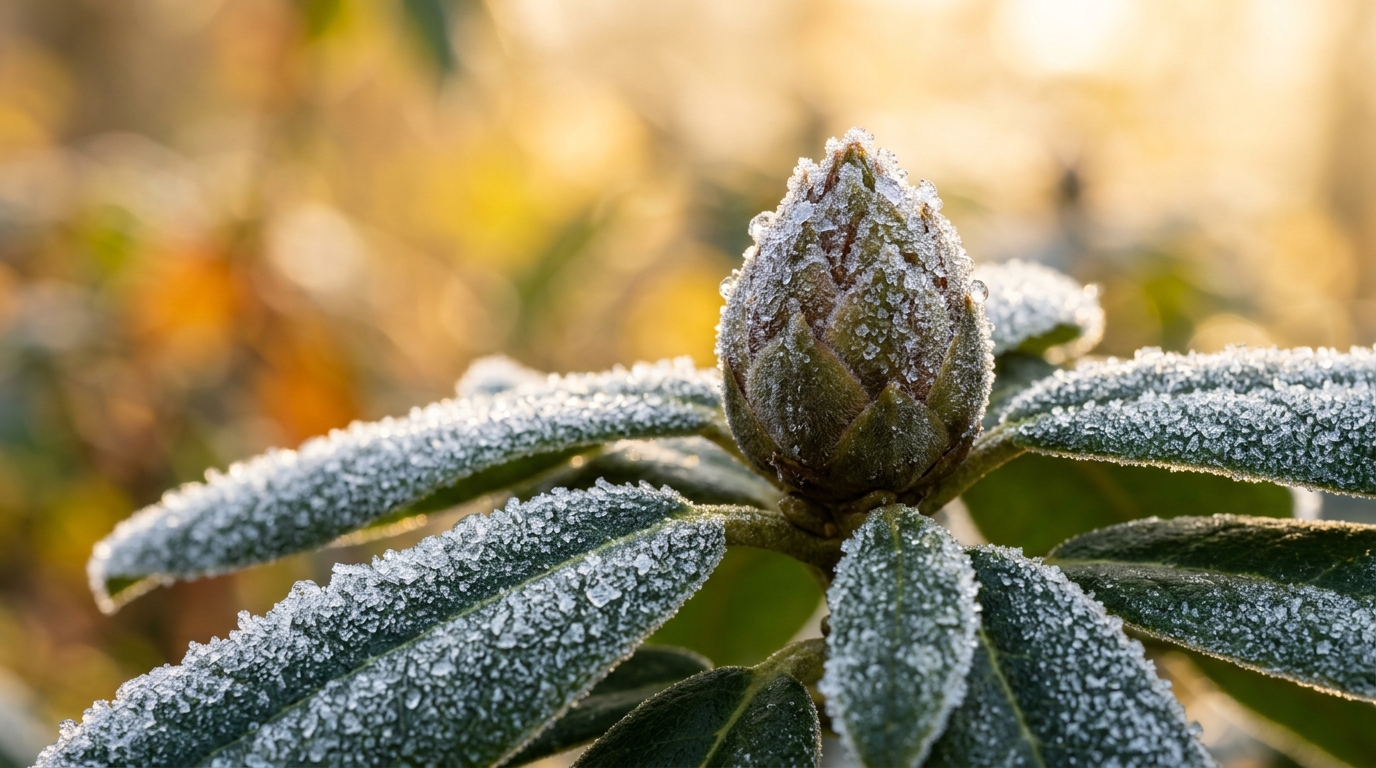
To successfully winterize rhododendrons and azaleas, gardeners must understand the crucial physiological difference between deciduous perennials and broadleaf evergreens. Unlike deciduous shrubs like mophead hydrangeas that shed foliage and enter deep dormancy, evergreen rhododendrons retain dense, moisture-rich leaves all winter long. These large leaves continuously transpire water vapor into dry winter air. When the ground freezes solid into an impenetrable permafrost crust, the plant’s delicate, shallow root system—which concentrates almost entirely in the top 4 inches of acidic soil—becomes physically incapable of drawing liquid moisture to replace what the wind evaporates. The result is rapid cellular desiccation, manifesting as scorched brown leaf margins, brittle twigs, and dead flower buds. Similar to the targeted microclimate protection required when winterizing boxwood shrubs or tying columnar arborvitae hedges, providing physical wind shelter without smothering the canopy is the gold standard of winter care.
Why Winterizing Rhododendrons & Azaleas Protects Spring Blooms & Root Health
- Preservation of Next Spring’s Pre-Formed Flower Buds: Rhododendrons set their flower buds during July and August of the preceding season. If sub-zero winter gales freeze or desiccate these swollen terminal buds, they turn dry, papery, and brown, completely wiping out next spring’s floral display.
- Elimination of Winter Windburn & Leaf Scorch: High-velocity winter winds and bright winter afternoon sun draw vital moisture from evergreen leaves while roots remain locked in frozen soil, resulting in severe necrotic brown scorched foliage.
- Thermal Ground Insulation for Shallow Fibrous Roots: Over 90% of rhododendron feeder roots inhabit the top 4 inches of soil. Oscillating freeze-thaw cycles cause severe frost-heaving, ripping delicate root hairs from the earth.
- Structural Protection Against Heavy Snow & Ice Splitting: The horizontal, spreading branch framework of mature rhododendrons readily traps wet, heavy snow, which easily snaps brittle cold-hardened limbs under excessive leverage.
Essential Supplies & Smart Material Choices

- Coarse Natural Burlap Fabric: The premier material for constructing freestanding windscreens. Burlap baffles freezing gusts by up to 70% while permitting ambient light and vital air circulation.
- Pointed 2×2-Inch Wooden Garden Stakes: Driven firmly into the earth around the shrub perimeter to support burlap screens without allowing fabric to contact brittle branches.
- Acidic Pine Straw or Shredded Oak Leaf Mulch: The ideal natural mulch for ericaceous plants. Decomposing pine needles maintain the low soil pH (4.5 to 5.5) essential for rhododendron nutrient absorption while insulating root collars.
- Horticultural Anti-Desiccant Spray (e.g., Wilt-Pruf): An organic pine resin wax that forms a breathable protective coating over broadleaf surfaces, slashing winter moisture loss by half.
- Heavy-Duty Staple Gun & Natural Jute Twine: Secures burlap tightly to wooden posts to resist violent winter storms without flapping against flower buds.
Step-by-Step Rhododendron & Azalea Winterizing Walkthrough
Step 1: Deep Pre-Winter Hydration
Before the ground freezes solid into an impenetrable layer (typically late autumn after deciduous trees have shed their leaves), give your rhododendrons and azaleas a thorough, deep soaking. Apply 5 to 10 gallons of water per mature shrub around the drip line. Well-hydrated cellular tissues resist sub-zero freeze-drying exponentially better than moisture-deprived leaves.
Rake away and discard any diseased autumn leaves beneath the shrub to eliminate overwintering fungal spores, such as Cercospora leaf spot.

Step 2: Apply a 3-Inch Acidic Mulch Blanket
Spread a 2 to 3-inch layer of clean pine straw, shredded pine bark, or composted oak leaves across the entire root zone, extending slightly beyond the outer branch drip line. Crucially, leave a 2-inch gap around the central trunk flare. Piling mulch directly against woody bark traps suffocating moisture that invites crown rot and bark-gnawing rodents.
Step 3: Apply Anti-Desiccant Spray on a Mild Autumn Day
Choose an overcast, calm autumn morning when ambient temperatures are between 45°F and 55°F (7°C to 13°C), ensuring conditions will remain above freezing for at least 4 to 6 hours to allow the wax film to set. Spray the upper and lower surfaces of evergreen leaves until glistening. This protective film seals microscopic stomata against winter drying.
Step 4: Erect a Freestanding Staked Burlap Windbreak
For shrubs planted in exposed northern or western exposures, drive three sturdy wooden stakes into the ground around the perimeter, placing them 6 to 12 inches outside the branch tips. Stretch heavy natural burlap tightly across the windward sides and staple securely. Leave the top completely open to the sky so natural precipitation and sunlight enter freely. Never wrap burlap directly around the foliage like a cocoon!
3 Expert Secrets for Rhododendron Cold Hardiness
1. Understand Thermonastic Leaf Curling: When outdoor temperatures drop below 25°F (-4°C), rhododendron leaves automatically droop vertically and roll tightly into cylinders resembling green cigars. This is not a sign of sickness or death! It is a brilliant botanical adaptation that reduces leaf surface area and minimizes transpiration. When warmer weather returns, the leaves unroll automatically. Never attempt to manipulate, heat, or uncurl frozen leaves.
2. Never Allow Burlap to Touch Terminal Flower Buds: Wet burlap fabric that rests directly against branches will freeze solid during ice storms. As winter winds buffet the fabric, it abrades and snaps swollen terminal flower buds right off the branch tips, eliminating next spring’s blooms. Always maintain a rigid air gap by mounting fabric to exterior wooden stakes.
3. Cease All Fertilizing and Pruning by Mid-Summer: Never feed rhododendrons with nitrogen fertilizers after July 1st. Late feeding stimulates tender green flushes that lack the lignified bark necessary to survive sub-freezing weather. Similarly, avoid fall pruning, which removes next season’s pre-formed flower buds.
Deciduous Azaleas vs. Evergreen Rhododendrons: Key Differences

- Deciduous Azaleas (e.g., Exbury, Northern Lights): Naturally drop all leaves in late autumn and enter complete dormancy. They are exceptionally cold-hardy down to USDA Zone 4 (-30°F / -34°C) and rarely require burlap windscreens. Their primary winter need is a 3-inch root mulch ring to prevent frost heaving.
- Evergreen Rhododendrons (e.g., Catawbiense, PJM, Nova Zembla): Retain large green foliage all winter and are far more susceptible to windburn, leaf scorch, and branch breakage. They require both acidic root mulching and vertical staked wind shielding in open sites.
- Container-Grown Rhododendrons & Azaleas: Potted specimens lack ground geothermal buffering. Roots die when container soil drops below 20°F (-7°C). Overwinter potted shrubs inside an unheated garage or trench pots directly into a garden bed up to their rims.
Spring Uncovering & Soil Awakening Protocol
- Timing Windbreak Dismantling: Remove burlap screens in early spring once extreme sub-zero arctic blasts subside (typically late March to early April), choosing an overcast day so foliage gradually readjusts to bright sunlight.
- Spring Acidic Feeding: In early spring as new green shoots push, top-dress the root zone with an organic acid-forming fertilizer formulated for rhododendrons, azaleas, and camellias (containing sulfur, cottonseed meal, and iron).
- Companion Care Synergy: Pair your spring shrub care with our companion guides on winterizing Japanese maples and selecting the best garden mulches.
Frequently Asked Questions
Why did my rhododendron fail to bloom in spring even though the leaves look healthy?
The most common culprit is winter flower bud freeze. If swollen terminal buds were exposed to sub-zero temperatures without snow cover or wind shielding, the tender internal embryonic flower petals freeze and die, while the tougher woody foliage survives undamaged. Another common cause is late-summer pruning that accidentally removed flower buds.
How do I safely remove heavy snow from rhododendron branches?
Never strike downward on snow-covered rhododendron branches with a shovel or heavy broom, as cold-hardened wood snaps easily. Instead, use a soft broom to gently push upward from beneath the branches. This relieves snow weight without stressing structural branch crotches.
Can I use plastic tarps or plastic sheeting instead of burlap?
Never use non-breathable plastic to wrap rhododendrons! Clear or black plastic traps heat on sunny winter afternoons, raising internal temperatures dramatically. When night falls, the sudden temperature crash ruptures cell walls, and trapped moisture causes severe fungal leaf rot. Always use porous, breathable natural burlap.
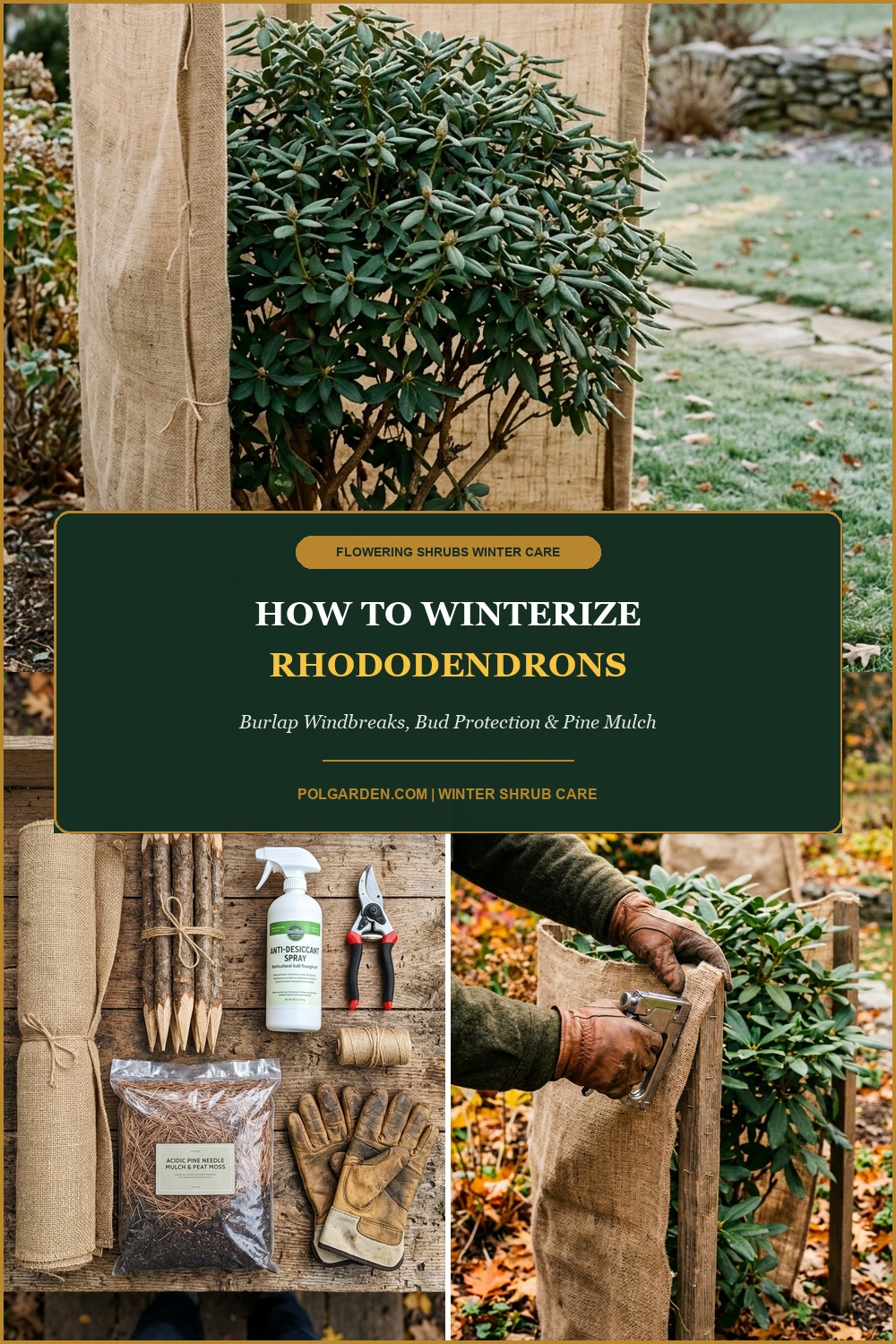
Pin This Rhododendron & Azalea Winterizing Guide for Later
Love this guide? Save this pin to your Pinterest gardening board so you have the staked burlap windbreak setup, flower bud protection tips, and acidic mulching steps ready before freezing winter weather arrives!