
Setting autumn borders ablaze with an electrifying contrast of vivid gentian-blue blossoms and fiery mahogany-crimson foliage, Hardy Plumbago (Ceratostigma plumbaginoides), affectionately celebrated by horticulturists as Leadwort, is one of the most magnificent late-season groundcovers in temperate gardens. Blooming tirelessly from late summer until hard frost, it forms a dense, weed-suppressing carpet over rocky slopes, retaining walls, and shrub borders. Yet, as winter freezes approach and the brilliant foliage turns bronze, gardeners routinely face confusing overwintering dilemmas. Cutting back top growth prematurely robs underground rhizomes of vital winter carbohydrate reserves, while heavy, waterlogged organic mulch mats can cause catastrophic root rot during wet freeze-thaw cycles.
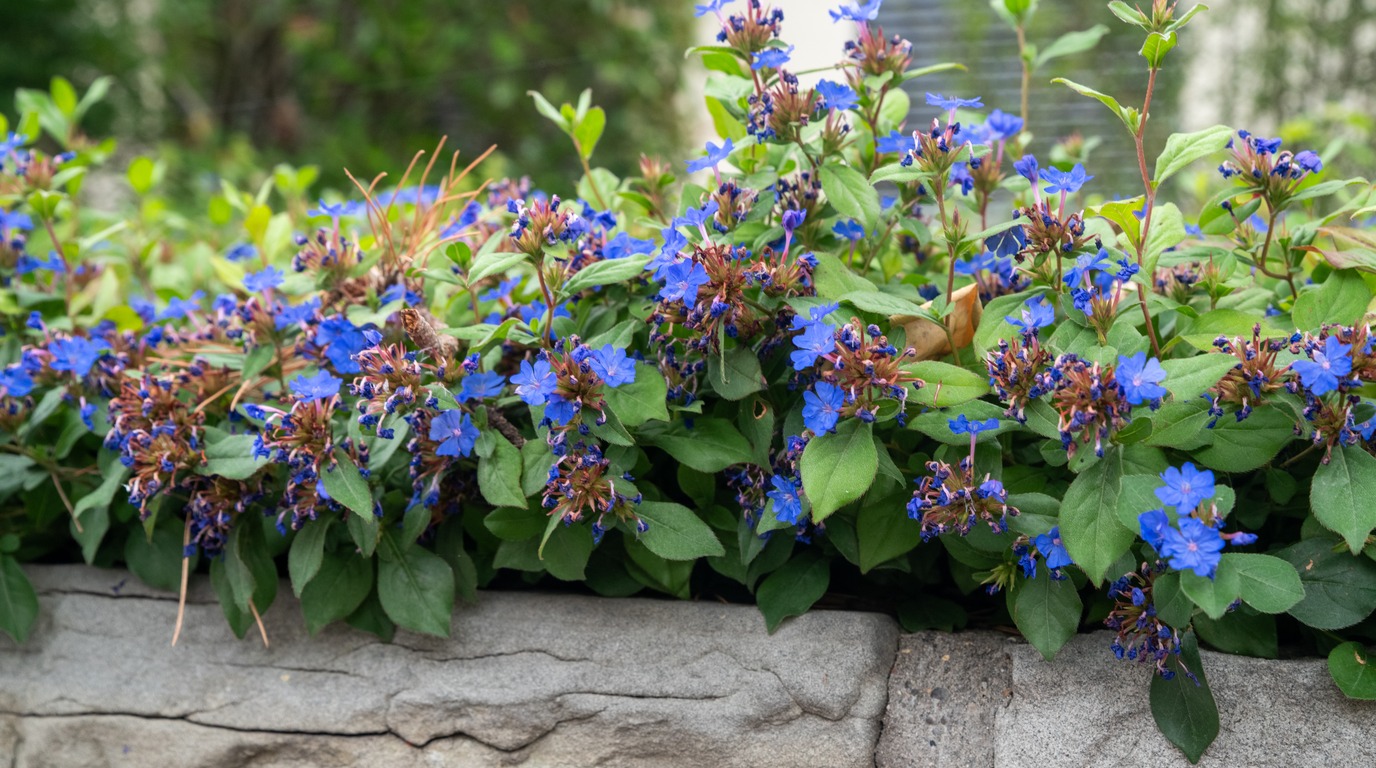
Endemic to dry western Chinese rocky riverbanks and sunny mountain hillsides, Hardy Leadwort is reliably cold-hardy across USDA Zones 5 through 9, enduring winter lows down to -20°F when established in sharp-draining soil. Unlike tender tropical Cape Leadwort (Plumbago auriculata) which must be brought indoors before frost, Ceratostigma is a deciduous sub-shrub that dies back to subterranean rhizomes each winter. Because these creeping rhizomes travel shallowly just beneath the soil surface, sudden bare-ground freezes and soil heaving can expose tender crowns. Mastering autumn pruning timing, installing mineral drainage collars, and applying breathable winter blankets after the ground freezes ensures your Leadwort carpet bursts into vigorous growth when spring arrives.
Why Hardy Leadwort is an Invaluable Autumn Groundcover
- Unmatched Fall Color Contrast: Combines brilliant cobalt-blue petals with rich bronzed-burgundy autumn foliage when most perennials have finished blooming.
- Weed-Choking Rhizomatous Habit: Spreads steadily to knit together a dense, erosion-controlling living mulch across sunny hillsides and stone borders alongside flowering plants for year-round color.
- Drought & Rocky Soil Tolerance: Thrives in poor, gravelly, and lean soils where high-maintenance perennials fail to take root.
- Complete Pest Immunity: Highly resistant to deer, rabbits, and foliar fungal diseases, making it a reliable low-intervention landscape performer.
Key Winterizing Supplies & Mulch Smart Swaps

- Bypass Hand Pruners or Grass Shears: Sharp scissor-action blades easily shear tangled, wiry autumn stems cleanly without pulling or disturbing the shallow underground rhizomes.
- Airy Shredded Hardwood Leaves or Pine Straw: Swap heavy, suffocating bark mulch for light, breathable leaf mold that moderates soil freezes without trapping excess moisture.
- Coarse Pea Gravel or Sharp Grit: In areas with wet winter soils, tucking mineral grit around bed edges sheds excessive moisture and prevents standing water.
- Permanent Location Stakes: Because Plumbago dies completely down to the ground and is notoriously slow to emerge in spring, markers prevent accidental digging.
Step-by-Step Autumn & Winter Care Walkthrough for Plumbago
1. Allow Frost to Complete Foliage Senescence: Do not cut back Plumbago while foliage remains green or reddish-bronze in early autumn. Allow hard frosts to naturally kill the top growth; as the leaves brown and wither, the plant channels vital sugars down into its underground rhizomes for winter storage.
2. Perform Late Autumn Cutback to 1 to 2 Inches: Once a killing frost has blackened or browned the top foliage, use bypass shears to trim the wiry stems down to 1–2 inches above the soil line. Removing old stems prevents fungal overwintering and keeps the garden bed tidy throughout winter.

3. Clear Wet, Matted Tree Leaves: Gently rake away heavy, whole maple or oak leaves that blanket the bed. Dense wet leaves trap water and create an oxygen-deprived seal, fostering mold and crown rot, mirroring best sanitation practices when winterizing Campanula.
4. Apply a 2- to 3-Inch Breathable Mulch Blanket After Ground Freeze: In colder regions (USDA Zones 5–6), wait until the top inch of garden soil freezes solid. Then spread a 2- to 3-inch layer of shredded leaves, pine needles, or evergreen boughs over the rhizome zone to insulate roots against repeated freeze-thaw cycles, similar to protective techniques in how to winterize Liatris.
3 Master Horticulturist Secrets for Flawless Plumbago Wintering
1. Never Mulch Warm Soil in Early Autumn: Applying heavy mulch before the soil has thoroughly chilled can trap residual heat and encourage fungal crown blight. Always wait until the first sustained hard freeze sets the ground before applying insulating mulch blankets, as emphasized in winterizing Japanese Painted Ferns.
2. Guard Against Winter Waterlogging – The Drainage Rule: Plumbago rhizomes are extremely hardy against freezing temperatures, but will quickly rot in soggy, waterlogged clay during winter thaws. Always establish Plumbago on sloped beds, raised borders, or rockeries with gravel drainage, echoing guidelines in winterizing Penstemon.
3. The “Late Spring Patience” Golden Rule: Ceratostigma is famously one of the very last perennials to break dormancy in spring, frequently remaining completely invisible underground until mid-to-late May. Never assume the plant has winter-killed; wait for warm soil temperatures to trigger rapid green emergence!
What to Pair with Plumbago in Autumn & Winter Borders

- Bluebeard (Caryopteris): Harmonizing with matching cobalt blooms and silver foliage, sub-shrubs share identical sharp winter drainage requirements outlined in winterizing Caryopteris.
- Dianthus (Garden Pinks): Blue-grey evergreen Dianthus cushions frame the front border edges, keeping the bed visually structured while Plumbago is dormant, as detailed in winterizing Dianthus.
- Spring Flowering Bulbs (Daffodils & Alliums): Planting bulbs beneath the Plumbago carpet creates the perfect succession: bulbs bloom early while Plumbago is dormant, then emergent Leadwort foliage masks fading bulb foliage by late spring.
Container Overwintering & Spring Wake-Up Routine
- Overwintering Potted Plumbago: Container roots will freeze solid if left outdoors in cold climates. Move planters into an unheated garage, shed, or basement once the plant goes dormant. Water sparingly once every 4 to 6 weeks to keep rhizomes from turning bone-dry.
- Spring Uncovering Routine: As daytime temperatures rise consistently in early spring, gently rake away the winter mulch blanket so sunshine can warm the soil and stimulate root emergence.
- Early Spring Fertilizer Application: Apply a light top-dressing of balanced organic compost or slow-release fertilizer in early spring as new green shoots begin breaking through the soil surface.
Frequently Asked Questions
Should Plumbago be cut back in the fall or spring?
You can cut back Hardy Plumbago in late autumn after hard frost kills the top growth, or leave the stems until early spring. Cutting back in late fall tidies the garden and prevents fungal issues, while waiting until spring helps mark the plant’s underground location.
Can Hardy Plumbago survive freezing winter temperatures?
Yes, Hardy Plumbago (Ceratostigma plumbaginoides) is cold-hardy down to USDA Zone 5 (-20°F). In Zone 5, a 2–3 inch layer of shredded leaf mulch applied after the ground freezes provides essential thermal insulation for shallow rhizomes.
Why hasn’t my Plumbago emerged in early spring?
Hardy Leadwort naturally awakens very late in spring, often waiting until mid-to-late May when soil temperatures thoroughly warm. Do not dig up the bed; your patience will be rewarded with rapid, vigorous growth.
Pin This Plumbago Winterizing Guide for Later
Protect your electric blue leadwort carpet! Save this pin to your Pinterest gardening board so you have these essential cutback rules, rhizome mulch tips, and winter care techniques ready for fall!
