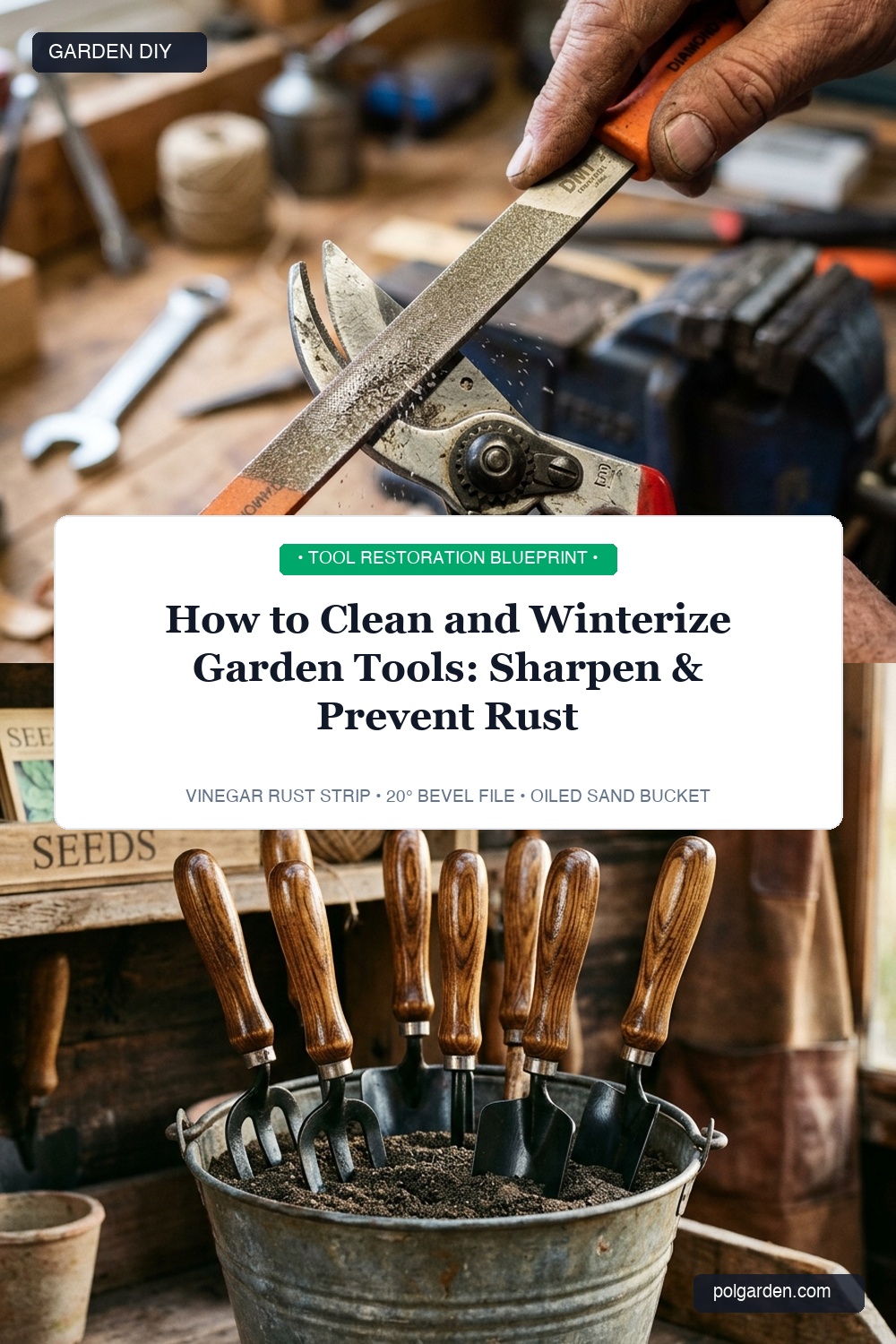
As autumn winds down and frost locks the garden soil, putting your hand pruners, spades, and shears away caked in damp dirt is a guaranteed recipe for pitting rust, blunted bevels, and brittle cracked handles by March. Taking an afternoon to thoroughly strip corrosion, hone razor-sharp cutting edges, and seal carbon steel and ash wood with natural protective oils not only extends tool lifespans by decades but guarantees crisp, disease-free pruning cuts when spring explodes.
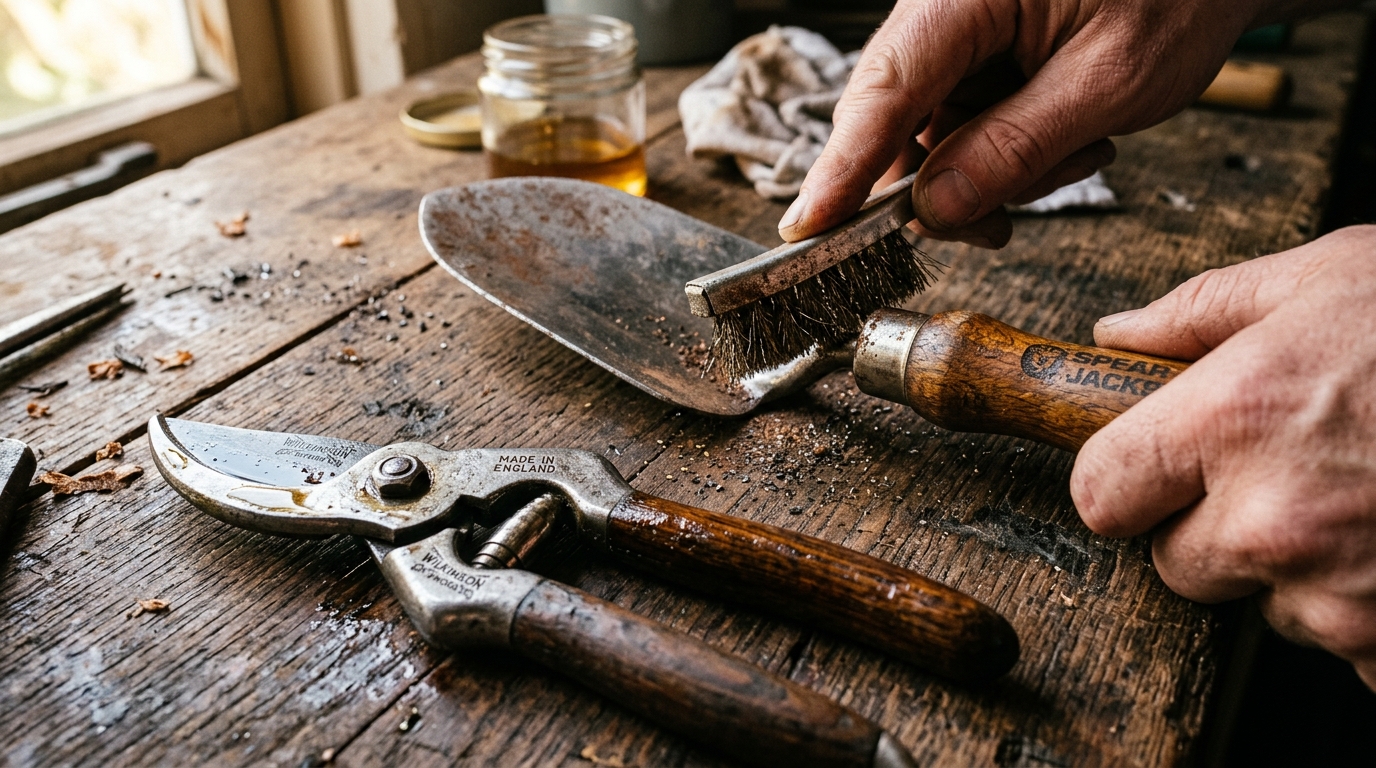
Dull, oxidized tools do more than make gardening physically exhausting—they cause jagged, torn plant tissues that invite fungal pathogens like botrytis and black stem rot. When high-carbon steel shears slice with surgical precision, woody perennials heal rapidly, and garden beds remain healthy through dormant winter freezes.
- Difficulty: Beginner to Intermediate
- Time Commitment: 45 to 60 Minutes (Entire Collection)
- Estimated Cost: Under .00 for Household Supplies
- Sharpening Angle: Strict 20° Single-Bevel Factory Angle
- Target Tools: Bypass Pruners, Loppers, Spades, Digging Forks, Garden Shears
Why You’ll Love Winterizing Your Tools
- Doubles Tool Longevity: Prevents deep structural rust oxidation that seizes tension springs and ruins forged steel.
- Surgical Clean Cuts in Spring: Sharp blades make clean botanical incisions that heal instantly without bark tearing.
- Zero Chemical Toxicity: Uses common white vinegar, steel wool, and food-safe plant oils instead of harsh petrochemical solvents.
- Instant Springtime Readiness: Eliminate frustrating prep delays when the first warm spring planting weekend arrives.
Essential Materials, Tools & Smart Swaps
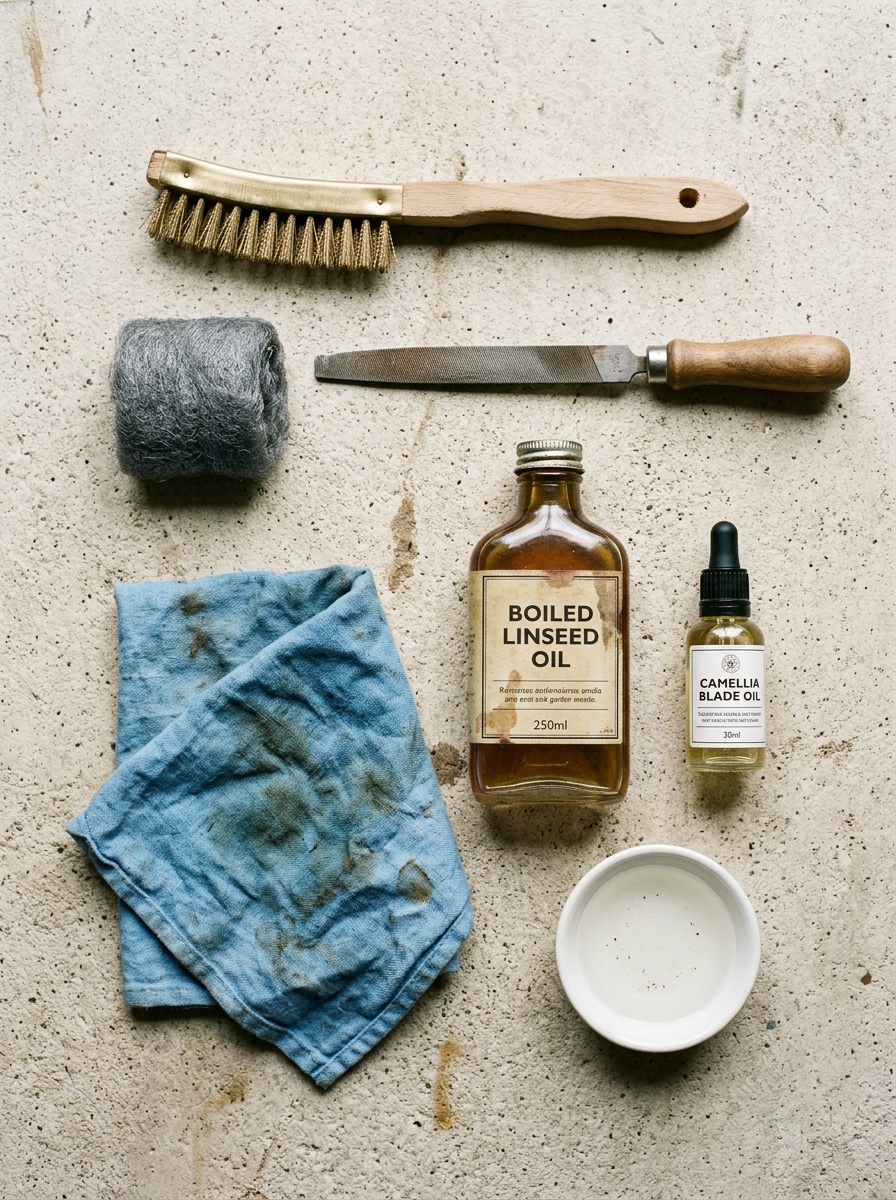
- Brass Wire Brush & Fine Steel Wool (#0000): Effortlessly scours hardened mud and surface oxidation without gouging cutting steel.
- Standard White Vinegar (5% Acidity): Natural mild acetic acid dissolves stubborn iron oxide rust crusts overnight.
- Single-Cut Mill Bastard File or Diamond Hone: Essential for restoring the precise 20-degree factory cutting bevel on pruners and spades.
- Boiled Linseed Oil: Polymerizing natural wood finish that penetrates dry ash or hickory handles, preventing splintering.
- Camellia Oil or Mineral Machine Oil: Non-drying botanical oil that coats bare metal blades to repel winter ambient humidity.
- Galvanized Metal Sand Bucket: Coarse builder sand blended with clean motor oil or mineral oil creates a self-cleaning storage caddy.
Step-by-Step Tool Winterizing Walkthrough
1. Mechanical Scrub Down: Begin by knocking off dried clods of soil using a stiff putty knife. Scrub metal heads and wooden sockets thoroughly under warm soapy water with a brass wire brush, then towel dry immediately.
2. Submerge in Vinegar for Stubborn Rust: For heavily corroded pruners or spade blades, submerge metal parts in a shallow tray filled with undiluted 5% white vinegar for 2 to 4 hours (avoid soaking brass rivets or wooden grips). The acid converts flaky orange rust into a soft black paste that scours away easily with fine #0000 steel wool.
3. Neutralize the Acid: Rinse stripped metal in a solution of warm water and 2 tablespoons of baking soda to immediately stop acid etching, then wipe completely dry with a clean cotton rag.
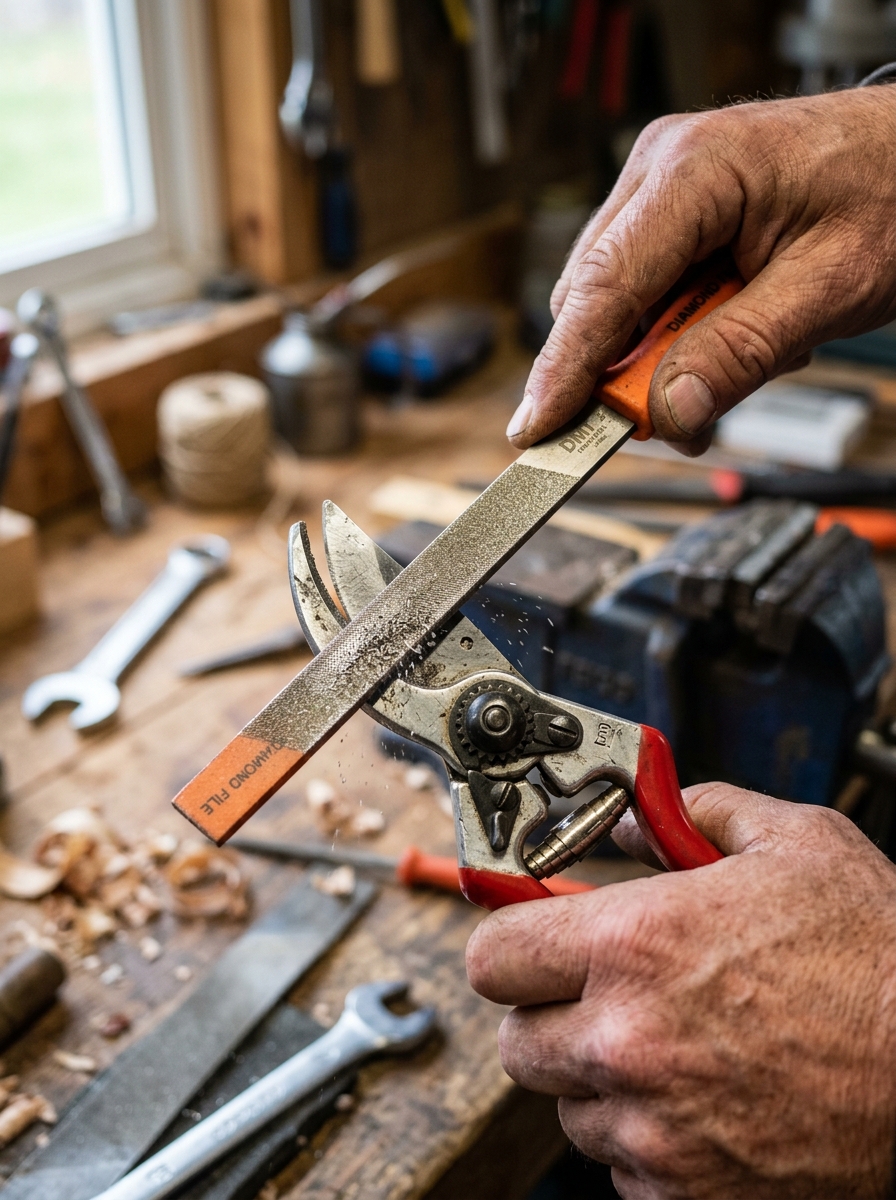
4. Hone the Factory Cutting Bevel: Secure bypass pruners or loppers in a bench vise. Identify the beveled cutting edge (never file the flat anvil side!). Hold your diamond file or mill bastard file flush against the factory bevel (typically 20°). Push the file forward in smooth, single-direction strokes from heel to tip 8 to 12 times until a glistening silver cutting burr forms. Flip the blade over and make one light, perfectly flat swipe across the back side to remove the burr.
5. Condition Wooden Handles: Sand weathered wooden handles lightly with 120-grit sandpaper to eliminate splinters. Apply a generous coat of boiled linseed oil using a clean rag, rubbing vigorously along the grain. Allow the oil to soak in for 20 minutes, then wipe off any tacky excess.
6. Lubricate the Pivot Mechanism: Apply 3 to 4 drops of camellia oil or 3-In-One oil directly to pruner pivot bolts, lock nuts, and internal tension springs. Work the handles back and forth 10 times to distribute lubricant evenly.
3 Master Gardener Secrets for 100% Success
1. Never Push-and-Pull a Sharpening File: Files are designed to cut in one direction only (forward on the push stroke). Sawing back and forth ruins the file teeth and creates jagged, uneven micro-chips along your cutting edge.
2. Distinguish Boiled Linseed Oil from Raw Linseed Oil: Raw linseed oil takes weeks to dry and remains sticky, attracting dirt and sawdust. Boiled linseed oil contains drying agents that polymerize within 12 to 24 hours into a rock-hard, waterproof satin seal.
3. Keep Digging Blades Sharpened Too: Gardeners frequently sharpen pruners but neglect shovels and garden spades! A sharp 45-degree edge on your spade cuts through stubborn roots, sod, and clay soil with half the physical effort.
Specialized Tool Maintenance Protocols
- Bypass Pruners & Loppers: Check tension lock nuts before winter storage. If the cutting blade and anvil have lateral wobble, tighten the center bolt slightly until blades glide past each other with minimal clearance.
- Digging Spades, Shovels & Hoes: Grind down mushroomed metal burrs on spade edges using a flat bastard file; coat large steel blades with boiled linseed oil or mineral oil before hanging.
- Hoses & Spray Nozzles: Disconnect all garden hoses from outdoor spigots before freezing weather arrives. Stretch hoses downhill to drain standing water completely, coil loosely, and store nozzles indoors to prevent freeze-cracking internal rubber O-rings.
- Lawn Mowers & Gas Equipment: Add fuel stabilizer to small engines or run tanks dry to prevent ethanol varnish from gumming up carburetors during cold winter months.
Winter Storage & Potting Shed Organization
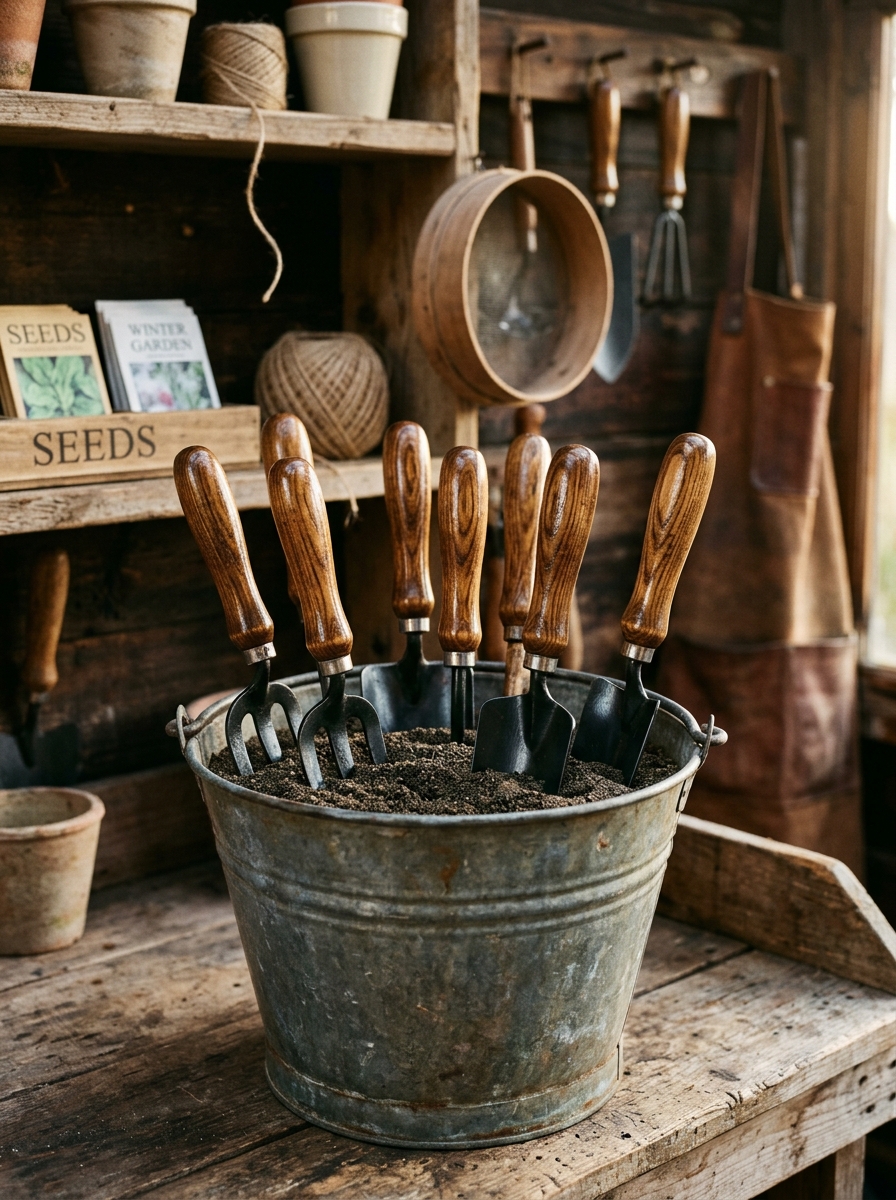
- The Oiled Sand Bucket Method: Fill a 5-gallon metal or plastic bucket with dry builder sand and blend in 1 quart of vegetable oil or mineral oil. Plunging trowels, hand forks, and weeders into the sand scours blades clean after each use and coats them in an oxygen-excluding oil film all winter long.
- Hang Tools Off Cold Concrete: Concrete floors wick moisture from damp winter air. Mount tool racks on wooden studs to hang heavy shovels and rakes at least 6 inches off the ground.
- Inspect Rubber Grips: Wipe synthetic handles with a damp silicone rag to prevent cold-induced rubber dry-rot and hardening.
Frequently Asked Questions
Can I use WD-40 to winterize garden tools?
WD-40 is a great solvent and water displacer, but it evaporates quickly and is not a true long-term lubricant. Use boiled linseed oil for wooden handles and non-detergent machine oil or camellia oil for lasting rust prevention.
How do I sharpen anvil pruners versus bypass pruners?
Bypass pruners have a single bevel and should only be sharpened on the outer angled edge. Anvil pruners, which cut by crushing against a flat brass base, have double-beveled blades that must be sharpened equally on both sides.
Is motor oil safe for conditioning garden tools?
Clean mineral oil or vegetable oil is preferred over used motor oil. Used motor oil contains heavy metals and petroleum combustion byproducts that can leach into organic vegetable garden beds.
Pin This Tool Care Blueprint for Later
Love these workshop restoration tips? Save this pin to your Garden DIY or Garden Tool Care Pinterest board so you have these sharpening and rust-proofing steps ready every fall!