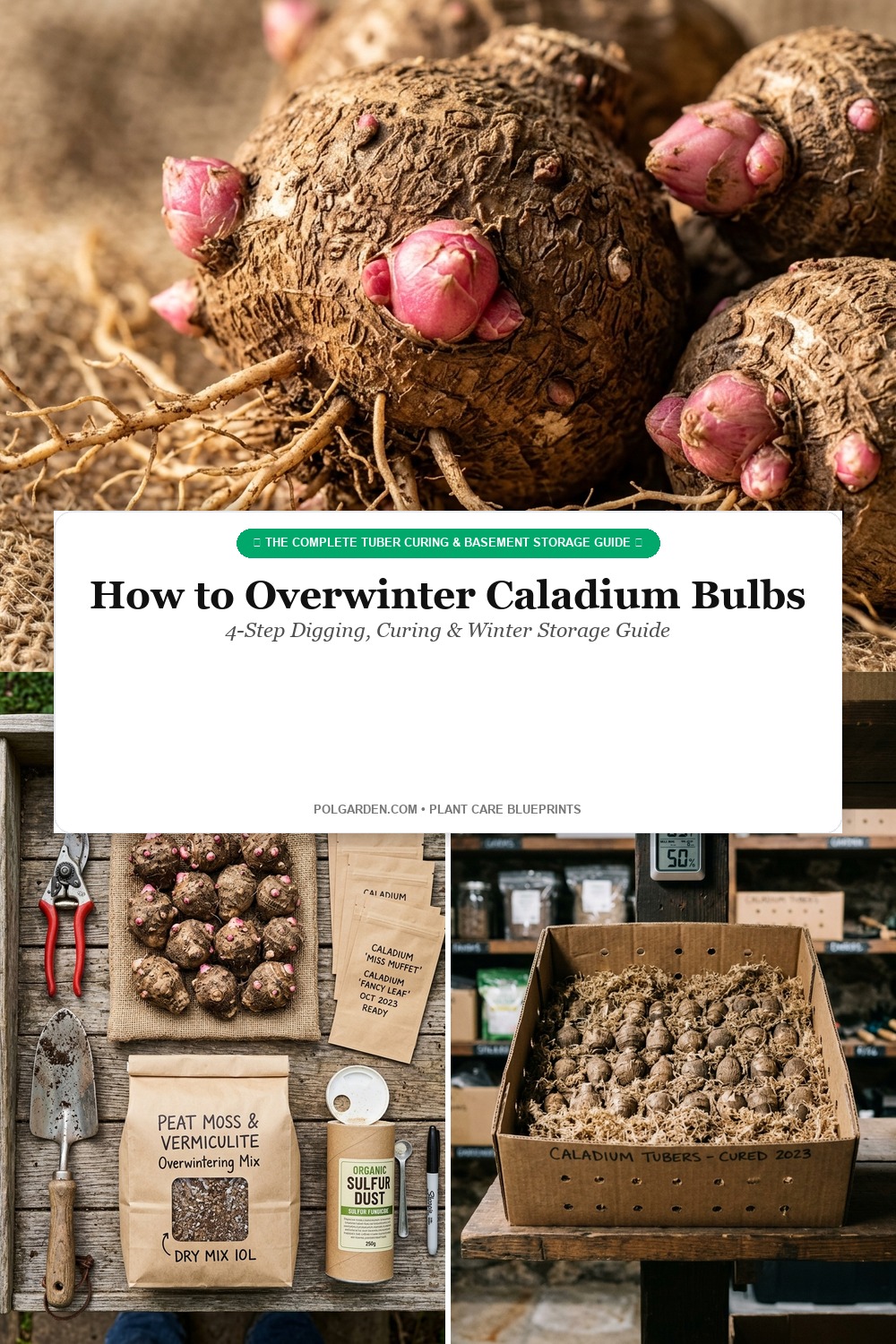
Few garden sights rival the luminous, heart-shaped spectacle of fancy-leaf caladiums brightening dark shady borders and container planters with their stained-glass patterns of translucent crimson, watermelon pink, snow white, and emerald green. Yet when autumn chill rolls in and night temperatures dip below 55°F (13°C), gardeners often watch in confusion as vigorous caladium stalks suddenly droop, yellow, and collapse. Left in the garden bed over winter in cold climates, these tender tropical tubers quickly rot into mush. The good news is that caladiums are not annuals—they are tuberous perennials that enter a natural winter dormancy and can be lifted, cured, and stored indoors for pennies, multiplying your collection year after year.
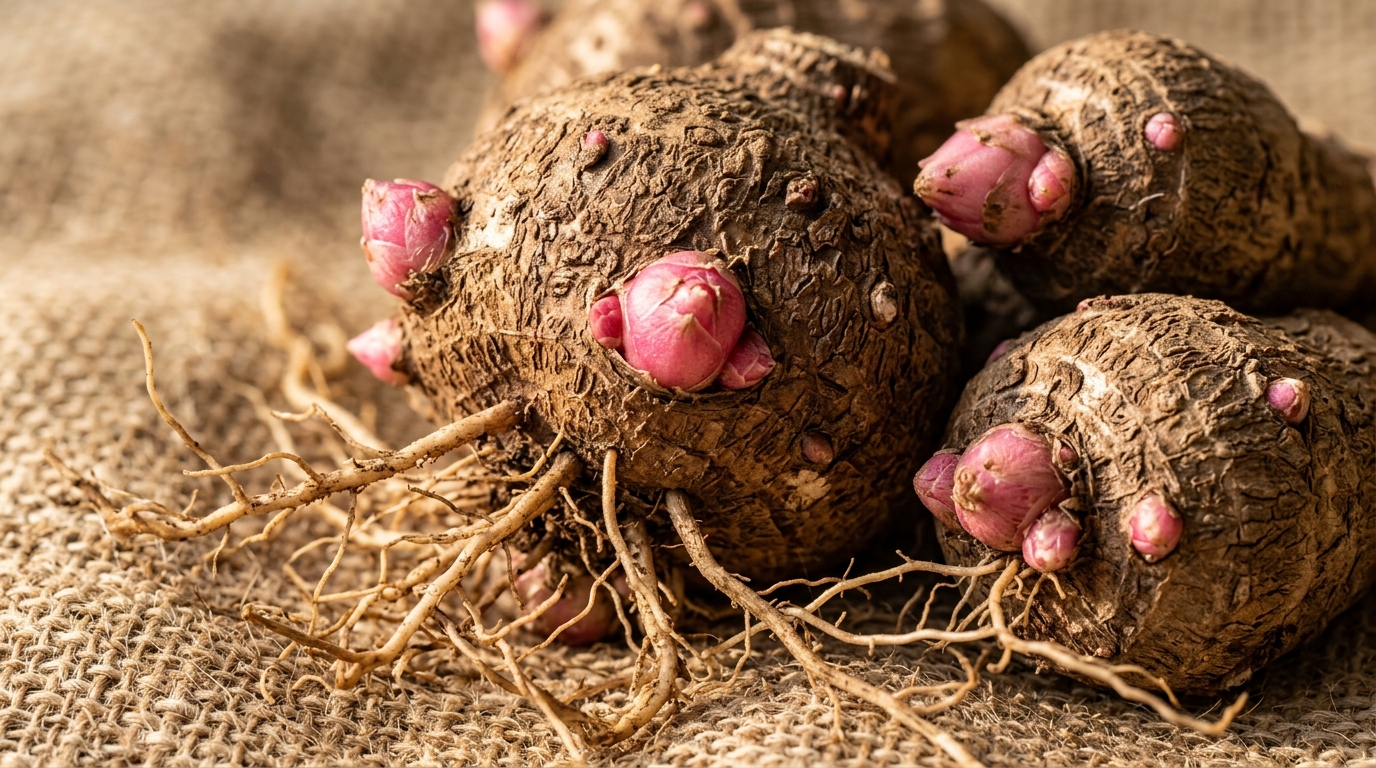
Indigenous to the warm riverbasins and humid tropical understories of Brazil and the Amazon, caladiums (Caladium bicolor) are adapted to distinct wet and dry seasons rather than freezing winters. In their native habitat, the dry season signals the plant to pull all carbohydrates, moisture, and essential nutrients from its large foliage back into the underground knobby tuber, which then rests safely until warm monsoon rains return. In temperate USDA Hardiness Zones 3 through 8, outdoor soil temperatures drop far below the 50°F (10°C) threshold where caladium cells suffer irreversible chilling injury. By executing a simple 4-step autumn protocol—lifting before the first hard ground-freeze, curing at warm room temperatures, dusting with organic fungicide, and nesting in breathable peat moss—you can store your tubers safely in a dark closet or basement and replant them next May for a breathtaking summer display.
Why You’ll Love Overwintering Caladium Bulbs
- 100% Free Perennial Displays: A single healthy tuber often produces multiple offsets during summer, allowing you to double your planting stock every year without spending a dime.
- Zero Winter Rot Losses: Proper warm curing and breathable packing prevent the damp fungal gray mold and bacterial soft rot that ruin poorly stored bulbs.
- Immunity to Freezing Soil Damage: Lifting before the ground locks up eliminates the heartbreaking spring discovery of decomposed tubers.
- Effortless Spring Head Start: Pre-sprouting your stored tubers indoors in pots during April gives you massive, show-stopping foliage a full month ahead of nursery stock.
Key Supplies & Pre-Winter Prep Station

Gather these essential harvesting and storage supplies in mid-October before nighttime temperatures drop near freezing:
- Garden Hand Fork or Wide Trowel: A spading fork is much safer than a sharp shovel for gently loosening soil around tubers without slicing into their protective outer skin.
- Sharp Bypass Hand Pruners: For clipping dried foliage back to the tuber neck after curing. Sterilize blades with rubbing alcohol to prevent pathogen transfer.
- Shallow Mesh Curing Trays or Slatted Crates: Allows 360-degree air circulation around lifting tubers during their critical 2- to 3-week indoor drying period.
- Dry Horticultural Peat Moss or Coarse Vermiculite: Fluffy, sterile packing mediums that cushion stored tubers, absorb excess moisture, and prevent desiccation shriveling.
- Cardboard Box with Ventilation Holes or Breathable Mesh Bags: Never store tubers in airtight plastic bins; cardboard boxes with punched holes provide ideal air exchange. Similar storage rules apply when overwintering dahlia tubers in peat moss.
- Organic Sulfur Dust or Ground Cinnamon: Natural antifungal powders to dust over any cuts or knobby crevices before winter packing.
Step-by-Step Walkthrough to Overwinter Caladium Bulbs
1. Step One: Timing & Gentle Autumn Lifting: Timing is paramount. Lift your caladium tubers in autumn as soon as temperatures drop below 55°F (13°C) and foliage begins to naturally droop or fade, but BEFORE the first hard killing frost. A light frost that touches leaves is acceptable, but frozen soil will damage the tubers beneath. Insert your garden fork 6 to 8 inches away from the base of the plant to avoid spearing the roots. Gently pry upward, lifting the entire clump of soil and tubers. Leave the drooping stems and leaves attached to the tubers for now; as they dry, they funnel remaining reserves back into the tuber.
2. Step Two: The 2-to-3 Week Warm Curing Period: Do not wash tubers with water! Wet washing introduces moisture into tiny cracks and encourages fungal mold. Instead, gently brush off loose clumps of dirt with your gloved fingers. Lay the tubers with foliage attached in a single layer on newspaper, cardboard, or wire mesh trays in a warm, dry, well-ventilated area (such as a garage, porch, or spare room) that stays between 70°F and 75°F (21°C to 24°C). Allow them to cure undisturbed for 14 to 21 days. During this period, the outer skin hardens and corks over, creating an impenetrable defensive layer against winter pathogens.

3. Step Three: Cleaning, Trimming & Antifungal Dusting: After two to three weeks of curing, the foliage will be completely brown, dry, and papery. Use clean shears to snip off the dead stems 1 inch above the tuber, or gently pull—they will often separate cleanly on their own. Gently rub away remaining dried garden soil and fibrous roots. Inspect each tuber carefully: discard any that feel soft, mushy, or hollow. Dust healthy tubers lightly with organic sulfur powder or ground culinary cinnamon to seal any minor surface abrasions.
4. Step Four: Packing in Peat Moss & Winter Storage Conditions: Line the bottom of a cardboard box or wooden crate with a 2-inch layer of dry peat moss, vermiculite, or shredded newspaper. Place caladium tubers on top, spacing them so they do not touch one another (if one tuber spoils, spacing prevents rot from spreading). Cover with another layer of peat moss, repeating until all tubers are buried. Store the box in a dark, dry space—such as a linen closet, interior basement pantry, or heated crawlspace—that remains consistently between 60°F and 65°F (15°C to 18°C). Crucial Law: Never store caladiums below 55°F (13°C) or in an unheated winter garage, as cold temperatures cause dormant tubers to rot internally. For companion shade garden foliage care, review our guide to overwintering coleus plants indoors.
3 Botanist Secrets for Non-Stop Caladium Tuber Vitality
1. Overwintering Caladiums in Containers: If you grew caladiums in decorative patio pots or window boxes, you don’t even have to dig them up! In autumn, move the entire container indoors into a warm basement or utility room after leaves begin yellowing. Withhold all water completely so the potting mix dries out bone-dry. Cut back the dead foliage and let the tubers sleep undisturbed inside their dry pots all winter long. In late April, bring the pot into a sunny window, resume gentle watering, and fresh sprouts will emerge within weeks.
2. Monthly Mid-Winter Moisture & Rot Inspection: Once a month during December, January, and February, open your storage box and inspect the tubers. If tubers appear slightly shriveled or rubbery from dry indoor heating, mist the surface of the peat moss with a fine spray of water (just a light misting, never soggy) to restore ambient humidity. If you spot any tuber that has developed soft rot, remove it immediately to protect neighboring tubers.
3. Tuber De-Eyeing Trick for Ultra-Bushy Foliage: Caladium tubers feature one dominant central “eye” surrounded by smaller secondary buds. If planted naturally, the dominant eye suppresses the others, producing a few tall, giant leaves. Before replanting in spring, take the tip of a clean paring knife and carefully excise the central dominant bud (cutting 1/8 inch deep). This breaks apical dominance, stimulating all the secondary buds to sprout simultaneously and resulting in a dense, compact, bushy mound of 30+ vibrant leaves.
Spring Awakening & Outdoor Reintroduction

When spring arrives, do not rush caladiums outside into cool garden soil. Cold spring soil (below 65°F) causes dormant tubers to sit stagnant or rot:
- Indoor Pre-Sprouting in April: 4 to 6 weeks before your last spring frost, plant tubers knobby-side up (smooth side down) 1 to 2 inches deep in shallow nursery flats filled with moist potting mix. Keep flats at 75°F to 80°F (24°C to 27°C) using a seedling heat mat to wake up pink buds.
- Wait for Warm Soil Temperatures: Only transplant caladiums into garden beds when outdoor soil temperatures reliably exceed 65°F to 70°F (18°C to 21°C) and nighttime air stays above 60°F (15°C).
- Pair with Spring Companions: Combine your waking caladiums with other seasonal favorites by exploring our blueprints for overwintering geraniums and planting fall bulbs for spring blooms.
Troubleshooting Common Winter Caladium Problems
- Tubers Soft, Mushy, or Smelling Foul in Spring: Storage temperature dropped below 55°F (13°C) or packing medium was too damp, causing bacterial soft rot. Caladiums require warmth (60°F to 65°F) during dormancy.
- Tubers Shriveled, Paper-Dry, or Brittle: Storage environment was too dry and warm (such as right next to a furnace), pulling all natural moisture from the tubers. Wrap in slightly deeper peat moss next winter.
- Tubers Sprouting Pale Shoots in January: Storage area is too warm (above 70°F) or receiving stray light. Move box to a darker, cooler closet that stays around 60°F to maintain deep dormancy.
Frequently Asked Questions
Can caladium bulbs stay in the ground all winter?
Caladiums can only survive outdoors year-round in tropical USDA Zones 9B through 11. In Zones 3 through 9A, freezing ground temperatures will destroy the tubers, making autumn lifting mandatory for winter survival.
When should I dig up caladium bulbs in the fall?
Dig up tubers in early-to-mid autumn when nighttime temperatures drop below 55°F (13°C) and leaves begin drooping, but before the first hard freezing frost locks up the soil.
How long do caladium bulbs need to cure before storage?
Caladium tubers require 2 to 3 weeks of warm (70°F to 75°F), dry indoor curing with leaves attached. This allows outer skins to harden and prevents fungal decay during winter storage.
What is the best temperature for storing caladium tubers?
Unlike dahlias or potatoes which prefer cold 45°F cellars, caladiums are tropical and MUST be stored between 60°F and 65°F (15°C to 18°C). Storing below 55°F causes fatal chilling rot.
Save This Winter Garden Guide for Later
Love this guide? Save this pin to your Pinterest gardening, bulb storage, shade garden, or winter plant protection board so you have the 4-step caladium digging and curing blueprint ready whenever autumn cold arrives!