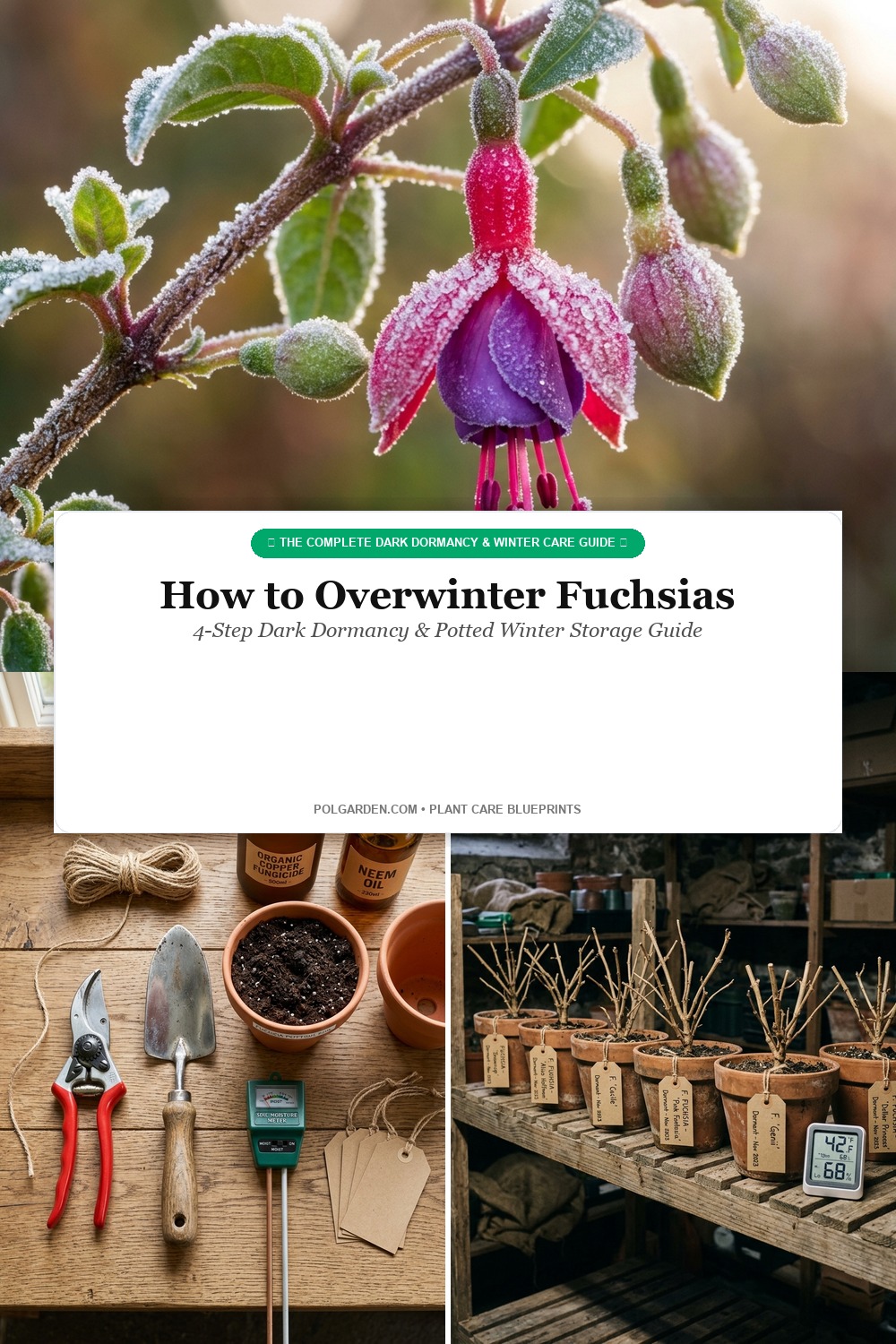
With their cascading pendant blossoms resembling intricate, jewel-toned ballerinas dancing in shades of cerise pink, deep magenta, royal purple, and porcelain white, hanging fuchsias are undisputed royalty in the shady summer porch garden. Yet because modern hybrid fuchsias are tender subtropical shrubs hailing from cool mountainous cloud forests in Central and South America, the arrival of autumn cold strikes dread into the hearts of gardeners. When freezing temperatures approach 32°F (0°C), tender succulent branches turn waterlogged and black, killing the plant overnight if left outdoors. However, you never need to treat prized fuchsia baskets as expendable annuals—by guiding them into a forced, dark winter dormancy, you can easily preserve them in a cold garage or basement and wake them in spring to produce even larger, more spectacular flushes of blooms year after year.
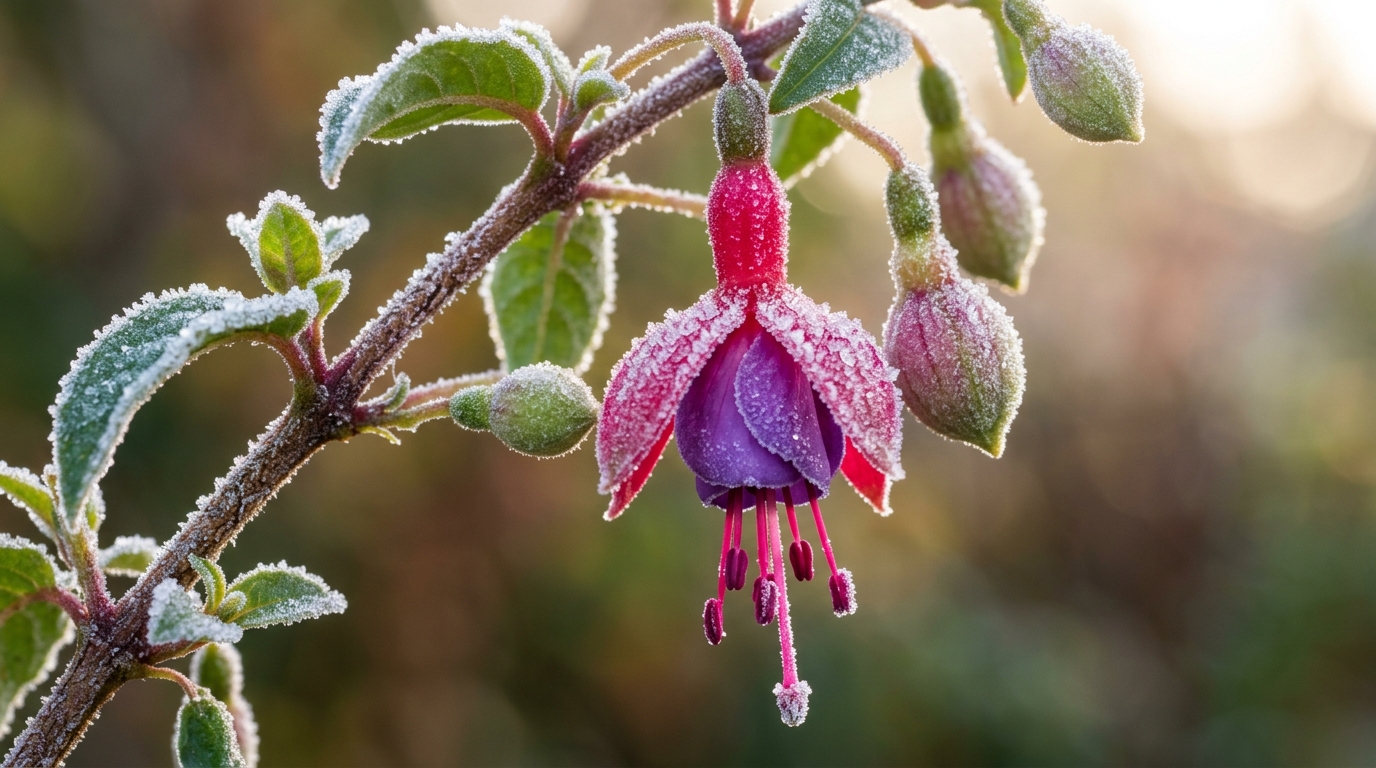
Understanding fuchsia physiology is the secret to successful overwintering. Unlike tropical houseplants that demand continuous high heat and bright grow lights, standard trailing and bush fuchsias (Fuchsia hybrida) naturally respond to dropping autumn temperatures and shorter daylight by slowing down their active vegetative growth. While hardy garden fuchsias (like Fuchsia magellanica) can survive in-ground in USDA Zones 6 through 9 with heavy root mulching, the delicate potted varieties sold in garden nurseries cannot withstand frozen root balls. The most foolproof, space-saving method for wintering potted fuchsias in cold climates (Zones 3 through 8) is cold dark dormancy: stripping the foliage, pruning back the canopy to a woody framework, and storing the potted root ball in a cool, unheated, frost-free room between 40°F and 45°F (4°C to 7°C) where the plant sleeps peacefully without requiring daily attention or supplementary grow lamps.
Why You’ll Love Overwintering Fuchsias
- Magnificent Specimen Growth: Year two and year three fuchsias develop thick, woody stems capable of bearing triple the number of floral trusses compared to juvenile, single-stem nursery starts.
- Zero Expensive Lighting Equipment: By forcing complete dark dormancy, you eliminate the need for costly indoor grow lights, humidifiers, or heated propagation tents.
- Minimal Winter Maintenance: Dormant fuchsias require no daily misting, no fertilizer, and only a tiny cup of water once a month to keep root fibers from desiccating.
- Major Cost Savings: Premium 10-inch trailing fuchsia hanging baskets often cost $30 to $45 at garden centers each spring; overwintering your own keeps that money in your wallet.
Key Supplies & Pre-Winter Prep Station

Before frost strikes in early to mid-autumn, prepare your workstation with these essential gardening tools and supplies:
- Sharp Bypass Hand Pruners: Precision shears deliver clean, crush-free cuts across tender woody stems. Always disinfect blades in a 70% isopropyl alcohol solution between plants to prevent transmitting viral pathogens.
- Organic Copper Fungicide or Sulfur Powder: Applying a protective preventive antifungal spray before storage eliminates dormant botrytis spores and gray mold that thrive in cool, dark environments.
- Neem Oil or Horticultural Soap Spray: Fuchsias are notorious magnets for greenhouse whiteflies and two-spotted spider mites. A thorough pre-storage wash prevents bringing pests indoors. Similar pest precautions are crucial when overwintering Boston ferns indoors.
- Plant Moisture Meter or Wooden Skewer: Checking soil moisture deep within the root ball prevents the number one cause of dormant plant death: winter root rot from overwatering.
- Waterproof Kraft Plant Identification Tags: Record variety names, flower colors, and storage dates so you can plan your spring shade combinations accurately.
- Digital Min/Max Thermometer: Place on your storage shelf to verify ambient temperatures stay strictly within the safe 40°F to 48°F (4°C to 9°C) zone.
Step-by-Step Walkthrough to Overwinter Potted Fuchsias
1. Step One: Pre-Frost Hard Pruning & Cleaning: Bring your fuchsia plants to a garden potting bench 1 to 2 weeks before the first expected autumn frost. Inspect the plant thoroughly and remove any remaining flowers, buds, seed pods (berries), and dead twigs. Using sharp bypass pruners, cut all branches back hard, reducing the entire plant down to a sturdy, woody framework approximately 4 to 6 inches (10 to 15 cm) above the soil line. Do not be timid—pruning stimulates vigorous branching in spring and dramatically reduces the surface area susceptible to mold and moisture loss during winter.
2. Step Two: Complete Manual Defoliation: After cutting back the stems, strip off every single remaining green leaf by hand. While stripping leaves may look severe, it is the most critical safeguard in the dark dormancy protocol. In the dark, leaves cannot photosynthesize; they will yellow, fall into the pot, and decay into a breeding ground for gray mold (Botrytis cinerea). Furthermore, pests such as spider mite eggs and whitefly pupae cling to the undersides of foliage. Removing the leaves manually guarantees a spotless, disease-free dormant specimen.

3. Step Three: Pest Wash & Antifungal Treatment: Spray the cut woody framework and the top layer of the potting soil thoroughly with an organic copper fungicide spray or neem oil wash. Spray into every nodal joint and branch crotch where microscopic insects might hide. Clear away all loose plant debris from the surface of the container potting mix. If you have had previous fungus gnat issues, top the pot with a thin 1/2-inch layer of sterile sand or coarse vermiculite.
4. Step Four: Storage in Cool Dark Quarters & Winter Care: Move your pruned, defoliated fuchsias into a completely dark, cool space that stays consistently between 40°F and 45°F (4°C to 7°C). An unheated basement corner, insulated attached garage, root cellar, or cool enclosed frost-free shed is ideal. Crucial rule: The soil should be barely moist when put away—never saturated wet! Once a month, check the pots. If the soil is pulling away from the pot edge and feels bone-dry to the touch, add just 1/4 to 1/2 cup of water around the root ball to prevent the roots from shriveling. The plant needs just enough moisture to stay alive, but never enough to stimulate premature growth. Compare this method with our cold dormancy protocol for overwintering dormant geraniums in pots.
3 Botanist Secrets for Fuchsia Longevity & Explosion of Blooms
1. Avoid the Fatal Warmth Trap: The single most common mistake with fuchsias is placing them in a warm living room (68°F to 72°F) under dim indoor light. Fuchsias kept in heated living quarters continue trying to grow, but lacking intense summer sunlight, they produce weak, spindly, pale green shoots that collapse and quickly succumb to spider mites. Cold temperatures (around 42°F) lock the plant in restful suspended animation, which preserves energy reserves for explosive spring vitality.
2. The Early Spring “Pinch-and-Prune” Strategy: When waking fuchsias in March, gardeners are often eager to let new green shoots grow wild. However, botanists use the “double-pinch” technique: as new shoots reach 3 inches with 3 pairs of leaves, pinch out the growing tip with your thumbnail. Each pinched stem will branch into two stems. Repeat this pinch once more 3 weeks later. This simple tactic creates an ultra-dense, mounded plant with dozens of flowering branches rather than a few leggy stems.
3. Root-Ball Refresh During March Wake-Up: Mature fuchsias often become root-bound in hanging baskets after a full season of growth. When waking plants in early spring, slide the root ball out of the pot. Use clean shears to slice away the bottom 1 to 2 inches of old root mass, loosen circling side roots, and replant in the same container with fresh, nutrient-rich potting compost. This stimulates an immediate flush of vigorous white feeder roots.
Spring Awakening & Outdoor Reintroduction Protocol

As winter begins to release its grip in late winter or early spring (typically mid-to-late March), follow this 3-step awakening sequence to jump-start your fuchsias:
- Step 1: Move to Bright Indirect Light & Warmth: Bring dormant pots out of the dark cold room into a bright, warm location (60°F to 65°F / 15°C to 18°C), such as an east-facing windowsill, sunroom, or heated greenhouse. Give the potting mix a thorough, deep watering until water drains freely from the base.
- Step 2: Resume Light Nutrition: Within 10 to 14 days, tiny pink or green nodes will swell and sprout along the woody stems. Once new shoots are 1 inch long, begin feeding with a balanced water-soluble fertilizer diluted to half-strength every two weeks. For companion shade plants, review our guidelines for overwintering caladium bulbs and rooting coleus cuttings.
- Step 3: Gradual Hardening Off in May: Never rush tender waking fuchsias outdoors immediately into direct wind and sun. When all danger of frost has passed in May, set the pots in dappled shade outdoors for 2 to 3 hours daily, gradually increasing outdoor exposure over 10 to 14 days before hanging them back in their permanent summer locations.
Troubleshooting Common Winter Fuchsia Problems
- Stems Covered in Fluffy White or Gray Mold: Air humidity is too stagnant and stagnant, or plant leaves were left on the stems. Immediately wipe off mold with a cloth dipped in diluted hydrogen peroxide, improve ventilation with a small oscillating fan, and let the soil dry out.
- Woody Stems Shriveled and Brittle: The storage environment is too dry or the root ball was left unwatered for multiple months. Perform a scratch test on the lower main trunk using your thumbnail: if green cambium tissue shows beneath the bark, the plant is alive—give it a cup of tepid water immediately. If it snaps like dry kindling and is completely brown inside, the root system has desiccated.
- Pale, Spindly White Shoots Sprouting in January: Ambient storage temperatures are too warm (above 50°F / 10°C). Move the container to a colder spot closer to 40°F (4°C) to keep the plant in deep dormancy. Prune off any weak white shoots that appeared prematurely.
Frequently Asked Questions
Can fuchsias survive winter outside?
Hardy shrub fuchsias like Fuchsia magellanica can survive outdoors down to USDA Zone 6 if planted deeply in the ground and heavily mulched with straw or leaves. However, standard trailing basket fuchsias (Fuchsia hybrida) cannot tolerate freezing temperatures and must be brought indoors before the first hard frost.
How cold can fuchsias tolerate before taking damage?
Tender potted fuchsias will show leaf and flower burn when temperatures dip below 35°F (1.5°C). Sustained freezing temperatures at or below 32°F (0°C) will penetrate container walls and destroy the root system within hours.
Do dormant fuchsias need sunlight in the winter?
No, dormant defoliated fuchsias do not need any sunlight. Because all leaves have been pruned away, the plant has no photosynthetic capability. Keeping them in complete darkness prevents premature, spindly shoot growth.
How often should I water overwintering fuchsias?
Only water once every 4 to 6 weeks. The goal during dark dormancy is to keep the soil just barely damp so the root ball does not turn into dust, but never soggy. In cool 42°F conditions, wet soil causes swift and fatal root rot.
Save This Winter Garden Guide for Later
Love this guide? Save this pin to your Pinterest gardening, plant care, shade garden, or winter plant protection board so you have the 4-step fuchsia dark dormancy and spring wake-up blueprint ready whenever autumn cold arrives!