Have you ever dreamed of growing your own fresh vegetables, herbs, and flowers without the back-breaking labor of traditional gardening? Starting a no-till raised bed garden might just be the perfect solution for you. This method not only saves time and energy but also helps create a thriving ecosystem in your garden, allowing you to enjoy the fruits of your labor with minimal effort.
In this comprehensive guide, we will walk you through every step of the process, from understanding what a no-till raised bed garden entails to reaping the rewards of your hard work. Whether you’re a complete novice or have dabbled in gardening before, you’ll find this guide warm and friendly, as if you’re chatting with a knowledgeable friend who’s eager to help you succeed in your gardening adventure.
Table of Contents
- What is a No-Till Raised Bed Garden?
- How It Works
- Benefits of No-Till Gardening
- Steps to Start Your No-Till Raised Bed Garden
- Advanced Tips for Success
- Essential Tools and Resources
- Frequently Asked Questions
- Conclusion
What Is It?
A no-till raised bed garden is a gardening method that focuses on building soil health and structure without the traditional practice of tilling. This approach involves creating raised beds filled with organic materials, allowing nature to do the hard work of breaking down and aerating the soil. It’s particularly beneficial for beginners, as it simplifies the process of building a productive garden while enhancing the ecosystem beneath the surface.
In essence, no-till gardening promotes a self-sustaining environment where beneficial microorganisms and earthworms thrive, leading to improved soil fertility and moisture retention. By layering organic materials like compost, straw, and mulch, you create a rich habitat for your plants while reducing the need for chemical fertilizers and pesticides.
- No-till gardening preserves soil structure and health.
- It encourages beneficial organisms, enhancing plant growth.
- Requires less physical labor compared to traditional tilling.
- Ideal for beginners and those with limited gardening experience.
How It Works
The science behind no-till gardening is rooted in the understanding that soil is a living ecosystem. When you avoid tilling, you maintain the natural layers of soil, which are crucial for the health of plants. Tilling disrupts the habitat for microorganisms and earthworms, crucial players in nutrient cycling and soil aeration. By allowing organic materials to decompose on the surface, you promote a healthy environment for these beneficial organisms to thrive.
Over time, as you layer compost and other organic materials on your raised beds, they break down and enrich the soil below, enhancing its structure and fertility. This results in healthier plants that are better able to withstand pests and diseases, thanks to the robust ecosystem you’ve nurtured in your garden beds.
- No-till gardening fosters a thriving underground ecosystem.
- Organic matter decomposition enriches soil naturally.
- Maintaining soil structure is vital for plant health.
- Less disruption leads to better moisture retention.
Key Benefits
- Improved Soil Health — No-till gardening preserves the natural soil structure, leading to better aeration and drainage. This results in healthier roots and more robust plants, as they have access to the nutrients and moisture they need to thrive.
- Reduced Labor — Without the need for frequent tilling, you’ll find that maintaining your garden becomes significantly easier. This method allows you to focus on planting and harvesting, rather than constantly preparing the soil.
- Increased Biodiversity — By fostering a healthy ecosystem, no-till raised beds attract beneficial insects and microorganisms. This biodiversity helps control pests naturally and supports the overall health of your garden.
- Sustainability — Utilizing organic materials and avoiding chemical inputs makes no-till gardening a more environmentally friendly option. You’ll contribute to soil health and sustainability with every plant you grow.
- Greater Moisture Retention — The organic layers in no-till raised beds help maintain soil moisture, reducing the need for frequent watering. This is especially beneficial during hot summer months when water conservation is crucial.
Step-by-Step Guide
Step 1: Choose Your Location

Selecting the right spot for your no-till raised bed garden is crucial for its success. Look for a location that receives at least 6-8 hours of sunlight daily, as most vegetables thrive in bright light. Avoid areas with heavy tree roots or where water tends to pool, as these conditions can hinder your plants’ growth. If you can, choose a site that is accessible for regular maintenance and harvesting.
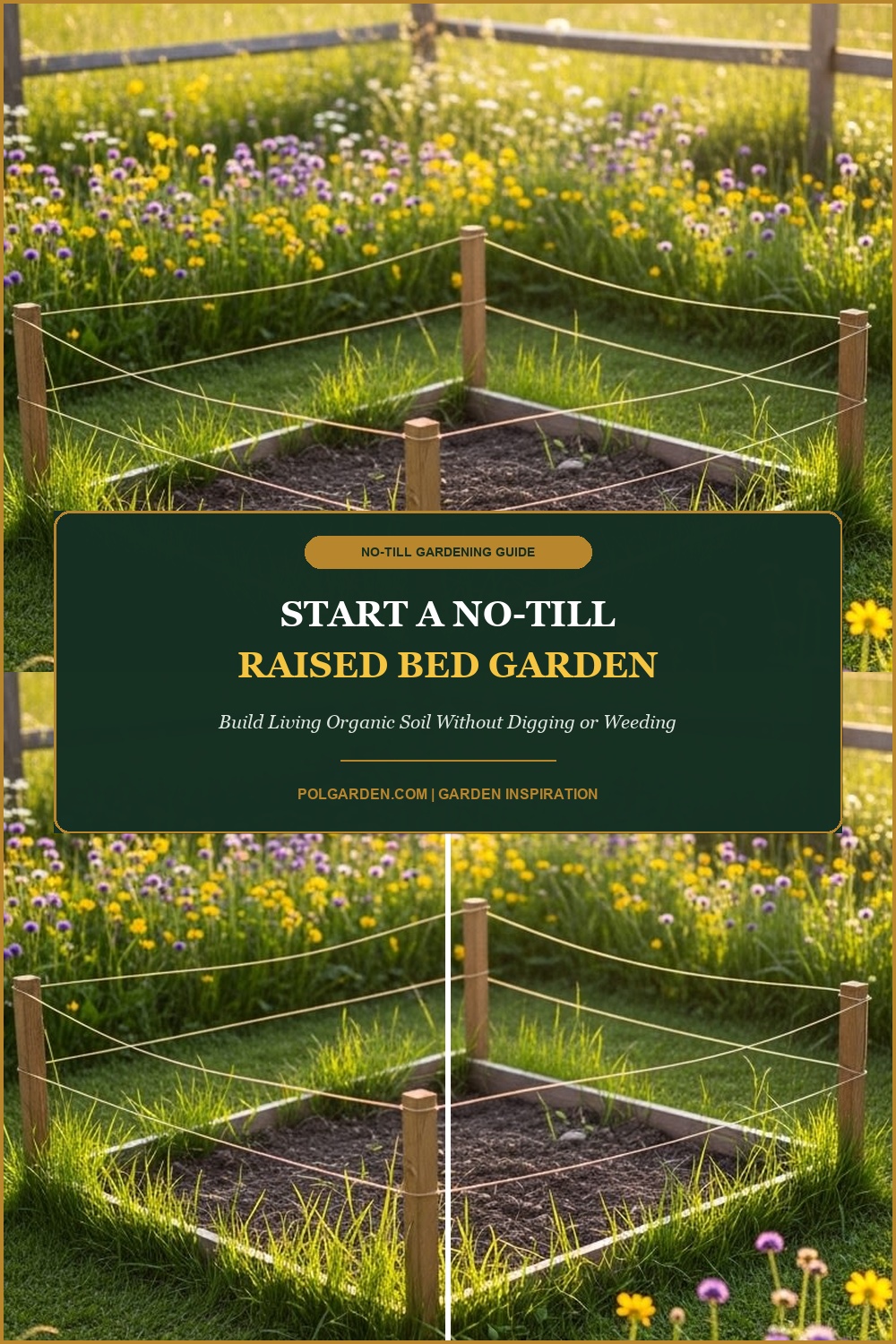
Once you’ve found your perfect spot, mark the dimensions of your raised bed with stakes or string to visualize the space you’ll be working with. This will also help you plan for any surrounding plants or pathways you might want to include.
Example: For instance, if your backyard has a sunny corner next to your patio, that could be an ideal spot for your raised bed.
Pro Tips:
- Consider proximity to your kitchen for easy access to fresh herbs and veggies.
- Avoid low-lying areas where water can collect after heavy rain.
- Observe sunlight patterns throughout the day to ensure optimal light exposure.
Step 2: Build Your Raised Bed Frame

Constructing a sturdy frame for your raised bed is the next step. You can use untreated wood, bricks, or stones—whatever fits your aesthetic and budget. If using wood, aim for dimensions of about 4 feet wide by 4 to 6 feet long and 12 to 24 inches deep for optimal planting conditions. Ensure your frame is level and secure, as it will hold the weight of the soil and plants.
Once your frame is built, place it over the marked area you prepared earlier. This will help you see how it fits in your space and if any adjustments are needed. Don’t forget to leave some space around the bed for easy access to tend to your plants.
Example: For example, if you decide on a wooden frame, using cedar or redwood will give you durability and resistance to rot.
Pro Tips:
- Use corner brackets to reinforce wooden frames for added stability.
- If using stones, ensure they are securely stacked to prevent shifting.
- Consider elevating the bed slightly to improve drainage.
Step 3: Layer Your Organic Materials
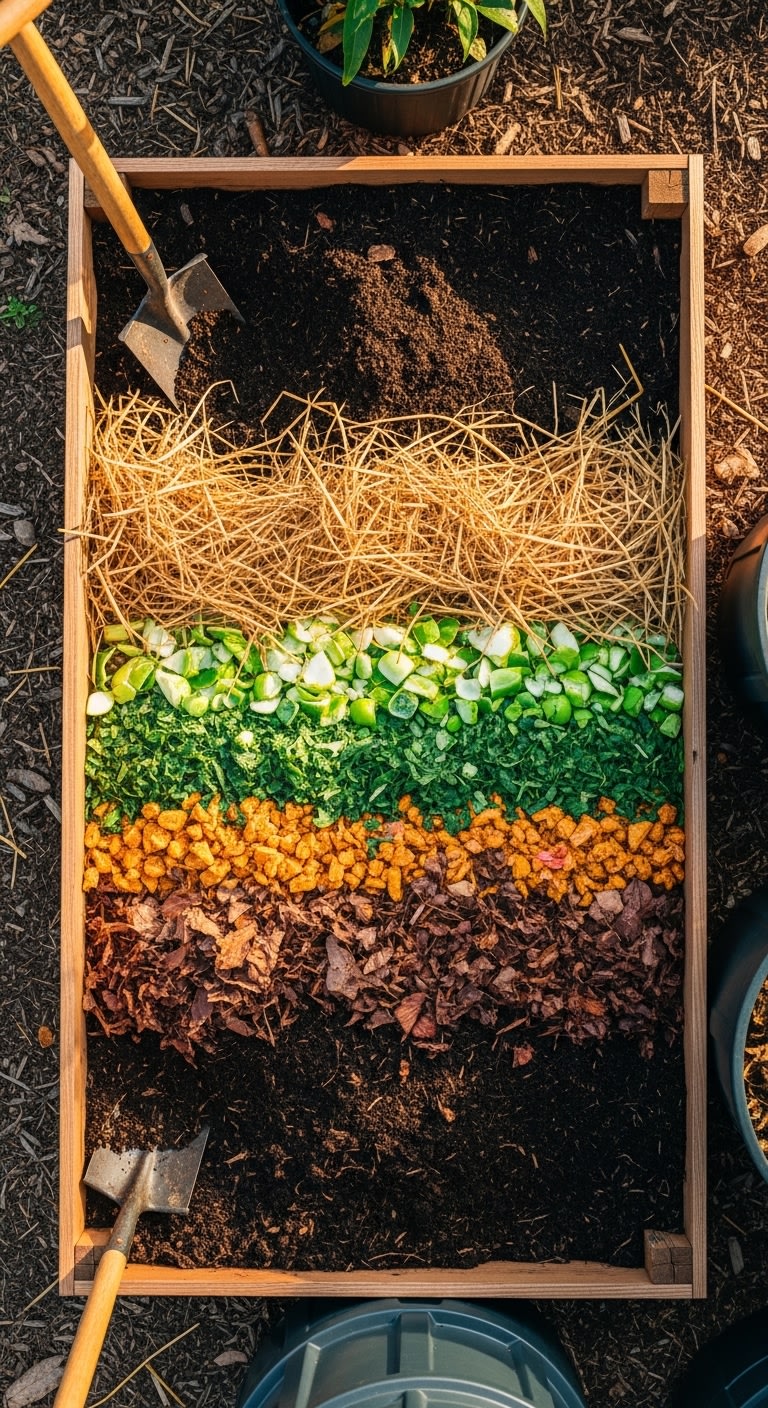
Now it’s time to fill your raised bed with organic materials to create a rich environment for your plants. Start with a base layer of coarse materials like straw or small branches to promote drainage. Then, alternate layers of green materials (like kitchen scraps, grass clippings, or green leaves) and brown materials (such as dried leaves or shredded cardboard) to create a balanced compost mix. Aim for a ratio of about 2:1 brown to green materials.
As you build your layers, make sure to leave some space at the top for soil and mulch. This layered approach will not only nourish your plants but also improve soil structure over time as the materials break down.
Example: For instance, you might start with a layer of straw, followed by a mix of grass clippings and dried leaves.
Pro Tips:
- Chop larger materials into smaller pieces to speed up decomposition.
- Avoid adding meat or dairy products, as they can attract pests.
- Consider using a compost thermometer to monitor the breakdown process.
Step 4: Add Quality Soil

After layering your organic materials, it’s time to add quality soil to your raised bed. Look for a mix that includes topsoil, compost, and peat moss or coconut coir, as this will provide a balanced environment for your plants. Fill the bed to about 2-4 inches below the top of the frame, allowing room for mulch later.
Once you have filled the bed with soil, gently rake the surface to level it out. This will help ensure even distribution of water and nutrients when you start planting. Be sure to check for any air pockets and fill them in with additional soil if needed.
Example: For instance, you might use a pre-mixed raised bed soil available at your local garden center.
Pro Tips:
- Mix in some slow-release fertilizer to give your plants a nutrient boost.
- Consider testing your soil pH to ensure it’s suitable for your desired plants.
- Water the soil lightly after filling to help settle it.
Step 5: Select Your Plants

Choosing the right plants is an exciting part of creating your no-till raised bed garden. Consider what you enjoy eating and what grows well in your climate. Start with easy-to-grow plants like lettuce, radishes, or herbs for your first season, as they tend to thrive in raised beds. You can also mix in some flowering plants to attract pollinators, which will enhance your garden’s productivity.
Make sure to check the spacing requirements for each plant type to ensure they have enough room to grow. This planning will help you create a balanced and bountiful garden.
Example: For instance, if you love salads, consider planting romaine lettuce, arugula, and cherry tomatoes together.
Pro Tips:
- Choose companion plants that benefit each other, like basil with tomatoes.
- Start with seedlings for an earlier harvest, or directly sow seeds for plants like carrots.
- Keep a garden journal to track what you plant and when.
Step 6: Mulch Your Bed

Once you’ve planted your seedlings or seeds, it’s time to add a layer of mulch to your raised bed. Mulching helps retain moisture in the soil, suppresses weeds, and regulates soil temperature. You can use straw, shredded leaves, or wood chips for this purpose. Aim for a layer about 2-4 inches thick, being careful not to bury the plants.
As the mulch decomposes, it will also contribute nutrients to the soil, further enhancing the growing environment for your plants. This simple step can make a significant difference in the health of your garden.
Example: For instance, using straw as mulch will not only suppress weeds but also retain moisture during dry spells.
Pro Tips:
- Replenish the mulch layer as needed throughout the growing season.
- Consider using colored mulch to add visual interest to your garden.
- Avoid using fresh grass clippings as they can mat down and restrict airflow.
Step 7: Water and Care for Your Garden

Now that your no-till raised bed garden is set up, it’s essential to establish a watering routine. Water your plants deeply and consistently, especially during their early growth stages. Depending on your climate, you might need to water every few days or even daily during hot, dry spells. Always check the soil moisture before watering to avoid over-saturating your plants.
In addition to watering, keep an eye out for any signs of pests or diseases. Regularly check the leaves for discoloration or holes, and take action if needed. You can simply hand-pick pests or use organic solutions to keep your plants healthy and thriving.
Example: For example, you might set a reminder to water your garden every morning during the summer months.
Pro Tips:
- Use a soaker hose or drip irrigation to conserve water and reduce evaporation.
- Mulch helps retain moisture, so make sure to keep it replenished.
- Rotate your crops each season to prevent soil depletion and pest issues.
Step 8: Observe and Enjoy Your Garden

As your no-till raised bed garden grows, take time to observe the changes and enjoy the fruits of your labor. Gardening is not just about the harvest; it’s also about the journey. Regularly checking on your plants allows you to notice what works well and what doesn’t, helping you become a more intuitive gardener.
Encourage beneficial insects, like butterflies and bees, to visit by planting flowers alongside your vegetables. Take joy in the process, and don’t be afraid to experiment with different plants and techniques each season. Celebrate your successes and learn from any challenges you encounter along the way.
Example: For instance, you might find that your tomatoes thrive better with more sunlight than they initially received.
Pro Tips:
- Keep a gardening journal to track plant growth and any observations.
- Invite friends or family to share in the harvest and celebrate your gardening journey.
- Take photos of your garden throughout the season to document its progress.
Advanced Tips
Companion Planting
Consider implementing companion planting in your no-till garden. Certain plants can benefit each other when grown together, enhancing growth and deterring pests. For example, planting marigolds alongside vegetables can deter nematodes and attract beneficial insects. Research which plants work well together to maximize your garden’s productivity.
Soil Testing
Conducting periodic soil tests can provide valuable insights into nutrient levels and pH balance. This information allows you to adjust your organic inputs accordingly. Many local extension services offer affordable testing, or you can purchase a soil test kit to use at home. Keeping an eye on soil health will ensure your plants continue to thrive.
Seasonal Crop Rotation
Implementing a crop rotation strategy every season can help prevent nutrient depletion and reduce pest populations. Different plants have varying nutrient needs, and rotating them allows the soil to recover and remain productive. Plan a rotation schedule to keep your garden flourishing year after year.
Utilize Cover Crops
In the off-season, consider planting cover crops like clover or vetch in your raised beds. These plants help improve soil structure, fix nitrogen, and prevent erosion. When it’s time to plant your main crops, simply cut down the cover crops and incorporate them into the soil for added nutrients.
Tools & Resources
- Raised Bed Soil Mix — A blend of topsoil, compost, and organic matter designed specifically for raised beds. This mix provides a nutrient-rich environment for your plants and ensures good drainage. — Available at: Available at local garden centers and online retailers like Home Depot or Amazon.
- Soil Testing Kit — A DIY kit that allows you to test your soil’s pH and nutrient levels. Knowing your soil’s health can guide your gardening choices. — Available at: Available at gardening stores or online at Amazon.
- Companion Planting Guide — A resource that provides information on which plants grow well together and how to maximize your garden’s productivity through strategic planting. — Available at: You can find books or online resources at sites like Amazon.
- Mulch Materials — Various organic materials like straw, wood chips, or shredded leaves used to cover the soil surface, helping retain moisture and suppress weeds. — Available at: Available at garden centers or landscaping supply stores.
- Compost Bin — A designated space for composting kitchen scraps and yard waste, turning it into rich organic matter for your garden beds. — Available at: Available at stores like Home Depot and online at Amazon.
Frequently Asked Questions
What is the difference between traditional and no-till gardening?
Traditional gardening often involves tilling the soil to aerate it and prepare it for planting. This process can disrupt soil structure and harm beneficial microorganisms. No-till gardening, on the other hand, focuses on building healthy soil without disturbing it, allowing nature to maintain the ecosystem. This method promotes better soil health, moisture retention, and reduces labor, making it a popular choice for many gardeners.
Can I start a no-till garden in a small space?
Absolutely! No-till gardening is adaptable to any space, whether you have a large backyard or a small balcony. You can create a small raised bed or even use containers filled with the same organic materials. The principles remain the same, allowing you to enjoy the benefits of no-till gardening in any available space.
How often should I water my no-till garden?
The frequency of watering depends on several factors, including your climate, plant types, and mulch usage. Generally, you should check the soil moisture a few inches deep. If it feels dry, it’s time to water. During hot, dry spells, you might need to water every few days. Always aim for deep watering to encourage strong root growth.
What can I plant in my no-till raised bed?
You can plant a wide variety of vegetables, herbs, and flowers in your no-till raised bed. Begin with easy-to-grow options like lettuce, radishes, and herbs. As you gain confidence, explore other vegetables like tomatoes, peppers, and zucchini. Incorporating flowering plants also attracts pollinators, enhancing your garden’s productivity.
Is no-till gardening suitable for all climates?
Yes, no-till gardening can be practiced in various climates. However, it’s essential to choose plants that are well-suited to your local weather conditions. In colder climates, consider season-extending strategies like row covers, while in hotter areas, prioritize plants that tolerate drought. Regardless of your climate, the no-till method can be adapted to meet your gardening needs.
Congratulations on embarking on your no-till raised bed gardening journey! You’ve learned about the benefits, essential steps, and expert tips to create a thriving garden that not only feeds you but also nurtures the environment. Remember, gardening is a rewarding process that encourages patience and observation, so take the time to enjoy every moment.
As you watch your plants grow and flourish, know that you’re contributing to a healthier ecosystem while enjoying fresh, homegrown produce. Now is the perfect time to roll up your sleeves and start planting. Happy gardening!