When the first sustained sub-freezing arctic air mass settles over your neighborhood, the 50 to 100 gallons of liquid rainwater resting peacefully inside your garden rain barrels transforms into an irresistible hydraulic press. Because water expands by approximately 9% as it solidifies into crystal ice, an undrained plastic or wooden rain barrel exerts thousands of pounds of outward hydrostatic pressure against its walls. Within hours of a hard freeze, heavy-gauge polyethylene barrels split lengthwise along manufacturing seams, cast brass spigots crack internally at the valve ball, and frozen downspout diverters backup, forcing icy roof runoff directly behind your home’s exterior siding.
Winterizing rain collection systems is not merely a matter of opening the bottom drain spigot and walking away. Residual sediment traps water beneath the lower valve outlet, internal seals dry out and crack in sub-zero air, and uncovered winter downspouts funnel heavy melting snow and ice into unvented barrels, causing recurrent freeze-thaw ruptures. By following a structured 4-step autumn maintenance protocol—draining completely, sanitizing internal organic biofilm, bypassing roof downspouts, and elevating the inverted barrel—you can protect your water conservation infrastructure and guarantee a leak-free harvesting setup next spring.
Why You’ll Love Winterizing Your Rain Barrels
- 100% Freeze-Crack Prevention: Eliminating trapped water protects expensive thick-walled polyethylene drums, brass fittings, and diverter kits from destructive ice expansion.
- Spring Biofilm & Algae Eradication: Thorough autumn cleaning strips away stagnant anaerobic bacteria, decaying summer leaf tannins, and dormant mosquito pupae.
- Foundation & Siding Protection: Properly capping or reconnecting your gutter downspouts diverts heavy winter snowmelt and ice safely away from your home’s foundation walls.
- Decade-Long Equipment Longevity: Storing valves, washers, and hose attachments sheltered from brutal sub-zero weather adds 8 to 10 years of reliable service to your rain catchment setup.
Essential Winterizing Supplies & Diverter Kits
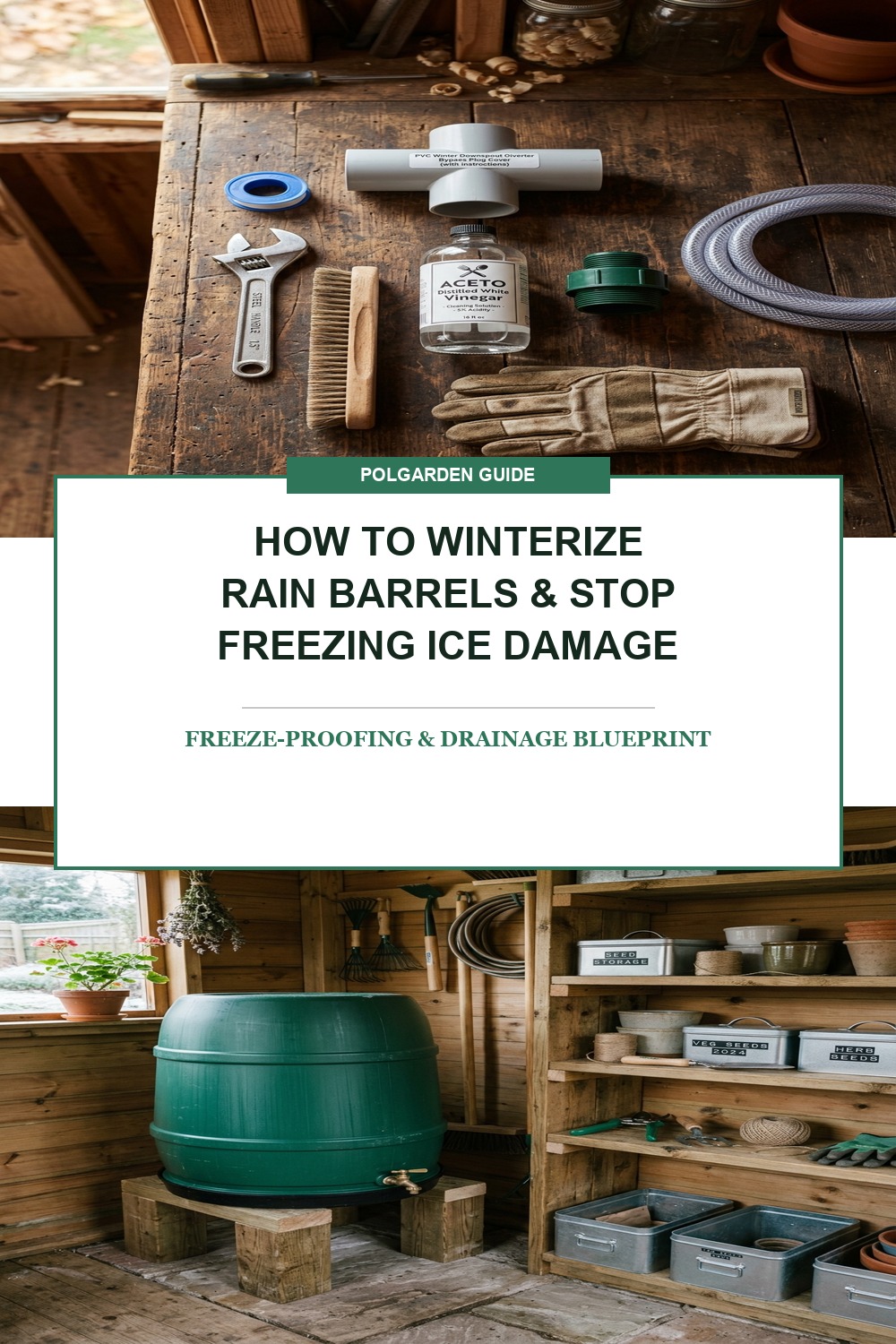
Before winter frosts freeze your brass valves shut, gather these basic tools and plumbing fittings for an effortless 30-minute shutdown:

- Downspout Winter Diverter Plug / Bypass Cap: If you use an automatic diverter kit (like EarthMinded or Oatey), install the manufacturer’s seasonal winter plug. This seals the side diverter port and restores continuous vertical roof runoff down the gutter downspout.
- Adjustable Crescent Wrench or Channel Locks: For loosening brass bulkhead nuts, disconnecting stubborn threaded garden hose attachments, and inspecting rubber O-rings.
- Distilled White Vinegar (5% Acidity): An eco-friendly, non-toxic sanitizing rinse that dissolves hard water mineral deposits, cleans algae scum, and eliminates mold spores without leaving chemical residues that harm garden soil next spring.
- Stiff-Bristle Utility Brush: Essential for scouring the bottom interior where anaerobic sludge and fine silt settle over the summer.
- Clean Wooden Riser Blocks (2x4s or Pavers): Elevating your inverted barrel keeps bottom rims off frozen wet earth, ensuring full ventilation and preventing animals from sheltering inside.
Step-by-Step Rain Barrel Winterization Protocol
1. Timing the Shutdown (Before the First Hard Freeze): Do not wait until ice sheets form on top of your water barrels. Schedule your winterization routine in mid-to-late autumn when daytime temperatures drop consistently into the 40s°F (4°C to 8°C). Check your local frost forecast; once overnight temperatures dip below 28°F (-2°C) for several hours, standing water will freeze solid.
2. Complete Drainage onto Thirsty Perennials: Disconnect any attached soaker hoses or drip irrigation manifolds. Open the brass spigot valve completely to discharge stored rainwater. Rather than sending 50 gallons into storm drains, direct the water onto dormant shrubs, fruit trees, or newly planted fall crops that benefit from a deep autumn soaking, such as detailed in our fall garlic planting guide and strawberry winterizing protocol.

3. Tip, Flush & Disinfect the Interior: Standard spigots sit 2 to 3 inches above the barrel floor to avoid clogging with silt, meaning 2 to 5 gallons of water remain trapped below the faucet line. Disconnect the barrel from your downspout, tip it onto its side, and pour out the sediment slurry. Spray down the walls with 1 quart of white vinegar diluted with warm water, scrub the base with your bristle brush, and rinse thoroughly. Disinfecting now ensures your first spring rain collection remains crystal clear and odor-free.
4. Reconnect or Bypass the Downspout: Never leave an open diverter hose dangling against your foundation in winter! Freezing ice dams can back up into the downspout, dislodging gutters under snow weight. Either insert a specialized winter rubber plug into the diverter hole, or remove the diverter entirely and reconnect a standard corrugated metal downspout extension pipe directing winter snowmelt 5 to 6 feet away from your foundation.
3 Master Secrets for Absolute Freeze Protection
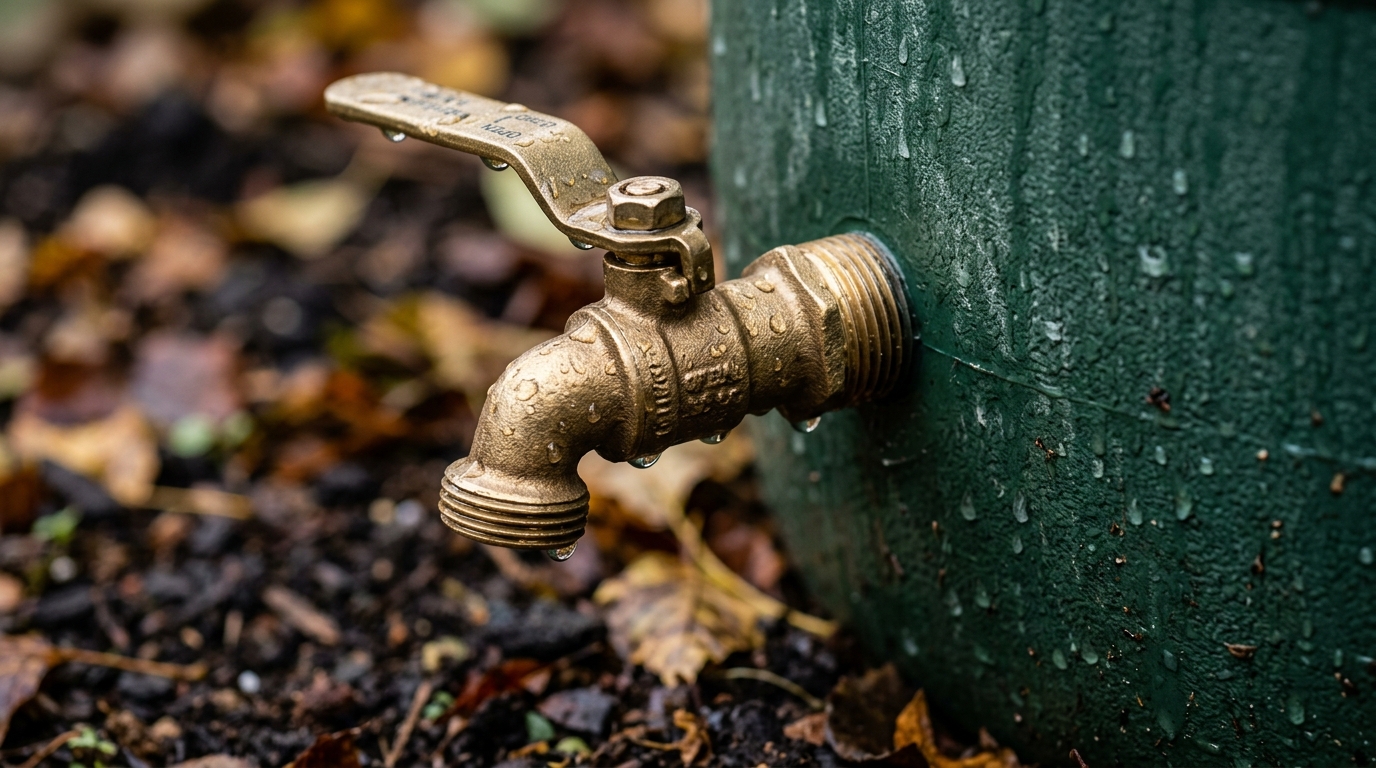
1. Always Leave the Spigot Valve in the 45-Degree Half-Open Position: Even after tipping the barrel, microscopic condensation droplets can collect inside the narrow cavity behind the spigot’s internal brass ball valve. If left completely closed, trapped water expands and splits the cast brass housing. Leaving the valve handle half-open (at a 45-degree angle) relieves internal hydraulic pressure and prevents freeze cracking.
2. Store Inverted (Upside Down): If storing your rain barrel outdoors beside your garden shed or house eaves, turn the clean barrel completely upside down. Storing right-side up allows freezing rain, autumn leaves, and heavy snow melt to refill the barrel over winter, negating your hard work. Inverting guarantees water drains immediately off the bottom dome.
3. Protect Rubber Gaskets with Food-Grade Silicone: Sub-zero winter dry air causes rubber washers and bulkhead gaskets to become brittle, leading to frustrating spring leaks. Remove rubber gaskets, wipe them clean, and apply a light coating of 100% silicone grease or petroleum jelly before storing them in a ziplock bag inside your shed alongside your sanitized winterized garden tools.
Outdoor vs Indoor Winter Storage Strategies
Depending on your available garage space and regional climate severity, choose the optimal winter storage method for your setup:

- Indoor Shed / Garage Storage (Best Protection): Moving your clean, dry barrels inside an unheated shed, basement, or DIY greenhouse shelter shields the UV-stabilized plastic from harsh winter sun degradation, snow loads, and wind storms.
- Outdoor Inverted Storage (Space-Saving): If indoor space is limited, invert the barrel on high ground beside your house on two wooden 2×4 blocks or concrete pavers. Elevating the barrel ensures air circulates beneath, preventing the rim from freezing into garden mud or ice.
- Weighted Covers: Place a clean brick or heavy stone on the top of inverted outdoor barrels, or secure a fitted waterproof canvas cover with a drawstring to prevent gale-force winter winds from tumbling empty barrels across your lawn.
Frequently Asked Questions
Can I leave a rain barrel full of water if I use a floating tennis ball or wooden board?
No. While placing a floating ball or 2×4 board inside stock tanks can absorb minor surface ice pressure in shallow troughs, it is ineffective in 55-gallon enclosed barrels. Freezing ice expands in all directions, exerting immense hydraulic force against the bottom curve and brass fittings that easily ruptures the plastic regardless of floating objects.
Do wooden whiskey and wine rain barrels require different winter care?
Yes! Authentic oak wine and whiskey barrels require delicate moisture balance. If allowed to dry out completely in a heated garage, oak staves shrink and pull away from steel hoops, causing catastrophic leaks. For wooden barrels, drain all water, clean thoroughly, and store in an unheated, humid shed or garage with a damp burlap sack draped across the interior to preserve stave hydration without allowing standing water to freeze.
When should I reconnect my rain barrels in spring?
Wait until your region has passed its average last hard frost date (typically late March to mid-April depending on your USDA hardiness zone). Once overnight freezes cease, reinstall your rubber O-rings with fresh Teflon plumbing tape, reconnect your downspout diverter, and let the first nourishing spring rains fill your barrels for the new growing season.
Pin This Rain Barrel Winterizing Guide for Later
Protect your water conservation equipment from freezing winter blizzards! Save this complete rain barrel draining, vinegar sanitizing, and freeze-proofing blueprint to your Garden DIY, Homesteading Projects, or Fall Maintenance boards on Pinterest so you never lose a rain barrel to ice cracks again!