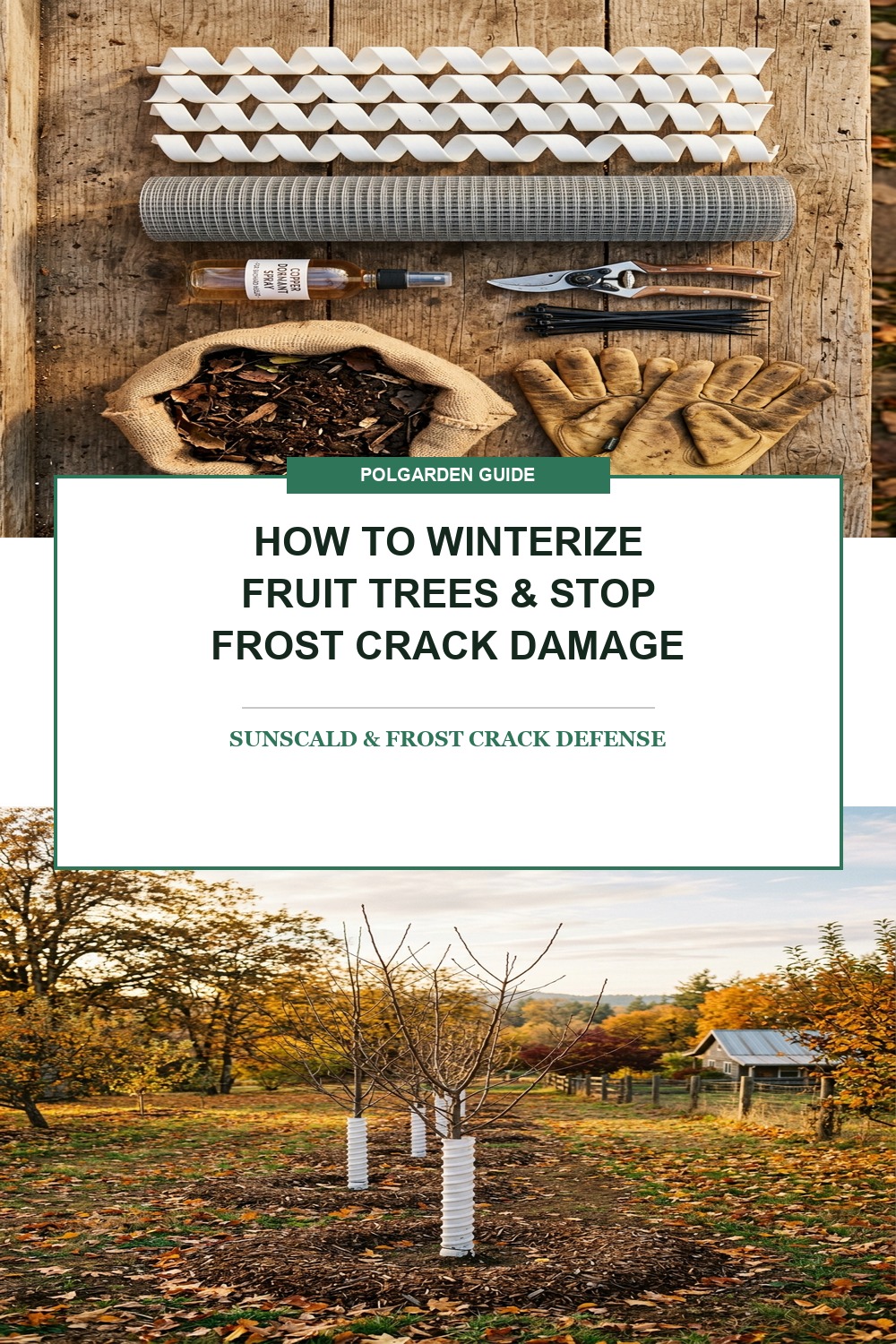
Every winter between December and February, orchardists and backyard fruit growers witness a silent, catastrophic phenomenon: vibrant young apple, peach, plum, and cherry trees developing deep vertical fissures that split their lower trunks wide open down to the heartwood. Known clinically as sunscald and frost cracking (or southwest injury), this destructive condition does not occur during blizzard midnights, but rather on brilliant, clear mid-winter afternoons. When intense low-angle winter sunlight reflects off surrounding snow blankets, dark tree bark absorbs thermal radiant heat, warming up to 30°F higher than ambient freezing air and prematurely waking dormant vascular cambium cells. As soon as the sun dips beneath the horizon, bark temperatures plunge instantaneously below zero, violently freezing and rupturing cell walls.
Beyond thermal bark ruptures, winter presents a triple-threat to orchard health: hungry field mice and voles tunneling beneath deep snow blankets to girdle sweet cambium bark, desiccating arctic windstorms that freeze shallow feeder roots, and overwintering fungal spores (such as peach leaf curl and black rot) lying dormant inside bark crevices. Protecting your fruit investment does not require expensive commercial orchard equipment; rather, it demands a coordinated autumn defense combining reflective trunk wraps, hardware cloth rodent barriers, hygienic copper sprays, and correct donut mulching before the soil freezes solid.
Why You’ll Love Winterizing Your Backyard Orchard
- 100% Frost Crack & Sunscald Immunity: Reflective white trunk barriers deflect radiant winter solar energy, maintaining stable dormant bark temperatures through extreme freeze-thaw swings.
- Complete Rodent Girdling Defense: Mechanical wire guards physically prevent hungry meadow voles and rabbits from stripping tender bark around the root flare during heavy snow cover.
- Eradication of Overwintering Fungal Pathogens: Applying timed autumn organic dormant copper sprays sterilizes lurking bacterial canker and fungal spore colonies before they awaken in spring.
- Guaranteed Vigorous Spring Blossom Sets: Safeguarding hydrated root crowns and intact vascular systems ensures explosive spring bud break, heavy pollination, and heavy summer fruit loads.
Essential Orchard Winterization Supplies
Assembling the correct materials ensures your trees remain safeguarded through sub-zero blizzards without trapping humid moisture that invites fungal decay:

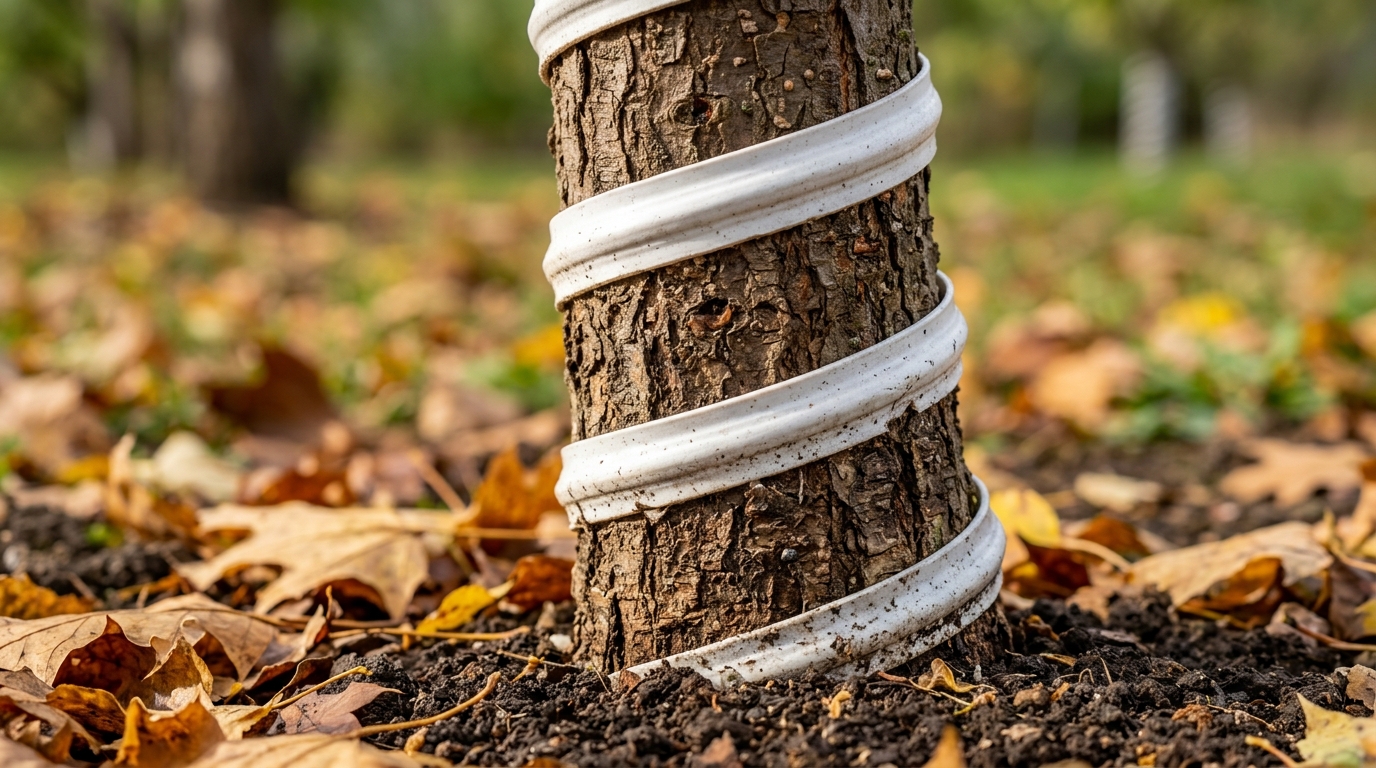
- White Plastic Spiral Tree Guards or Corrugated Wraps: White reflects winter sun radiation away from dark bark. Spiral wraps expand naturally as young trunks grow, while corrugated tubes provide heavy mechanical protection against rabbit teeth.
- 1/4-Inch Galvanized Hardware Cloth (Wire Mesh): The only impenetrable barrier against meadow voles. Unlike plastic wraps that voles can chew through, galvanized steel wire cylinders keep rodents away from the root flare permanently.
- Liquid Copper Fungicide or Lime-Sulfur Dormant Spray: An essential organic spray applied after 90% of autumn leaves drop to sterilize bark crevices against peach leaf curl (Taphrina deformans), fire blight, and bacterial cankers.
- Bypass Hand Pruners: For clipping dead, broken, or diseased twigs before winter winds catch them. Always sanitize blades following our tested tool cleaning and winterizing protocols.
- Organic Wood Chips or Bark Mulch: Acts as a geothermal blanket that insulates the root zone, pairing seamlessly with our autumn soil mulch guide.
Step-by-Step Fruit Tree Winterizing Protocol
1. Autumn Sanitation & Fallen Leaf Removal: Fungal pathogens and boring insect larvae overwinter inside fallen orchard debris and mummified fruits left hanging on branches. Rake up all fallen leaves, dropped fruit, and weeds within the tree dripline. Discard diseased debris in the municipal waste rather than your home compost to eliminate fungal reinfection cycles.
2. Apply Organic Dormant Spray: Wait until your fruit tree has naturally shed 90% to 100% of its foliage and temperatures remain above 40°F (4°C) for 24 hours. Thoroughly saturate the entire tree—from the topmost branch tips down to the root flare—with an organic copper fungicide or horticultural dormant oil spray to suffocate overwintering scale insects, mite eggs, and fungal inoculums.

3. Install Hardware Cloth & White Trunk Wraps: Construct an 18-to-24-inch cylinder of 1/4-inch galvanized hardware cloth around the trunk, pushing the bottom edge 2 to 3 inches deep into the soil to prevent burrowing voles from tunneling beneath. Inside or above the wire cage, wrap the trunk in white spiral tree wrap. Ensure the white wrap faces the southwest exposure to reflect harsh winter afternoon sunlight.
4. Deep Autumn Hydration & Donut Mulching: In late autumn before the ground freezes, soak the root zone deeply (10 to 15 gallons per tree). Moist soil retains significantly more latent heat than dry soil, protecting tender root systems from deep freeze-thaw damage (identical to the principles in our strawberry winterizing protocol and autumn garlic bed guide). Layer 3 to 4 inches of wood chips across the root zone in a donut shape, keeping mulch strictly 6 inches away from the trunk bark.
3 Master Secrets for Orchard Freeze Immunity
1. The “Donut” vs “Volcano” Mulching Rule: Never pile mulch up against the trunk bark (the dreaded “mulch volcano”). Piling mulch against bark creates a dark, moist haven that rots the trunk cambium and provides an insulated winter dining room for girdling mice. Always leave a 6-inch bare-soil moat between the trunk and your 4-inch insulating mulch ring.
2. Diluted White Latex Paint (The Commercial Orchard Secret): If wrapping dozens of trees is impractical, mix equal parts water and 50% interior white latex paint (never use exterior oil-based paints, which contain phytotoxic solvents). Paint the lower 2 to 3 feet of trunk and major southwest scaffold limbs. The white coating permanently reflects winter sunlight, keeping bark cool without trapping humidity.
3. Halt Late-Summer Nitrogen Fertilization: Cease all high-nitrogen feeding after mid-July. Applying late-season fertilizer stimulates tender vegetative shoot growth that cannot harden off before autumn frosts, guaranteeing severe winterkill on branch tips when sub-freezing temperatures arrive.
Protecting Young Trees vs Established Mature Trees
Cold vulnerability varies dramatically based on tree age, rootstock type, and regional USDA hardiness zones:

- First- to Third-Year Saplings: Young trees possess paper-thin green bark with minimal insulating cork layer. They require 100% mandatory white trunk wrapping and hardware cloth protection every winter until trunks develop thick, furrowed bark.
- Mature Fruit Trees (5+ Years): Mature trees develop thick, rough bark naturally resistant to sunscald and rodent damage. Focus your winter maintenance on sanitation pruning, dormant copper spraying, and windbreak staking for heavy snow loads.
- Container-Grown Fruit Trees: Dwarf fruit trees in pots experience extreme cold because freezing air surrounds the container root ball. Move pots into an unheated garage, shed, or protective greenhouse cold frame once fully dormant, watering once a month to prevent root desiccation.
Frequently Asked Questions
When should I remove the white trunk guards in spring?
Remove spiral plastic tree guards in early spring as soon as daily temperatures consistently stay above freezing (typically mid-April). Leaving plastic guards on during warm spring weather traps moisture, harbors earwigs and boring beetles, and can constrict active trunk expansion.
Should I prune fruit trees in late autumn?
No! Avoid major pruning in late autumn. Pruning wounds remain open and vulnerable in sub-freezing weather, drying out branch tips and reducing cold hardiness. Save structural and fruit-thinning pruning for late winter (late February or early March) while the tree remains dormant but just prior to spring sap flow.
What should I do if a fruit tree trunk already has a frost crack?
Do not paint the wound with tar or commercial wound sealers, which trap fungal spores and moisture inside the split. Instead, allow the tree to heal naturally by exposing the wound to clean, circulating air. Install a white tree wrap immediately to prevent further solar expansion, keep the tree well-watered during summer droughts, and the tree will form healthy callused wound wood across the fissure.
Pin This Fruit Tree Winterizing Guide for Later
Protect your orchard from winter frost cracks and rodent girdling! Save this complete trunk wrapping, dormant spraying, and winter mulching blueprint to your Fruit Trees, Backyard Orchard, or Fall Garden Prep boards on Pinterest so you never lose a fruit tree to winter freeze damage again!