Common fig trees (Ficus carica) produce some of the most decadent, honey-sweet fruit of late summer, but their Mediterranean origins make them notorious winter weaklings in colder climates. While mature fig roots can often survive temperatures down to 10°F (-12°C), above-ground wood suffers severe cellular freezing and catastrophic dieback below 15°F (-9°C). When an in-ground fig freezes to the soil line, it loses all its mature fruiting wood and its coveted early-season breba crop, forcing the tree to expend an entire summer regrowing vegetative suckers. By executing this proven 4-step fig tree winterizing protocol, you will shield mature scaffold branches from arctic blasts, protect delicate breba buds, and ensure heavy, bountiful harvests year after year.
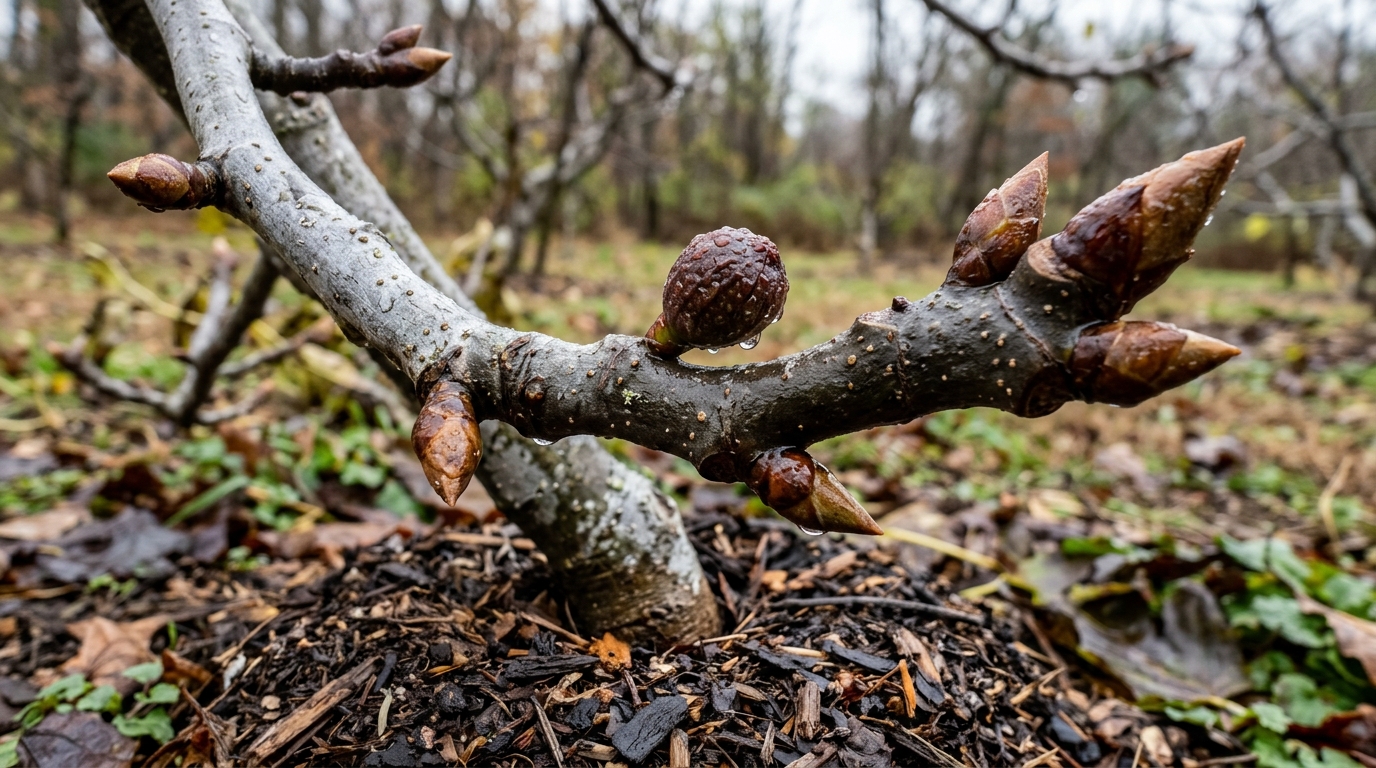
Fig wood possesses spongy, pithy centers that absorb and retain moisture, making canes highly vulnerable to cellular rupture when internal sap expands during hard freezes. Gardeners in USDA Zones 5 through 7 cannot rely on natural hardiness alone; they must create an external thermal envelope that buffers against sub-zero freezes, blocks desiccating north winds, and sheds freezing rain. When properly bundled and insulated, in-ground fig trees can easily endure brutal -10°F (-23°C) winters without losing an inch of fruiting wood.
- Difficulty: Intermediate
- Critical Temperature Threshold: 15°F (-9°C) for above-ground wood; 10°F (-12°C) for roots
- Execution Window: Late autumn after 2 to 3 hard freezes have caused total leaf drop
- Core Insulation Materials: Heavy breathable burlap, dry wheat straw or pine needles, water-shedding tarp cap
- Primary Benefit: Preserves 2-year-old fruiting wood for early July breba figs and robust August main crops
Why Winter Fig Protection is Essential in Cold Zones
Understanding the dual-crop physiology of fig trees explains why preserving mature canes is vital for serious fruit growers:
- Saving the Breba Crop: Certain cold-hardy varieties (like Chicago Hardy, Brown Turkey, and Desert King) produce two distinct crops: an early “breba” crop on previous year’s wood, and a main crop on new current-season shoots. If winter freezes kill the canes, your breba harvest is completely lost.
- Preventing Vascular Pith Freezing: Fig branches have wide, porous vascular conduits. Freezing winds dehydrate the bark while ice crystals rupture cellular walls, causing vertical splits and cankers.
- Preserving Root Energy Reserves: When a fig freezes to the ground, the root system exhausts massive carbohydrate reserves pushing dozens of weak, dense vegetative suckers rather than focusing on ripening heavy fruit.
- Short-Season Maturity Insurance: In northern regions with short summers, new shoots that sprout from the ground in May often run out of warm autumn days before their main crop figs can ripen. Overwintered mature wood starts growing weeks earlier in spring, guaranteeing ripe figs before frost returns.
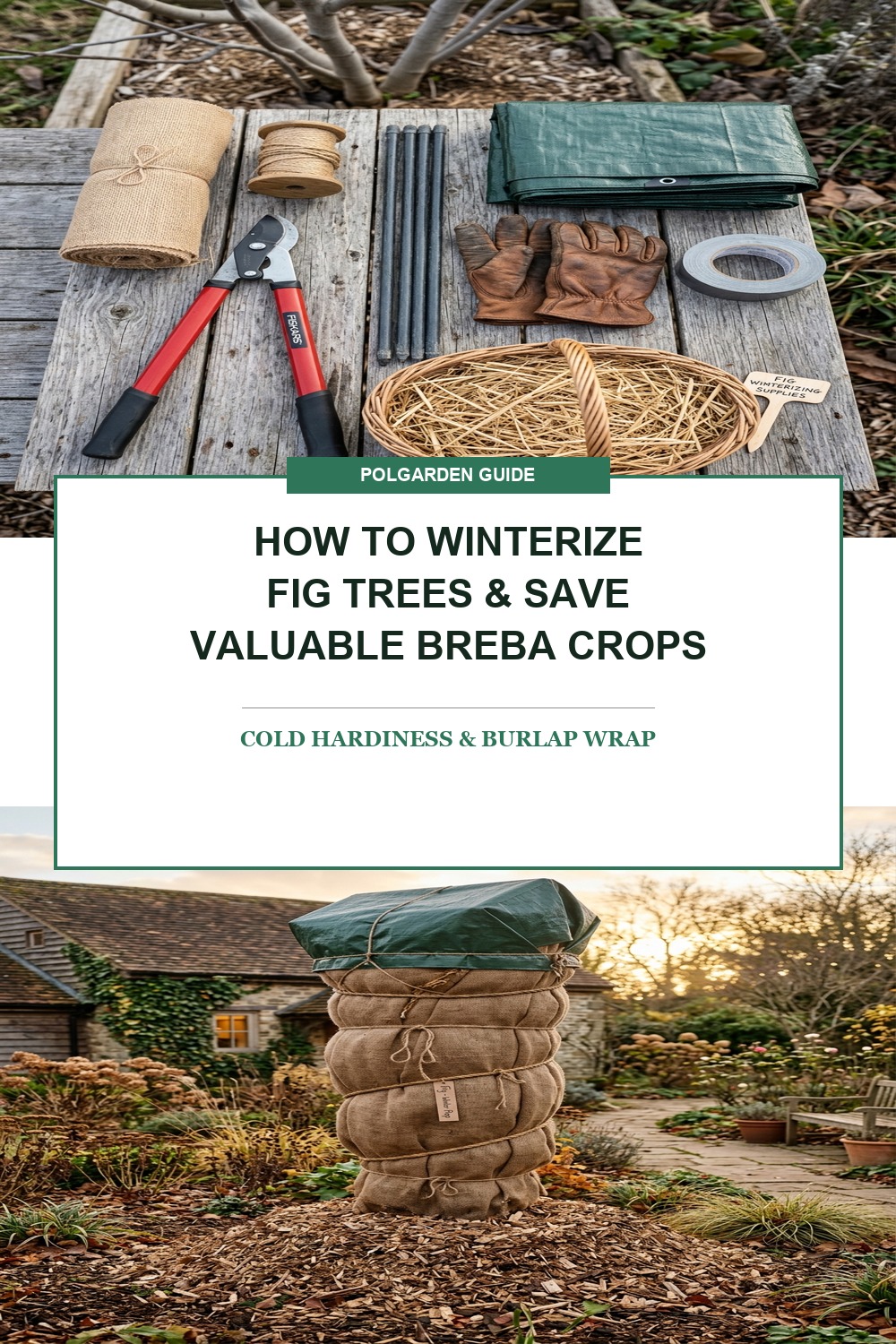
Essential Fig Winterizing Supplies
Gather these durable materials before the ground freezes solid in November:

- Heavy Natural Burlap: Breathable woven burlap wraps the inner core, insulating the branches while allowing condensation and humid air to breathe out.
- Heavy-Duty Waterproof Tarp (Roof Cap): An impervious tarp or heavy-duty plastic used strictly on the exterior and top to shed rain, freezing sleet, and melting snow.
- Clean Wheat Straw or Pine Needles: Provides airy thermal insulation between branches without packing down into a wet, soggy paste.
- Strong Jute Rope or Sisal Twine: Secures branches into a compact vertical column without biting deeply into tender green bark.
- Wood Chips or Shredded Leaves: For building a 12- to 18-inch insulating blanket over the root zone and basal trunk.
The 4-Step Fig Tree Winterizing Walkthrough
Follow this proven chimney-wrap technique once cold weather induces complete winter dormancy:
Step 1: Wait for Complete Dormancy & Fall Cleanup
Never wrap a fig tree while green leaves remain attached. Wrapping too early traps humid warmth and promotes botrytis mold and rotting buds. Wait until several hard frosts have caused all broad leaves to yellow and drop naturally. Clear away all fallen leaves and unripened mummified figs from the base to eliminate overwintering fungal spores.
Step 2: Selective Thinning & Cane Bundling
Remove weak, spindly center shoots and outward-pointing lateral branches that cannot bend inward without snapping. Carefully gather the main flexible scaffold branches toward the center of the tree. Working from the bottom upward, wrap heavy jute rope around the canopy in a spiral, pulling the branches into a snug, upright columnar cylinder. This compact profile reduces wind resistance and makes insulation installation straightforward.

Step 3: Stuffing the Insulating Core & Base Mounding
Wrap the bundled cylinder in two full layers of breathable burlap, pinning it closed with safety pins or tying with rope. Next, tuck clean dry straw or pine needles generously into the interior spaces between branches, creating an airy thermal cushion. Around the base of the trunk, pile 12 to 18 inches of aged wood chips or shredded hardwood mulch in a wide cone over the root flare to insulate the crown from frost heaving.
Step 4: Weatherproof Tarpaulin Cap Installation
While burlap provides insulation, soaking wet burlap will freeze solid into a deadly ice jacket. To prevent this, wrap the exterior with an impermeable tarpaulin or outdoor canvas. Crucially, invert an empty plastic 5-gallon bucket or fold the top of the tarp into a steep peaked roof over the top of the bundle to shed heavy snow and torrential winter rains. Tie the entire structure tightly with rope so winter gales cannot whip it loose.
3 Master Orchard Secrets for Maximum Fig Survival
Protect your trees like professional northern fig growers with these insider techniques:
1. Never Wrap Impermeable Plastic Directly Against Wood: Direct contact between clear plastic and fig bark creates extreme solar overheating on sunny 30°F winter days, followed by flash freezing at night. Always use breathable burlap as the inner cushion.
2. Cut Back Nitrogen by Early August: Late fertilization encourages lush, tender growth that stays green well into autumn and freezes black instantly. Cease nitrogen feeding by late summer to encourage thick, brown lignification of all terminal buds.
3. Keep the Top Cap Ventilated on Mild Days: In late winter when daytime temperatures begin nudging into the 40s and 50s, open the top tarp cap on sunny days to vent built-up moisture and prevent premature bud swelling.
The Fully Winterized Fig Tree in the Garden
Observe how a properly insulated and roof-capped fig tree stands resilient throughout the harshest winter blizzards:

Spring Unwrapping & Reactivation Protocol
Removing winter protection requires careful staging as spring returns:
- Unwrap in Early to Mid-Spring: In Zones 6-7, the ideal time to unwrap is late March or early April, roughly when daily high temperatures stabilize above 45°F (7°C) and severe sub-zero cold has passed.
- Unpack on an Overcast Day: Exposing pale, dormant branches to direct, blazing spring sun can scald tender bark. Unwrap during cloudy weather to give branches time to adjust.
- Spread the Mulch Mound: Rake back the 18-inch mulch cone away from the trunk so warm spring sunshine can penetrate the root zone and awaken root metabolism.
- Prune Any Freeze-Damaged Tips: Scratch the bark on terminal branch tips with your thumbnail. Green tissue indicates healthy live wood; prune back any hollow brown wood to the first plump, bright green bud.
Frequently Asked Questions
Can I grow fig trees in containers and overwinter them in an unheated garage?
Yes! Containerized figs are very easy to overwinter. Once the tree drops its leaves in late autumn, move the pot into an unheated garage, shed, or cellar where temperatures stay between 25°F and 45°F (-4°C to 7°C). Water lightly just once every 4 to 6 weeks to keep roots from desiccating.
What are the most cold-hardy fig varieties for northern gardeners?
Chicago Hardy (Bensonhurst Purple), Ronde de Bordeaux, Violette de Bordeaux, and Brown Turkey are exceptionally resilient in Zones 5-7. With proper winter wrapping, Chicago Hardy can reliably produce bountiful crops even in Chicago and New York.
What is the fig trenching method?
In very cold Zone 4-5 areas with large mature trees, gardeners practice “fig burial” (trenching). A trench 2 feet deep is dug alongside the tree, root pruning is performed on one side, and the entire tree is gently hinged down into the trench, covered with boards, straw, and soil for bulletproof subterranean winter protection.
Related Seasonal Garden Preparation Guides
Expand your autumn orchard and garden defense systems with our complete collection of seasonal guides:
- How to Winterize Fruit Trees: The 4-Step Trunk Wrap, Pest Band & Root Protection Guide
- How to Winterize Roses: The 4-Step Mounding, Pruning & Burlap Shield Masterclass
- How to Winterize Strawberry Plants: Crown Protection & Straw Mulch Blueprint
- How to Plant Garlic in Fall: The Complete Cloves, Soil & Mulch Masterclass
- How to Winterize Rain Barrels: Complete Freeze-Proofing & Storage Guide
Pin This Fig Tree Winterizing Guide for Later
Love homegrown sweet figs? Pin this visual blueprint to your Gardening or Fruit Tree Pinterest board to keep your fig trees warm and heavy with fruit next season!