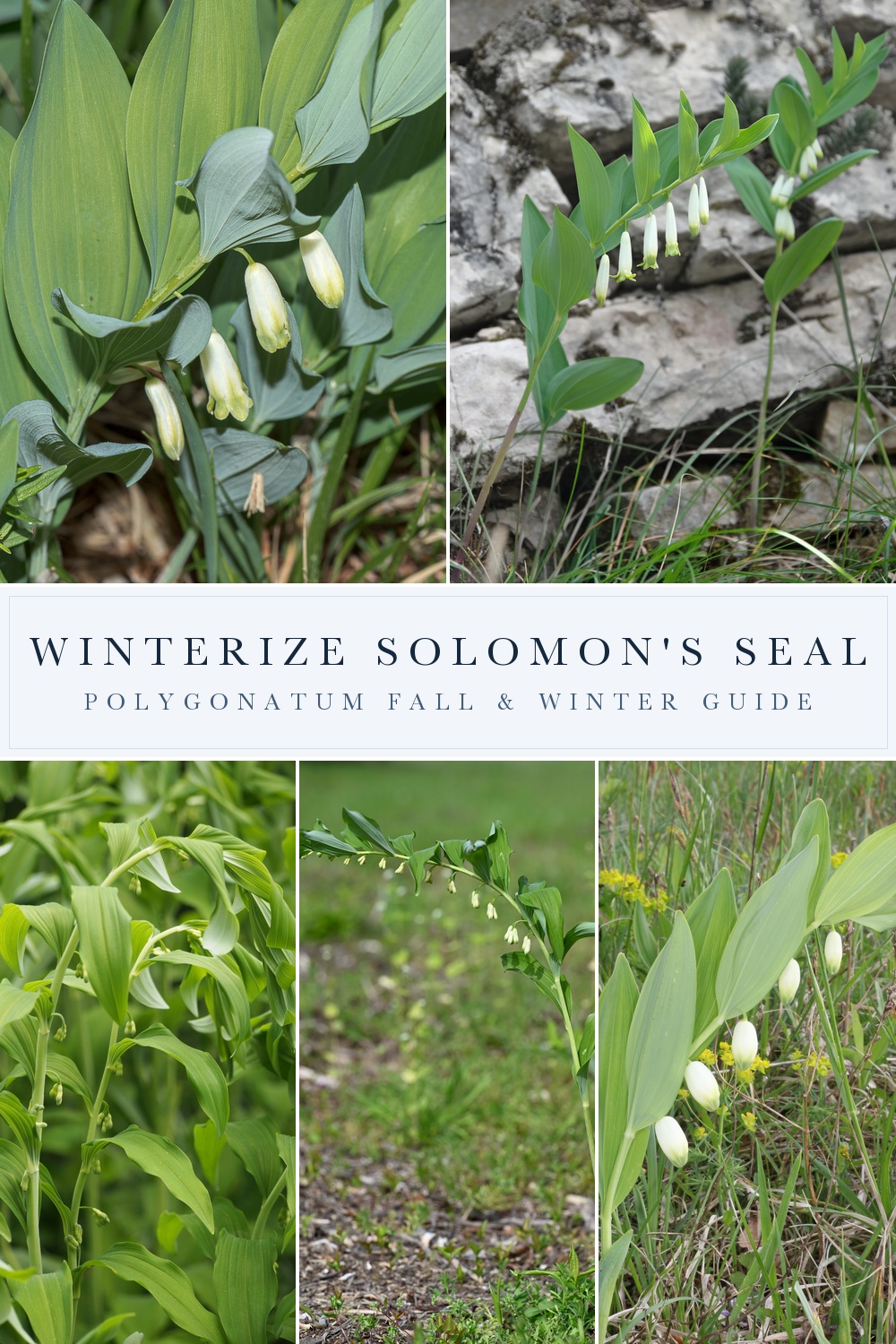
Few woodland perennials command the quiet majesty of Solomon’s seal (Polygonatum). Renowned for its graceful, arching stems, dangling creamy-white bell flowers, and luminous golden autumn foliage, this hardy shade-dweller transforms dark garden corners into tapestry-like sanctuaries. Yet beneath its poetic silhouette lies a specialized network of thick, horizontal rhizomes creeping just beneath the soil line. As freezing temperatures approach, learning how to winterize Solomon’s seal properly ensures these sensitive storage organs survive severe ground freezes, resist fungal rot, and produce towering, vigorous spears the moment spring soil awakens.
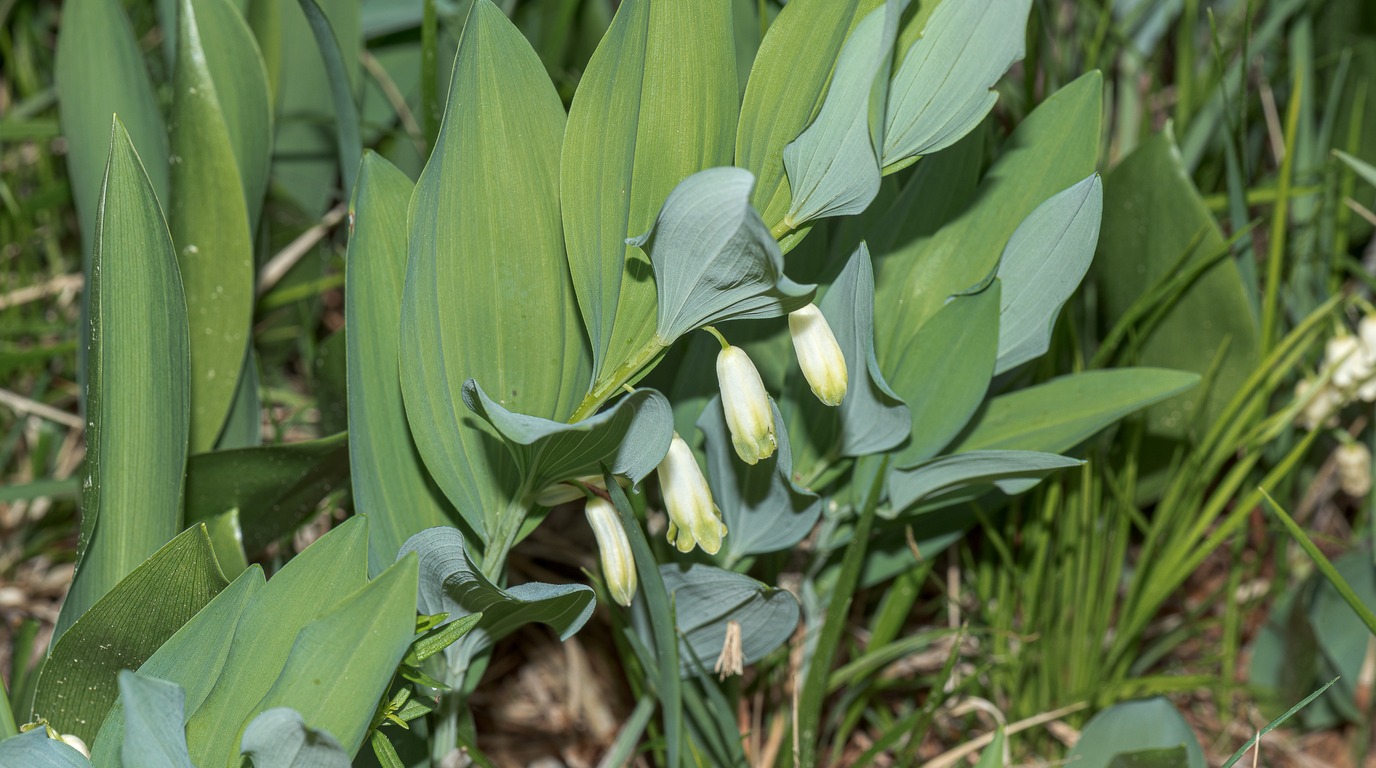
Native to temperate deciduous forests across North America, Europe, and Asia, both wild species like Polygonatum biflorum and celebrated garden cultivars like variegated Solomon’s seal (Polygonatum odoratum ‘Variegatum’) possess impressive cold hardiness, thriving from USDA Zones 3 through 9. The plant derives its distinctive name from the round, circular scars left along its creeping rhizomes—resembling ancient wax seals—where past years’ stems naturally detached. Because these rhizomes travel shallowly through forest duff rather than anchoring deep underground, winter preparation focuses on safeguarding these knobby crowns from destructive freeze-thaw heaving, winter desiccation, and fungal blights.
Why You’ll Love This Winter Care Routine
- Time / Speed: Takes under 15 minutes per garden bed once the first hard frosts arrive in late autumn.
- Rhizome Longevity & Rot Prevention: Removing collapsing wet foliage prevents fungal pathogens like rust and leaf spot from overwintering on dormant crowns.
- Effortless Spring Emergence: Clearing spent stems allows muscular spring spears to shoot upward freely without navigating tangled old debris.
- Naturalizing Expansion: Insulating shallow creeping nodes buffers against frost heave, encouraging dense, colonizing drifts that suppress woodland weeds.
Key Supplies & Seasonal Timing

- Clean Bypass Hand Pruners: Sharp secateurs make smooth, clean cuts through fibrous autumn stems without wrenching or dislodging shallow root systems.
- Shredded Hardwood Bark or Leaf Mold: An airy, 2-to-3-inch protective blanket shields exposed rhizome joints while permitting vital air exchange.
- Well-Aged Organic Compost: A light 1-inch autumn top-dressing enriches woodland soil and replenishes organic matter as snow melts.
- Bamboo Stakes or Plant Markers: Essential markers to indicate underground crown perimeters before herbaceous foliage vanishes completely.
Step-by-Step Solomon’s Seal Winterizing Walkthrough
1. Late Autumn Deep Hydration: Before ground frost locks up soil moisture, give your Solomon’s seal drifts a deep, gentle soaking. Even in moist woodland borders, dry autumn winds can dehydrate dormant rhizomes. Saturated root tissues remain significantly warmer than bone-dry earth, buffering the underground storage stems against abrupt sub-zero temperature drops.
2. Allow Natural Autumn Senescence: Do not rush to cut back green foliage in early autumn! As days shorten in September and October, Solomon’s seal leaves gradually turn brilliant hues of gold and amber. During this phase, chlorophyll breaks down and valuable starches and sugars translocate back down into the rhizomes. Wait until the entire stem has yellowed or turned translucent brown after the first hard killing freeze.

3. Cut Spent Stems to Ground Level: Once stems collapse and dry, use clean bypass shears to sever each arching stalk 1 to 2 inches above the soil line. Avoid yanking or tugging on the stems with your hands, as brittle rhizomes resting right at the surface can snap or rip loose from the soil. Discard the pruned foliage into your municipal yard waste or compost pile if disease-free.
4. Apply an Insulating Organic Mulch Blanket: Spread a 2- to 3-inch layer of shredded leaves, pine needles, or seasoned leaf mold directly across the planting footprint. This mimics the natural forest floor litter that wild Solomon’s seal relies upon in nature, moderating soil temperatures and preventing soil heaving during mid-winter thaws.
3 Horticultural Secrets for Thriving Solomon’s Seal
1. The Bed Marker Rule: Because Solomon’s seal is entirely herbaceous, its top growth vanishes completely in winter. Furthermore, its emerging spring spears—which resemble asparagus tips—are exceedingly brittle. Place bright bamboo stakes or stone markers around your rhizome beds in November so you, family members, or energetic pets never accidentally trample the dormant crowns during winter walks or early spring cleanups.
2. Early Autumn Rhizome Division: If your Solomon’s seal patch has become crowded or you wish to naturalize new garden zones, divide rhizomes in early autumn (September through early October) rather than spring. Carefully unearth clumps with a garden fork, locate the knobby rhizome sections with at least one viable growth bud, and slice them into 3-to-4-inch segments. Replant them horizontally 2 inches deep and water thoroughly so new roots establish before freezing weather arrives.
3. Prevent Winter Waterlogging in Heavy Clay: Solomon’s seal loves rich, moist soil, but sitting in stagnant, icy water during winter will rot horizontal rhizomes within weeks. If your garden has dense clay, amend the bed with coarse compost or plant on slight woodland mounds where gravity draws standing puddles away from dormant root collars.
What to Pair With Solomon’s Seal in Winter Borders

- Semi-Evergreen Fairy Wings: Pair with barrenwort (Epimedium), whose bronze winter foliage maintains structure and visual interest while Solomon’s seal rests below ground.
- Textured Shade Foliage: Interplant with scalloped lady’s mantle (Alchemilla mollis) and silver-patterned Siberian bugloss (Brunnera macrophylla) for contrasting leaf shapes that awaken harmoniously in April.
- Speckled Early Bloomers: Combine with hardy lungwort (Pulmonaria) to create early-season pollinator waystations beneath deciduous tree canopies.
- Bold Woodland Leaves: Weave amongst broad-leafed hostas and bleeding hearts to establish lush multi-tiered cottage borders.
Winter Monitoring, Cold Hardiness & Spring Care
- Sub-Zero Hardiness: Most Polygonatum species are exceptionally winter-hardy, surviving temperatures down to -35°F (-37°C) in Zone 3 without supplemental heating cables or protective cloches.
- Overwintering Potted Solomon’s Seal: Potted specimens lack the insulating mass of ground soil. In Zone 6 and colder, sink pots directly into an empty garden bed to ground level, or relocate containers into an unheated garage or shed once fully dormant.
- Rodent & Pest Resistance: Unlike delicate spring bulbs, mature Solomon’s seal rhizomes are rarely targeted by voles or mice during winter snow cover, providing reliable year-after-year returns.
- Early Spring Awakening: In mid-to-late April, gently pull back excessive mulch layers as soil warms so emerging shoots absorb warming spring sunlight without fungal damp-off.
Frequently Asked Questions
Can I leave Solomon’s Seal stems standing through winter?
While standing stems do catch insulating snow, they become soft, soggy, and prone to fungal mold after repeated freezes. It is best to prune spent stalks 1 to 2 inches above ground in late autumn and replace them with a clean layer of shredded leaf mulch.
Do Solomon’s Seal rhizomes need deep burial for winter?
No. Solomon’s seal rhizomes naturally grow horizontally just 1 to 2 inches beneath the soil surface. Never bury them deeply, as suffocated rhizomes may rot or produce stunted shoots. Instead, top-dress with 2 inches of airy organic mulch to provide thermal insulation without restricting aeration.
How do I protect emerging shoots from late spring frosts?
If an unseasonal late spring freeze threatens after tender spears have emerged, simply drape an inverted bucket, flower pot, or frost cloth over the shoots overnight, removing it the following morning when temperatures climb above freezing.
Are all Solomon’s Seal cultivars equally cold hardy?
Yes, the vast majority of commonly cultivated varieties—including the classic variegated Solomon’s seal (Polygonatum odoratum ‘Variegatum’) and giant Solomon’s seal (Polygonatum biflorum)—are rock-hardy across USDA Zones 3 through 8.
Save This Solomon’s Seal Winter Guide
Loved this Solomon’s seal winterizing guide? Save this pin to your shade gardening and perennial care boards on Pinterest so you have these essential rhizome care tips ready every autumn!