
Illuminating the darkest corners of shade borders with glorious heart-shaped leaves etched in shimmering silver and emerald veins, Brunnera macrophylla—celebrated by woodland gardeners as Siberian Bugloss or Great Forget-Me-Not—is one of the most enchanting perennial foliage plants in cultivation. From early spring when clouds of sky-blue blossoms dance above emerging leaves until hard autumn frosts arrive, cultivars like ‘Jack Frost’, ‘Sea Heart’, and ‘Alexander’s Great’ provide unmatched luminous texture. Yet, as late autumn temperatures plunge and leaves begin to blacken, even seasoned gardeners face a pivotal overwintering dilemma: should you shear Siberian Bugloss down to the ground before winter, or leave its frosted foliage intact? Knowing how to winterize Brunnera correctly prevents devastating winter crown rot, protects early spring flower buds from freeze damage, and guarantees a spectacular foliage explosion next season.
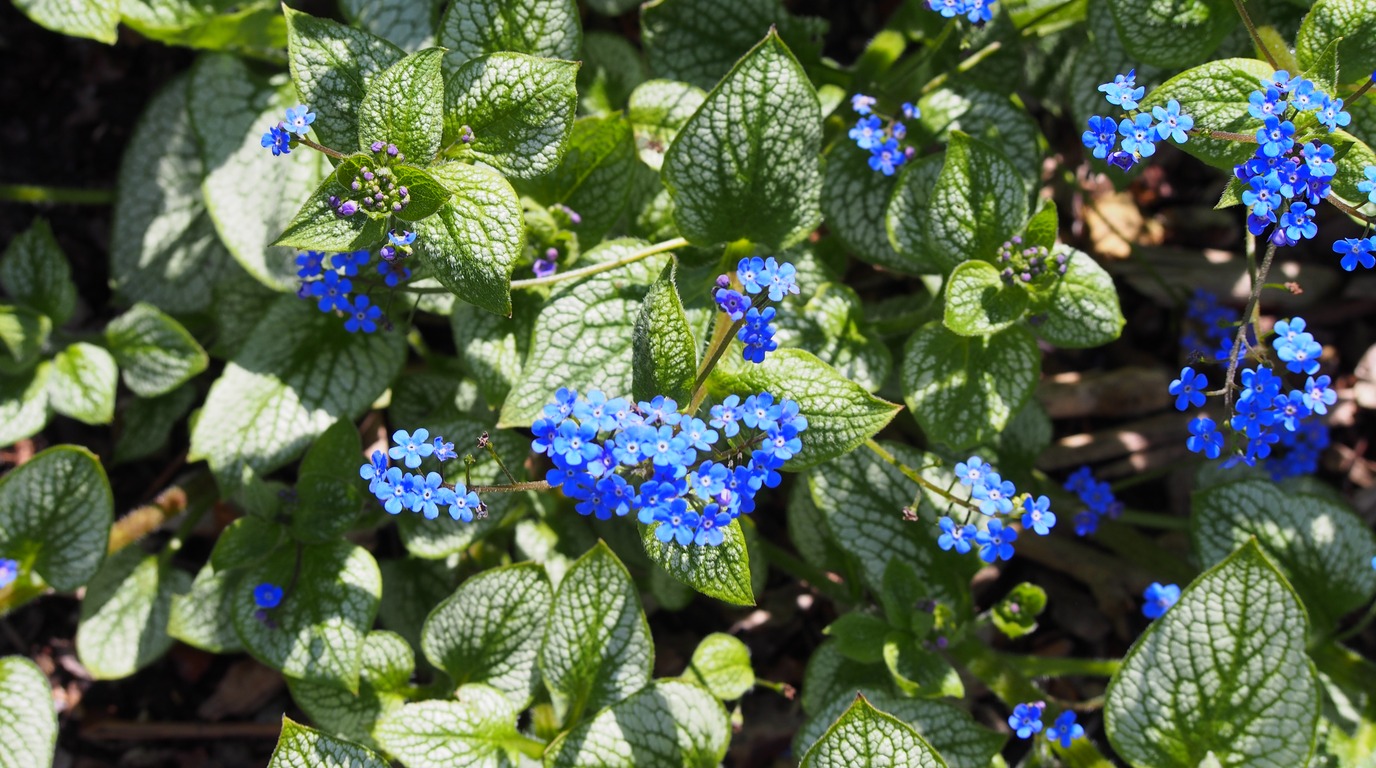
Native to the woodlands and mountain slopes of the Caucasus and Eastern Europe, Siberian Bugloss possesses extraordinary innate cold hardiness, comfortably surviving across USDA Hardiness Zones 3 through 8 and withstanding winter freezes as severe as -40°F (-40°C). However, cold hardiness in a natural woodland floor does not translate to immunity against poor garden conditions. Brunnera grows from a slowly spreading rhizomatous woody crown nestled just beneath the soil surface. In waterlogged winter soils or beneath heavy, sodden blankets of wet whole maple or oak leaves, this central crown quickly suffocates, falling prey to fungal rot and slug infestation. By establishing a strategic autumn cleanup routine—removing diseased foliage while protecting the crown with breathable winter mulch—you will safeguard your prized shade perennials throughout the harshest winter storms.
Why Brunnera Remains an Irreplaceable Shade Perennial
- Unmatched Silver Luminous Foliage: Heart-shaped leaves with intricate silver veining act like natural garden mirrors, brightening dim shady borders throughout the growing season alongside other shade-loving plants for problem areas.
- Early Spring Pollinator Feast: Delicate sprays of forget-me-not sky-blue flowers emerge in April and May, offering critical early-season nectar to solitary native bees and emerging honeybees.
- Extreme Sub-Zero Cold Hardiness: Thrives in USDA Zones 3 through 8, reliably returning every spring even after brutal northern blizzards and deep ground freezes.
- Natural Deer and Rabbit Resistance: The rough, bristly texture of mature Brunnera leaves naturally repels browsing deer and rabbits that readily devour softer hostas and spring bulbs.
Key Winterizing Supplies & Mulch Smart Swaps

- Sharp Bypass Hand Snips: Use sanitized bypass pruners rather than anvil shears to cleanly snip blackened fall stems without tearing or crushing the delicate central growing crown.
- Coarse Shredded Pine Bark or Airy Pine Straw: Swap heavy, moisture-trapping whole autumn leaves for breathable pine straw or coarse shredded bark that allows free oxygen exchange around dormant rhizomes.
- Organic Slug Deterrent (Iron Phosphate Granules): Slugs frequently overwinter beneath dead Brunnera foliage and hollow leaf petioles; applying a light sprinkle of iron phosphate pellets in late autumn protects emerging spring buds.
- Winterizing Reminder (No Fall Division!): Avoid dividing mature Siberian Bugloss clumps in late October or November; disturbed roots cannot knit before freezing, risking total plant loss.
Step-by-Step Autumn & Winter Care Walkthrough for Brunnera
1. Clear Heavy Tree Litter from the Crown: Deciduous shade trees drop large sheets of flat leaves directly onto Brunnera crowns by late autumn. If left untouched, wet mats of decomposing oak or maple foliage create an anaerobic barrier that rots the crown and breeds botrytis mold. Carefully rake away heavy leaf sheets, keeping the center of the plant open and airy.
2. Prune Blackened and Diseased Leaves (Leave Clean Basal Petioles): Following the first moderate frost, outer foliage will turn soft and blacken. Using sharp bypass snips, cut back only the completely dead, blackened leaves to roughly 1 to 2 inches above the soil line. If any lower green leaves remain undamaged in milder zones, leave them alone: they provide natural thermal insulation over dormant root nodes, echoing techniques in how to winterize Coral Bells.

3. Hydrate Thoroughly Before the Hard Freeze: In mid-autumn before the top six inches of topsoil freeze solid, give your Brunnera a deep, slow soaking. Evergreen and semi-evergreen woodland perennials suffer far more winter losses from desiccation caused by dry frozen winds than from cold alone, a principle shared in how to winterize Geum.
4. Apply an Airy “Doughnut” Mulch Collar: After the ground has experienced its first hard frost, spread a 2- to 3-inch protective layer of shredded bark mulch or pine needles around the root zone. Crucially, form a doughnut: leave a 2-inch buffer zone completely bare around the central crown to prevent moisture retention and fungus, similar to protocols in how to winterize Astilbe.
3 Master Horticulturist Secrets for Flawless Brunnera Wintering
1. Spring Pruning vs. Fall Pruning Strategy: In northern regions with heavy snowpack (USDA Zones 3–5), leaving the partially collapsed foliage on the plant throughout winter provides a natural insulating thermal tent that catches snow and buffers the crown against extreme freeze-thaw cycles. Simply wait until late winter or very early spring (before new growth stirs) to perform a complete garden cleanup.
2. Guard Against Frost Heaving in Heavy Clay: Brunnera has relatively shallow, fibrous rhizomes. In soils that alternate rapidly between daytime thaws and nighttime freezing, frost heaving can physically eject crowns out of the ground, exposing fragile roots to biting air. Inspect plants during mid-winter warm spells; if a crown has lifted, gently press it back into the soil and add a handful of coarse pea gravel or mulch over the exposed roots.
3. Never Over-Mulch Crown Centers: The single quickest way to kill Siberian Bugloss during winter is smothering the center with rich, moist compost or dense manure. Brunnera rhizomes require oxygen even during winter dormancy; keeping mulch strictly at the perimeter ensures roots stay protected while the crown breathes freely, as outlined in how to winterize Hardy Geraniums.
What to Pair with Brunnera in Shady Autumn & Winter Borders

- Coral Bells (Heuchera): Deep burgundy, plum, and caramel foliage of Heuchera creates stunning contrast with the iced-silver leaves of Brunnera, protected under our guide on how to winterize Coral Bells.
- Japanese Painted Fern (Athyrium niponicum): Silvery fronds with burgundy midribs echo the frosted leaf patterns of Siberian Bugloss, cared for using how to winterize Japanese Painted Fern.
- Astilbe: Feathery dried winter flower plumes of Astilbe add height and vertical texture behind low, mounding Brunnera clumps, following our steps on how to winterize Astilbe.
Winter Container Care & Early Spring Wake-Up Routine
- Overwintering Potted Brunnera: Container-grown Siberian Bugloss roots are far more exposed to freezing air than in-ground plants. Once dormant after the first hard freeze, move containers into an unheated garage, cold frame, or sheltered north-facing wall. Water very sparingly once every 4–6 weeks to prevent root desiccation.
- Early Spring Debris Removal: As snow melts in late winter (March or early April), remove all remaining tatty leaves before the delicate blue flower scapes begin to push upward from the central crown.
- Gentle Spring Awakening: Brunnera awakens early in the spring season. Apply a light top-dressing of balanced organic compost around the drip line as soon as new purple-green shoot tips become visible.
Frequently Asked Questions
Should I cut back Brunnera in the fall or spring?
Both approaches work well! In colder northern climates (USDA Zones 3–5), leaving foliage through winter provides natural insulation and catches snow to protect the crown. In milder zones with wet winters (Zones 6–8), pruning away blackened, dead leaves in late autumn prevents mold and slug harborage.
Is Siberian Bugloss winter hardy?
Yes, Brunnera macrophylla is exceptionally cold hardy, surviving easily down to USDA Zone 3 (-40°F). Its thick rhizomes tolerate freezing ground effortlessly, provided the soil has adequate drainage and does not sit waterlogged.
Why did my Brunnera crown rot over the winter?
Winter crown rot is almost always caused by poor drainage or over-mulching. Piling heavy, wet autumn leaves directly on top of the central growing point traps stagnant moisture and suffocates the dormant rhizome.
Pin This Gardening Guide for Later
Save this Siberian Bugloss winterizing guide to your favorite Pinterest gardening board so you have these expert pruning rules, crown protection tips, and frost heave solutions ready whenever cold weather arrives!
