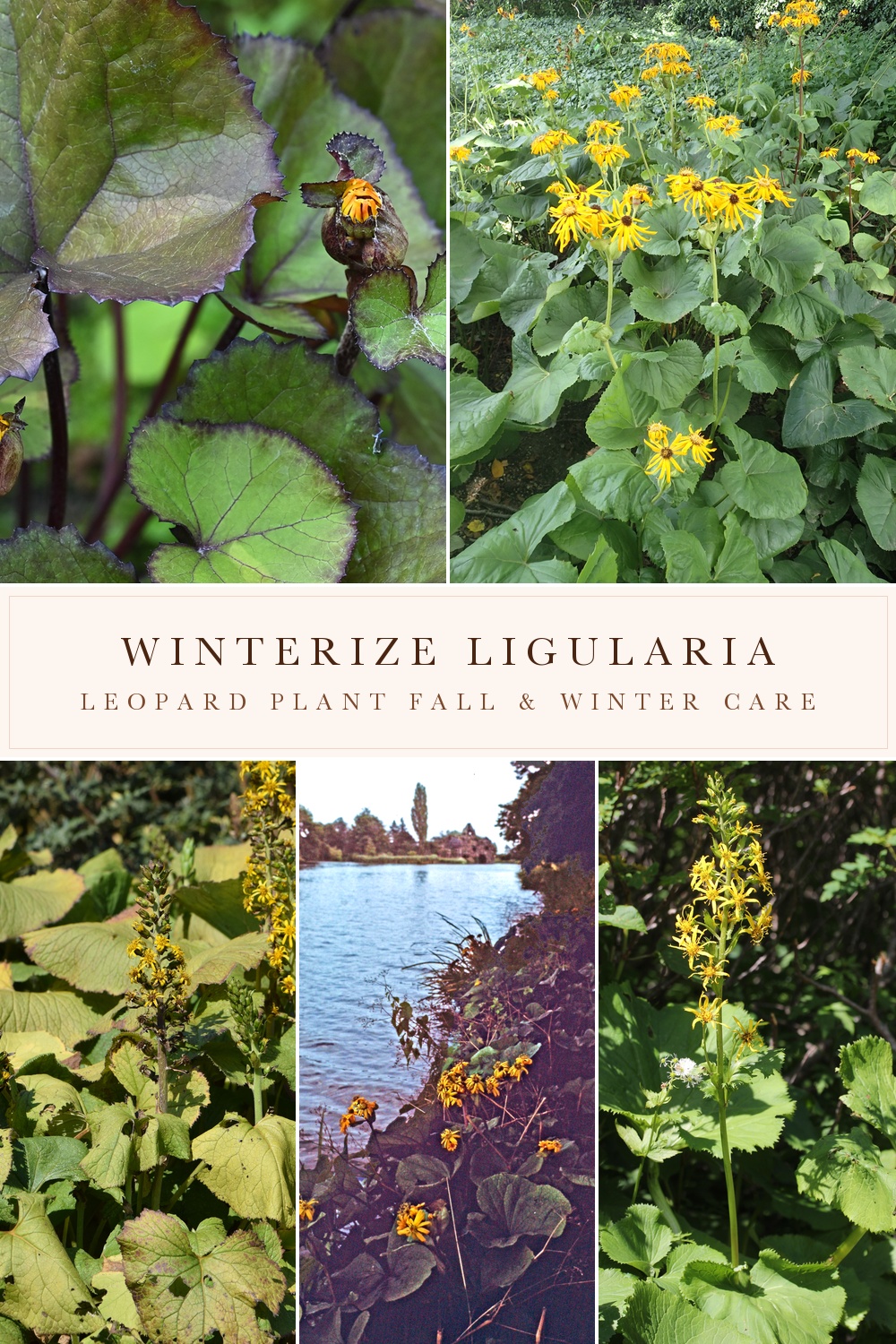
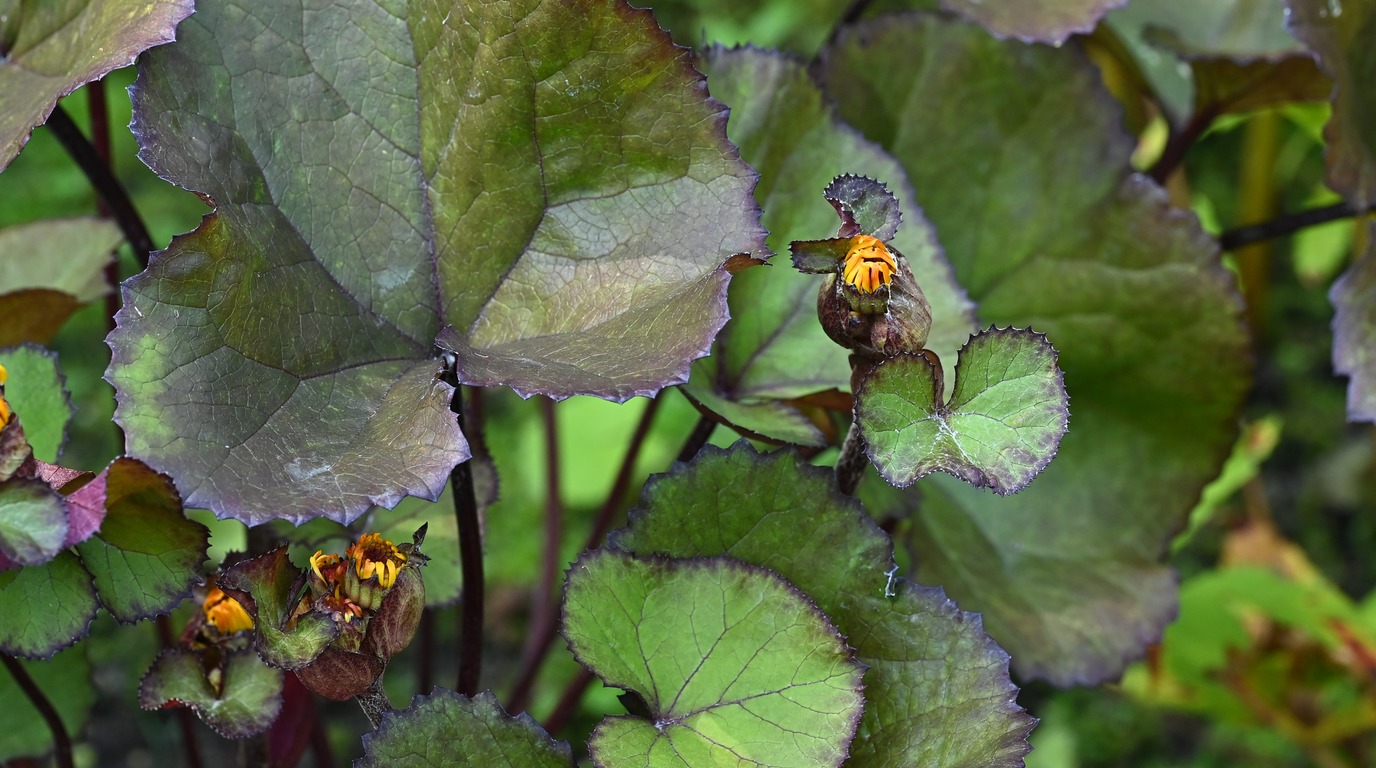
Few shade perennials create the theatrical visual impact of Ligularia (popularly celebrated as the leopard plant, golden groundsel, or elephant ears). With its massive, glossy kidney-shaped foliage—often drenched in deep mahogany and purple hues—and towering spikes of radiant yellow-orange blossoms, Ligularia commands total attention in damp woodland borders. Yet when the first severe frost sweeps through the garden, those colossal, succulent leaves collapse into a dense, water-logged carpet. Learning how to winterize Ligularia properly is vital: leaving that sodden foliage intact suffocates the crown, invites destructive fungal crown rot, and turns your garden bed into an overwintering nursery for voracious spring slugs.
Hailing from the cool, moisture-rich meadows and stream banks of Central and Eastern Asia, cultivated varieties such as Ligularia dentata ‘Britt Marie Crawford’ and Ligularia stenocephala ‘The Rocket’ boast exceptional cold hardiness across USDA Zones 4 through 8. Their thick, fleshy crowns and fibrous roots tolerate sub-zero winter temperatures with ease—provided soil conditions remain well-aerated. The danger in winter is never cold alone; it is the combination of freezing temperatures and waterlogged, stagnant sludge. Autumn care focuses on prompt post-frost shearing, eliminating pest sanctuaries, and applying an airy mulch ring that protects crown tissue while shedding excess surface moisture.
Why You’ll Love This Winter Care Routine
- Time / Speed: Requires only 10 to 15 minutes of straightforward cutting and mulching once freezing weather arrives.
- Crown Rot & Botrytis Prevention: Removing collapsing fleshy leaves eliminates the primary host material for fungal mold and collar rot during winter thaws.
- Aggressive Slug Eradication: Denies overwintering slugs and snails the moist decaying foliage they require to lay springtime egg clutches.
- Explosive Early Spring Regrowth: Clean crowns awaken rapidly in April, unfurling unblemished, glossy leaves unobstructed by old withered stalks.
Key Supplies & Seasonal Timing

- Sharp Bypass Hand Pruners or Loppers: Thick Ligularia leaf stalks contain high moisture levels; sharp blades ensure crisp cuts without crushing vascular tissue.
- Coarse Shredded Bark or Pine Straw: An airy, breathable 2-to-3-inch mulch layer insulates without trapping stagnant water against crown buds.
- Organic Slug Deterrent (Iron Phosphate): A late-autumn application around the crown perimeter knocks out lingering adult slugs before winter hibernation.
- Garden Hand Rake: Perfect for gently gathering collapsed foliage without disturbing shallow surface roots.
Step-by-Step Ligularia Winterizing Walkthrough
1. Wait for the First Hard Killing Frost: Do not trim Ligularia while its immense leaves remain green and upright in September or early October. Even late in the season, those broad solar panels photosynthesize actively, pumping vital energy reserves into the crown and roots. Wait until a hard freeze (temperatures dropping below 28°F / -2°C) causes the foliage to collapse and turn dark brown or black.
2. Deep Autumn Root Hydration: If autumn has been unusually dry, give your Ligularia a thorough, deep soaking 1 to 2 weeks before the ground freezes solid. Because these perennials naturally frequent wetlands, crowns entering winter with dehydrated root tissues suffer significant dieback from biting winter winds.

3. Cut Stems Cleanly to 2 Inches: Using bypass pruners, shear back all collapsed leaf stalks and spent flowering stems to approximately 2 inches above the soil surface. Never tear or wrench stems away by hand, as this can pull off dormant growth eyes resting on the crown. Remove all pruned foliage from the bed immediately and dispose of it to prevent harboring disease.
4. Apply an Airy Insulating Mulch Ring: Spread 2 to 3 inches of coarse shredded bark, pine needles, or well-aerated compost over the root zone. Crucially, taper the mulch layer so it does not pile directly over the center of the crown. Leaving the center slightly open prevents excessive moisture retention while insulating the peripheral root system against severe frost heaving.
3 Horticultural Secrets for Majestic Spring Ligularias
1. The Crown Aeration Mandate: While Ligularias are moisture-lovers during hot summer months, dormant crowns sitting in freezing pools of water will rot within weeks. If your garden has heavy, compacted clay, plant Ligularia on a gentle 3-to-4-inch raised mound or incorporate organic grit to ensure excess winter precipitation drains away from the crown collar.
2. Early Autumn Clump Division: Large, mature Ligularia clumps benefit from division every 3 to 4 years to maintain flowering vigor. Divide crowns in early autumn (September through early October) while soil is still warm. Use a sharp spade to divide the fibrous root mass into sections containing 2 to 3 healthy growth eyes, replanting immediately at the exact original soil depth.
3. The Pre-Emptive Late-Winter Slug Barrier: Slugs adore tender Ligularia shoots above almost all other perennials. In late February or early March—well before new leaves pierce the ground—scatter pet-safe iron phosphate granules or crushed eggshells around the crowns. Eliminating early-season slug populations ensures your spring leaves emerge without unsightly holes.
What to Pair With Ligularia in Winter Borders

- Arching Woodland Grace: Plant alongside Solomon’s seal (Polygonatum), whose slender arching stems and white spring bells contrast dramatically with Ligularia’s broad, rounded foliage.
- Groundcover Thermal Shields: Weave around barrenwort (Epimedium) and scalloped lady’s mantle (Alchemilla mollis) to form evergreen and semi-evergreen skirts that soften bare winter soil.
- Feathery Plume Companions: Combine with moisture-loving astilbes, which appreciate identical rich, boggy soils and share the same late-autumn cutback schedule.
- Bold Texture Partners: Interplant with large blue-leafed hostas and silver-leaved Siberian bugloss (Brunnera) for a dynamic, multi-layered shade border.
Winter Monitoring, Cold Hardiness & Spring Care
- Hardiness Zone Thresholds: Ligularias thrive reliably down to USDA Zone 4 (-30°F / -34°C). In Zone 3, add an extra layer of evergreen boughs or straw across beds to guard against bitter freeze cycles without snow cover.
- Overwintering Potted Ligularias: Container-grown specimens have vulnerable root systems that freeze easily. Move containers into an unheated garage, shed, or bury the entire pot up to its rim in garden soil before applying a thick mulch cap.
- Deer & Pest Behavior: While deer occasionally sample flower buds in late summer, dormant crowns and roots are virtually untouched by winter burrowing pests.
- Spring Unveiling: In early April as daytime temperatures consistently reach 50°F (10°C), gently sweep away heavy mulch layers from the crown center to let warming sunlight stimulate early purple leaf shoots.
Frequently Asked Questions
Can I leave Ligularia seed heads standing through winter?
While upright seed stalks do provide minor winter architectural interest, leaving them in place usually keeps collapsing wet leaf stalks attached beneath them. Because wet Ligularia leaves turn into a slimy mess that fosters crown rot, it is far safer to shear the entire plant down in late autumn.
Why do Ligularia leaves turn into black slime after frost?
Ligularia foliage contains very high water content in its fleshy cellular structure. Freezing temperatures burst these cell walls immediately, causing the tissue to melt into soft, sodden material that rapidly decomposes unless pruned away.
Do Ligularias need heavy fertilizer in autumn?
No. Never apply high-nitrogen fertilizers in autumn, as this forces tender late-season growth that gets instantly killed by freezing weather. Instead, top-dress with a light 1/2-inch layer of rich organic compost that slowly feeds soil biology over winter.
When do Ligularia shoots emerge in spring?
Ligularias are moderately early risers, typically pushing up tightly curled purple or bronze rosettes in mid-to-late April once soil temperatures stabilize above 45°F (7°C).
Save This Ligularia Winter Guide
Loved this Ligularia winterizing guide? Save this pin to your Pinterest shade gardening and perennial care boards so you have these essential crown protection tips ready every autumn!