
Late summer heatwaves, heavy foot traffic, and dry spells leave residential lawns compacted, weed-infested, and thinning by September. Attempting to revive tired turf with surface fertilizers alone fails because compacted subsoil blocks oxygen, water, and essential nutrients from reaching deep root zones. Executing a timely autumn core aeration and overseeding protocol is the single most effective cultural practice for establishing dense, weed-choking, velvety green turf that thrives through winter and flourishes next spring.
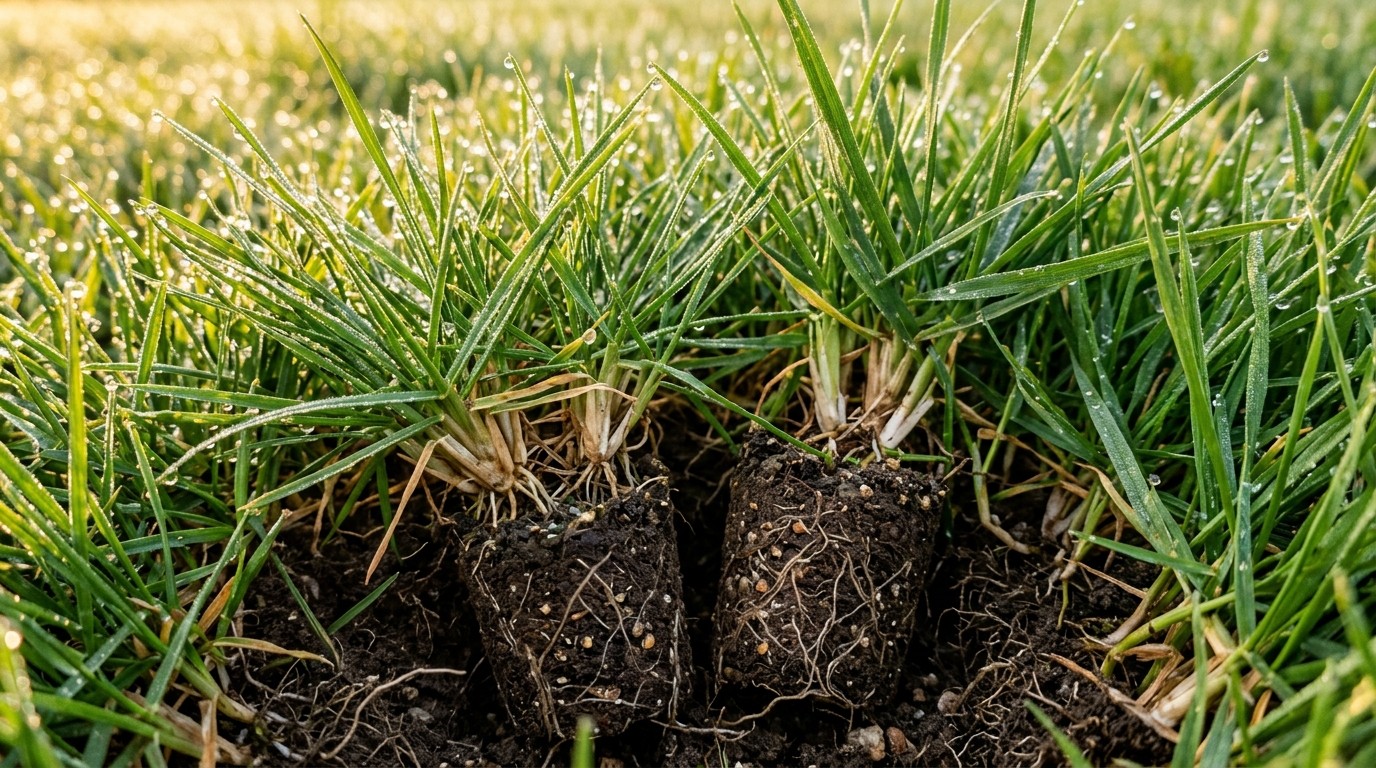
Autumn is the biological sweet spot for cool-season turfgrass regeneration. As daytime air temperatures moderate into the comfortable 60°F–75°F (15°C–24°C) range while soil temperatures remain warm, weed competition plummets and autumn rainfall supports rapid germination. Core aeration mechanically fractures hardpan soil, creating thousands of ideal seed-to-soil incubation micro-pockets that protect delicate seedlings from desiccation and surface runoff.
Why Fall is the Ultimate Lawn Renovation Window
- Warm Soil & Cool Air Synergy: Warm 55°F–65°F soil temperatures accelerate germination while cool autumn air prevents tender shoots from scorching.
- Minimal Annual Weed Competition: Aggressive summer weeds like crabgrass and foxtail naturally die off with the first light frost, leaving open soil for desirable grass seed.
- Maximum Root Development Time: Fall-seeded grasses establish deep extensive root networks for six full months before facing intense summer heat and drought.
- Permanent Thatch & Compaction Relief: Hollow core tines remove cylindrical plugs of soil and thatch, dramatically improving irrigation infiltration and soil microbiology.
Required Equipment & Seed Selection
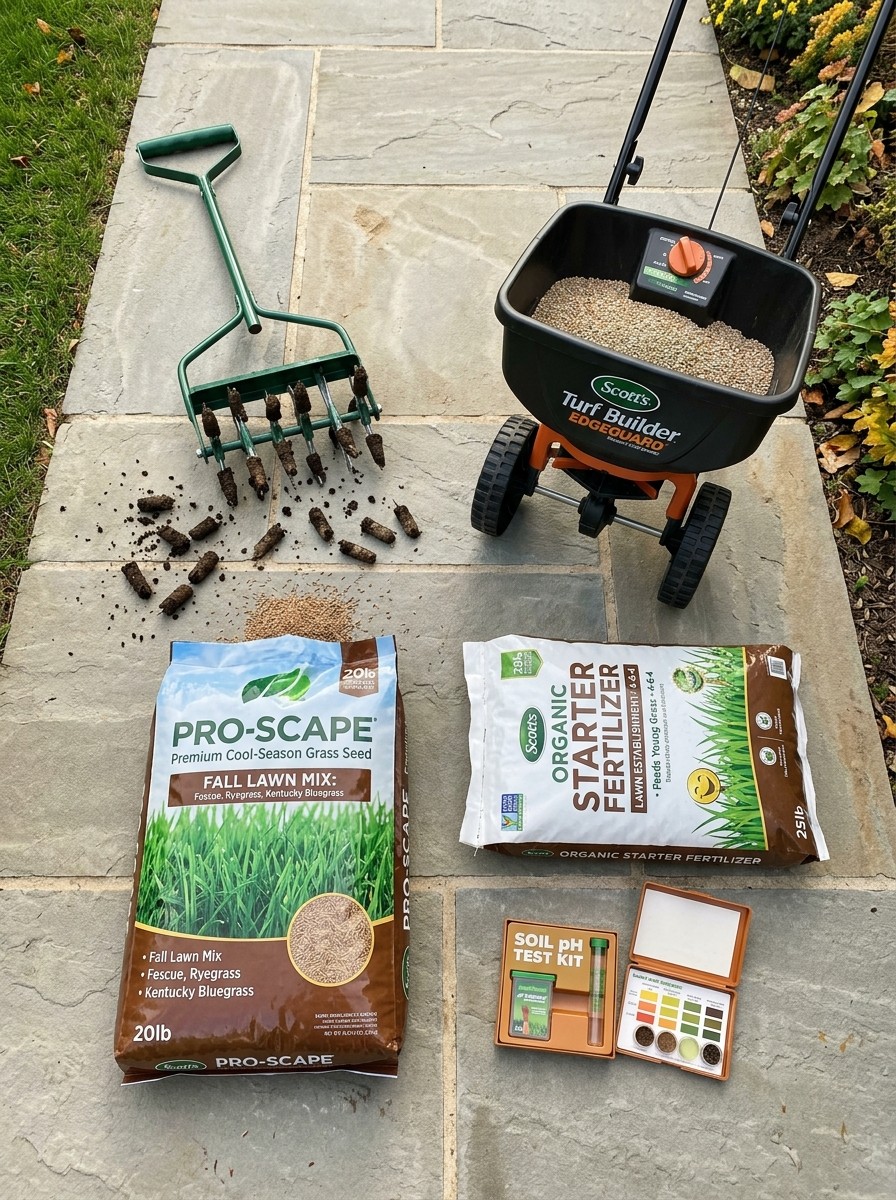
- Commercial Hollow-Tine Core Aerator: Choose a mechanical walk-behind aerator that pulls actual 2-to-3 inch cylindrical soil plugs (never use solid-spike aerators, which increase lateral soil compaction).
- Premium Turf-Type Seed Blend: Select certified, weed-free cool-season blends such as Turf-Type Tall Fescue (TTTF), Kentucky Bluegrass (KBG), or Perennial Ryegrass suited to your sunlight conditions.
- High-Phosphorus Starter Fertilizer: Formulated with a balanced N-P-K ratio (such as 10-18-10 or organic equivalent) to fuel rapid primary root elongation.
- Rotary Broadcast Push Spreader: Ensures uniform, calibrated seed and fertilizer application across all lawn zones without clumping.
The Step-by-Step Fall Aeration & Overseeding Timeline
1. Week -1 (Pre-Aeration Prep & Scalping): Seven to ten days before aeration, test soil pH (aiming for 6.2–6.8). Mow your existing lawn shorter than usual—down to roughly 1.5 to 2 inches—and bag all clippings. Thoroughly water the lawn 24 to 48 hours prior to aerating so the soil is moist and receptive, allowing tines to penetrate to their maximum depth.
2. Day 0 (Core Aeration Passes): Run the core aerator across the entire lawn in overlapping grid patterns (north-south, followed by east-west). Aim for a minimum density of 20 to 40 core holes per square foot. Leave the extracted soil plugs on the surface—they will naturally break down within two weeks, returning beneficial microbes and minerals to the lawn canopy.
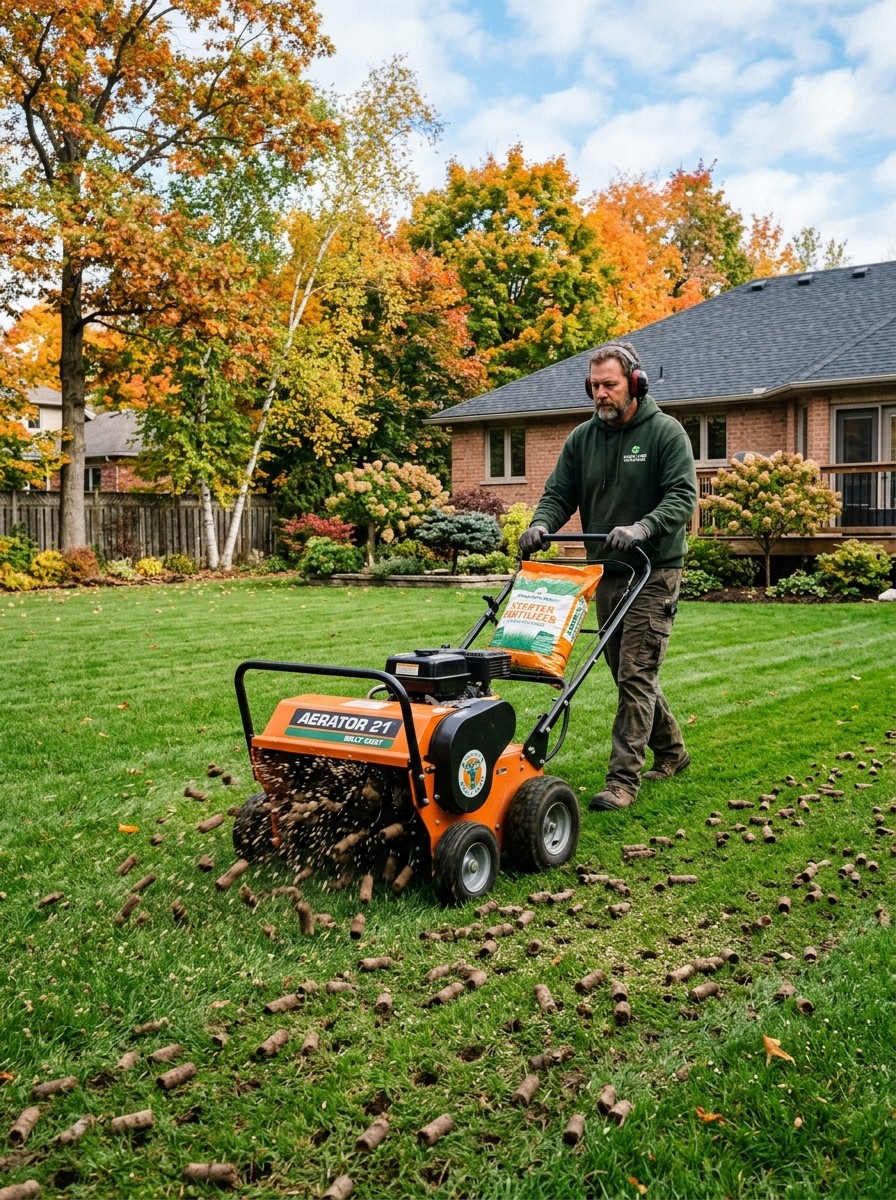
3. Day 0 (Broadcast Overseeding & Starter Feeding): Immediately after aerating, apply your grass seed using a calibrated broadcast spreader at the overseeding rate (typically 4–6 lbs per 1,000 sq ft for tall fescues; 2–3 lbs for Kentucky bluegrass). Follow immediately with an application of starter fertilizer. Lightly drag a flexible leaf rake or back of a push broom across the turf to sweep seeds directly into the open core holes.
4. Weeks 1 to 3 (Precision Moisture Management): Keep the top inch of soil consistently moist, but not waterlogged. Water 2 to 3 times daily in short 5-to-10 minute bursts during daylight hours until germination is complete. Perennial ryegrass sprouts in 5–7 days, tall fescue in 7–14 days, and Kentucky bluegrass in 14–21 days.
3 Turfmaster Secrets for Thick Carpet-Like Grass
1. Never Use “Weed & Feed” or Pre-Emergent Herbicides: Standard fall weed preventers (like prodiamine or dithiopyr) create a chemical barrier that stops all botanical seeds from germinating, which will completely kill your expensive new grass seed. Postpone all chemical weed controls until newly seeded turf has been mowed at least four times.
2. Topdress Thin Areas with Fine Compost: For severely eroded or bare patches, spread a thin 1/8-inch dusting of screened compost or peat moss over the seed. This organic blanket locks in critical moisture, protects seed from hungry birds, and accelerates rooting.
3. The First Mow Rule: Resist the urge to mow too early. Wait until newly established grass blades reach 3.5 to 4 inches in height. Ensure mower blades are razor-sharp to prevent ripping tender root crowns, and never remove more than one-third of the total grass blade length in a single cutting.
Complementary Autumn Yard Upgrades
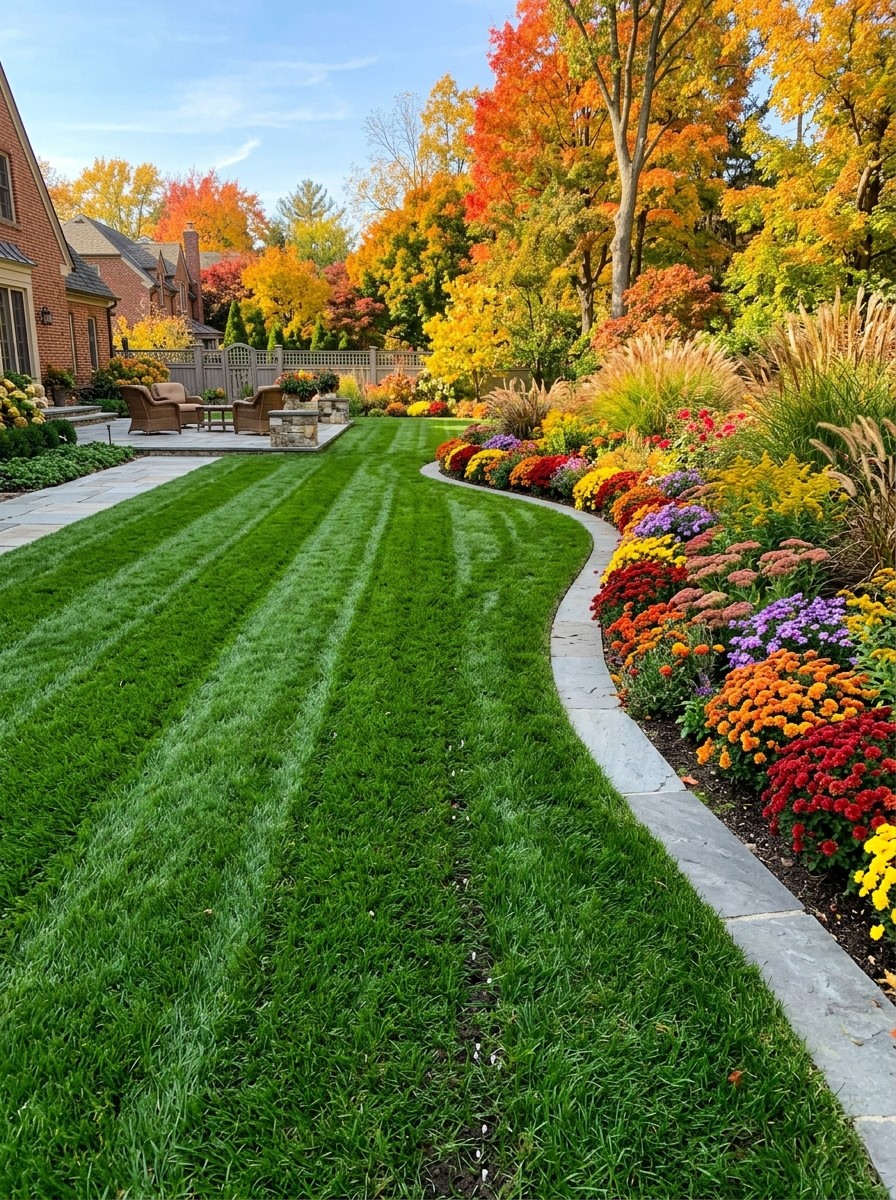
- Seasonal Flower Bed Borders: Enhance your lawn perimeter by establishing permanent blooms with our perennial flower border design guide.
- Autumn Garden Bed Mulching: Protect adjacent shrubs and landscape beds with our complete fall mulch and soil insulation guide.
- Spring Bulb Integration: Plant stunning spring focal points in turf margins following our fall spring bulb explosion guide.
Troubleshooting Common Overseeding Mistakes
- Patchy Germination: Caused by uneven surface drying or improper seed-to-soil contact. Re-seed light spots lightly, press seed into soil, and maintain steady moisture.
- Heavy Leaf Litter Covering Seedlings: Fallen autumn leaves smother fragile grass sprouts. Gently blow leaves off using a low-throttle leaf blower rather than heavy metal rakes.
- Runoff on Slopes: Fast irrigation washes seed down inclines. Use straw erosion blankets or apply light frequent mistings to keep seed locked in place.
Frequently Asked Questions
What is the latest date I can aerate and overseed my lawn in the fall?
Your goal should be to finish overseeding roughly 45 days before your region’s historical first hard freeze date (typically mid-to-late October in northern zones; November in transition zones). This gives tender grass seedlings adequate time to develop mature cell walls and hardy root crowns capable of surviving freezing winter soil.
Do I need to rake up the soil plugs left behind after core aerating?
No. Leave the core plugs directly on the lawn surface. Rain, irrigation, and subsequent mowing will naturally dissolve the soil cores within 10 to 14 days, filtering beneficial topsoil and organic matter back into the thatch layer without suffocating existing grass.
Should I aerate my lawn every single year?
Lawns growing in heavy clay soils or experiencing frequent foot and vehicle traffic benefit greatly from annual fall core aeration. For established lawns with loose, well-draining loam and minimal compaction, aerating every two to three years is generally sufficient to maintain optimal root health.
Pin This Lawn Care Blueprint for Later
Love this lawn restoration guide? Save this pin to your Lawn Care and Fall Yard Maintenance board on Pinterest so you have these aeration timing and overseeding steps ready before cold weather sets in!