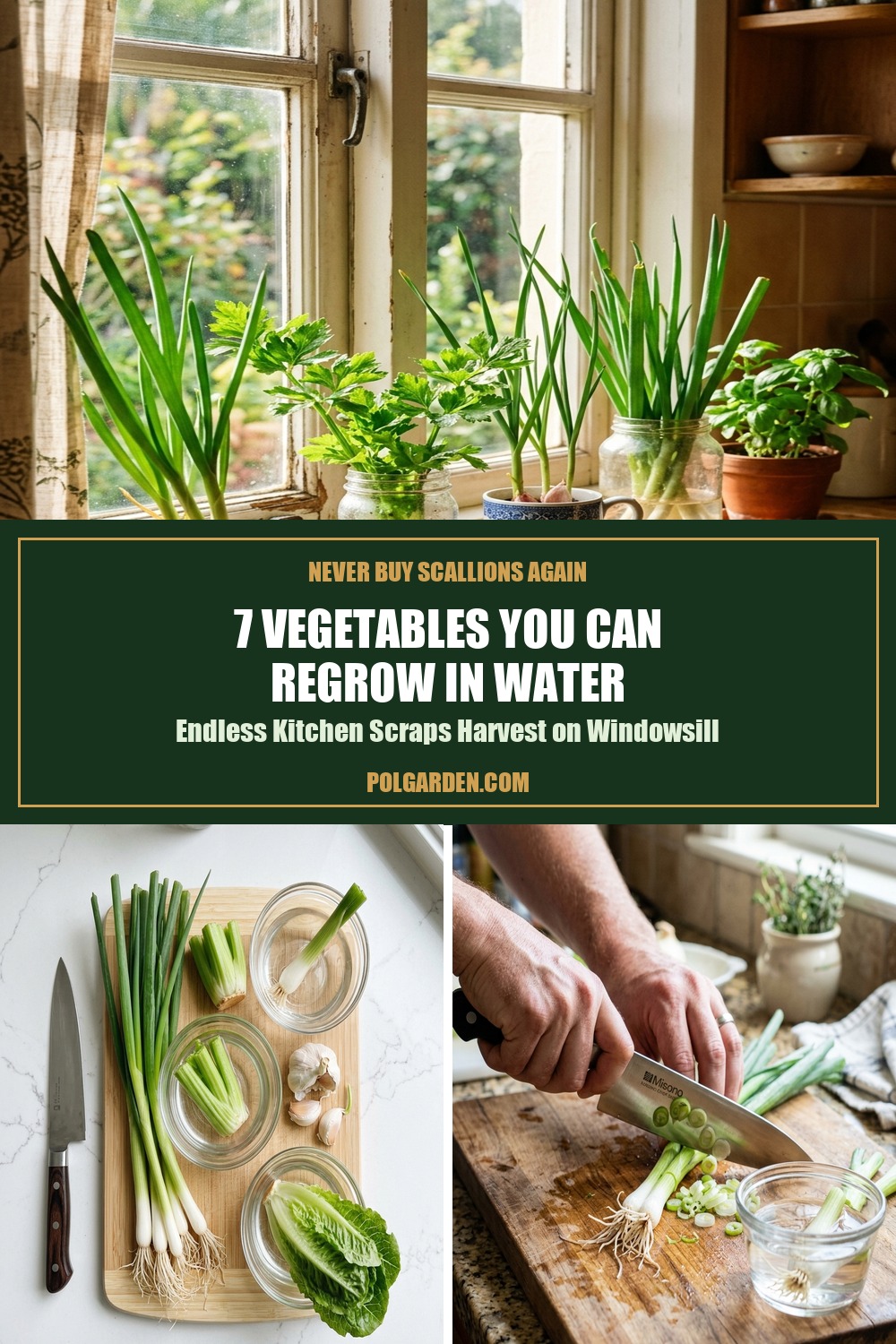
Before tossing vegetable trimmings into the compost bin, look closely at their botanical bases: many kitchen staples hold dormant meristematic tissue ready to regenerate vigorous new roots and fresh culinary greens with nothing more than a shallow dish of tap water and a sunny windowsill. Regrowing vegetables from kitchen scraps is the ultimate zero-cost, zero-waste kitchen gardening hack for crisp, organic garnishes year-round.
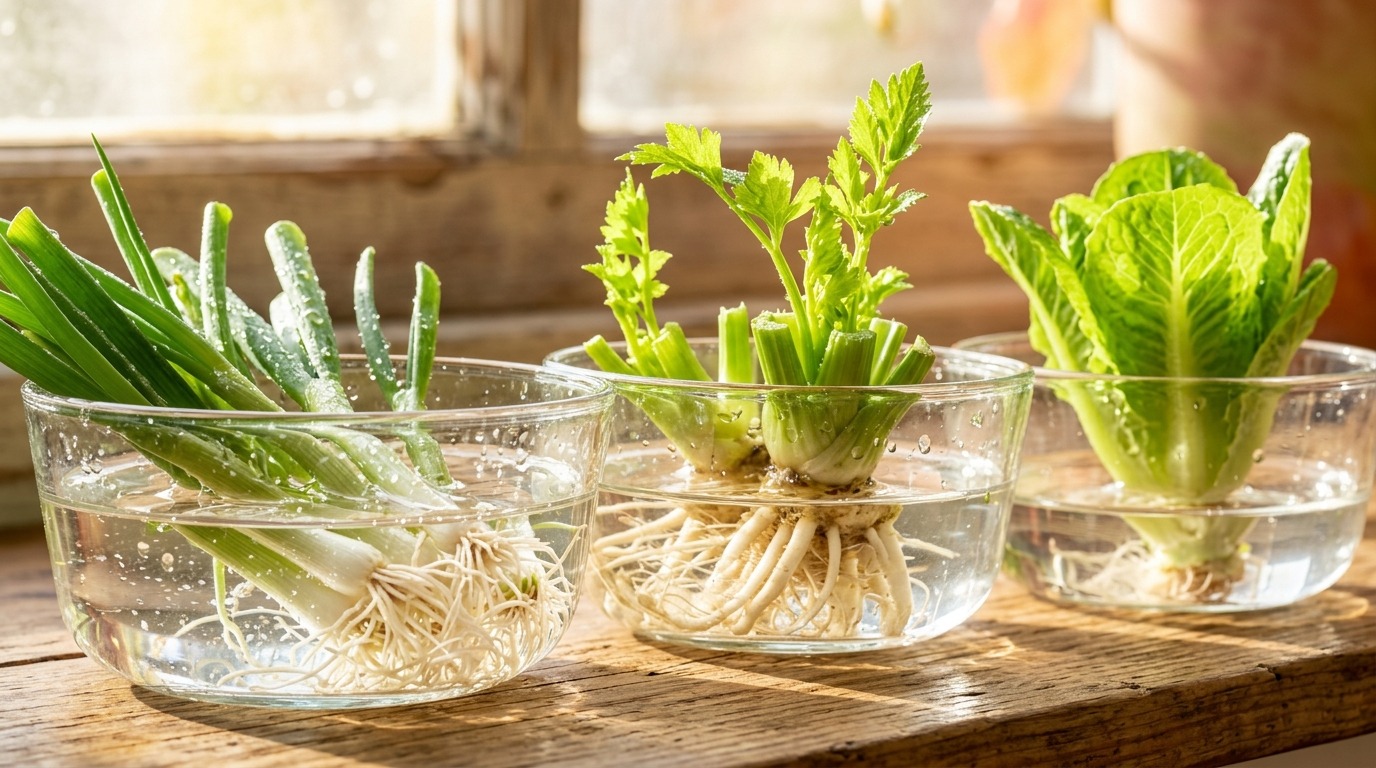
Unlike full-scale outdoor gardening that requires bags of potting mix and large garden beds, water regeneration focuses on cellular energy reserves already stored in plant root crowns and basal plates. By providing consistent moisture, fresh oxygen, and ambient sunlight, you can produce continuous harvests of savory greens, fresh aromatics, and vitamin-packed salad toppings right next to your kitchen sink.
Why You’ll Love Regrowing Kitchen Scraps
- Zero Grocery Waste & 100% Free: Saves money on fresh produce while turning discarded kitchen cut-offs into productive food.
- Instant Rapid Growth: Green onions and garlic shoots begin visibly sprouting within 24 to 48 hours.
- No Dirt or Mess Indoors: Perfect for small apartment kitchens, urban windowsills, and classrooms without dealing with soil spillage.
- Pest-Free Hydroponic Growing: Eliminates outdoor soil-borne pests and prevents indoor nuisances like fungus gnats.
Required Tools & Setup Checklist
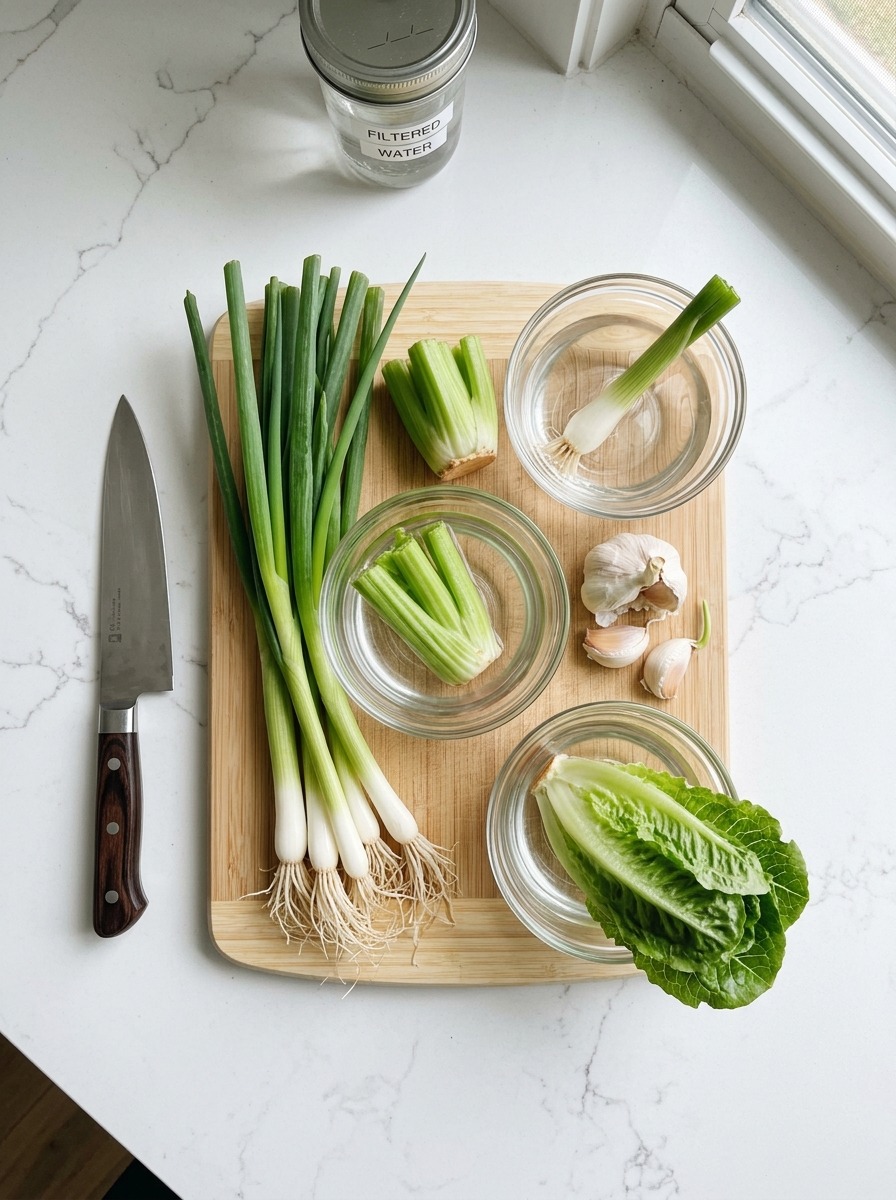
- Kitchen Scraps: Intact basal ends of scallions (green onions), celery, romaine lettuce, leeks, bok choy, fennel, and sprouted garlic cloves.
- Vessels: Small glass jars, ramekins, shallow ceramic tea saucers, or recycled shot glasses.
- Clean Water Source: Filtered, spring, or dechlorinated tap water (let tap water sit open for 24 hours to dissipate chlorine).
- Cutting Board & Sharp Knife: To make clean, uncrushed slices across basal stems.
- Toothpicks (Optional): Handy for suspending larger avocado pits or sweet potato slips above deep water lines.
The 7 Best Vegetables to Regrow in Water (Step-by-Step)
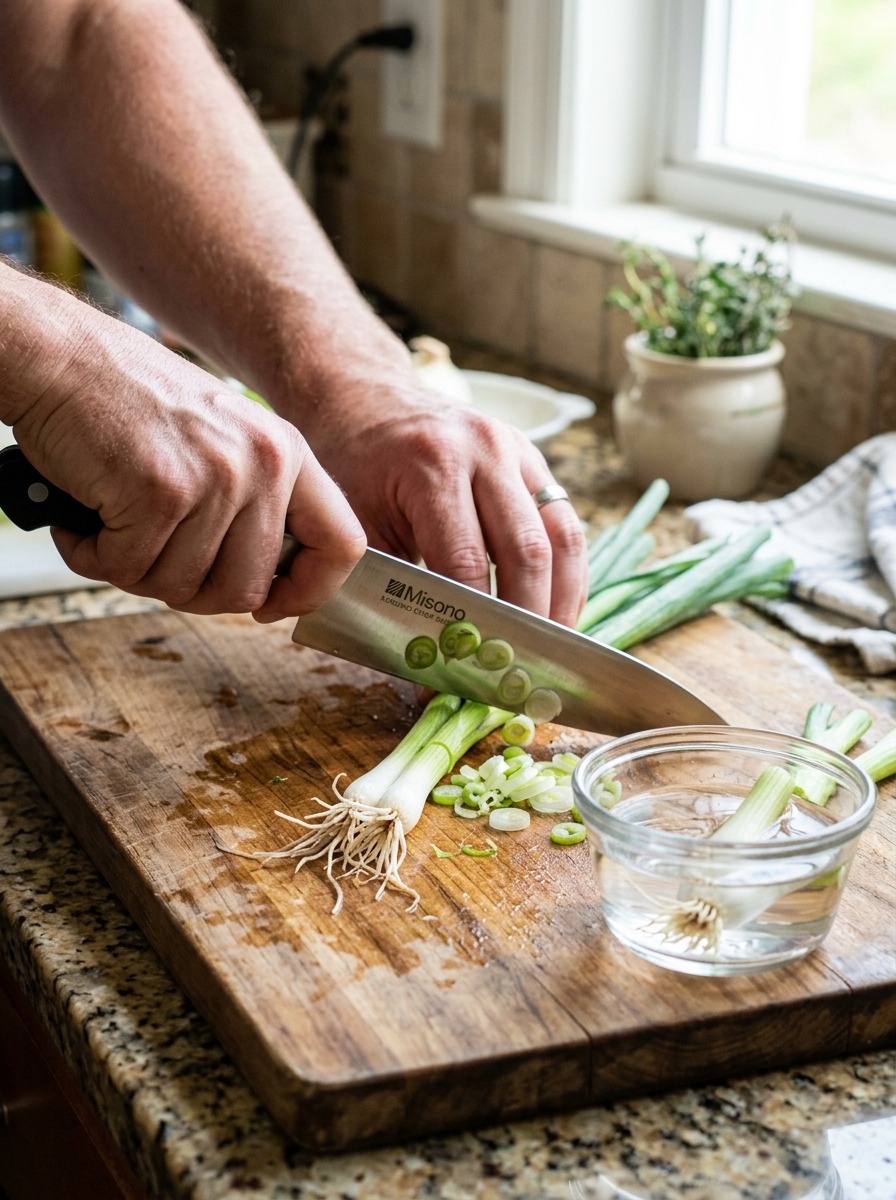
1. Green Onions & Scallions — The Infinite Harvest Champion
Cut scallions leaving 1.5 to 2 inches of the white root base intact. Place them root-down in a narrow shot glass with 1 inch of water. Within 5 to 7 days on a bright windowsill, crisp new emerald shoots will shoot up 6 inches high. Snip with kitchen scissors and let them regrow 3 to 4 times repeatedly.
2. Celery — Crunchy Stalks & Fragrant Herb Leaves
Cut the bottom 2 inches of a celery bunch base. Rest the base flat in a shallow bowl with 1/2 inch of water. In 3 to 5 days, tender chartreuse leaf buds will emerge from the center core, accompanied by fresh root hairs below.
3. Romaine & Butterhead Lettuce — Fresh Salad Leaves
Save the bottom 2-inch stump of your romaine head. Submerge only the bottom 1/2 inch in clean water. Keep on a bright windowsill, refreshing water every two days. In 10 to 14 days, you can harvest fresh, tender salad leaves for sandwiches.
4. Garlic Cloves — Sweet Garlic Greens & Chives
When pantry garlic cloves develop tiny green shoots, do not throw them away! Set sprouted cloves root-end down in a small ramekin with just enough water to wet the bottom. They quickly grow aromatic, mild garlic greens that taste delicious in stir-fries, omelets, and dips. For full underground head production, review how to plant garlic in fall.
5. Leeks — Sturdy Allium Regrowth
Just like green onions, leek basal roots regenerate rapidly. Cut 2 inches above the root plate and stand upright in a glass jar with 1 to 1.5 inches of water. Harvest the tender inner shoots as they surge upward.
6. Bok Choy & Tatsoi — Asian Braising Greens
Cut the bottom 1.5 inches of a bok choy head. Place upright in a shallow saucer with 1/2 inch of water. Growth begins from the inner rosette center in under 48 hours, producing mild, succulent greens.
7. Sweet Potato Slips — Ornamental Vines & Garden Tubers
Suspend half a sweet potato in a jar of water using toothpicks. In 2 to 3 weeks, it will erupt with lush green vines known as ‘slips’ that can be detached, rooted in water, and planted outdoors. See our full tutorial on growing 50 lbs of tubers from sweet potato slips.
3 Master Rules to Prevent Water Sliminess & Rot
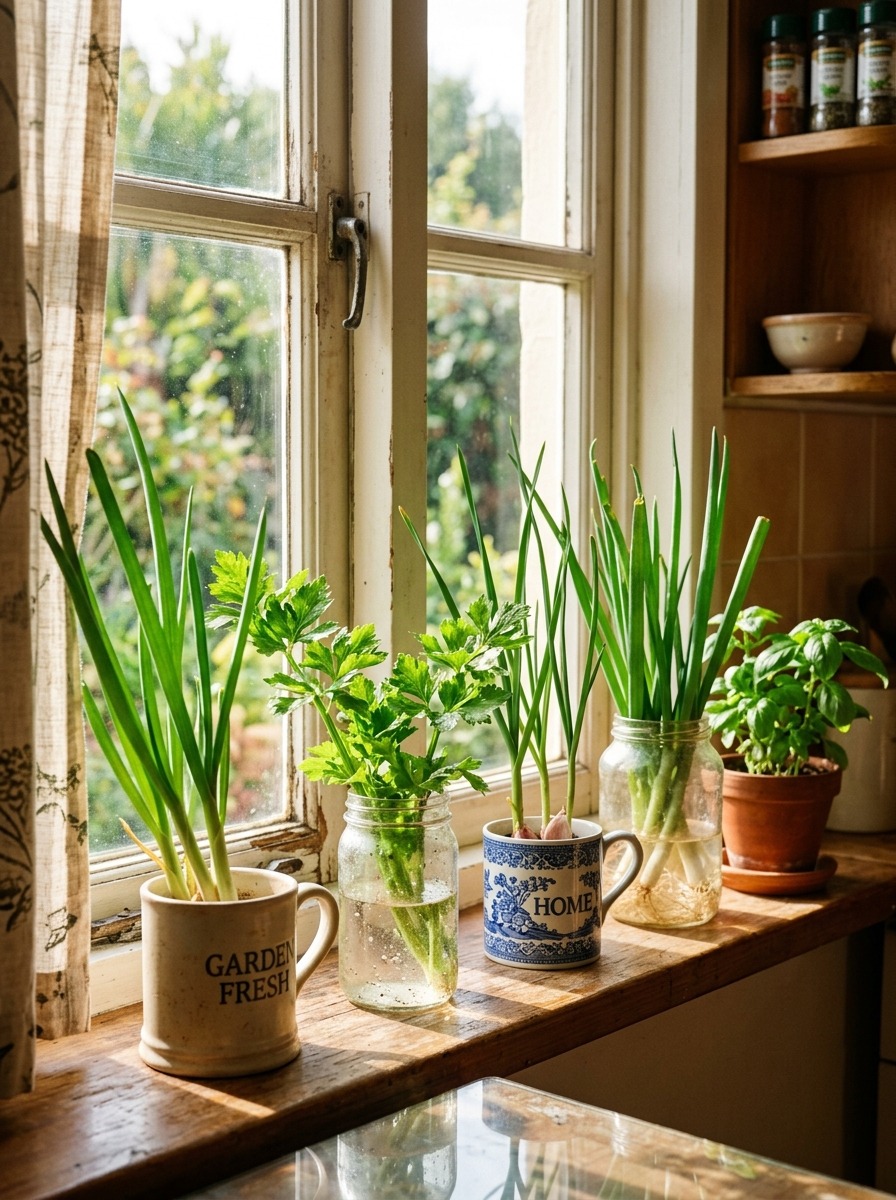
Water-regenerated plants fail only when stagnant water promotes bacterial slime. Master these 3 simple hygiene rules for 100% success:
- Never Submerge the Entire Base: Only the bottom 1/4 to 1/2 inch of the root plate should touch water. If the entire stem is submerged, lack of oxygen causes rapid tissue softening and rot.
- Change Water Every 48 Hours: Stagnant water depletes dissolved oxygen and accumulates bacterial biofilm. Dump, rinse the vessel, and refill with fresh cool water every 2 days.
- Transition to Soil for Long-Term Nutrition: Pure water provides hydration but zero soil minerals. Once healthy white root networks reach 2 to 3 inches, pot them into rich potting soil enriched with organic leaf mold for full-size, long-term vegetable production.
Frequently Asked Questions
Can you regrow root vegetables like carrots and beets in water?
Carrot and beet tops will sprout beautiful, feathery edible green foliage in water (great for chimichurri and pestos), but they will not regenerate a new taproot underground. Only leafy greens and bulb alliums regrow their primary edible parts.
How many times can you regrow green onions in water?
You can comfortably harvest scallions in water 3 to 4 times. After that, the stored nutrients in the bulb become exhausted, and the new shoots grow thinner. Transplanting into potting soil allows them to produce indefinitely.
Do regrown vegetables taste as good as fresh ones?
Yes! The flavor of freshly harvested scallions, garlic greens, and celery leaves grown on a sunny windowsill is vibrant, crisp, and intensely aromatic.
Authoritative Horticultural References & Sources
- University of Illinois Extension: Regrowing Vegetables from Kitchen Scraps: Botanical Principles of Vegetative Propagation.
- Cornell Cooperative Extension: Indoor Vegetable Gardening and Kitchen Scrap Science Activities.
- USDA Food & Nutrition Service: Food Waste Reduction and Home Produce Hydroponic Regrowth.
Pin This Kitchen Garden Guide to Your Pinterest Board
Never throw away kitchen vegetable scraps again! Save this step-by-step water regrowing guide to your Pinterest Gardening Board so you always have fresh greens ready at home!