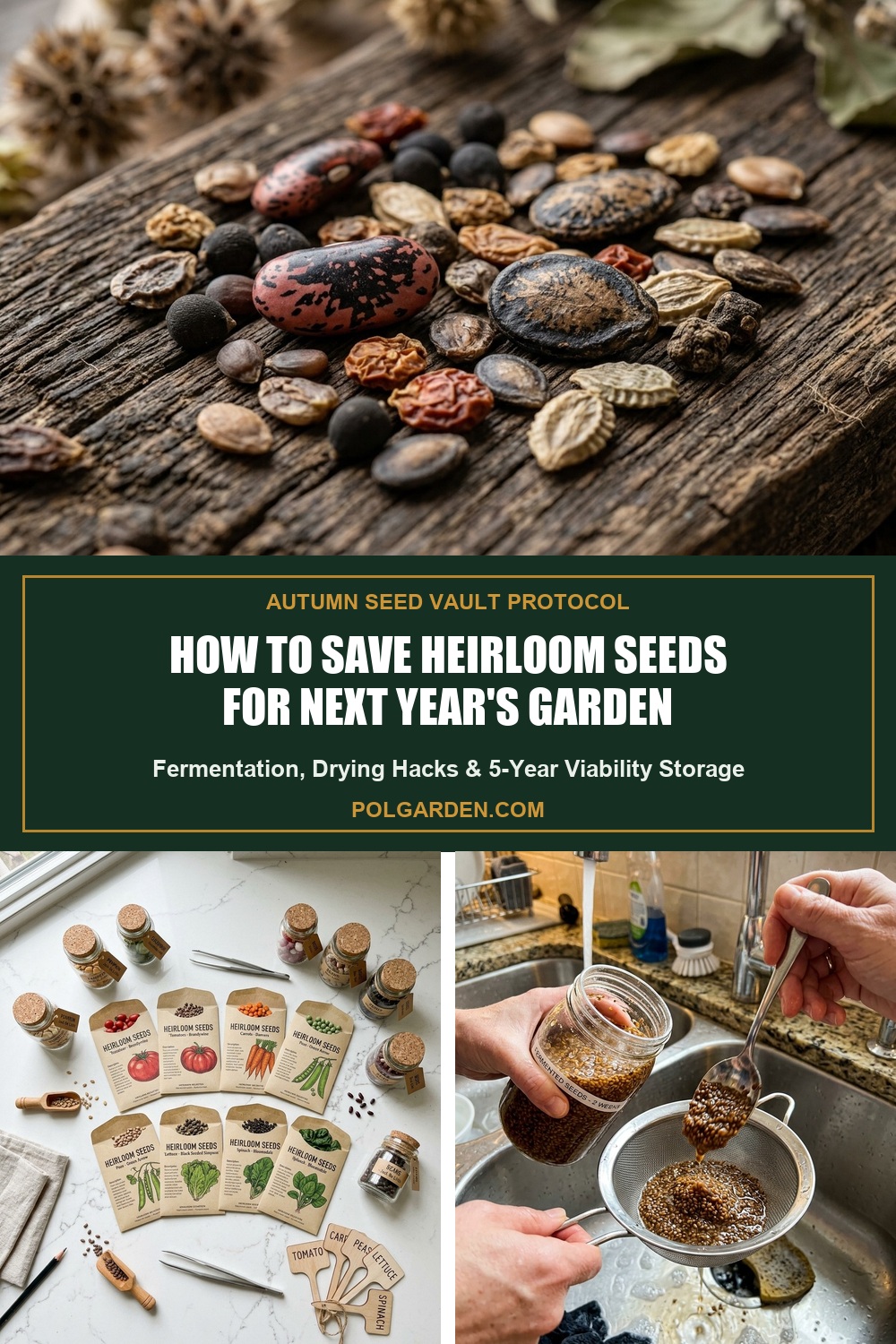
Harvesting and saving your own heirloom seeds in autumn is the ultimate mark of self-reliant gardening, preserving open-pollinated genetics that have naturally adapted to your local microclimate and soil biology. By mastering proper wet fermentation, moisture elimination, and airtight storage, you can build a resilient seed bank with 95%+ germination rates for up to five full seasons.
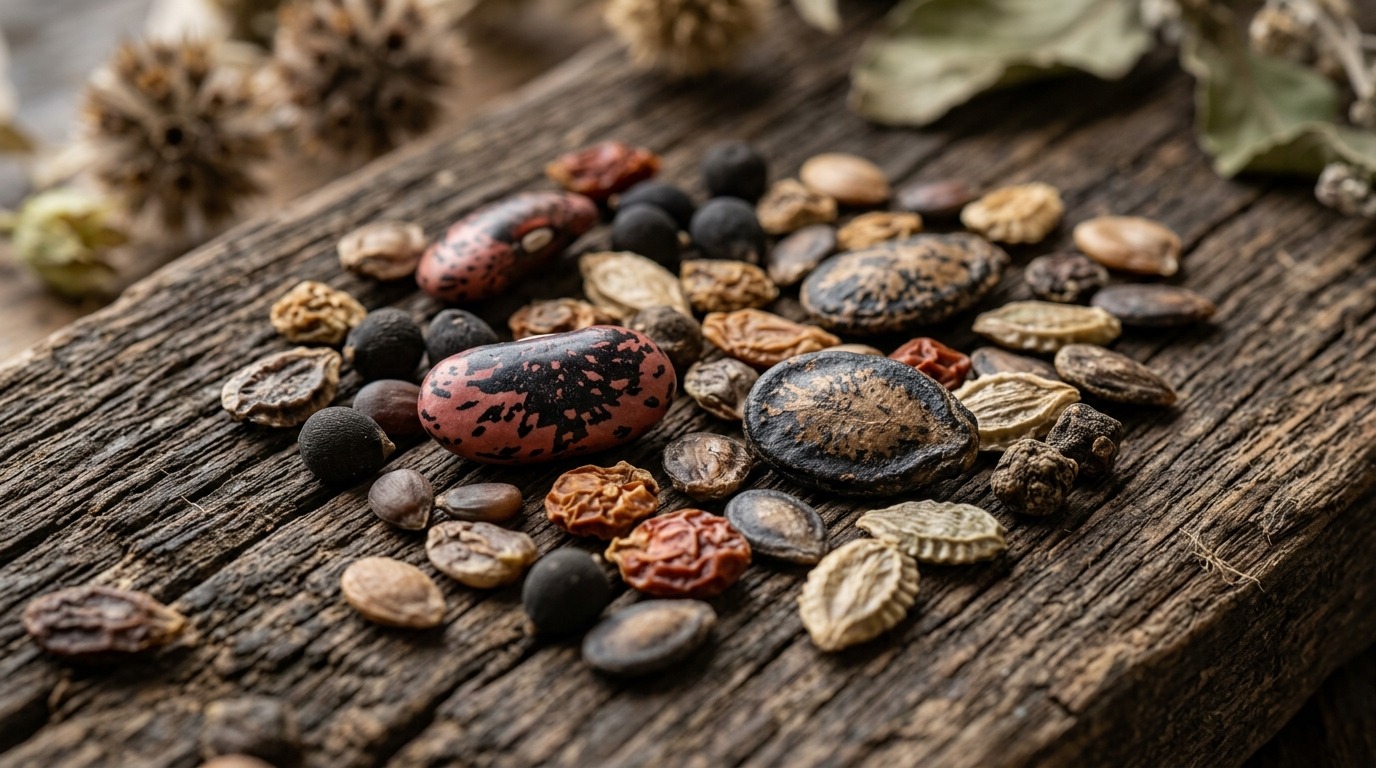
Unlike commercial hybrid (F1) varieties—which produce unpredictable, unstable offspring if saved—open-pollinated heirloom vegetables breed 100% true to type. Collecting seeds from your top-performing tomatoes, peppers, beans, and pollinator flowers ensures that each successive generation exhibits greater natural resistance to regional pests, drought stress, and fungal pressures.
Why Autumn Seed Saving Beats Store-Bought Seed Packets
- Epigenetic Climate Adaptation: Seeds harvested from plants that thrived through your specific summer heat or early cold carry customized genetic vigor.
- Zero Gardening Input Cost: A single heirloom beefsteak tomato or winter squash yields 150+ viable seeds—enough for years of community seed swaps.
- Preservation of Rare Flavors: Safeguard historic heirloom varieties with complex sugars and aromatics that commercial seed monopolies have discontinued.
- Synergy with Indoor Propagation: Pair saved seeds with our DIY seed starting station for explosive early spring transplants.
Wet vs. Dry Seed Processing: The Fundamental Botanical Split
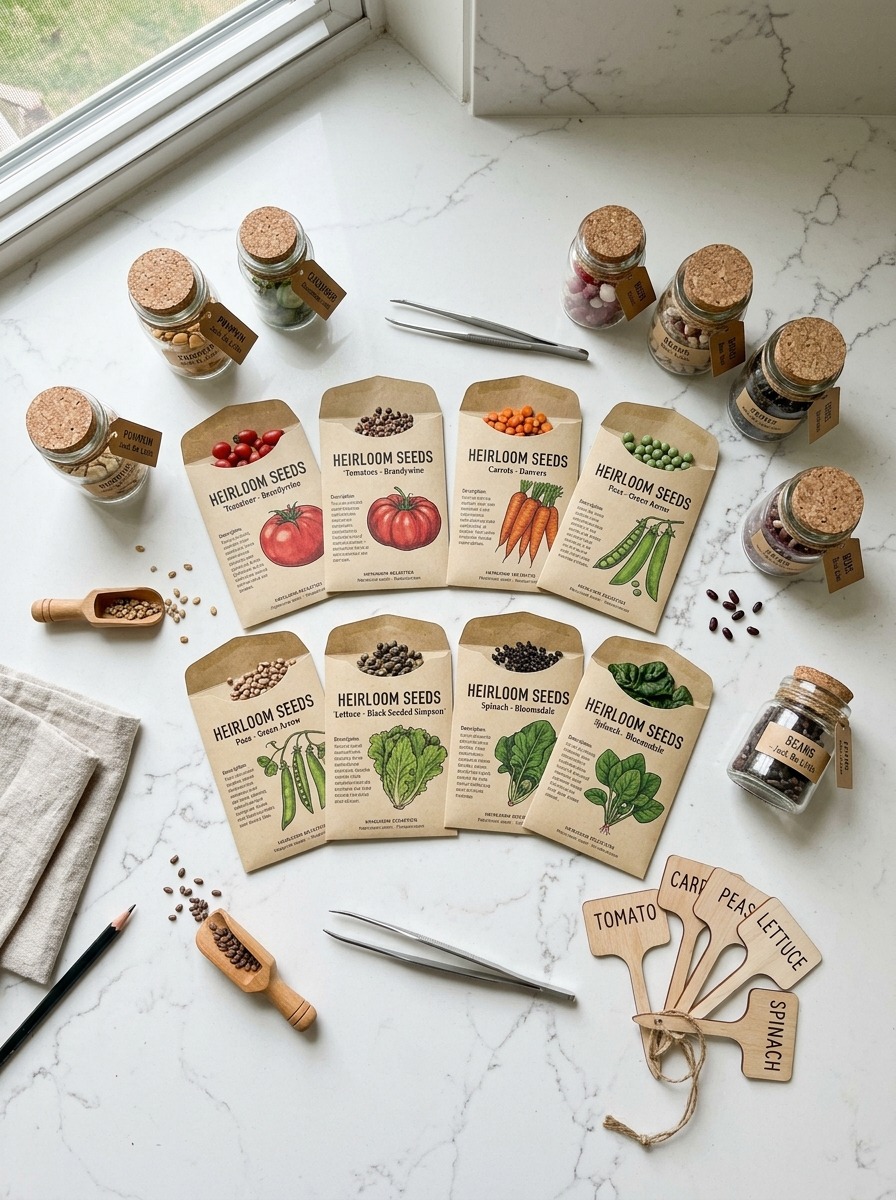
- 1. Dry-Seeded Crops (Beans, Peas, Lettuce, Brassicas, Flowers): Seeds mature and dry directly inside seed pods, seed heads, or siliques on the vine before autumn rains arrive.
- 2. Wet-Seeded Crops (Tomatoes, Peppers, Melons, Cucumbers, Squash): Seeds develop suspended within moist fruit pulp and require water separation or active biological fermentation to remove germination-inhibiting gel sacs.
- 3. Flower & Pollinator Seed Heads: Perennial coneflowers, zinnias, and salvias from your perennial flower borders can be shaken directly into paper bags once petals wither.
Step-by-Step Seed Extraction & Fermentation Walkthrough
Step 1: Select Only Superior Parent Specimens
Never save seeds from diseased, stunted, or off-type plants. Harvest seeds exclusively from your most vigorous, productive, and disease-free specimens at peak botanical maturity (often slightly overripe for eating).
Step 2: The 72-Hour Tomato Fermentation Hack
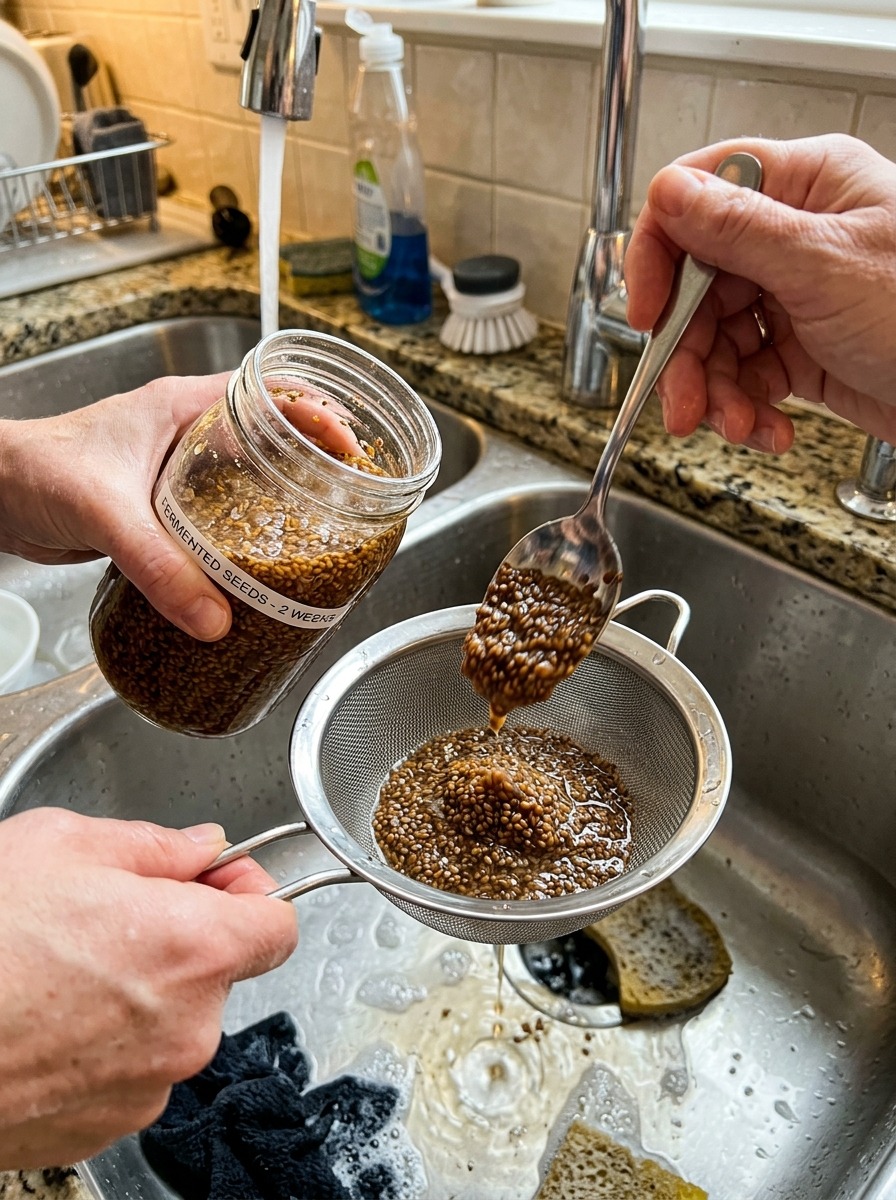
Tomato seeds are encased in a gelatinous glycoprotein coating that prevents premature vivipary (sprouting inside the fruit). Squeeze seeds and juice into a clean glass jar with 2 tablespoons of water. Cover loosely with cheesecloth and allow beneficial ambient fungi to ferment for 3 days at room temperature. The mold layer dissolves the gel and destroys seed-borne pathogens (like bacterial canker).
Step 3: Decant, Rinse & Separate
Fill the jar with lukewarm water and swirl. Viable, plump seeds sink immediately to the glass bottom. Gently pour off the surface scum, floating empty shells, and pulp. Pour the bottom seeds through a fine-mesh culinary strainer.
Step 4: Dehydrate on Parchment Paper (Never Paper Towels)
Spread clean seeds onto unbleached parchment paper or ceramic plates in a warm, ventilated room out of direct sunlight for 7 to 14 days. Never dry seeds on paper towels—wet seed coats fuse to the cellulose fibers permanently, destroying seed embryos when peeled.
The ‘Rule of 100’: Storing Seeds for Maximum 5-Year Viability
1. The Universal Seed Longevity Equation: The sum of the storage temperature (°F) and the relative humidity (%) must remain below 100 (and ideally below 80). For example, storing seeds at 50°F (10°C) with 30% relative humidity equals 80—guaranteeing 5+ years of prime viability.
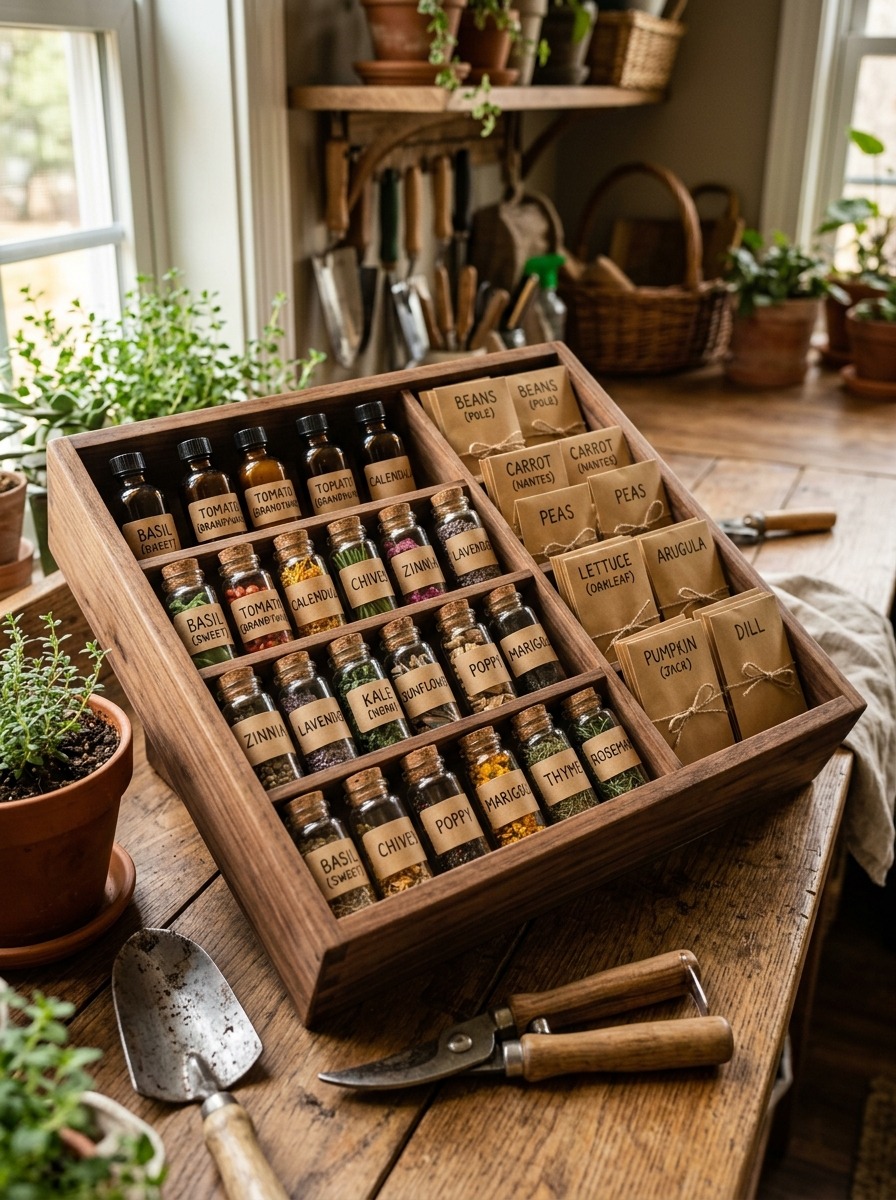
2. The Silica Gel Desiccant Shield: Place paper seed packets inside airtight glass Mason jars along with a 5-gram color-indicating food-grade silica gel pack to prevent microscopic moisture spikes.
3. Cold, Dark & Constant: Store your seed jars in a dark basement cabinet, cold pantry, or refrigerator crisper drawer. Keep away from winter heat vents and humid kitchens. Pair with fall garden bed prep like autumn mulching and planting spring bulbs.
Expected Seed Viability by Vegetable Family
- Long-Lived (4 to 6 Years): Tomatoes, Cucumbers, Radishes, Melons, Brassicas (Broccoli, Kale, Cabbage).
- Medium-Lived (3 Years): Beans, Peas, Carrots, Peppers, Spinach, Squash.
- Short-Lived (1 to 2 Years): Onions, Leeks, Parsnips, Sweet Corn. (Must be refreshed frequently).
Frequently Asked Questions
Can I save seeds from store-bought organic grocery vegetables?
Only if they are open-pollinated heirlooms. Most commercial grocery produce comes from F1 hybrids that will either produce sterile plants or revert to inferior wild parental traits. For grocery scrap regrowing without seeds, check our guide on regrowing vegetables in water.
How do I test if old saved seeds are still good?
Perform a simple paper towel germination test: place 10 seeds on a damp paper towel inside a zip-top bag in a warm room for 7 days. If 8 or more sprout, your batch has an 80%+ germination rate and is ready for planting.
Will cross-pollination ruin my saved seeds?
Squash, corn, and brassicas cross-pollinate easily with neighboring varieties within 500 feet. Tomatoes, beans, lettuce, and peppers are primarily self-pollinating and rarely cross, making them the easiest beginner varieties.
Authoritative Horticultural References & Seed Science
- Seed Savers Exchange: The Seed Garden: The Art and Practice of Seed Saving.
- University of California Agriculture & Natural Resources: Principles of Seed Storage, Dehydration, and Viability Preservation.
- Organic Seed Alliance (OSA): A Seed Saving Guide for Gardeners and Small-Scale Farmers.
Pin This Autumn Seed Saving Guide for Next Season
Never buy garden seeds again! Save this step-by-step heirloom seed harvesting and vault storage guide to your Pinterest Gardening Board so you have the fermentation and viability rules ready!