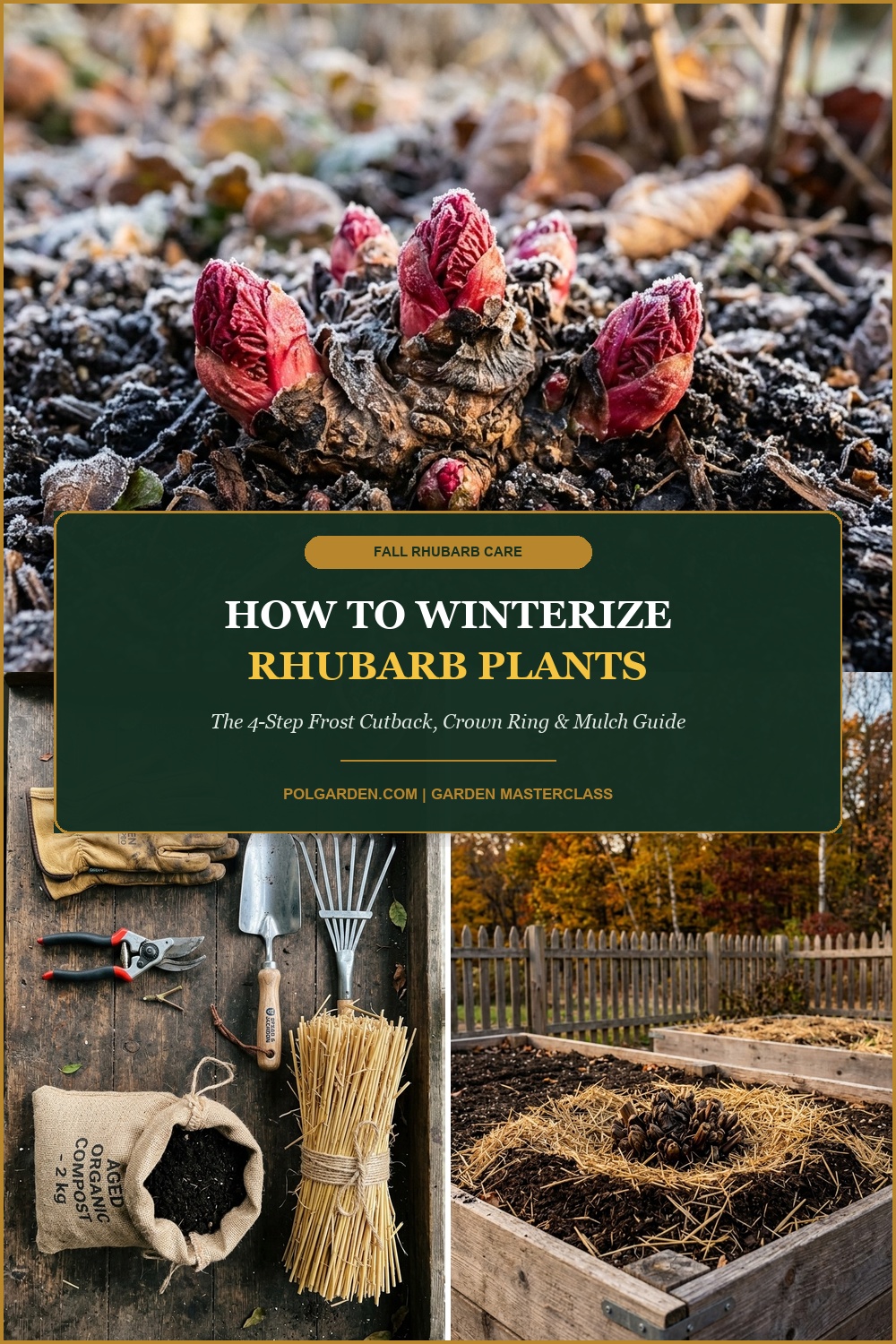
Rhubarb (Rheum rhabarbarum) is celebrated as one of the hardest-working, most enduring perennial edibles in the home vegetable garden, returning year after year with massive ruffled foliage and crisp, ruby-hued stalks. Yet behind this rugged exterior lies a plant with exact winter biological demands: rhubarb strictly requires a prolonged winter dormancy of 500 or more chill hours below 40°F (4°C) to stimulate spring bud break, balanced against the real risk of crown rot and freeze-thaw frost heaving. Knowing precisely when to step back, when to prune, and how to feed the perimeter of the crown without suffocating its central growing buds makes the difference between thin, stringy petioles and massive, juicy spring harvests.
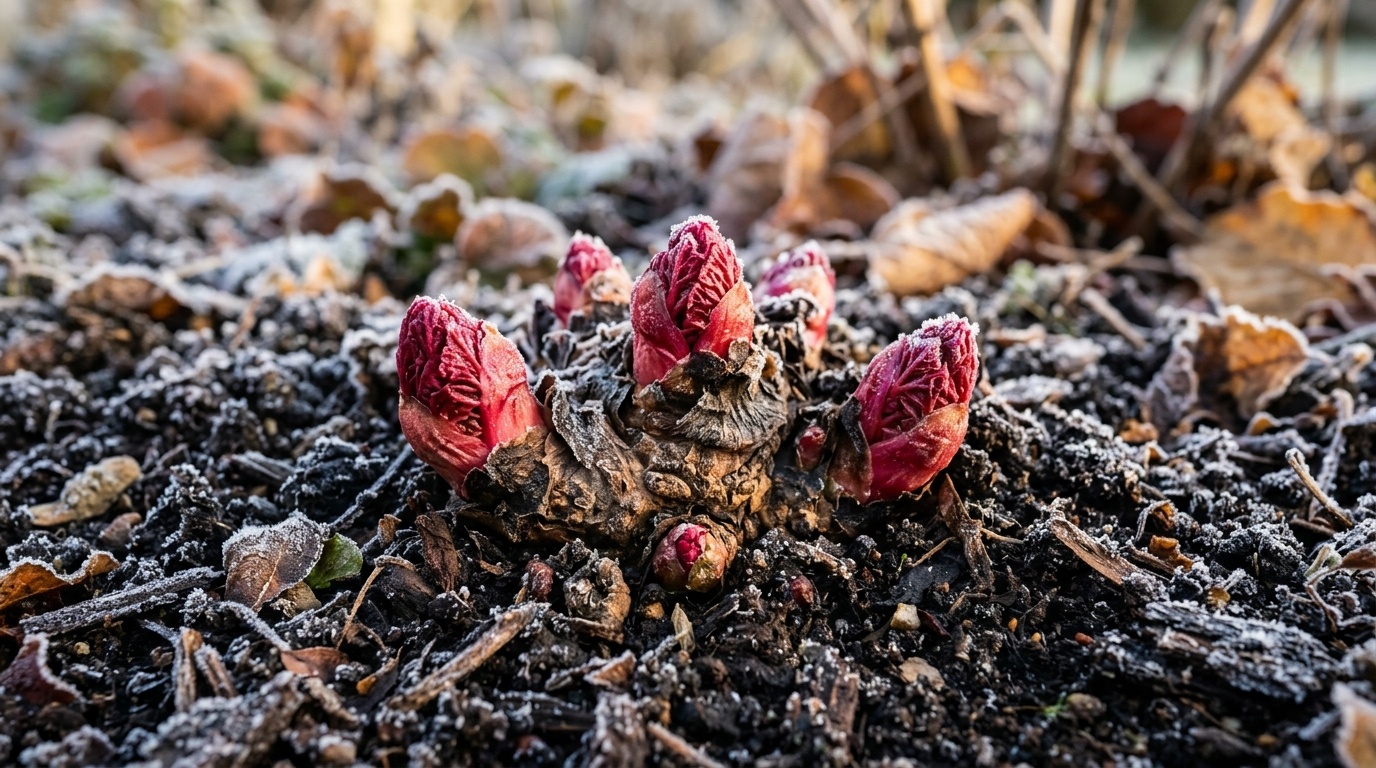
Unlike tender garden crops that must be coddled through early autumn, rhubarb is a true cold-climate champion native to the harsh steppes and river valleys of Siberia and northwestern China. Its sprawling fleshy root system acts as a massive energy reservoir, storing complex carbohydrates synthesized throughout the long summer days. When temperatures drop and heavy autumn frosts strike, an intricate hormonal shift signals the rhubarb plant to withdraw all mobile nutrients from its sprawling leaves back into the subterranean rhizome. Understanding this natural cycle ensures your fall maintenance works in harmony with the plant’s physiology rather than fighting against it.
Why You’ll Love This Fall Winterizing Strategy
- Vigorous Spring Petiole Flush: Nourishes heavy-yielding crowns right before deep dormancy without encouraging tender, frost-sensitive late green growth.
- Total Crown Rot & Pest Elimination: Removing collapsed, rotting foliage denies shelter to the destructive rhubarb curculio weevil and eradicates fungal spores of Phytophthora cactorum.
- Frost Heave Protection: Insulates shallow crown eyes against erratic midwinter freeze-thaw cycles that push mature roots out of the soil profile.
- Effortless 30-Minute Routine: Requires only basic garden hand tools and organic mulch, setting your perennial patch up for decades of sustainable harvests.
Essential Fall Supplies & Crown Preparation
Winterizing rhubarb does not require elaborate chemical treatments or complicated structures. Instead, it relies on clean sanitation and high-quality organic matter to insulate the root zone while honoring the crown’s need for crisp winter air.

- Bypass Hand Pruners: Choose clean, sharp bypass pruners sterilized with 70% isopropyl alcohol to slice through fibrous leaf petioles cleanly without crushing vascular tissue.
- Heavy-Duty Gardening Gloves: Sturdy leather or rubber-coated gloves protect hands when raking out wet, decaying foliage and handling abrasive compost.
- Aged Organic Manure or Finished Compost: Rhubarb is an exceptionally heavy feeder; 2 to 3 buckets of well-rotted farmyard manure (steer or horse) or rich compost provide slow-release organic nitrogen, potassium, and beneficial soil microbes.
- Seedless Clean Straw or Shredded Hardwood Leaves: Provides loose, breathable thermal insulation without compacting or introducing troublesome weed seeds into your perennial patch.
- Hand Trowel & Wire Hand Rake: Ideal for gently clearing dead plant debris around the crown without gouging the sensitive pink growth eyes.
Step-by-Step Rhubarb Winterizing Walkthrough
Follow these four chronological steps from mid-autumn through the first sustained ground freeze to prepare your rhubarb bed for maximum cold-hardiness and explosive spring production.
Step 1: Wait for the First Killing Frost (Natural Defoliation)
The single most common mistake beginner gardeners make is cutting back rhubarb foliage while it is still lush and green in early September. As autumn days shorten, the massive green leaves continue photosynthesizing, channeling vital starches, sugars, and mineral reserves down into the large crown rhizome. Cutting leaves prematurely starves the crown of winter energy reserves.
Instead, wait patiently until after the first hard killing frost (temperatures dropping below 28°F / -2°C). Frost will instantly cause the broad leaf blades to wilt, turn yellow-brown, and collapse limp across the soil surface. This visible collapse confirms that the plant has safely translocated its energy reserves into winter storage and entered genuine metabolic dormancy.
Step 2: Sanitized Stalk Cutback & Foliage Disposal
Once the foliage has collapsed, prompt sanitation is paramount. Leaving decomposing, soggy rhubarb leaves over the crown creates a damp microclimate that invites pathogenic fungi, bacterial soft rot, and provides overwintering habitat for garden slugs and the destructive rhubarb curculio beetle (Lixus concavus).

Wearing gloves, grasp each limp petiole near its base and use your bypass shears to slice cleanly through the stem approximately 1 to 2 inches above soil level. Alternatively, mature frost-hit stalks often pull away smoothly from the crown with a gentle downward twisting motion. Clear all clippings, leaf remnants, and surrounding weeds entirely out of the bed. Dispose of the dead foliage in municipal green waste or an active hot compost pile (temperatures exceeding 140°F / 60°C); if your rhubarb displayed signs of leaf spot or curculio damage during summer, discard or burn the foliage rather than composting.
Step 3: The “Donut Ring” Heavy Fall Feeding
Rhubarb produces massive biomass every spring, requiring substantial soil fertility. Because perennial crowns awaken early in late winter—often before gardeners can easily dig cold, saturated springtime soil—autumn is the ideal window to apply a generous organic top-dressing.
Apply a 2- to 3-inch layer of rich, well-composted manure or organic compost in a wide circular band around the plant. Spread the compost directly over the root zone, extending from 6 inches away from the crown out to the outer drip line (about 24 to 36 inches in diameter). Critical rule: Do NOT pile manure or compost directly on top of the central crown or bury the pink growth eyes! Smothering the center restricts air circulation and traps moisture directly against dormant tissues, drastically elevating crown rot risk during damp winter thaws.
Step 4: Winter Mulching & Frost Heave Insulation
In USDA Hardiness Zones 3 through 6 where winter temperatures routinely dip below 0°F (-18°C), unplanted or shallow crowns are vulnerable to “frost heaving”—the repeated expansion and contraction of wet soil during freezing and thawing that levers plants up, severing delicate root systems and exposing tender rhizomes to desiccating winds.
Once the top 1 inch of soil has frozen solid (typically late November to mid-December), cover the bed with a loose 4- to 6-inch layer of clean wheat straw, dry shredded oak leaves, or salt marsh hay. Mulching over already-frozen ground locks in the cold, preventing premature temperature swings on unseasonably warm winter afternoons while protecting the root structure through deep freezes.
3 Chef & Horticulturist Secrets for Massive Spring Stalks
Elevate your perennial rhubarb harvests from ordinary to commercial-grade with these proven horticultural techniques:
1. Never Bury the Central Eyes: Rhubarb crowns require direct atmospheric cold to register their mandatory 500+ chill hours. If you bury the crown under 6 inches of heavy soil or dense compost, the soil temperature around the buds stays insulated, delaying dormancy break and increasing spring decay. Keep mulch loose and aerated.
2. The 5-Year Division Window (Fall Splitting): Mature rhubarb plants gradually become congested after 4 to 6 years, resulting in dozens of pencil-thin petioles rather than thick, crisp stalks. Fall is an outstanding time to divide mature crowns just as they enter dormancy. Using a clean, sharpened spade, slice straight down through the root mass, ensuring each separated division contains at least 2 to 3 prominent pink eyes and a hefty section of taproot. Replant immediately into compost-enriched soil spaced 3 to 4 feet apart.
3. The Spring Terracotta Forcing Trick: If you crave sweet, tender, bright crimson rhubarb weeks before your neighbors, practice traditional winter forcing. In late February or early March, place a large upturned terracotta rhubarb forcing pot, chimney flue, or inverted dark bucket directly over the dormant crown. By excluding light and trapping geothermal heat, the plant produces extraordinarily tender, non-stringy, pale pink stalks (“champagne rhubarb”) with minimal acidity by early April.
Companion Care & Winter Garden Pairings
Rhubarb thrives best when integrated into an intentional, permanent perennial edible border alongside other long-lived cool-season staples.

- Asparagus Patch Proximity: Rhubarb and asparagus are the twin pillars of perennial spring vegetables. Because both require complete autumn sanitation and heavy winter compost dressing, grouping them adjacent in dedicated raised beds simplifies maintenance. If you manage both, consult our comprehensive guide on how to winterize asparagus beds in fall for synchronized care.
- Fall Perennial Berry Insulation: Nearby fruit patches benefit from similar winter root insulation protocols. Review our field walkthrough for winterizing strawberry plants with protective mulch to ensure your summer fruit harvests stay prolific.
- All-Organic Bed Conditioning: Enriching your surrounding garden beds with autumn cover crops builds systemic soil fertility that benefits neighboring deep-rooted perennials; explore our breakdown on winterizing raised garden beds with cover crops.
- Fall Allium Integration: Planting hardneck garlic cloves along the perimeter of your perennial rhubarb patch provides natural sulfur deterrence against underground pests; follow our masterclass on planting garlic in fall for giant bulbs.
Spring Awakening & Harvest Safety Rules
As winter gives way to early spring and daytime temperatures consistently climb into the mid-40s°F (7°C), gently rake back the heavy straw mulch from the center of the rhubarb crown to allow direct sunlight and warming air to kiss the pink buds. Leaving heavy mulch over emerging crowns can cause early shoots to rot or become spindly.
Crucial Fall & Winter Safety Warning: Never harvest or consume rhubarb stalks that have suffered a hard killing frost in late autumn or winter. Freezing temperatures rupture cellular walls within the foliage, allowing toxic soluble oxalic acid and calcium oxalates to migrate from the toxic leaf blades down into the edible petioles. Eating frost-bitten rhubarb stalks can trigger acute kidney irritation and gastrointestinal distress. Always remove and compost damaged fall stalks, reserving your appetite for the crisp, clean spring flush.
Frequently Asked Questions
Should I cut back rhubarb before or after the first frost?
Always wait until after the first hard killing frost has collapsed the foliage. Green leaves synthesize and store crucial sugars and starches in the root system throughout autumn. Once frosted, the leaves turn brown and limp, signaling that nutrients have successfully moved down into the crown and it is safe to prune.
Can I compost dead rhubarb leaves despite their oxalic acid content?
Yes, healthy dead rhubarb leaves are completely safe to add to household compost piles. Oxalic acid is an organic compound that breaks down rapidly into harmless components through microbial action and heat during decomposition. The finished compost will not harm soil or other plants. However, avoid composting leaves infected with fungal spots or infested with weevils.
Do potted rhubarb plants need special winter protection?
Yes. Rhubarb grown in containers is far more vulnerable because the root ball lacks the ground’s thermal mass. In zones where temperatures dip below 25°F (-4°C), move the dormant pot into an unheated garage, garden shed, or cold frame, or sink the entire pot into garden soil and mound straw around the rim to prevent root freezing.
How many chill hours does rhubarb actually need?
Rhubarb requires roughly 500 to 700 hours of temperatures between 28°F and 40°F (-2°C to 4°C) during winter dormancy to stimulate vigorous petiole growth in spring. In mild climates (Zones 9 and higher) where winters lack sufficient chilling, rhubarb is often grown strictly as an annual from seed planted in autumn.
Pin This Rhubarb Winterizing Guide for Later
Love homegrown perennial vegetables? Save this pin to your Fall Gardening or Vegetable Patch board on Pinterest so you have these vital crown protection steps ready every autumn!