
With their lush tropical foliage, vigorous climbing tendrils, and continuous cascade of vivid trumpet-shaped blooms in shades of crimson, pink, and white, mandevilla vines (Mandevilla splendens and Mandevilla sanderi, often called rocktrumpet or dipladenia) reign as the undisputed showstoppers of summer patio planters and sunny garden trellises. Native to the sun-drenched rainforest edges of Central and South America, these flamboyant tropical perennials thrive in sizzling summer heat and high humidity, rewarding gardeners with months of uninterrupted floral majesty. However, mandevilla plants possess virtually zero natural cold tolerance. As late autumn approaches and nocturnal temperatures plunge below 50°F (10°C), plant growth abruptly stalls, and the very first light ground frost (32°F / 0°C) will instantly turn delicate succulent vines into black, water-soaked mush. Rather than treating your prized potted climber as an expensive annual and discarding it each autumn, learning how to overwinter mandevilla indoors allows you to preserve your established vine year after year. With our proven 4-step protocol covering pre-frost timing, severe cutback pruning, pest sterilization, and basement dormancy or sunny indoor maintenance, your mandevilla will emerge from winter stronger, thicker, and ready to explode into vigorous spring blooms.
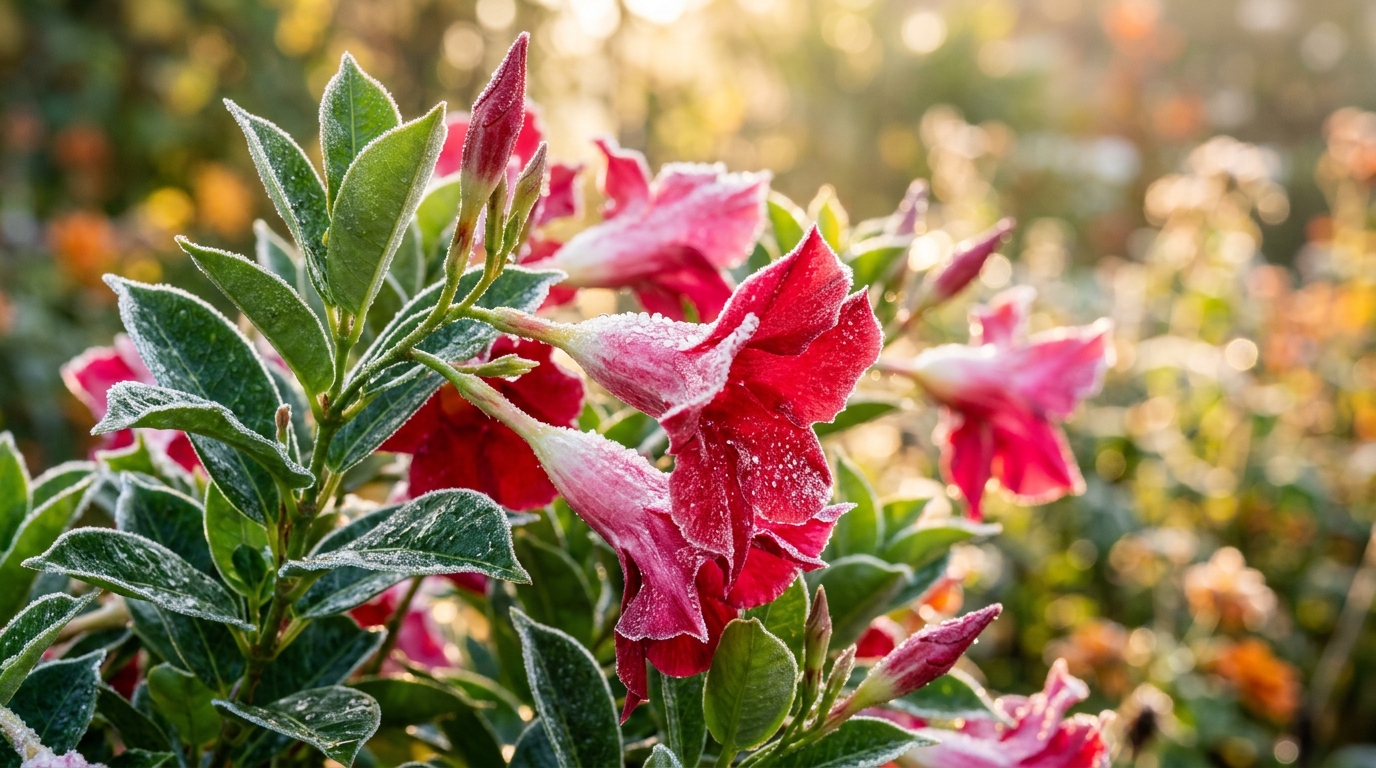
Successfully overwintering mandevilla hinges on understanding how tropical vines behave when moved from radiant outdoor sun into the dry, low-light environment of a heated home. In USDA hardiness zones 9 through 11, mandevilla vines can remain outdoors year-round as evergreen garden perennials. But for gardeners in USDA zones 3 through 8, outdoor survival is an impossibility. When brought indoors, mandevillas generally follow one of two management pathways: maintaining active growth as a sun-drenched houseplant, or inducing forced cold dormancy in a cool basement or garage. Much like the transition protocols practiced when overwintering tropical hibiscus indoors or storing dormant fuchsias in winter, cutting back top growth and withholding heavy feeding prevents leggy, pest-infested winter foliage while safeguarding the plant’s thick, tuberous taproots until spring warmth returns.
Why Overwintering Mandevilla Saves Money & Yields Massive Summer Blooms
- Exponentially Larger Floral Displays: A mature 2- or 3-year-old overwintered mandevilla develops a massive, woody root ball capable of fueling hundreds of trumpet flowers next summer—far outpacing small, immature nursery transplants.
- Significant Cost Savings: Premium trellis-trained mandevilla pots frequently retail for $35 to $60 each spring. Overwintering preserves your investment with minimal effort.
- Vigorous Early-Season Growth: Overwintered vines already possess a mature subterranean energy reservoir, allowing them to leaf out and begin setting buds weeks earlier in late spring than seedling starts.
- Preservation of Rare Cultivars: Heirloom colors, ruffled double varieties, and specialty two-tone dipladenia cultivars can be difficult to source reliably at local garden centers each season.
Essential Supplies & Smart Overwintering Toolkit

- Sterilized Bypass Pruning Shears: Sharp pruners deliver clean, uncrushed cuts on thick woody vines, preventing ragged wounds that invite fungal stem rot.
- 70% Isopropyl Rubbing Alcohol: Used to wipe down blades between cuts to avoid transmitting viral or bacterial pathogens.
- Organic Insecticidal Soap & Cold-Pressed Neem Oil: Essential botanical treatments to eliminate spider mites, aphids, and whiteflies hiding on leaf undersides before bringing pots indoors.
- Fresh Well-Draining Potting Soil: Formulated with peat moss, perlite, and coarse bark to refresh tired potting soil if root-bound containers require repotting.
- Moisture Meter or Long Wood Skewer: Invaluable for monitoring moisture levels in deep root zones and avoiding winter root rot.
Step-by-Step Mandevilla Overwintering Walkthrough
Step 1: Timing & Outdoor Pre-Inspection
Begin the overwintering transition in early to mid-autumn when outdoor nighttime temperatures consistently dip to 50°F (10°C), and well before the first anticipated frost date. Inspect the entire vine, trellis supports, and container drainage holes for hitchhiking pests like scale, spider mites, mealybugs, and fungus gnats. Blast the foliage thoroughly with a strong stream of hose water to dislodge debris and insects, then allow the plant to dry completely.

Step 2: Perform Severe Cutback Pruning
Attempting to bring 6- to 10-foot sprawling vines indoors is messy and stresses the plant in low-light environments. Using sterilized bypass pruners, cut the entire vine back vigorously, leaving a clean, compact framework of main stems standing roughly 10 to 12 inches tall above the soil line. Make each cut roughly 1/4 inch above an outward-facing leaf node or dormant bud eye. Mandevilla bleeds a milky white latex sap when cut, which is a mild skin irritant; wear gardening gloves to protect your hands.
Step 3: Thorough Foliar & Soil Pest Treatment
Spray all remaining stems and the base of the plant thoroughly with insecticidal soap or horticultural neem oil solution, paying special attention to branch crotches and the soil surface. Drench the container soil with a dilute insecticidal soap solution or mosquito bit tea to neutralize any hidden fungus gnat larvae or soil-dwelling bugs. Let the container drain freely for several hours in a sheltered porch before carrying it indoors.
Step 4: Select Your Wintering Method (Dormancy vs. Active Growth)
Choose one of two proven indoor environments based on your available space:
• Method A: Cool Basement Dormancy (Recommended): Place the pruned container in a dark or dimly lit cool room, unheated basement, or frost-free garage where temperatures hover consistently between 45°F and 55°F (7°C to 13°C). The plant will drop its remaining leaves and enter full winter dormancy. Water very sparingly—just once every 4 to 6 weeks—only to prevent the subterranean root ball from drying to dust.
• Method B: Sunny Houseplant Maintenance: If you lack a cool cellar, place the pruned pot in the brightest available south- or west-facing window. Supplement with a full-spectrum LED grow light if daily direct sun is under 6 hours. Keep ambient temperatures between 60°F and 70°F (15°C to 21°C). Water moderately only when the top 2 inches of soil feel bone-dry, and keep the plant far away from drafty doorways and heating vents.
3 Master Secrets for Flawless Mandevilla Dormancy
1. Strict Winter Diet: Zero Fertilizer Allowed: Never apply liquid or granular fertilizers to mandevilla plants between October and March. Forcing new tender shoot growth during short, cloudy winter days produces weak, etiolated vines that become prime targets for debilitating spider mite colonies. Allow the vine’s root system to rest completely.
2. Understand Toxic Milky Latex Sap: Mandevilla stems and roots exude a thick white sap containing cardenolides and diterpenes when pruned. This latex is mildly toxic to cats and dogs if ingested and can cause dermatitis on sensitive human skin. Always wash your pruning tools with alcohol immediately after trimming to prevent gumming, and keep overwintering pots out of reach of inquisitive household pets.
3. Beware of Winter Overwatering (The #1 Killer): In dormant or low-light conditions, mandevilla root respiration slows down dramatically. Soil that remains soggy for more than 48 hours will quickly suffocate fine feeder roots and rot the central root crown. When in doubt, leave the soil dry! A slightly thirsty mandevilla easily bounces back, but a waterlogged vine quickly suffers fatal black root rot.
Mandevilla vs. Dipladenia: Identifying Your Plant’s Winter Needs

- Vining Mandevilla (e.g., Alice du Pont): Displays broad, puckered textured leaves and rapid twining vines that easily climb 10 to 15 feet. Highly suited for severe autumn pruning and basement dormancy, as it rapidly re-grows vigorous new vines from basal nodes in spring.
- Bushy Dipladenia (e.g., Rio Series, Diamantina): Exhibits narrower, glossy, leathery deep-green leaves with a compact, mounding or cascading habit. Often easier to overwinter as an active houseplant on a sunny windowsill, needing only light shaping rather than severe cutbacks.
- In-Ground Vines vs. Container Specimens: Vines planted directly in garden beds cannot survive winter outdoors. Carefully dig up the root ball 3 weeks before first frost, trim the tuberous roots slightly, and pot them into fresh, sterilized container mix with generous bottom drainage.
Spring Awakening & Outdoor Hardening-Off Protocol
- Early Spring Awakening (Late February – March): Move dormant basement containers into a bright, warm room (65°F to 72°F / 18°C to 22°C). Resume regular watering, giving the root ball a thorough drink. Within 2 to 3 weeks, vibrant lime-green shoots will sprout from the pruned stems.
- Early Feeding & Repotting: Once 2 inches of new growth appears, feed with a balanced, water-soluble fertilizer diluted to half strength. If roots are circling the container base, gently pot up into a container 2 inches larger with fresh potting mix.
- Gradual Hardening Off in May: When nighttime temperatures stay reliably above 50°F (10°C) without frost risk, begin moving the plant outdoors. Start with 2 hours of dappled morning shade, gradually increasing direct sun exposure over 10 to 14 days to prevent leaf scald before returning to its summer trellis.
- Explore Companion Overwintering Guides: Expand your autumn plant protection knowledge with our specialized guides on storing begonia tubers and taking coleus indoor winter cuttings.
Frequently Asked Questions
Why are my mandevilla leaves turning yellow and dropping after moving indoors?
Leaf yellowing and leaf drop are normal shock responses when tropical plants adapt to the reduced light and lower humidity inside a home. As long as the stems remain firm, green beneath the bark, and pliable, the plant is simply adjusting its canopy size. Reduce watering and ensure it receives maximum natural light.
Can I propagate mandevilla from the vines I cut off in autumn?
Yes! The non-woody, healthy stem tips you remove during autumn pruning make excellent softwood cuttings. Cut 4- to 6-inch shoot tips, dip the cut ends in rooting hormone powder, and stick them into moist potting perlite under a clear plastic humidity dome. They typically root in 3 to 4 weeks under bright indirect light.
When should I put the trellis back into the pot?
Insert your trellis or climbing support into the pot in early spring when repotting or as soon as new green shoots reach 6 to 8 inches in length. Guiding young shoots onto the trellis early prevents brittle growing tips from snapping.

Pin This Mandevilla Overwintering Guide for Later
Love this guide? Save this pin to your Pinterest gardening board so you have the cutback pruning steps, basement dormancy tips, and spring revival protocol ready before the first autumn freeze!